- HOME
- INTRODUCTION
- FEASTS OF GOD
- 1. PASSOVER- Leviticus 23:5
- 2. FEAST OF UNLEAVENED BREAD - Leviticus 23:6-8
- 3. FEAST OF FIRSTFRUITS - Leviticus 23:9-11,14,15
- 4. FEAST OF WEEKS OR PENTECOST - Leviticus 23: 15-16
- 5. FEAST OF TRUMPETS - Leviticus 23:23,25
- 6. ATONEMENT DAY - Leviticus 23: 32,31
- 7. FEAST OF TABERNACLES OR BOOTHS - 23:34-36
- THE WORSHIP ACCEPTABLE TO GOD
- Conclusion
- Italiano
- Francais
FEASTS OF GOD
The project solving all human problems
Chapter:
[ appointed times ]
THE ANNUAL FEASTS ARE THE LORD’S FEASTS
 The annual Feasts of Leviticus, chapter 23, are the LORD’s Feasts. Moses, reported, «These are the feasts of the LORD, holy convocations which you shall proclaim at their appointed times» (Lev. 23:2). Furthermore, «These are My feasts», declared the LORD Himself when He commanded to keep His annual appointed times (Lev. 23:1).
Why therefore some Christians say, «they are the Jewish festivals, the Jewish Sabbaths»? The LORD who gave His holy appointments at Sinai is not the same GOD of Israelites and Christians alike? Yes, indeed!
Regrettably, believers, in time, lost knowledge of GOD’s Word and mistakenly declared many of His laws and statutes obsolete. Yet, the seven annual feasts, and seven Sabbath-days are, and will always be, «the feasts of the LORD» (Lev. 23:1)! Therefore, His true people, in all nations and generations, will keep them holy, and celebrate them.
The Feasts of the Eternal Covenant
 Many modern theologians attest that Scripture testifies of various Covenants abrogated by Jesus’ death. But that’s not the truth. All Scripture, instead, testifies of one GOD, one Savior, and one «eternal covenant» (Is. 24:5; see also 54:8; 55:3; Jer. 31:3; 32:40; 50:5). The first was with Adam and Eve (Gn. 3:15). And this was ultimately renewed, fulfilled, and validated, «once and for all», by the GOD of heaven and earth, through Jesus’ sacrifice and blood.
Furthermore, if the Covenant established at Sinai regards only the Jews because GOD established it first with Israel, by logical consequence, even salvation through Jesus Christ, who was a Jew, regards only the Jews!
If the annual feasts are obsolete for Christians, and they are only for the Jewish people, then also the Sabbath, the ten commandments given first to Israel, are no binding for Christians. Even the regulations concerning tithe, pure and impure animals are no longer binding for Christians! Yet, various Christian churches do apply the latter laws to their congregations, today. Indeed, this is a deceptive reasoning completely incoherent with the Word of GOD! Therefore, believe that the annual Feasts are the LORD’s feasts, the seven holy convocations to be kept by Israelite and Gentile believers alike.
GOD’s people are Israelites and Gentiles
 Even in our time, Christian believers give evidence to hold still the same attitude of the Romans and the Greeks, to whom Paul wrote about two thousand years ago. Because of envy and pride, they still spread around the falsity that GOD has rejected Israel. The apostle Paul denounces this prejudicial attitude, declaring, «I say then, has God cast away His people? Certainly not! … God has not cast away His people whom He foreknew» (Rm. 11:1,2).
Paul further explained that all Israelite and Gentile believers are branches of the spiritual genealogical tree of redeemed Israel, GOD’s true people. This means that for our heavenly Father there is one and unique people, united in Christ Jesus. Man has created ethnic, theological, religious and social barriers, and still holds them up to cover mistakes and sins of the past. Yet, the Father sees true believers in Him, His Son, and His Written Word, as one people, His eternal people.
Paul exhorted to abandon the errors of the past, for GOD’s Law is equal for all people. He states that some Israelites were broken off from His nation because of their unbelief and transgressions. Therefore, He adds, «do not be haughty, but fear. For if God did not spare the natural branches, He may not spare you either. Therefore consider the goodness and the severity of God: on those who fell, severity; but toward you, goodness, if you continue in His goodness. Otherwise you also will be cut off» (Rm. 11:20-22). Let us seriously listen to this warning. And, do not despise GOD’s first chosen people, but retain a privilege and a grace to be partakers of the same Covenant’s blessings.
GOD’s Feasts celebrated in the New Kingdom
 Moreover, believers stating that the annual feasts are exclusively Jewish, ignore that the prophets of GOD declared that some of them will be celebrated also in the New Earth.
Zaccaria testified, «And it shall come to pass that everyone who is left of all the nations which came against Jerusalem shall go up from year to year to worship the King, the Lord of hosts, and to keep the Feast of Tabernacles» (Zec. 14:16).
Isiah also wrote, «”And it shall come to pass that from one New Moon to another, and from one Sabbath to another, all flesh shall come to worship before Me,” says the Lord» (Is. 66:23).
Then, how do we interpret their testimony? GOD established the Feast of the Tabernacles, the New Moon, and the Sabbath for the Israelites. Then He made them obsolete for the Christians, and finally He will re-establish them in the future life for the redeemed? It is not so. The annual Feasts are the LORD’s feasts, and we Israelite and Gentile believers must observe them as such.
Jesus died to forgive and take away the transgression of GOD’s commandments. He loves us. Even if unknowingly we have disobeyed GOD’s Law, misinterpreted predictions, and Jesus’ Testimony, He will forgive us. We have just to admit our faults and return to be fully loyal to GOD. For this is the manner that will enable our soul to stand before GOD face to face. And ultimately, proclaim, «This is our God, the one in whom we trusted, the one who saved us. This is the Lord for whom we waited. Let us rejoice, and be glad!» (Isaiah 25:9).
Rejoice with the LORD
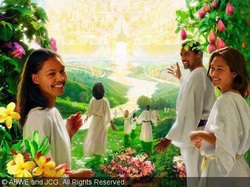 In conclusion, let the truth make us free to trust, love and obey. Let us follow Christ’s example and observe even the least of GOD’s commandment including those concerning His annual feasts and Sabbaths. Because this will give us the privilege to be «called great in the kingdom of heaven» , and to rejoice with GOD forever (Mt. 5:19).
Chapter:
[ appointed times ]
SCRIPTURE INTERPRETS ITSELF
Scripture Interprets Itself Through Typology
For an exact and progressive understanding of the written revelation, the LORD communicated with man through tangible symbols, defined “types”. And, from these derives the term “typology”[i], the study of Scripture to understand the originals entities prefigured by the biblical types.
Remarkably the Scripture interprets itself through typology. Consequently, all that is needed is studying it, and watching attentively the events of human history, in particular of Israel. These, in fact, enable to discern when a biblical type and a prophetic event is truly and completely fulfilled in its antitype. And, only at that time, it will be once for all. Then, and only then, interpreters of Scripture receive evidence that their interpretation of a symbol, was correct.[iii]
In antiquity the writers of Scripture were very familiar with this divine method of communication. Consequently, they considered real things, real persons, and real events of the past, types of things to come.
Even today, using typology, this symbolic language can be understood without external references by comparing scripture with scripture.
Man’s Redemption in Types and Antitypes
I. The first sacrifice
 The LORD informed progressively about the means He retained necessary to execute the redemption of repented believers, using types.
Firstly, He disclosed the solution to Adam with the promise of a Messiah that would come only from a woman. His Anointed would defeat the “Serpent”, the “Dragon” by suffering and dying innocently to redeem many. Here, the serpent is a tangible type. In fact, it represents the “devil”, “Satan”, the rebellious angel that took possession of the “ancient serpent” to deceive the parents of humanity (Rev. 12:9).
To Adam and Eve, GOD also specified how the extraordinary Seed of the woman would defeat Satan (Gen. 3:15). In fact, after promising a Redeemer, the LORD presented in types the means through which He would fulfill His promise. And He did this by sacrificing an “innocent animal”, most probably a “lamb”. Then, the LORD, out of love, took the skin of the victim and made garments. And, with them, He covered the parents of humanity, left naked and ashamed of their new miserable sinful condition (Gen. 3:21).
Purposely with this first sacrificial death of an innocent victim, GOD taught to Adam that the Seed of Eve will one day die to make them live. And He also dramatically explained that without shedding of blood there is no remission of sin. Ultimately,this sacrifice prefigured the great sacrifice which, in the latter days, should be offered once for all. Thus, the first death in GOD’s Universe was the sacrifice of Christ in a figure.
II. The substitutionary sacrifice
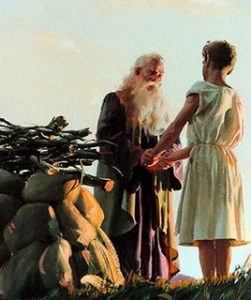 Secondly, the LORD asked Abraham to dramatize the same solution. Trusting in GOD’s promises, our spiritual patriarch offered Isaac, his only legitimate son, as a sacrifice. Yet, as Abraham raised his hands to kill Isaac, the Angel of the LORD stopped him. And, GOD substituted his son with an “innocent victim” He Himself had chosen and provided for the burnt offering (Gen. 22).
This substitutionary sacrifice was a prophetic reenactment. In it, Abraham played the role of our Father who is in Heaven. And, Isaac prefigured GOD’s only Son, sacrificed, once for all, at the fullness of time (John 3:16).
III. The perpetual sacrifice
Thirdly, to the teaching of man’s salvation, GOD added also the spatial dimension through another type, His sanctuary. And, with it He offered other types of the places and means He would use to redeem His believing people. Amazingly, in Scripture the sanctuary typology is used from Genesis to Revelation.
 After liberating Israel, the LORD commanded to build a sanctuary, similar to the one which is in Heaven (Ex. 3:12; 19:11). In obedience, «on the first day of the first month» of the sacred calendar, «the tabernacle was raised up». Then, «the glory of the LORD filled it». Afterwards, «The cloud of the LORD was above the tabernacle by day, fire was over it by night, in the sight of all the house of Israel, throughout all their journey» to the earthly promised land (Ex. 40:17, 35, 38).
In GOD’s sanctuary, the priest offered the perpetual sacrifice, called the “korban tamid” . It was a daily sacrifice of two lambs as burnt offering to maintain a constant relationship with GOD (Exodus 29:38-39). As a matter of fact, one lamb was offered in the morning, and one lamb in the afternoon, each day of the week. In the morning, no sacrifice was before the first lamb. In the afternoon, no sacrifice was after the last lamb. And, they both were holy types, prefiguring the continuous intercession of Christ for the perpetual purification and blessing of repented believers.
The High Priest of GOD
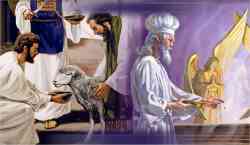 Astonishingly, the sanctuary was a «copy and shadow of the heavenly things» mentioned various times in the book of Revelation (Heb. 8:5).[ii] Indeed, each animal sacrificed on its burnt offering altar was a «shadow of the good things to come» (Heb. 10:1). And, ultimately, it prefigured Jesus Christ, the Savior, the «Lamb of God who takes away the sin of the world» (John 1:29). Who, also, is the «High Priest», the only Mediator between the Father and mankind (John 1:29; Rev. 5:5-6; Heb. 9:6,7, 25).
With the earthly sanctuary and the heavenly sanctuary, the LORD showed how He would accomplish the restoration of His faithful people. Concerning both, «it is what the structures represent, or teach about the great controversy between Christ and Satan, and about the plan of salvation, that matters. The dwelling places of the Deity propose to teach us spiritual truths».[iv]
Without question, what the LORD presents us with His sanctuaries is His good, just and unchangeable will toward fallen man (Ex. 25:22). In fact, He shows in this type the places and wonders through which, at His perfectly fixed dates, He started and will ultimately complete the wonders bringing forth the final rescue of repentant sinners, believing in Him and His Messiah.
Significance of GOD’s Temple
Undoubtedly all that is revealed with the mosaic tabernacle points to the glory of the Father and His saving way with men (Ps. 77:13,19). For this reason, the LORD urged Ezekiel to study it, and to proclaim its message. «Son of man, describe the temple to the house of Israel, that they may be ashamed of their iniquities, and let them measure the pattern. And if they are ashamed of all that they have done, make known to them the design of the temple and its arrangement… its entire design and all its ordinances, and perform them» (Ezek. 43:10,11).
In similar manner, the apostle John, acting the part of true Israel of the last days, was ordered to «rise and measure the temple of God, the altar, and those who worship there» (Rev. 11:1). Indeed, in the penetrating light of GOD’s Good News streaming from the Sanctuary and in its plan, today, the universal people of GOD can be deeply moved through their own sinfulness. And, if they repent, can still find grace, and hear the LORD, from His throne, pronounce the redeeming words, «I will accept you» (Ezek. 43:27, cf. 43:6-27).[vi]
Biblical types testify of Christ
Jesus Christ declared, «You search the Scriptures, for in them you think you have eternal life; and these are they which testify of Me» (John 5:39). Indeed in GOD’s Written Word, many types prefigure the Messiah and His ministry for the redemption of believers.
 It is written, «Your way, O God is in the sanctuary… You are the God who does wonders… You have with your arm redeemed Your people» (Psalm 77:1, 14, 15). Unquestionably, the sanctuary with its rituals presents clearly that it is on earth and through his Lamb, His «only and unique» Son, that our heavenly Father manages the project that will result in the redemption of His people (John 3:16-18). In reality, Jesus came on earth, mysteriously incarnated in a humble human being, to start it. And, He will return, as a glorious King, to complete it.
After His ascension, Jesus is directing the activities leading to man’s redemption from the Heavenly Sanctuary, His actual dwelling place. There, in His tabernacle, the Most Holy Place of GOD, He works on behalf of each repentant believer.[v]
GOD’s redemptive
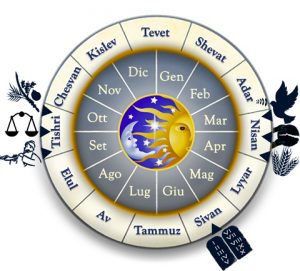 After giving to the teaching of His project for man’s redemption the place and means dimension through His earthly sanctuary, GOD added to it also the time dimension through His weekly Sabbath (Lev. 23:1-3), the seven annual feasts (Lev. 23:4-44), the Septennial and the Jubilee year (Lev. 25).
Especially, the chronology of the annual feasts serves as a divinely ordained calendar. In other words, each feast marks key moments in Israel’s history and represents a specific aspect of GOD’s covenant with His people. And it reveals GOD’s plan for humanity through the progression of the feasts throughout the year.
Concluding, with His appointed times, GOD uses symbolic acts and celebrations that prefigure the redemptive work of His Son, the Messiah. And, all this and more it is revealed through typology, allowing the Scripture to interpret itself.
[i] For further study see website, http://www.theopedia.com/biblical-typology . The Typology of Scripture, (NY and London: Funk & Wagnalls, 1900), I, p. 106; R.T. France, Jesus and the Old Testament (Downers Grove, Ill.: Inter-Varsity Press, 1971), p. 40. Typos, Theological Dictionary of the New Testament. VIII, (Grand Rapids, MI: Eerdmans, 1972), pp. 246-259; Bernard Ramm, Protestant Biblical Interpretation, (Grand Rapids, MI: Baker, 1970), pp. 215-232; Biblical Typology Yesterday and Today, Calvin Theological Journal 5 (1970) pp. 133-162.
[ii] Also Jerusalem is a very dim “shadow” of the city of GOD, (see Heb. 12:22; Rev. 3:12; 2; 22). In fact, the traveling of Abraham toward the earthly promised land and its city, is a type, representing the walk of each individual and family toward GOD’s New Earth and New Jerusalem.
[iii] David H. Stern is a Messianic Jewish theologian. He is the author of the Complete Jewish Bible, a commentary to the New Testament, the Messianic Jewish Manifesto and Restoring the Jewishness of the Gospel, (Clarksville, MD: Jewish New Testament Publications, Inc., first ed. 1984). In the synthesis of this last work titled, Restoring the Jewishness of the Gospel, Section D, Stern mentions four types of Jewish interpretation of Scriptures: the P’shat, Remez, Drash or midrash. These same types are used by the author of this study. For David H. Stern’s publications contact by e-mail: lederer@messianicjewish.net or see website:www.messianicjewish.net.
[iv] Samuele Bacchiocchi, God’s Festivals in Scripture and History, Part II: The Fall Festivals, Biblical Perspectives, (Berrien Springs, MI: 1996), p. 176. Dr. Bacchiocchi is the first non-Catholic to graduate from the Pontifical Gregorian University in Rome. His works include: From Sabbath to Sunday – Sabbath under Crossfire- Immortality or Resurrection? – The Advent Hope for Human Hopelessness – Wine in the Bible, Popular Beliefs – Are they biblical? More information to purchase his publications can be found at: Sbacchiocchi@biblicalperspectives.com; or http://www.biblicalperspectives.com.
[v] Various authors of the Seventh-day Adventist Church, Il Santuario – Il piano di Dio per la Nostra Salvezza, see chapter of Robert S. Folkenberg, “La via degli Altari”, (Falciani, Impruneta, FI: Edizioni ADV, 1996), pp. 18,19.
[vi] For a deeper study on the sanctuary typology see, Wallace B. Nicholson, The Hebrew Sanctuary: a Study in Typology, (Grand Rapids: Baker Book House, 1951. 232.3 n528; Merwin R. Thurber, Symbols of Salvation: How Men are Saved, as Revealed in the Ancient Sanctuary, (Washington D:C:: Review and Herald, 1961, BT 262 .T48; Alfred Felix Vaucher, Le sanctuaire, Collonges-sous-Saleve: Fides, 1970) BT 265 .V37 Heritage; Ellen G. White, Patriarch and Prophets, (Mountain View, CA: Pacific Press, 1958), Chapter 30 “the Tabernacle and Its Services, Chapter 52 – “The annual Feasts”; Christ in the Sanctuary, (Mountain View, CA: Pacific Press, 1969), The Great Controversy between Christ and Satan, (Mountain View, CA: Pacific Press 1950), 488.
Chapter:
[ appointed times ]
The Sabbatical Year
The Feast of Tabernacles lasts seven days. It is also the last and seventh holy appointment of GOD, requiring the third and final pilgrimage of His people to Jerusalem. In addition, every seven years it inaugurates the Sabbatical year, the septennial of rest for the earth. With these attributes, it ultimately points to the Millenium of preparation for GOD’s eternal Kingdom.
Nature of GOD’s Feasts
For a better understanding of the message of GOD’s feasts it is necessary to consider closely their nature once again. As it has been seen, the dates of GOD’s annual appointments are: typical, events and memorial dates.
«1. TYPICAL DATES: these dates are kept in anticipation of divine victories which are planned to occur in a future year, but on the same day of the same month». Only the dates of the Feasts occurring in the seventh month, Trumpets, Atonement and Tabernacles are still only typical dates. In fact, Jesus has not yet fulfilled fully the events they predict, once for all. The warnings of the trumpets have been partial until now. The final atonement of sins, and the final cleansing of the heavenly sanctuary will occur soon. The Feast of the Tabernacles was partially accomplished when Jesus came to live with humanity the first time, because He left and He has not yet come back to live with us physically, visibly and tangibly forever.
«2. EVENT DATES: These are the actual dates on which the Almighty will perform His mightiest deeds in the Plan of Salvation. When these “once in eternity” arrive, they will be highlighted by signs in the sun, moon and stars». Jesus’ Passover, the Week of Unleavened Bread, the Feast of First Fruits, and of Pentecost that followed, were characterized by signs in God’s creation: earthquake, darkness, sounds from heaven and mighty wind (Mat. 27:54; 28:2; Acts 2:2). They are dates of events fulfilled once forever, whose final blessings will be received fully in the seventh and last month of our history.
«3. MEMORIAL DATES: these are dates which will be celebrated throughout eternity by the redeemed as memorials and anniversaries. On these dates, throughout time, we will look back with rejoicing as we remember the great deeds Yahweh and His Son Yeshua performed to secure our salvation».[iii] These will be perennial commemorations (Zec. 14:16).
The last Septennial of our history
 Surely, the Week of Tabernacles points to the last septennial of our history. The reason is that the periods of time referring to the end of Daniel, chapter 8 and 12, are intervals connecting to the last three feasts and to Jesus’ return (Dan. 8:17; 12:9).
«You will see from the examples given below that these time spans begin and end on divinely appointed dates in the sacred calendar, on the Almighty’s annual Sabbaths, His Feast and Fast days…». Here are some examples:
«The 2300 day prophecy of Daniel 8
In certain periods there are exactly 2300 days between the Feasts of Pentecost in one year and the Feast of Trumpets about seven years later. The first and the last days are both included in the count.» 2300 is six years and 30 days.
- Example 1: between May 22, 1988 and September 7, 1994
- Example 2: between June 1, 1998 and September 16, 2004
- Example 3: between May 22, 1999 and September 6, 2005.
«The 1260 day (3 ½ years or 42 months) of Daniel chapters 7 & 12, and Revelation 13
In certain periods there are exactly 1260 days between the Last Day of Unleavened Bread in one Year and the Day of Atonement in 3 ½ years later. The first and the last days are both included in the count».
- Example 4: between March 30, 1997 and September 9, 2000
- Example 5: between April 18, 1998 and September 28, 2001
- Example 6: between April 4, 2002 and September 14, 2005.
«The 1290-day prophecy of Daniel 12
In certain periods there are exactly 1290 days between New Year’s Day –Feast of Trumpets – in the sacred calendar and the Last Great Day of Tabernacles– the Eighth Day – just over 3 ½ years later. The first day is not included in the count».
- Example 7: between March 25, 1993 and October 5, 1996
- Example 8: between March 14, 1994 and September 24,1997
- Example 9: between March 21, 1996 and October 2, 1999.
«The 1335 day prophecy of Daniel 12
In certain periods there are exactly 1335 days between the Feast of Trumpets in one year and the Feast of Pentecost several years later. The first and the last days are both included in the count».
- Example 10: between September 17, 1993 and May 13, 1997
- Example 11: between September 26, 1995 and May 22, 1999
- Example 12: between September 22, 1998 and May 18, 2002.[iv]
The LORD did not fix these time spans between a feast and another by coincidence. The final two difficult periods, the 1290 and 1335 days of Daniel 12:12, will poccur in the last septennial of our history.
Interpretation of the feasts’ prophetic message
It is relevant to know that any interpretation of prophecy is an hypothesis until it is proved correct by the exact fulfilling of the predicted event. Therefore only in the future, the enigma of the last 1290 and 1335 days of Daniel 12:11-12, will be finally resolved.
 However, the prophetic message of the last three annual feasts surely concerns the end of time. In fact, Michael said, «Many shall be purified, made white, and refined, but the wicked shall do wickedly, and none of the wicked shall understand, but the wise shall understand. And from the time that the daily sacrifice is taken away, and the abomination of desolation is set up, there shall be one thousand two hundred and ninety days. Blessed is he who waits, and comes to the one thousand three hundred and thirty-five days!» (Dan. 12:10-12).
Probably, in the future, on the Last Day of Unleavened Bread (a day of sabbatical rest), Jesus’ activity of daily mediation, forgiveness, and purification on behalf of believers will cease. Then, Satan will take power through his human mediums and partners. And he will show his furious hate on Jesus’ last-days followers on earth. Nevertheless, his evil works will not last longer that 1290 and 1335 days. God is greater and more powerful than all enemies. And He will deliver gloriously His last-days saints at His appointed time. As He mightily saved His first chosen people from all their Egyptians enemies, at the time He predicted to Abraham (See Gen. 15:13-17).
The Ultimate Gathering
 As already stated, «The Feast of Tabernacles … not only pointed back to the wilderness sojourn, but as the feast of harvest, it celebrated the ingathering of the fruits of the earth. And it pointed forward to the great day of final ingathering when the Lord of the harvest shall send forth His reapers to gather the tares together in bundles for the fire, and to gather wheat into His garner».[i]
«What a blessed thought to know that the day is hastening that even now reapers are getting ready to gather the harvest of souls. Soon the Master will descend with all the holy angels, and gather His elect from the four winds, from one end of heaven even to the other. Then with Abraham, Isaac, and Jacob, with all the true and faithful servants of God we shall observe the great Feast of Tabernacles. Oh what a blessed rejoicing that will be»![ii]
Indeed, it is extremely comforting to know that «it shall come to pass that everyone who is left of all the nations which came against Jerusalem shall go up from year to year to worship the King, the Lord of hosts, and to keep the Feast of Tabernacles» (Zec. 14:16).
The celebration in the New Jerusalem
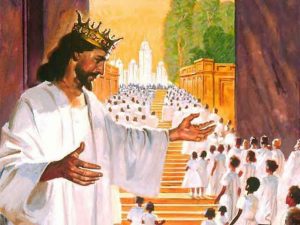 Undoubtedly, the Feast of Tabernacles foretells about the glorious feast the saints will enjoy in the New Jerusalem. John had the privilege to have a foretaste of this celebration. As it happened in the ancient Feast of Tabernacles, he saw «a great multitude which no one could number, of all nations, tribes, peoples, and tongues, standing before the throne and before the Lamb, clothed with white robes, with palm branches in their hands and crying out with a lord voice, saying, “Salvation belongs to our God who sits on the throne, and to the Lamb!”» (Rev. 7:9-10).
The song they are singing reminds a song chanted on the Feast of Tabernacles Psalm 118). Behold, «The voice of rejoicing and salvation is in the tents of the righteous; the right hand of the LORD does valiantly, the right hand of the LORD is exalted… Open to me the gates of righteousness; I will go through them, and I will praise the LORD. This is the gate of the LORD, through which the righteous shall enter… This was the LORD’s doing; it is marvelous in our eyes. This is the day the LORD has made; I will rejoice and be glad in it… You are my God, I will exalt You» (Ps. 118:15, 20-29).
The Sabbath Year of rest for the earth

Beside the year of Jubilee, the LORD set a year of rest and liberty, every seven years. It is the Septennial, the Sabbath Year of rest for the Land. The Hebrew word for “Septennial” is shmita, (Hebrew: שמיטה) which means “release”. It refers to the seventh year of the seven-year agricultural cycle mandated by GOD. Its other names are: Sabbatical Year, “Sabbath of the Land” and shǝvi’it (Hebrew: שביעית), literally, “seventh”. The laws of shmita also include: releasing all debts, ceasing cultivation of the land, and giving up ownership of anything that grows in the fields.
In His legislation GOD established that «the land shall keep a Sabbath to the LORD. Six years you shall sow your field, and six years you shall prune your vineyard, and gather its fruit; but the seventh year there shall be a Sabbath of solemn rest for the land, a Sabbath to the LORD» (Lev. 25:2-4).
GOD made a promise concerning the Sabbatical year corresponding with the 49th followed by the Jubilee Year, the 50th year. He declared, «I will command My blessing on you in the sixth year, and it will bring forth produce enough for three years» (Lev. 25:21). He who has always kept His promises, will keep even this one. He will give rest to His earth. And He will bless abundantly His people in the sixth year of the last «seven Sabbaths of years» (Lev. 25:8).
The Sabbatical year of liberty
 The Septennial is a year of celebration, freedom, grace, joy and satisfaction in the LORD of the Covenant. It is interesting to notice that «Jewish tradition interpreted 2 Chron. 36:21 to mean that the 70 years’ captivity was intended to make up for not observing sabbatical years».[v]
Every seventh year people were not to work the fields (Ex. 23:10-11; Lev. 25:4,5). The land would produce abundant spontaneous fruits and crops for God’s people (Isa. 37:30; Lev. 25:18,19). There would be food even for the foreigners who joined them, and all their animals (Ex. 23:10-11; Lev. 25:6-7). The harvest of the sixth year would be overabundant (Lev. 25:20-22). And the poor would be released of all their debts (Deut. 15:1-4).
The Millennial Kingdom
The Feast of Tabernacles points also beyond this human history. In fact, it prefigures the millennial government of Jesus Christ in the place He prepared in heaven (John 14:2,3). There, all the redeemed «shall be priests of God and of Christ, and shall reign with Him a thousand years» (Rev. 20:6; see also Isa. 66:21, John 14:2,3).
During the week of the Feast of Tabernacles, every Septennial year, people read carefully the book of the law in preparation for the new year (Deut. 31:26).
In fact, the Lord prescribed, “At the end of every seven years, at the appointed time in the year of release, at the Feast of Tabernacles, when all Israel comes to appear before the Lord your God in the place which He chooses, you shall read this law before all Israel in their hearing. Gather the people together, men and women and little ones, and the stranger who is within your gates, that they may hear and that they may learn to fear the Lord your God and carefully observe all the words of this law, and that their children, who have not known it, may hear and learn to fear the LORD your God as long as you live» (Deut. 31:10-13).Life in the Millennial Kingdom
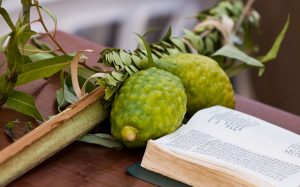 Soon the final Feast of Tabernacles will be fully real. And our heavenly Father and Jesus will inaugurate their New Kingdom with redeemed humanity. During the following millennium, the redeemed will enjoy a new life with Christ. And, among other things, they will study the Law that governs GOD’s universe. So that, when the millennium is over, they will administer His New Earth in the proper manner.
The LORD commanded also to the king of Israel to write for himself a copy of the book of the Law. And he ordered to «read it all the days of his life, that he may learn to fear the LORD his God and be careful to observe all the words of this law and these statutes» (Deut. 17: 19).
King David and Solomon prospered and their people, too, because they delighted in the study of GOD’s Law. Jesus Himself, the «King of kings and Lord of lords» studied it deeply when He lived among humanity (Rev. 19:16). And He knew it so well that at the age of twelve amazed the spiritual leaders of His time (Luke 2:46-47). Furthermore, He considered all GOD’s Law binding. Therefore, He made all efforts to obey even its least statute. It was because of GOD’s instructions that He clearly distinguished good from evil, right from wrong, and never sinned. He pleased our heavenly Father in all things and fulfilling His mission (Mat. 3:17; see Isa. 42:1-4).
Study and teach GOD’s Law
 For the Feast of Tabernacles the LORD still commands all political and religious leaders to study and teach His Law. He orders, «Gather the people together, men and women and little ones, and the stranger who is within your gates, that they may hear and that they may learn to fear the LORD and carefully observe all the words of this law, and that their children, who have not known it, may hear and learn to fear the LORD your God as long as you live» (Deut. 31:12).
Regrettably, most leaders have not studied GOD’s Law to put it into practice. Consequently, all the nations that they led, neglected and transgressed, in a way or another, GOD’s commands. Others picked from GOD’s Law what it seemed fit to their human and limited understanding. Then, they influenced people to believe that GOD’s Law was no longer necessary. Therefore, they promulgated their own legislations, often contrary to GOD’s statutes.
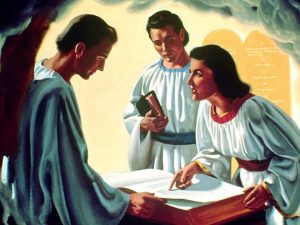 Let us therefore return to believe in GOD’s Law and follow Christ’s example alone in all things. Let us put our trust in the our eternal good and just Father and keep His commands, as Jesus did. So, that since now, «the righteous requirement of the law might be fulfilled in us who do not walk according to the flesh but according to the Spirit» (Rom. 8:4).
Together with Jesus, the redeemed will also evaluate the angels that rebelled against GOD. At this judgment’s revision, in fact, refers Paul when he states: «Do you not know that the saints will judge the world? … Do you not know that we will judge angels?» (1 Cor. 6:2,3).
Events happening after the Millennial Kingdom
The extermination of the wicked
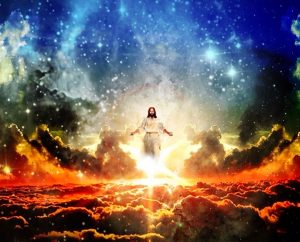 The shekinah glory of Jesus and His voice will have on the wicked the effect of an atomic bomb, of a «consuming fire» (Ex. 24:17; see Isa. 30:27; Heb. 10:27). Scripture states clearly that the «the brightness of His coming» will consume all the wicked (2 Thes. 2:12, 8-12). And they will «not come alive again until the thousand years were finished» (Rev. 20:5).
As on the Atonement Day, people who did not repent perished, «cut off» from GOD’s people (Lev. 23:29). So, all the wicked who «did not believe the truth but had pleasure in unrighteousness», at the end of the Millenium, will be subject to the second death, annihilation.
The destiny of Satan during the Millenium
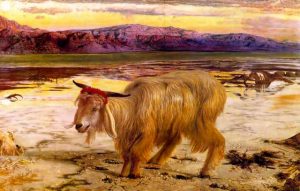 To Satan, on the last Atonement Day, will happen what the ritual of Azazel prefigured. In fact, on this holy Sabbath day, the high priest completed first the purification of GOD’s people and His sanctuary with the blood of the goat chosen by the LORD. Then, all sins were removed and placed «on the head of the live goat» Azazel, representing Satan. And finally, the unclean animal was sent to perish «into the wilderness», in the dwelling of demons (Lev. 16:19-22).
Similarly, Christ, at His return, will eliminate the power of sin by condemning Satan before the entire universe. After a powerful angel of God, will make him powerless. And finally he will confine him «into the bottomless pit, and shut it up, and set a seal on him, so that he should not deceive the nations no more till the thousand years were finished. But after these things he must be released for a little while» (Rev. 20: 1-3).
Notice how good, righteous and patient is our heavenly Father, even in treating His angelic rebellious creatures (Heb. 2:7). He will give a thousand years extra to meditate on the results of their transgression, and to repent.
The second resurrection of the wicked
As surprising as it may seem to some Christians, Jesus declares that there will be a second resurrection. It will concern only the wicked people. Informing His followers, He said: «Do not marvel at this, for the hour is coming in which all who are in the graves will hear His voice and come forth – those who have done good, to the resurrection of life, and those who have done evil, to the resurrection of condemnation» (Rev. 5:25-29). The second resurrection of the wicked people, that one of condemnation, will occur at the end of the thousand years (Rev. 20:5).
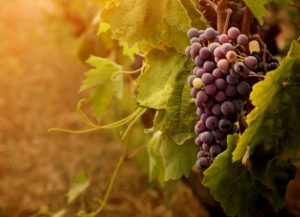
In Scripture the “treading of the wine-press” is emblematic of this ultimate divine judgement of condemnation. In fact, Revelation 14:19, describes the last gathering of the wicked this way, «The angel thrust his sickle into the earth and gathered the vine of the earth, and threw it into the great winepress of the wrath of God» (see also Isa. 63:2; Lam. 1:15). It is at this time that the rebellious unrepentant will know the final verdict. Which will predestine them to the second death, meaning, to their elimination from GOD’s universe (Rev. 20:6, 11-14).
Armageddon the greatest battle of all
Christ, in His testimony, adds that «when the thousand years have expired, Satan will be released from his prison and will go out to deceive the nations which are in the four corners of the earth, God and Magog, to gather them together to battle» (Rev. 20:7,8). Gog and Magog represent the nations formed by the unrepentant and rebellious humanity resurrected after the thousand years. Satan and three other demoniac spirits will organize these nations of wicked people for «the battle of that great day of God Almighty» (Rev 16:14).
They will gather them together «to the place called in Hebrew, Armageddon» (Rev. 16:16). This means around the heavenly Jerusalem, the Tabernacle of GOD, that after the thousand years will descend on earth with Jesus and the redeemed (Rev. 21:2, 10).
Armageddon is the crucial battle that the wicked people with the malefic angels will fight against Christ and His saints. At the end of it all the wicked angels and wicked humans will exist o. John saw their annihilation under the seventh bowl which describes God’s wrath (Rev. 16:17). So, He reported that the evil nations, together with the satanic army, «went up on the breath of the earth and surrounded the camp of the saints and the beloved city. And fire came down from God out of heaven and devoured them. The devil, who deceived them was cast into the lake of fire and brimstone» (Rev. 20:9-10; 21:8). This is the complete and definitive «destruction» of Satan, the diabolic devastator, his malefic angels, and his wicked human followers. In other words, it is the extinction of all those who ravaged GOD’s humanity and desolated His earth (Dan. 9:27).
 Until there is time, believe in GOD, study His Law, and faithfully put it into practice. Because «Blessed are those who keep His testimonies, who seek Him with the whole heart» (Ps. 119:2). Indeed, «Blessed are those who keep justice, and he who does righteousness at all times» (Ps. 106:3).
Believe also in GOD’s Son, the Savior, in His testimony, and lovingly follow His example. Avoid provoking His anger so that you may not perish. «Blessed are all those who put their trust in Him» (Ps. 2:12).
[i] Ellen G.White, Patriarchs and Prophets, (Mountain View: Pacific Press Pub. Asso.,
1958), p. 541,542.
[ii] F.C. Gilbert, p. 276.
[iii] Stewarton Bible School, The Sacred Calendar of the God of Israel, p. 63.
[iv] Ibid., p. 60-62.
[v] Holman, Illustrated Bible Dictionary, p. 573.