- HOME
- INTRODUCTION
- FEASTS OF GOD
- 1. PASSOVER- Leviticus 23:5
- 2. FEAST OF UNLEAVENED BREAD - Leviticus 23:6-8
- 3. FEAST OF FIRSTFRUITS - Leviticus 23:9-11,14,15
- 4. FEAST OF WEEKS OR PENTECOST - Leviticus 23: 15-16
- 5. FEAST OF TRUMPETS - Leviticus 23:23,25
- 6. ATONEMENT DAY - Leviticus 23: 32,31
- 7. FEAST OF TABERNACLES OR BOOTHS - 23:34-36
- THE WORSHIP ACCEPTABLE TO GOD
- Conclusion
- Italiano
- Francais
FEASTS OF GOD
The project solving all human problems
Chapter:
[ Christ ]
WORSHIP GOD IN SPIRIT AND TRUTH
«True worshippers will worship the Father in spirit and truth, for the Father is seeking such to worship Him.
God is Spirit, and those who worship Him must worship in spirit and truth»
(John 4:23,24).
 The Holy Bible provides all the fundamental standards for the worship acceptable to GOD. Yet, in our society today, many believers worship GOD following the practices of religious leaders that do not preach and live all the truth. Because of this, some of them think that they can please GOD, through the mediation of persons dead or alive. Others pray, attend spiritual meetings and worship GOD very sporadicly.
There are also people who suppose that once baptized, forgiven, and sealed for salvation through baptism, they remain always saved. But that’s a lie, a deception. In fact, «the LORD said unto Moses, “Whosoever has sinned against me, him will I blot out of my book“» Ex. 32:33). This implies that there is no salvation for any worshipper of GOD who keeps consciously transgressing His commandments.
GOD is good just and holy
Our Father who is in Heaven is perfect, good, just and holy. Yet, many believers think that He is so good that, finally, He will save all people, in spite of what they believe, say, and do. For them worshipping GOD means singing a few loud songs and praying when they feel the need of help. Others think that giving offerings and tithes to their churches and doing some good, is all that GOD requires.
 Yet, Jesus Himself encourages to resist the temptation to follow human traditions contrary to GOD’s commandments. He warns, «He that overcomes, the same shall be clothed in white raiment; and I will not blot out his name out of the book of life, but I will confess his name before my Father, and before his angels» (Rev. 3:5). Therefore, we better make all efforts to walk with GOD, and not with transgressors of His commandments.
Worship GOD in spirit and truth
 Even in this generation there are believers who acknowledge that the Sabbath of GOD’s Law is not Sunday (Day of the Sun). But they fear to lose their jobs or to become victim of persecution if they keep the LORD’s Sabbaths. Consequently, they have resolved to worship GOD on Sunday, and to consider His Sabbaths and seven annual feasts obsolete. Nevertheless, nowhere it is written that Jesus Christ, will ignore their refusal to put into practice GOD’s commandments as prescribed. Instead, He warns that «whoever loves and practice a lie» will be left out of the New Kingdom of GOD (Rev. 22:15,14; see Ps. 5:6; Pr. 6:19; 19:5).
We have to clean up our worship from all lies of human invention, if we truly want to please GOD. «God is Spirit, and those who worship Him must worship in spirit and truth» (John 4:23,24). This is the worship acceptable to GOD. To reach excellence in our relationship with the Almighty, we need to obey His commandments. In addition, we are called to respect the Sabbaths and feasts of the LORD as prescribed in Scripture (Lev. 23). And we urgently need to abandon all unbiblical practices, all oversleeping, all overeating and all over-indulging.
 It is important that we relate to GOD like to a perfect, just, good Father. Now is the time to know Him, love Him and learn to please Him. Tomorrow it could be too late. From now, let us also respect all His appointed times, His Sabbaths, the weekly and the yearly ones. So that we may bring glory, honor and joy to our Him and to Christ, who is fulfilling their message. These are the holy times to meet with Him and worship Him in spirit, truth and love.
Therefore, commit yourself to sanctify all His appointed Sabbaths. Praise GOD for who He is, He was and He will be. And never cease to thank Him for what He has done, is doing, and will do. Love, Him, trust Him and obey Him. Since this is the way to offer Him, and His beloved Son, an acceptable worship.
Chapter:
[ Christ ]
THE ANNUAL FEASTS ARE THE LORD’S FEASTS
 The annual Feasts of Leviticus, chapter 23, are the LORD’s Feasts. Moses, reported, «These are the feasts of the LORD, holy convocations which you shall proclaim at their appointed times» (Lev. 23:2). Furthermore, «These are My feasts», declared the LORD Himself when He commanded to keep His annual appointed times (Lev. 23:1).
Why therefore some Christians say, «they are the Jewish festivals, the Jewish Sabbaths»? The LORD who gave His holy appointments at Sinai is not the same GOD of Israelites and Christians alike? Yes, indeed!
Regrettably, believers, in time, lost knowledge of GOD’s Word and mistakenly declared many of His laws and statutes obsolete. Yet, the seven annual feasts, and seven Sabbath-days are, and will always be, «the feasts of the LORD» (Lev. 23:1)! Therefore, His true people, in all nations and generations, will keep them holy, and celebrate them.
The Feasts of the Eternal Covenant
 Many modern theologians attest that Scripture testifies of various Covenants abrogated by Jesus’ death. But that’s not the truth. All Scripture, instead, testifies of one GOD, one Savior, and one «eternal covenant» (Is. 24:5; see also 54:8; 55:3; Jer. 31:3; 32:40; 50:5). The first was with Adam and Eve (Gn. 3:15). And this was ultimately renewed, fulfilled, and validated, «once and for all», by the GOD of heaven and earth, through Jesus’ sacrifice and blood.
Furthermore, if the Covenant established at Sinai regards only the Jews because GOD established it first with Israel, by logical consequence, even salvation through Jesus Christ, who was a Jew, regards only the Jews!
If the annual feasts are obsolete for Christians, and they are only for the Jewish people, then also the Sabbath, the ten commandments given first to Israel, are no binding for Christians. Even the regulations concerning tithe, pure and impure animals are no longer binding for Christians! Yet, various Christian churches do apply the latter laws to their congregations, today. Indeed, this is a deceptive reasoning completely incoherent with the Word of GOD! Therefore, believe that the annual Feasts are the LORD’s feasts, the seven holy convocations to be kept by Israelite and Gentile believers alike.
GOD’s people are Israelites and Gentiles
 Even in our time, Christian believers give evidence to hold still the same attitude of the Romans and the Greeks, to whom Paul wrote about two thousand years ago. Because of envy and pride, they still spread around the falsity that GOD has rejected Israel. The apostle Paul denounces this prejudicial attitude, declaring, «I say then, has God cast away His people? Certainly not! … God has not cast away His people whom He foreknew» (Rm. 11:1,2).
Paul further explained that all Israelite and Gentile believers are branches of the spiritual genealogical tree of redeemed Israel, GOD’s true people. This means that for our heavenly Father there is one and unique people, united in Christ Jesus. Man has created ethnic, theological, religious and social barriers, and still holds them up to cover mistakes and sins of the past. Yet, the Father sees true believers in Him, His Son, and His Written Word, as one people, His eternal people.
Paul exhorted to abandon the errors of the past, for GOD’s Law is equal for all people. He states that some Israelites were broken off from His nation because of their unbelief and transgressions. Therefore, He adds, «do not be haughty, but fear. For if God did not spare the natural branches, He may not spare you either. Therefore consider the goodness and the severity of God: on those who fell, severity; but toward you, goodness, if you continue in His goodness. Otherwise you also will be cut off» (Rm. 11:20-22). Let us seriously listen to this warning. And, do not despise GOD’s first chosen people, but retain a privilege and a grace to be partakers of the same Covenant’s blessings.
GOD’s Feasts celebrated in the New Kingdom
 Moreover, believers stating that the annual feasts are exclusively Jewish, ignore that the prophets of GOD declared that some of them will be celebrated also in the New Earth.
Zaccaria testified, «And it shall come to pass that everyone who is left of all the nations which came against Jerusalem shall go up from year to year to worship the King, the Lord of hosts, and to keep the Feast of Tabernacles» (Zec. 14:16).
Isiah also wrote, «”And it shall come to pass that from one New Moon to another, and from one Sabbath to another, all flesh shall come to worship before Me,” says the Lord» (Is. 66:23).
Then, how do we interpret their testimony? GOD established the Feast of the Tabernacles, the New Moon, and the Sabbath for the Israelites. Then He made them obsolete for the Christians, and finally He will re-establish them in the future life for the redeemed? It is not so. The annual Feasts are the LORD’s feasts, and we Israelite and Gentile believers must observe them as such.
Jesus died to forgive and take away the transgression of GOD’s commandments. He loves us. Even if unknowingly we have disobeyed GOD’s Law, misinterpreted predictions, and Jesus’ Testimony, He will forgive us. We have just to admit our faults and return to be fully loyal to GOD. For this is the manner that will enable our soul to stand before GOD face to face. And ultimately, proclaim, «This is our God, the one in whom we trusted, the one who saved us. This is the Lord for whom we waited. Let us rejoice, and be glad!» (Isaiah 25:9).
Rejoice with the LORD
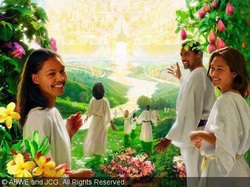 In conclusion, let the truth make us free to trust, love and obey. Let us follow Christ’s example and observe even the least of GOD’s commandment including those concerning His annual feasts and Sabbaths. Because this will give us the privilege to be «called great in the kingdom of heaven» , and to rejoice with GOD forever (Mt. 5:19).
 Furthermore, GOD commanded to the fathers to teach their children what it means to love Him, trust Him, and obey Him. So that He may be their GOD, and they may know how to worship Him in spirit and truth (see Dt. 6:5-8).
 At this point, it is important to highlight that the rituals that man performs do not save. As the sacrifices and offerings at the Temple of GOD by themselves did not redeem the repentant Israelites, so our acts of obedience, do not save us. Truly, who saves people from the slavery of sin is a Person, GOD Himself. And He has chosen to accomplish this wonder through His beloved Son, Jesus Christ.
 On the other side, He will not leave unpunished those who profane His Name by worshipping Him according to human traditions contrary to His expressed instructions, (see Lev. 18:21, 20:3; 21:6; 22:2; Pr. 30:9; Is. 48:11; Ez. 22:26; 39:7; Mic. 4:11; Mal. 1:12:2:10). Indeed, teaching ways different from the ones proclaimed in His Law, do not please Him (see Lev. 10: 8-11; 19:8; 22:15; Num. 18:32; Ps. 74:7; Ez. 7:22; Soph. 3:4; Ac. 21:28; 24:6; Heb. 10:29; 12:16; Rev. 2:14,15,24). Profaning His earth with abominations contrary to His will (see Is. 24:5; Jer. 16:8), and transgressing His Sabbaths, bring only misery and death (see Ex. 31:4; 22:9; Neh. 13:17; Ez. 7:22; 20:13,16; 22:8,26; 23:38; Is. 56:2; Hos. 2:10-15).
 Indeed, all GOD’s annual Sabbaths, including the Atonement Day, have been stipulated as perennial laws. And, the LORD also today exhorts us to remember them and keep them holy, for our wellbeing and blessing (Ex. 31:13; Lev. 19:3,30; 26:2; 23:38; 26:34; Is. 1:13; Lam. 2:6). For, when you trust and obey,«Your light shall break forth like the morning, your healing shall spring forth speedily, and your righteousness will go before you; then you shall call, and the LORD will answer; you shall cry, and He will say, “Here I am”» (Is. 58:8,9). Surely these are GOD’s promises for every believer who celebrates the Sabbaths of the LORD in the manner that He prescribed in His Law.
 Also the Atonement Day, which is a Sabbath of fasting, personal and corporative introspection and repentance, should be lived with thanksgiving and joy in our hearts because our Redeemer shows His infinite compassion by completely cleansing and restoring us.
 Sabbath-keeping means remembering, reflecting, and rejoicing about the Creation of the world (see Exodus 20:11), the redemption of repentant people from sin (see Dt. 5:15; Lk. 4:16-19), the promise of Christ’s Second Coming, and the creation of the New Earth (see Is. 66:22,23). Even GOD enjoys commemorating and reflecting on important happenings. For example, He paused to reflect on His accomplishments at creation (see Gn. 1:4,9,12,18,21,25,31; 2:2-3; Ex. 20:11).
 GOD concerning the Sabbath specifies that no work is to be done by «you, nor your son, nor your daughter, nor your male servant, nor your female servant, nor your cattle, nor the stranger who is within your gates» (Ex. 20:10). Consequently, this means that employers should not have their employees work. usinesses owned by Sabbath-keepers should be closed on the Sabbath days. We are to pause from our normal routines—shopping, errands, activities, sports, television – and spend the day, not oversleeping, but focusing on spiritual things, following the example of Jesus.
 Our Father who is in Heaven desires the redemption of every human being. Jesus Christ “came to save the lost” and if He finds one He is very happy (Mt. 18:11,13). We answer to the gift of His grace with joy, delight, glorifying His Name with songs, musical instruments, and thanksgiving prayers. Our Father will celebrate at the marriage supper of the Lamb with the redeemed (Rev 19:7-9). Therefore, all the Sabbath days «Give thanks to the LORD with the lyre, sing praises to him with the ten-stringed harp» (Ps. 33:2).
 Keeping the Sabbath days means trusting GOD to take care of what we leave undone during the hours of the Sabbath (see Ex. 16:14-30; 20:10; Ps. 5:11,12; Mt. 6:33). It , also, means learning to depend on GOD rather than on ourselves. In fact, Jesus trusted His Father no matter how much Satan tempted Him to do otherwise (see Lk. 4:1-13). And, He demonstrated this trusting attitude as He suffered for our salvation (see Mt. 26:39; Lk. 23:46).
 Jesus proclaims, «the Sabbath was made for man» (Mk. 2:27). And He, who is the «
Chapter:
[ Christ ]
SCRIPTURE INTERPRETS ITSELF
Scripture Interprets Itself Through Typology
For an exact and progressive understanding of the written revelation, the LORD communicated with man through tangible symbols, defined “types”. And, from these derives the term “typology”[i], the study of Scripture to understand the originals entities prefigured by the biblical types.
Remarkably the Scripture interprets itself through typology. Consequently, all that is needed is studying it, and watching attentively the events of human history, in particular of Israel. These, in fact, enable to discern when a biblical type and a prophetic event is truly and completely fulfilled in its antitype. And, only at that time, it will be once for all. Then, and only then, interpreters of Scripture receive evidence that their interpretation of a symbol, was correct.[iii]
In antiquity the writers of Scripture were very familiar with this divine method of communication. Consequently, they considered real things, real persons, and real events of the past, types of things to come.
Even today, using typology, this symbolic language can be understood without external references by comparing scripture with scripture.
Man’s Redemption in Types and Antitypes
I. The first sacrifice
 The LORD informed progressively about the means He retained necessary to execute the redemption of repented believers, using types.
Firstly, He disclosed the solution to Adam with the promise of a Messiah that would come only from a woman. His Anointed would defeat the “Serpent”, the “Dragon” by suffering and dying innocently to redeem many. Here, the serpent is a tangible type. In fact, it represents the “devil”, “Satan”, the rebellious angel that took possession of the “ancient serpent” to deceive the parents of humanity (Rev. 12:9).
To Adam and Eve, GOD also specified how the extraordinary Seed of the woman would defeat Satan (Gen. 3:15). In fact, after promising a Redeemer, the LORD presented in types the means through which He would fulfill His promise. And He did this by sacrificing an “innocent animal”, most probably a “lamb”. Then, the LORD, out of love, took the skin of the victim and made garments. And, with them, He covered the parents of humanity, left naked and ashamed of their new miserable sinful condition (Gen. 3:21).
Purposely with this first sacrificial death of an innocent victim, GOD taught to Adam that the Seed of Eve will one day die to make them live. And He also dramatically explained that without shedding of blood there is no remission of sin. Ultimately,this sacrifice prefigured the great sacrifice which, in the latter days, should be offered once for all. Thus, the first death in GOD’s Universe was the sacrifice of Christ in a figure.
II. The substitutionary sacrifice
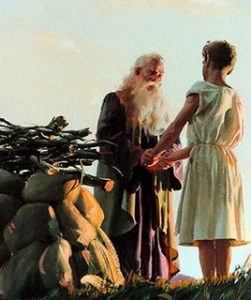 Secondly, the LORD asked Abraham to dramatize the same solution. Trusting in GOD’s promises, our spiritual patriarch offered Isaac, his only legitimate son, as a sacrifice. Yet, as Abraham raised his hands to kill Isaac, the Angel of the LORD stopped him. And, GOD substituted his son with an “innocent victim” He Himself had chosen and provided for the burnt offering (Gen. 22).
This substitutionary sacrifice was a prophetic reenactment. In it, Abraham played the role of our Father who is in Heaven. And, Isaac prefigured GOD’s only Son, sacrificed, once for all, at the fullness of time (John 3:16).
III. The perpetual sacrifice
Thirdly, to the teaching of man’s salvation, GOD added also the spatial dimension through another type, His sanctuary. And, with it He offered other types of the places and means He would use to redeem His believing people. Amazingly, in Scripture the sanctuary typology is used from Genesis to Revelation.
 After liberating Israel, the LORD commanded to build a sanctuary, similar to the one which is in Heaven (Ex. 3:12; 19:11). In obedience, «on the first day of the first month» of the sacred calendar, «the tabernacle was raised up». Then, «the glory of the LORD filled it». Afterwards, «The cloud of the LORD was above the tabernacle by day, fire was over it by night, in the sight of all the house of Israel, throughout all their journey» to the earthly promised land (Ex. 40:17, 35, 38).
In GOD’s sanctuary, the priest offered the perpetual sacrifice, called the “korban tamid” . It was a daily sacrifice of two lambs as burnt offering to maintain a constant relationship with GOD (Exodus 29:38-39). As a matter of fact, one lamb was offered in the morning, and one lamb in the afternoon, each day of the week. In the morning, no sacrifice was before the first lamb. In the afternoon, no sacrifice was after the last lamb. And, they both were holy types, prefiguring the continuous intercession of Christ for the perpetual purification and blessing of repented believers.
The High Priest of GOD
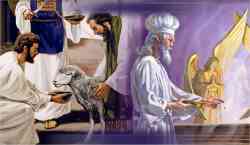 Astonishingly, the sanctuary was a «copy and shadow of the heavenly things» mentioned various times in the book of Revelation (Heb. 8:5).[ii] Indeed, each animal sacrificed on its burnt offering altar was a «shadow of the good things to come» (Heb. 10:1). And, ultimately, it prefigured Jesus Christ, the Savior, the «Lamb of God who takes away the sin of the world» (John 1:29). Who, also, is the «High Priest», the only Mediator between the Father and mankind (John 1:29; Rev. 5:5-6; Heb. 9:6,7, 25).
With the earthly sanctuary and the heavenly sanctuary, the LORD showed how He would accomplish the restoration of His faithful people. Concerning both, «it is what the structures represent, or teach about the great controversy between Christ and Satan, and about the plan of salvation, that matters. The dwelling places of the Deity propose to teach us spiritual truths».[iv]
Without question, what the LORD presents us with His sanctuaries is His good, just and unchangeable will toward fallen man (Ex. 25:22). In fact, He shows in this type the places and wonders through which, at His perfectly fixed dates, He started and will ultimately complete the wonders bringing forth the final rescue of repentant sinners, believing in Him and His Messiah.
Significance of GOD’s Temple
Undoubtedly all that is revealed with the mosaic tabernacle points to the glory of the Father and His saving way with men (Ps. 77:13,19). For this reason, the LORD urged Ezekiel to study it, and to proclaim its message. «Son of man, describe the temple to the house of Israel, that they may be ashamed of their iniquities, and let them measure the pattern. And if they are ashamed of all that they have done, make known to them the design of the temple and its arrangement… its entire design and all its ordinances, and perform them» (Ezek. 43:10,11).
In similar manner, the apostle John, acting the part of true Israel of the last days, was ordered to «rise and measure the temple of God, the altar, and those who worship there» (Rev. 11:1). Indeed, in the penetrating light of GOD’s Good News streaming from the Sanctuary and in its plan, today, the universal people of GOD can be deeply moved through their own sinfulness. And, if they repent, can still find grace, and hear the LORD, from His throne, pronounce the redeeming words, «I will accept you» (Ezek. 43:27, cf. 43:6-27).[vi]
Biblical types testify of Christ
Jesus Christ declared, «You search the Scriptures, for in them you think you have eternal life; and these are they which testify of Me» (John 5:39). Indeed in GOD’s Written Word, many types prefigure the Messiah and His ministry for the redemption of believers.
 It is written, «Your way, O God is in the sanctuary… You are the God who does wonders… You have with your arm redeemed Your people» (Psalm 77:1, 14, 15). Unquestionably, the sanctuary with its rituals presents clearly that it is on earth and through his Lamb, His «only and unique» Son, that our heavenly Father manages the project that will result in the redemption of His people (John 3:16-18). In reality, Jesus came on earth, mysteriously incarnated in a humble human being, to start it. And, He will return, as a glorious King, to complete it.
After His ascension, Jesus is directing the activities leading to man’s redemption from the Heavenly Sanctuary, His actual dwelling place. There, in His tabernacle, the Most Holy Place of GOD, He works on behalf of each repentant believer.[v]
GOD’s redemptive
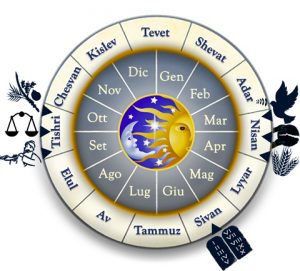 After giving to the teaching of His project for man’s redemption the place and means dimension through His earthly sanctuary, GOD added to it also the time dimension through His weekly Sabbath (Lev. 23:1-3), the seven annual feasts (Lev. 23:4-44), the Septennial and the Jubilee year (Lev. 25).
Especially, the chronology of the annual feasts serves as a divinely ordained calendar. In other words, each feast marks key moments in Israel’s history and represents a specific aspect of GOD’s covenant with His people. And it reveals GOD’s plan for humanity through the progression of the feasts throughout the year.
Concluding, with His appointed times, GOD uses symbolic acts and celebrations that prefigure the redemptive work of His Son, the Messiah. And, all this and more it is revealed through typology, allowing the Scripture to interpret itself.
[i] For further study see website, http://www.theopedia.com/biblical-typology . The Typology of Scripture, (NY and London: Funk & Wagnalls, 1900), I, p. 106; R.T. France, Jesus and the Old Testament (Downers Grove, Ill.: Inter-Varsity Press, 1971), p. 40. Typos, Theological Dictionary of the New Testament. VIII, (Grand Rapids, MI: Eerdmans, 1972), pp. 246-259; Bernard Ramm, Protestant Biblical Interpretation, (Grand Rapids, MI: Baker, 1970), pp. 215-232; Biblical Typology Yesterday and Today, Calvin Theological Journal 5 (1970) pp. 133-162.
[ii] Also Jerusalem is a very dim “shadow” of the city of GOD, (see Heb. 12:22; Rev. 3:12; 2; 22). In fact, the traveling of Abraham toward the earthly promised land and its city, is a type, representing the walk of each individual and family toward GOD’s New Earth and New Jerusalem.
[iii] David H. Stern is a Messianic Jewish theologian. He is the author of the Complete Jewish Bible, a commentary to the New Testament, the Messianic Jewish Manifesto and Restoring the Jewishness of the Gospel, (Clarksville, MD: Jewish New Testament Publications, Inc., first ed. 1984). In the synthesis of this last work titled, Restoring the Jewishness of the Gospel, Section D, Stern mentions four types of Jewish interpretation of Scriptures: the P’shat, Remez, Drash or midrash. These same types are used by the author of this study. For David H. Stern’s publications contact by e-mail: lederer@messianicjewish.net or see website:www.messianicjewish.net.
[iv] Samuele Bacchiocchi, God’s Festivals in Scripture and History, Part II: The Fall Festivals, Biblical Perspectives, (Berrien Springs, MI: 1996), p. 176. Dr. Bacchiocchi is the first non-Catholic to graduate from the Pontifical Gregorian University in Rome. His works include: From Sabbath to Sunday – Sabbath under Crossfire- Immortality or Resurrection? – The Advent Hope for Human Hopelessness – Wine in the Bible, Popular Beliefs – Are they biblical? More information to purchase his publications can be found at: Sbacchiocchi@biblicalperspectives.com; or http://www.biblicalperspectives.com.
[v] Various authors of the Seventh-day Adventist Church, Il Santuario – Il piano di Dio per la Nostra Salvezza, see chapter of Robert S. Folkenberg, “La via degli Altari”, (Falciani, Impruneta, FI: Edizioni ADV, 1996), pp. 18,19.
[vi] For a deeper study on the sanctuary typology see, Wallace B. Nicholson, The Hebrew Sanctuary: a Study in Typology, (Grand Rapids: Baker Book House, 1951. 232.3 n528; Merwin R. Thurber, Symbols of Salvation: How Men are Saved, as Revealed in the Ancient Sanctuary, (Washington D:C:: Review and Herald, 1961, BT 262 .T48; Alfred Felix Vaucher, Le sanctuaire, Collonges-sous-Saleve: Fides, 1970) BT 265 .V37 Heritage; Ellen G. White, Patriarch and Prophets, (Mountain View, CA: Pacific Press, 1958), Chapter 30 “the Tabernacle and Its Services, Chapter 52 – “The annual Feasts”; Christ in the Sanctuary, (Mountain View, CA: Pacific Press, 1969), The Great Controversy between Christ and Satan, (Mountain View, CA: Pacific Press 1950), 488.
Chapter:
[ Christ ]
THE ANNUAL FEASTS
«These are the feasts of the LORD, holy convocations, which you shall proclaim at their appointed times»
(Leviticus 23:4)
The annual feasts of the LORD are:
1. The Passover (Lev. 23:4-5 – Ex. 12:1-8; Num. 28:16; Deut. 16:1-2);
2. The Feast of Unleavened Bread (Lev. 23:6-8 – Ex. 23:14-15; Num. 28:16-25; Deut. 16:1-8, 16-17);
3. The Feast of the First Fruits (Lev. 23:9-14);
4. The Feast of Weeks or Pentecost (Lev. 23:15-22 – Ex. 23:16-19; Num. 28:26-31; Deut. 16:9-12, 16-17);
5. The Feast of Trumpets (Lev. 23:23-25 – Num. 29:1-6);
6. The Atonement Day, (Lev. 23:26-32; Lev. 16; Num. 29:7-11) and
7. The Feast of Tabernacles (Lev. 23:33-44; Ex. 23:16-17; Num. 29:12-39; Deut. 16:13-17).
GOD’s Appointed Times
The Hebrew language uses mainly two terms that refer to a feast: “mo’ed” which that translated means “an appointed time”, an “assembly”, a “solemn assembling”, a “holy anniversary”[1], and “hag” which means to “celebrate” and to “make a pilgrimage” (See Ex. 23:14-19; Deut.16:16-17). The “feasts” in ancient times were all «the appointed seasons of the LORD», (in Hebrew מוֹעֲדֵי יְהוָה – Mo’edi’ Yahweh), established on mount Sinai (Lev. 23:2,4). Among them there is the Day of Atonement, that is a feast and also a fast, the Sabbath of all Sabbaths.
Feasts’ Calendar
The seven annual feasts have their origins with the calendar established by the LORD. In fact on the fourth day of creation, «God said, “Let there be lights in the firmament of the heavens to divide the day from night; and let there be for signs and seasons, and for days and years» (Gen. 1:14). Indeed, if the LORD had not created this calendar in the beginning, humanity wouldn’t have known how to calculate time and the days GOD has planned to meet with believers.
According to the calendar of the LORD, the day begins at sunset and ends at sunset (Gen. 1; 1 Kin. 22:35-36; 2 Cr. 18:24; 2 Sam 3:3), the months start and end when the new moon can be seen, and the year begins at Israel’s spring, at the new moon nearest the true equinox,[3] in the month of Abib, or Nisan (Ex. 12:1,2; 13:4; 34:18), fourteen days before Passover.
This study focuses on the seven annual feasts and Sabbaths, although it will not neglect the other Sabbaths commanded by the LORD: the weekly, the Septennial, the sabbatical year, and the Jubilee, the fiftieth, which are years of special rest and deliverance for both man and earth (Lev. 25).
Feasts’ Observance
Three components distinguish the annual feasts: «1. Rejoicing, which mostly takes the form of ceremonial meals (with the exception of the Day of Atonement), and on the more important biblical festivals, the prohibition of work; 2. The liturgy – or in temple times, the special sacrifice and offering service; and 3. Particular ceremonials of the festival, such as eating the matzo on Passover…».[2]
None of the religious denominations having the origin of their faith found in the Jewish Scripture has observed the annual feasts regularly in the manner it was prescribed by the LORD and practiced and taught by Jesus. Israel abandoned them in the periods of apostasy and revived their observance in times of spiritual reform and faithfulness to GOD.
On the other side, Christianity and Islam have changed their names and dates losing memory of what their message is. Various denominations have even ceased to celebrate them altogether. The reasons they give for this are diverse. Some believe that the annual feasts of Leviticus 23 belong exclusively to the Jews. While others attest that the feasts have been abolished with the sacrifice of Jesus Christ. Others still affirm that feasts and sacrifices have been completely taken away at the destruction of the temple (70 A.D).
GOD’s Feasts are Mandatory Laws
Scripture states that all the feasts established by the LORD are mandatory laws to be kept “generation” after “generation”, in every place where those who profess to love the GOD of Abraham, Isaac and Israel, will live (Ex. 20:8-11; Lev. 23:14,21,31,41; Lev. 25:18). Therefore, for Israel, Christianity and all other believers, the feasts of the LORD remain a way to worship Him as Creator and Savior, a foretaste of GOD’s grace and of joyful communion with fellow men, in which everyone can rejoice and be glad.
Feasts’ Nature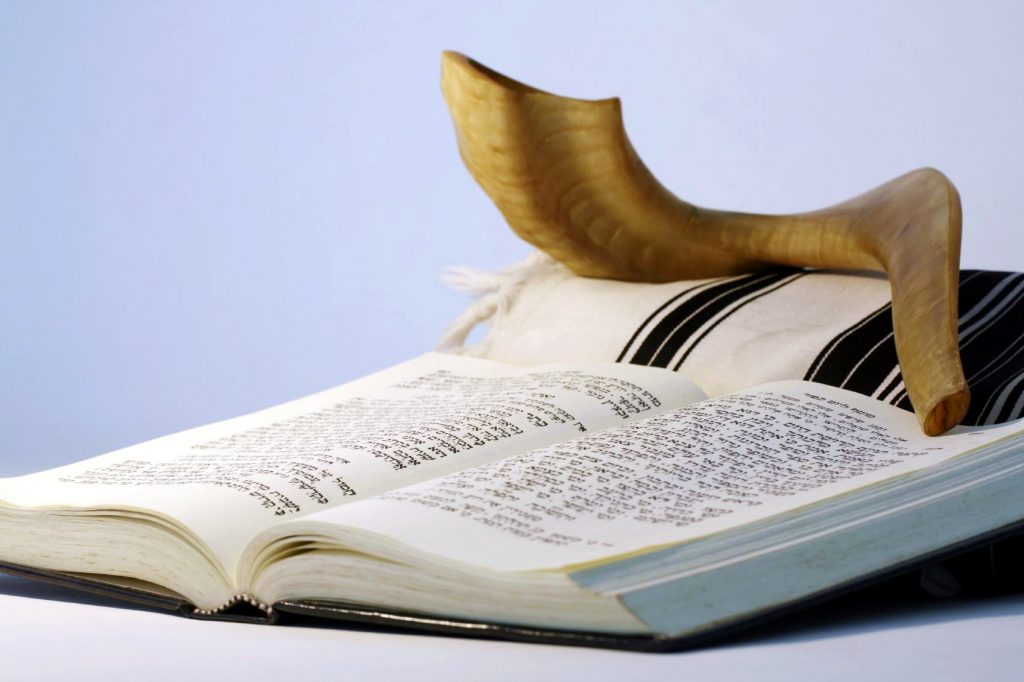
GOD’s annual feasts have a peculiar nature. They are typical, prophetic and commemorative. First, they are typical, real shadows, tangible models, because they «contain in typical language a record of God’s dealings with man in grace from the death of Christ to His millennial kingdom»[4]. Indeed, they are real appointments that He has set to be kept for meeting with Him on specific days. At the same time, the feasts are also types, meaning that their message points to the Messiah’s ministry. And, it presents the project that He is executing for the redemption of repented believers. More specifically, the feasts of the LORD indicate:
- The phase that Jesus Christ has already completed, once forever, at His first coming on earth (first three feasts).
- The activity of intercession He is accomplishing, as High Priest, in Heaven, on behalf of believers (fourth feast). While the Spirit, His Agent on earth, prepares, once forever, believers to receive the citizenship for His new kingdom.
- The ultimate works through which our Savior, in the future, will accomplish, once forever, the complete redemption of His people. And, finally, He will fulfill all other promises He has made (last three feasts).
Second, they are prophetic. meaning a real «foreshadowing of great events of the future part of which have since been fulfilled and part of which are yet to be».[5]
Third, when totally fulfilled in all their details, they are commemorative. They become delightful reminders of specific wonders accomplished by the LORD, once and for all, in the past.
Feasts’ Purpose
It is worthy of notice that the word «seasons», in Hebrew “mo-adim”, has the same meaning of “sacred seasons”, “feasts” and “appointments”. This means that the first reason for which our Creator has established His calendar with the lights of our solar system is for directing His worshippers to identify and respect His spiritual appointments on the days that He Himself had fixed to execute and then commemorate His mighty works in their behalf.
The time these days of celebration were ordained and their purpose are also important. The LORD gave these solemn days of worship and rejoicing to the people during the exodus. After He delivered them from the oppression of slavery, and while they traveling toward the promised land, He ordained His feasts, «…as divinely expressions of the moral obligation of His people, as memorial of God’s saving acts in the past, as sacrament of His sanctifying power in the present, and as types of His anticipated victory over sin in the forthcoming first and second advents of Jesus Christ».[6]
 Seven in the Feasts
The numbers used by the LORD in His annual feasts are also symbols. For example, seven communicated a sense of “fullness” or “completeness” (שבע “seven” is spelled with the same consonants as the word שבע “complete/full”). In fact, seven is the number that characterizes the weekly Sabbath.[7] This is the day of rest GOD Himself sanctified when He completed the creation of heaven and earth.
Seven is ever present also in the annual feasts, indicating the fullness of blessings the LORD confers on these days. Indeed, seven are GOD’s annual appointments, and seven are also their Sabbaths of rest.
Furthermore, in His sacred calendar, the LORD fixed Passover’s day on Nisan 14th. This date, twice seven, was predetermined at the creation of humanity by the Father to be the day in which He would sacrifice His only Son for our forgiveness. Having completed according to the plan, once for all, the primordial, original redemptive act on the wood of the cross, Jesus, in fact, pronounced «It is finished!» transforming the Passover in a commemorative spiritual anniversary of His first wonderful act for the redemption of those who believe in Him (John 19:30).
Seven days the LORD made also last the following feast, Unleavened Bread, representing the purification from sin that started to take place in the life of Jesus’ followers from Nisan 15th after His death up to today.
Seven weeks after Passover, the LORD fixed the Feast of Weeks, or Pentecost, which started bringing the powerful blessings of the Holy Spirit to complete the spiritual ripening of the human harvest of Jesus.
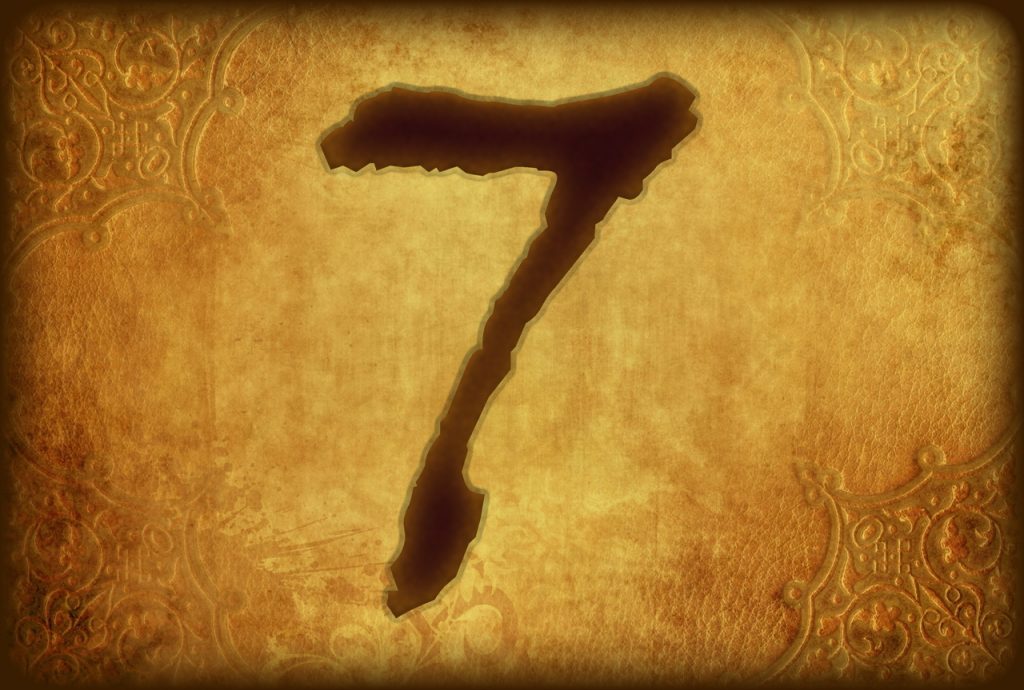
Then, in the seventh month of His sacred year, the LORD dated His last feasts: Trumpets, Expiation and Tabernacles. Through which, He informed concerning the last tasks that His Son would accomplish to bring at completion the project of redemption.
These activities include: universal warning about the judgment and universal invitation to repentance addressed to the last human generation, and then final absolution, definitive purification and transformation for all His loyal followers ever existed. At last, He ordained the seventh feast, Tabernacles. Even this lasting seven days and ending on the Eighth Day, which is the seventh annual Sabbath of absolute rest and rejoicing, the one depicting the great, unique and perennial day of our new existence with our heavenly Father and Jesus on the earth made new.
The Three Pilgrimage Feasts
It is important to notice that in the written revelation, seven in connection with eight takes up a never-ending value. Significantly, seven and eight are present together in the three pilgrimage feasts to Jerusalem, which is a type of the eternal city built by GOD Himself.
First, the feasts’ cycle opens with eight days of celebration. They are:  the day of Passover, followed by the seven days of the Unleavened Bread.
Second, it progresses with seven weeks of spiritual preparation (49 days). Of which the seventh week (day 42 to 49) are followed by the eighth day, that is the glorious Feast of Weeks (day 50).
Third, the feasts’ cycle ends with other eight days of celebration. They are: the seven days of Tabernacles, followed by the Eighth Day, the seventh annual Sabbath. Indeed, his last Sabbath day is a glorious type of the eternal rest believers will experience in the Jerusalem of GOD (see Lev. 23:39).
Not by chance, all the Sabbaths days established by the LORD for celebrating with Him His three mighty works of creation, redemption and re-creation, are eight: the weekly Sabbath plus the seven annual Sabbaths (Lev. 23). And all eight stipulated as perennial laws of His eternal Covenant with His believing, loyal worshippers (Lev. 23:3,14, 21,31,41).
Feasts’ Chronological Order
The feasts of the LORD have a perfect predetermined chronological order that cannot be broken. Notably, their cycle starts with three spring feasts (Passover, Unleavened Bread, First Fruits). Then it closes with three autumn feasts (Trumpets, Expiation, Tabernacles). In the interior of which there is the Feast of Weeks, or Pentecost, separating and, at the same time, binding the first three to the last three, the beginning to the end of the divine project solving all human problems.
The annual feasts are also interdependent. This is evident by the fact that the meaning and purpose of each one is made clear by the feasts that precede or that follow. For instance without the Passover it becomes difficult to fully understand the meaning and purpose of the Feast of Unleavened Bread, the First Fruits and all the following ones.[8] Instead with the Passover its meaning and fulfillment in mind (Ex. 12), it is easily understood why the LORD ordained the keeping of the seven days of Unleavened Bread to be «as a sign to you on your hand and as a memorial between your eyes», and added, «You shall therefore keep this ordinance in its season from year to year» (Ex. 13:6-10).
[1] Adam Clarke, LL.L., FS.A. & C., Clarke’s Commentary, (New York, NY: Phillips & Hunt, 1830), vol. 1, p.583.
[2] Encyclopedia Judaica, (New York, NY: The Macmillan Co., 1971), vol. 6, p. 1238.
[3] The Stewarton Bible School, has published two booklets entitled The festivals of the God of Israel and The Sacred Calendar of the God of Israel.
This School’s publications, which seem to present a Messianic Jewish interpretation of the Scripture’s prophecies include: Understand the Revelation – Who/What is the AntiChrist? What is his Mark? – The Two Witnesses… Who are they? – Time is Short… Are we nearing the Return of Jesus Christ?
Their free booklets can be requested at www.sbs777.org.uk .
[4] John Ritchie, The Feasts of Jehova Bright Foreshadowings of Grace and Glory, 3rd ed., (Kilmarnock, Sturrock Street: John Ritchie LTD., n.d.), p. B Introduction.
[5] Ibid.
[6] The International Standard Bible Encyclopedia, (Grand Rapids: William B. Eerdmans Pub. Co., 1982), vol.2, p. 293.
[7] Sabbath in Hebrew means rest, abstinence from all work. GOD, after creation, rested and sanctified the weekly Sabbath (see Gen. 1,2). Later, He also established the seven annual Sabbath days, to rest and worship Him as the Author of salvation, in His Messiah, Jesus Christ.
[8] S. Bacchiocchi, God’s Festivals in Scripture and History, Part II: The Fall Festivals, p. 35-40.
Chapter:
[ Christ ]
THE SACRIFICE BECOMES REALITY WITH CHRIST
 GOD informed beforehand concerning the time when the real Passover sacrifice would become reality with Christ, once and for all. Gabriel said to the prophet Daniel: «Seventy weeks are determined for your people and for your holy city, to finish the transgression, to make an end of sins, to make reconciliation for iniquity, to bring in everlasting righteousness, to seal up vision and prophecy, and to anoint the Most Holy» (Dan. 9:24).
These seventy weeks, according to the prophetic principle one-day=one-year, set by Scripture in Numbers 14:34 and Ezekiel 4:6, are 490 years (70x7days=490 years). The command to restore and build Jerusalem allows to find an approximative date. This is the decree of Artaxerxes, King of Persia, issued in the year 457 B.C.. Indeed, with this alone the people of GOD obtained the permission to restore and build Jerusalem together with its temple. No other. The Scripture that by principle interprets itself, records this decree in Ezra 7:8-26.[i]
The date of Christ’s sacrifice
 Gabriel continued, «Know therefore and understand, that from the going forth of the command to restore and build Jerusalem, until the Messiah the Prince, there shall be seven weeks and sixty-two weeks» (Dan. 9:25-26). The «seven weeks and sixty-two weeks», are sixty-nine weeks of years, prophetically 483 years (69 x 7). If we add to 457 B.C. the 483 years we reach the time Jesus was thirty years old (30).
Gabriel finished his explanation of the seventy-weeks/490-years informing that after the killing of the Messiah, Satan, the prince of demons, by the agency of his human agents, «shall destroy the city and the sanctuary», and profane GOD’s holy things (Dan. 9:26). This is what Satan continues to do, «until the end, which is already determined», will come upon him (Dan. 9:27).
The high priest received the anointing for the priestly ministry in the Sanctuary of GOD at thirty years (See Num. 4:3). So did Jesus Christ, who is the High Priest according to the order of Melchizedek (Ps. 110:4, Heb. 7:17). The Holy Spirit anointed Jesus at His baptism, when He was thirty years old (See Mat. 2:1,16,19; Lk. 1:32). Today, it’s impossible to calculate the exact year when His baptism took place because the calendar has been changed in 1582.[ii]
End of sacrifice and offering
 After His anointment, Jesus accomplished His public ministry by teaching about the new way of salvation (see Mat. 3:13-17; Mark 1:9-11; Luke 3:21-22; John 1:32-34). Then, «in the middle of the week», the seventieth prophetic week (7 years), exactly three and a half years after his baptism (7:2 = 3 ½), He brought «an end to sacrifice and offering» by sacrificing Himself for the redemption of humanity (Dan. 9:27). In fact, He died on wood, as occurred for any animal sacrifice.
The destroyer who «cut off» the Messiah, the Prince of GOD, is Satan (Dan. 9:27). He accomplished this atrocity by manipulating the roman oppressors and the religious leaders of Israel of that time. In fact, they represent the two great categories in which humanity distributed itself since the days of Cain and Abel: the unbeliever and the believer. Satan murdered Christ, not knowing that, manifesting his hate against GOD’s Son, he would have been disclosed. While the Savior would have confirmed, once for all, GOD’s eternal covenant with believing humanity.
GOD’s eternal covenant confirmed once for all
 Jesus replaced the animal “sacrifice” and the burned “offering” taking place in the court of God’s earthly sanctuary with His substitutive-redemptive sacrifice. Therefore, these two alone, ceased to have value for our merciful Father, because these alone were the tangible types prefiguring the sacrifice of His only Son.[iii] Indeed, by suffering and dying, Jesus obtained, on earth and in heaven, once and for all, an eternal righteousness for all faithful believers (See Isa. 53).
The types prefiguring the suffering Messiah and His atoning death were fulfilled in their least details. Jesus Christ gave His life in sacrifice on Passover day. His death occurred on this day for a purpose, to confirm GOD’s eternal covenant, once for all. Jesus knew that His death was to occur on the fourteenth day of Nisan (Aviv) because He knew He would fulfill the Passover sacrifice.
Jesus Christ fulfilled the Passover
 Christ also knew the hour He would suffer and die to redeem His followers. Indeed, He is the true Passover Lamb, the first sacrifice accomplished in the annual cycle of GOD’s feasts. And the true Lamb of GOD, prefigured by the first and the last lamb offering of each single day.
In fact, commanded, «Now this is what you shall offer on the altar: two lambs of the first year, day by day continually. One lamb you shall offer in the morning, and the other lamb you shall offer at twilight … This shall be a continual burnt offering throughout your generations at the door of the tabernacle of meeting before the Lord» (Ex. 29:38-42).
In time, this continual burnt offering became known as the “Tamid Sacrifice“. The Hebrew word “tamid” (תָּמִיד) means “always”, “everlasting”, or “daily offering.” It was the sacrifice of a lamb with the offering of bread and wine. No other sacrifices were to take precedence over it, and no other sacrifices were to follow it.
Jesus Christ is the true Tamid Lamb, the «First and the Last» sacrifice and offering to GOD (Rev. 1:8). As a matter of fact, He, the Lamb of GOD, was crucified in the morning, at the «third hour» of the day, 9 am (Mk 15:25). This is the same exact hour the morning lamb was sacrificed in the temple. And Christ died, at twilight, at the «ninth hour» of the day, 3 pm (Mt. 27:46). This is the exact same hour the evening lamb was offered to end any daily «sacrifice and offering».[iv]
The Lamb of GOD
 Scripture testifies that the first phase of the project solving all human problems started at the miraculous incarnation of the Son of GOD (Luke 1; see Isa. 9:6). And it finished at His sacrificial death. In fact, in the exact day determined before the foundation of the world as His Passover appointment, the Father sacrificed His Son. And wonderfully, He constituted Him Savior of repentant and believing sinners (Dan. 9:24).
The prophet Isaiah (Isa. 53) understood that the suffering Servant of the LORD is Jesus Christ, «the Lamb of God that takes away the sins of the world» (John 1:29).
The apostle John himself saw in heaven Jesus, in the form of «a Lamb as though it had been slain»(Rev. 5:6). And He testified that the Savior has all power, all knowledge and all authority. His «seven horns», «seven eyes», and «seven Spirits of GOD» reveal in fact Jesus’ divinity (Rev. 5:6).
Also Paul, a Jewish doctor of the Law of GOD, describes Christ as «our Passover» (1 Cor. 5:7. For this reason, he encourages believers to keep the feast in remembrance of His redeeming sacrifice (v.8). Our Savior is the «Prince of peace» (Isa. 9:6; 55:4; Mic. 5:1), and the «Prince of life» (Ac. 3:15). Let us therefore proclaim His Name until we will celebrate with Him in GOD’s Kingdom.
[i] This is the interpretation of the Seventh-day Adventist Church.
[ii] “There is consensus among modern scholars that the historical year of the birth of Jesus was around 6-4 Before Christ”. Romans Catholic popes have changed the calendar. Because of this, now believers cannot know the year exact. Nevertheless, thanks to our gracious GOD, we know the “season”. For more information on the changes of the actual calendar and the date of Jesus’ birth see: http://en.wikipedia.org/wiki/Anno_Domini .
[iii] See also the studies of the Stewarton Bible School entitled Behold the Lamb of God – Animal Sacrifices … are they Necessary? See also link: www.sbs777.org.uk.
[iv] For more prophecies fulfilled by the death of Jesus, see link: allaboutjesuschrist.org/prophecies-fulfilled-by-the-crucifixion-of-jesus-christ-fag.htm.
Chapter:
[ Christ ]
The Fulfillment of Passover
The redemptive sacrifice of Jesus Christ is the fulfillment of Passover. In fact, at His last Passover meal, He took the cups of wine and used them to symbolize the Covenant in his blood. Then, He said to His disciples, «Drink from it, all of you. This is my blood of the covenant, which is poured out for many for the forgiveness of sins. I tell you, I will not drink from this fruit of the vine from now on until that day when I drink it new with you in my Father’s kingdom» (Mat. 26:27-29).
The following chart gives evidence that Jesus Christ truly is «the Lamb of God» (John 1:29). Indeed, the Passover sacrifice in Egypt freed Israel from slavery, while Jesus’ sacrifice freed God’s universal people from sin.
THE FULFILLMENT OF PASSOVER
| THE LAMB |
THE SON OF GOD |
| Exodus 12:3-5 Each family set apart a lamb, an unblemished male firstborn, four days before they sacrificed it. | John 11:47-53 The Sanhedrim condemned Christ a few days before they killed Him. |
| Exodus 12:6 Then, they kept the chosen lamb separated from the sheep. | John 11:53-54 The leaders of Jerusalem kept Jesus under arrest. Therefore, He could no longer go openly among the people. |
| Exodus 12:6 They killed the lamb at the twilight of Nisan (Abib) 14th. It occurred in the first month of the sacred calendar established by GOD. | John 18:28; 19:14; 19:31; Luke 23: 54-56 Unbelievers killed Christ at the time of the day people sacrificed the Passover lamb.
Isaiah 53:5 «He was wounded for our transgressions, He was bruised for our iniquities; the chastisement for our peace was upon Him, and by His stripes we are healed». |
| Leviticus 23:5; Ex 12:6 Then, they started preparing its flesh for an evening meal. | Mark 15:34-37; John 19:30 The Son of GOD died around 3 p.m., a few hours before the sunset, and the Passover meal. |
| Exodus 12:46 They did not break any lamb’s bone. | John 19:33-36 Jesus did not have any bone fractured at His death. |
| Exodus 12:8 They put the lamb’s blood on the doorposts to prevent the death of their firstborn and their entire household. | 1 Pet. 1:18-20 «You were not redeemed with corruptible things, like silver and gold, … but with the precious blood of Christ, as of a lamb without blemish and without spot. He indeed was foreordained before the foundation of the world». |
| Exodus 12:7 They roasted the flesh of the Lamb with fire. | John 6:51 A repentant person receive forgiveness only when he believes that Christ died to expiate the transgressions of sinners. |
| Exodus 12:8 They ate the lamb’s meat with unleavened bread and bitter herbs. | 1 Cor. 5:7-8 Each individual needs to manifest sincere repentance, plead to receive forgiveness, and make efforts to sin no more to obtain GOD’s grace. |
| Exodus 12:10,46 No leftover of the lamb was to remain until morning. | Mal. 4:1-3; Ezek. 28:12-19 Christ gave His life once for all to redeem His people. Therefore, at the end of this age, only ashes will remain of sin and of incredulous, unrepentant sinners. |
| Exodus 12:19 After Passover the families had no trace of leaven for seven days. | 1 Pet. 3:10; 1 Thes. 5:23 Every believer forgiven and purified, avoids sinning in thoughts, words, and actions. |
| Exodus 12:22,23 They received freedom and protection from the destroyer because of the blood of the lamb on the doorposts of their homes. | 1 John 1:7 «The blood of Jesus Christ His Son cleanses us from all sin».
Acts 4:12 In Jesus Christ alone repentant believers receive forgiveness of sins and liberty from death. «Nor is there salvation in any other, for there is no other name under heaven given among men by which we must be saved». |
| Exodus 12:43-48 No foreigner or uncircumcised person could partake of the lamb, and be freed from slavery and death. | Rev. 21:27; Eph. 2:13; Gal. 3:29; Col. 2:11 In conclusion, no man who has rejected Jesus Christ and GOD’s Covenant Laws can partake of the reward of believers. Surely, only «those who keep the commandments of God and the faith of Jesus» will inherit eternal life (Rev. 14:12). |
In conclusion, Jesus Christ and His sacrificial death is the fulfillment of Passover. Indeed, GOD «made Him who knew no sin to be sin for us, that we might become the righteousness of God in Him» (2 Cor. 5:21). For all humanity there is no other Savior.
Chapter:
[ Christ ]
Commemoration of Christ’s Sacrifice
 The commemoration of Christ’s sacrifice has to be performed on annual basis on the Passover day. Jesus Himself during His last celebration of the Passover’s meal taught His apostles what to do to commemorate His sacrifice. Matthew reported the manner in which He did it (Mt. 26:26-29; see also Mark 14:22-25; Luke 22:19-20; and Paul, in 1 Corinthians 11:23-26).
Jesus replaced with His own person all the animal sacrifices and offerings performed at the temple for the forgiveness of sin with His own Person. And from there on, at Passover, the grape juice is symbol of His blood. And the unleavened bread is symbol of his flagellated, bleeding body, offered in sacrifice for bearing our penalty.
 Aside from substituting the symbols, the rituals, and the place where to celebrate Passover, Jesus didn’t reform anything else. He didn’t substitute its name, which refers to the “sacrifice” made for the forgiveness of the repentant’s sins. Neither He called it Holy Supper, or Holy Communion, even less, Easter. He didn’t changed the date of this holy day. On the contrary, He died Abib (Nisan) 14th afternoon, perfectly fulfilling even the time of His sacrificial-redemptive death.
Do not change the law of the Most High GOD
GOD has never given authority to man to change His laws. Yet, Daniel reported that there will be humans attempting to change GOD’s instructions concerning His appointed times, or holy convocations. In fact, GOD foretold him, that someone «shall speak pompous words against the Most High, shall persecute the saints of the Most High, and shall intend to change times and law» (Da. 7:25). Regrettably, this prediction has become reality.
With the passing of time, rulers have made the change of name, date, symbols and manner of celebrating Passover. And this way, they lost view of the importance of its perfect, and supernatural fulfillment by Jesus Christ. In so doing, they also obscured the entire plan of GOD for the redemption of believers.
Jesus didn’t need to fulfill Passover as He did. He celebrated it beforehand with His apostles to show that all sacrifices really pointed to His all sufficient sacrifice. Then, He fulfilled it, once for all, replacing all the sanctuary’s types. Jesus even interpreted the types portraying Him given in ancient times. So, the apostles understood the first wonder accomplished by GOD’s Son for their spiritual redemption. And they celebrated Passover, from then on, in the manner in which Jesus instructed them to do it.
The blood of the Covenant shed for forgiveness of sin
Jesus explained to His apostles that He would fulfill Passover’s message. In fact, at His last Passover meal, He took a cup of grape juice, thanked the Father, and invited, «Drink from it, all of you. For this is My blood of the covenant, which is to be shed on behalf of many for forgiveness of sins» (Mt 26:28, from NASB). His blood has ever been the only means to be forgiven, even when it was prefigured by animal blood. Here, it’s also important to notice that Jesus said that He would forgive «many», not “all” people. He will grant forgiveness only to believers who sincerely repent, and turn to faithfully obey God’s commandments.
Some people today find cruel the fact that the LORD ordained the shedding of blood of so many innocent animals. They think animals need to be protected, not killed. These individuals should be reminded that all creatures of earth, humans and animals alike, have been condemned to suffering and death by man’s sin. In reality, no one loves animals more than their Creator to which He still gives life. Who knows the LORD well understands that He is the One that suffers, and has suffered more than anyone else, in seeing His earth devastated, His animals suffering, and even His Son dying innocently because of man’s rebellion.[i]
The earthly sanctuary itself was instituted to point to Jesus’ sacrifice for the forgiveness of sins. An it lost the purpose of its existence at His death. In fact, since the moment Jesus «yielded up His spirit», and the «veil of the temple was torn in two from top to bottom» the mediation of human priests was no longer necessary for the reconciliation with the Father (Mat. 27:50-51; see also Mk. 15:38-41; Lk. 23:45,47-49). Jesus Himself took up the function of the High Priest, the innocent ani sacrificed, and the offerings. Because of this, in the moment that He died, the Father torn the veil that separated the repentant sinner from His most holy presence.
Since then, GOD gave free access to His «most holy place» in heaven (Dan. 9:24), the place where He lives. And it’s from there, that He and our Savior direct the project for our salvation (Ps. 47:8; Mat. 5:34; Rev. 20:11). This is also why GOD allowed that Jerusalem, and the «sanctuary» be destroyed in the year 70 A.D. And, it has not been possible to rebuilt it (Dan. 9:26).
It has to be noted that the cruel death of the LORD’s Messiah did not signal the rejection of Israel’s people and GOD’s Law. It simply abrogated the «sacrifice» of animals, and the «offering» in kind, consummated by fire in the temple (Dan. 9:27). These types being replaced by Jesus Christ, gave also an end to the function of the earthly sanctuary. Since then, the LORD wished that the attention of all humanity be directed exclusively to His only Son. He is His chosen Passover sacrifice, our Redeemer. He is sitting at the right side of GOD’s throne, in the most holy place (Rev. 22:1-3). Let us therefore believe in GOD and in Jesus Christ, repent, obey, consecrate ourselves to Them, and be saved.
[i] The LORD has ordered the sacrifice of His animal creatures to engrave in the mind of man the enormous cost He and His Son would have paid to ransom repentant man from Satan, the adversary. Again, what to say instead of man? Billions of animals are killed by humanity and even by believers in GOD only for the sake of using them as food, or for satisfying their degenerated longing for meat, when they could have fed themselves otherwise. What to say also of people that today seem to show more respect and love for their animal pets than for their Maker?
Chapter:
[ Christ ]
CHRIST FORGIVES REPENTANT BELIEVERS
The Feast of Unleavened Bread proclaims that Christ forgives repentant believers. On the cross, He shed His blood and water to expiate the sins of His universal fallen people. Therefore, we need to celebrate the Passover, the Feast of Firstfruits, and the Feast of Unleavened Bread trusting in Him for our redemption. He is merciful and wishes to bless us beyond what we might ask.
The cleansing through Feet Washing
 Jesus proclaimed the wonderful truth that He is willing to forgive our sins by establishing the Feet Washing ritual. During His last Passover, He f instructed His apostles to commemorate His sacrificial death with unleavened bread and unfermented wine. Then, «supper being ended, … knowing that the Father had given all things into His hands, and that He had come from God and was going to God, rose from supper and laid aside His garments, took a towel and girded Himself. After that, He poured water into a basin and began to wash the disciples’ feet, and to wipe them with the towel with which He was girded» (John 13:2, 4-5).
Christ fulfills the Feast of Unleavened Bread
By performing the ritual of the Feet Washing, after His Passover Supper,  Jesus initiated the Feast of Unleavened Bread. In fact, the first day and first Sabbath of this feast begins at the sundown of the Passover day. And with its unleavened bread, it symbolizes the cleansing of the soul from sin (leaven). In the project of redemption, this spiritual washing is produced in the believer’s life after he accepts Christ’s sacrifice and is baptized. Consequently, this ritual gives evidence that Jesus fulfilled the message of the Feast of Unleavened Bread in the least detail. In fact, by doing it, He cleansed not only the feet but also the soul of His faithful apostles.
Feet that crossed trouble waters
The crossing of the Red Sea is a symbol of baptism, which is a type that foreshadows the Feet Washing as performed by Jesus. In fact, it all goes back to the Biblical account of the deliverance of Israel from the bondage in Egypt. GOD, through the mediation of Moses, saved the Israelites from slavery. Then, He miraculously enabled them to cross the Red Sea’s waters by foot.[i] So, His people safely moved forward to the Promised Land (Ex. 14:13-30).
Also the crossing of the Jordan River is a symbol of baptism, which is a type foreshadowing the Feet Washing. Scripture reports that GOD accompanied and blessed the Israelites during their forty years of wandering in the wilderness. Then, under Joshua’s leadership, helped them to cross the waters of the Jordan River by foot. So, he led them in the the land GOD had promised to Abraham, making it a powerful symbol of achieving salvation by grace.
How sins are washed away
The Feet Washing ritual symbolizes, first, Christ who forgives and cleanses repentant believers. Secondly, our forgiveness of those who have offended and hurt us. This is clearly demonstrated by what happened to Him on the cross. John testifies that the soldiers responsible of executing the death’s penalty went to verify the conditions of the condemned. And when «they came to Jesus and saw that He was already dead… But one of the soldiers pierced his side with a spear and immediately blood and water came out» (John 19:33,34). His is the blood and the water that cleanses repentant believers from sin.
Isaiah saw this miracle of GOD’s grace centuries before. And he attested that the Messiah, «… was pierced for our transgressions, he was crushed for our iniquities; the punishment that brought us peace was on him, and by his wounds we are healed» (Is. 53:5). This is how Christ forgives and cleanses all repentant believers from spiritual impurities. And how He gives peace to their souls.
Christ’s cleansing ministry in the Heaven
Furthermore, Jesus’ feet washing fulfills the sanctuary’s type signified by the washing done by the high priest with the water of the bronze laver. This was standing in the sanctuary’s court after the altar of burnt offerings where the lambs were sacrificed. With the water in the bronze laver the high priest washed hands and feet that made him ritually cleansed. Then, he went in the tabernacle, in the presence of the LORD. And there, he presented the blood of the lamb. Asked for mercy, and in answer to his supplication, GOD forgave the sins of His people (Ex. 38:8).
 Christ truly is the eternal High Priest of GOD most High. A few days before His sacrifice, Mary’s tears washed His feet, anointing Him to accomplish His priestly mission (Luke 7:36-50). Then, on Calvary, He willingly shed His blood and water to cleanse all repentant believers. He alone has the authority to cancel the sins and purify the conscience and soul of the repentant. Only Christ is able to make a believer pure, holy, and ready to enter the Kingdom of GOD. No other.
The Cleansing Water in the Sanctuary of GOD
Christ’s body is the antitype of the bronze laver, its stand and its content. The laver was of bronze as was the altar of the burnt offerings. Even this particular feature is rich in spiritual meaning. It reminds of the bronze serpent that was lifted up to cleanse GOD’s people from the poison of the serpents. The people who believed, repented and looked up to that type of the Redeemer, survived from the snakes’ poison (Num. 21:9; 5-8). In similar manner, Christ cleanses repentant believers from the poison of their sins.
What redeems man is not belonging to a church or a nation, is not trusting in human beings, as great as they may be. It is not a high reputation or the accumulation of means and success in this life. What makes men acceptable to our heavenly Father, and prospective citizens of His future kingdom, is Jesus, our Savior. He explained clearly, «I am the way, the truth and the life. No one comes to the Father except through Me» (John 14:6). Surely, He is «the lamb of GOD who takes away the sins of the world» (John 1:19). He is the eternal Mediator between GOD and men, and the only One who can purify body, mind and soul.
Forgive One Another

It is important to notice that Jesus gave a precise example to follow, when He washed the feet of His disciples. In fact,«when He had washed their feet, taken His garments, and sat down again, He said to them, “Do you understand what I have done to you? You call Me Teacher and Lord, and you say well, for so I am. If I then, your Lord and Teacher, have washed your feet, you also ought to wash one another’s feet. For I have given you an example, that you should do as I have done to you» (John 13:12-15). Therefore, we need to forgive others if wish to be forgiven.
Our Savior gave proof to be merciful and willing to forgive even the worst sin of repentant believers. He gave proof of this when He prayed for the forgiveness of His tormentors: «Father, forgive them; for they do not know what they are doing» (Luke 23:34). He will plead also for your forgiveness. Forgive those that have offended and hurt you, as did Christ. Avoid doing what is evil, following Christ’s example, and He will save you.
Remission of sins to be preached in Jesus’ Name
Since Jesus’ Passover Supper and His institution of the Feet Washing ritual, He wishes that «repentance and remission of sins should be preached in His name to all nations, beginning at Jerusalem» (Luke 24:47). All people, should know that, even before the foundation of the world, He decided to sacrifice His Son, in the eventuality man would fall prey of His enemy. The unbeliever that is perishing for lack of knowledge, need to know that since the first sacrifice accomplished in Eden (Gen. 3:21), «the wages of sin is death, but the gift of God is eternal life in Christ Jesus our Lord» (Rom. 6:23).
Christ, the Giver of Living Water
 To the Samaritan woman who ashamed of her sins was going to the well searching for water in the full heat of the day, Jesus said, «Whoever drinks of this water will thirst again, but whoever drinks of the water that I shall give him will never thirst… the water that I shall give him will become in him a fountain of water springing up into everlasting life» (John 4:13-14). This promise of abundant and perennial life is for all repentant believes. Adam and Eve benefitted of it, when they acknowledged their sin and became ashamed of it. Let us therefore not hide behind futile excuses and ask Chr on a daily basis, «Sir, give of this water that I may not thirst» anymore (John 4:15; Mt. 6:12-13).
Christ, invites all sinners to trust in Him, repent of whatever sin they have committed, and ask forgiveness. «’Come now, and let us reason together,’ says the Lord, ‘Though your sins are like scarlet, they shall be as white as snow; though they are red like crimson, they shall be as wool» (Is. 1:18). Let us believe in this promise and go to Him sincerely repented, assured that He will grant forgiveness.
The pure water of Life
 Finally, the water of the Feet Washing reminds of the river «that went out of Eden to water the garden, and from there it parted and became four rivers» (Gen. 2:10). The first parents of humanity could not drink of its water because of their sin. The believers in Christ, those that He has purified, will see its waters in the New Kingdom. They will drink from the «pure water of life, clear as crystal, proceeding from the throne of God and of the Lamb» (Rev. 22:1), and thirst no more from anything they are now longing for.
Therefore, until Christ returns invite others, «Come!». «And let him who hears say, “Come!” And let him who thirsts come. Whoever desires, let him take the water of life”» that the LORD freely gives to all who believe in His wonderful Son (Rev. 22:17).
[i] Is it not amazing that even the Red sea, the people of GOD had to cross to obtain final freedom from pharaoh’s persecution, has the color of blood?
[ii] For more information on the extraordinary events that occurred in the Bible times and in particular at the death of Jesus-Christ, see: Findings Confirming the Bible – The Greatest Biblical Archeology Discoveries of all Time, by Ron Wyatt, The Truth always Adds Up, by Ron Wyatt: https://www.youtube.com/watch?v=euCeXXAcAnU and Forbidden Pictures Revealed – Did Ron Wyatt tell the truth? By David Gates: https://www.youtube.com/watch?v=9ubKUip6pz0
David Gates interviews Dr. David Kim, who made 12 trips behind military fences in Saudi Arabia and climbed Mt. Sinai to collect evidence of a Red Sea crossing. Amazing photos and artifacts. Published on July 6, 2013.
Chapter:
[ Christ ]
The step that introduces a new life
 Christ in His preaching pointed at the baptism by immersion as the step that introduces believers to a new life. Jesus taught that knowledge of Scripture and faith alone, are not enough to live pleasing GOD. Actions demonstrate a living faith. And the first step of faith is to sign an eternal agreement with Him through a conscious baptism by immersion. Furthermore, Jesus’ baptism at the age of twenty-seven or thirty, shows that it is a conscious, personal decision. And this signifies that He requires a baptism by immersion at a mature age.
 The Scripture assists in understanding the spiritual event that takes place at baptism. In fact, it compares the new life of the believer starting at baptism to the birth of a baby. It declares, «whoever believes that Jesus is the Christ is born of God… This is He who came by water and by blood – Jesus Christ, not only by water, but by water and blood. And it is the Spirit who bears witness, because the Spirit is truth. For there are three who bear witness in heaven, the Father, the Word, and the Holy Spirit, and these three are one» (1 John 5:1,6-8).
A new spiritual life
Today, there are mature people professing to believe in Christ, yet not willing to follow His teachings and commands. And taking Scripture lightly, they do not commit themselves to follow His example of baptism. Nevertheless, rejecting to accomplish this official and public demonstrations of faith, they neglect to fulfill the prerequisites necessary to please GOD. And they do not allow Christ to forgive, purify and prepare them for His new kingdom.
Notice that Christ did not need a baptism of repentance. Yet, when John the Baptist, hesitated to baptize Him, He «said to him, “Permit it to be so now, for thus it is fitting for us to fulfill all righteousness”» (Mat. 3:15). It is therefore fitting also for every believer to start a righteous life with a baptism by immersion.
Baptism and Redemption
 «He who believes and is baptized will be saved» stated Jesus (Mark 16:16). Therefore, skipping the first step that introduces to a new spiritual life, thinking that things will be all right anyway, is a pure illusion. Who believes in Christ, acts according to His examples, His commands, and puts Him first of all. And who does not put also Christ first, in reality does not want Him as Savior, either. Consequently, the refusal to obey, prevents the Savior from cleansing them as He wishes to do.
Jesus was baptized by immersion in adult age before GOD, men and all the intelligent beings of the universe. Therefore, when the Holy Spirit, having convinced about Jesus and our sinfulness, prompts to sign an eternal agreement with GOD for our redemption, let us take His example seriously, and be baptized (Col. 3:1-3).[i]
[i] For deeper presentation on baptism see: Samuele Bacchiocchi, Popular Beliefs – Are they Biblical? chapter 10. Infant Baptism (Berrien Springs, MI: Biblical Perspectives, 2008), 379.348-379.
Chapter:
[ Christ ]
CHRIST IS THE GIVER OF LIFE

The Feast of Unleavened Bread proclaims that Jesus Christ is the Giver of Life. Scripture testifies this because Jesus declared, «I am the living bread, which came down from heaven. If anyone eats of this bread, he will live forever, and the bread that I shall give is my flesh, which I shall give for the life of the world» (John 6:48,49).
Then, He pointed to His blood as the fulfillment of all the animal sacrifices. He said «Most assuredly, I say to you, unless you eat the flesh of the Son of Man and drink His blood, you have no life in you. Whoever eats My flesh and drinks My blood has eternal life, and I will raise him up at the last day» (John 6:53-56).

Jesus’ statements do not mean that He is bodily in the unleavened bread that we eat to commemorate His sacrifice. In fact, no one has ever eaten living bread, with life in it. That’s why our Redeemer continued explaining, «he who feeds on Me will live because of Me» (John 57). Since the creation of this world and of Adam and Eve, Christ is the Giver of life. In addition, because of His redemptive sacrifice, «whoever believes in Him shall not perish but have eternal life» (John 3:16).
Our Savior spoke in a very symbolic way of spiritual realities. He taught that we have to believe in Him. It is necessary to interiorize that He was sacrificed, and His blood was shed, for the expiation of our sins. Eating of Him signifies to depend completely on Him and His Word. He exhorts all believers to follow His footsteps and examples on a daily basis. As humans eat food on a daily basis, so we have to trust in Jesus daily for forgiveness of sins, and physical and mental strength, to be spiritually healthy. He is coming back soon to gather His elects. As He promised, in that day, He will raise up those who are resting in the sleep of death. And, together with the faithful living, He will make them incorruptible and immortal.
«the Bread of Life»
The Feast of Unleavened bread brings also to memory the table of showbread. It was positioned on the north side of the Holy Place in the sanctuary of GOD with twelve breads on it. These were symbols of His trusting and obedient people distributed in the twelve tribes of Israel. Today, they also represent believers in GOD and Jesus Christ from all the nations the earth.
In addition, the table of showbread was set with all the necessary utensils for partaking a meal. Week after week, the priests ate the twelve breads and put on it twelve new ones to remain always in the presence of the LORD (Ex. 25:23-30; 37:16). As humans need daily food, so the believers need Jesus, «the Bread of Life» to survive spiritually in this world (John 6:35-63) . Only Him will enable them to sanctify their soul and live eternally in the presence of our most Holy GOD.
Chapter:
[ Christ ]
BELIEVERS AVOID SIN

The seven day Feast of Unleavened Bread reminds believers to avoid sin, and be winners with Christ over every temptation. The Savior who has not sinned, desires that His followers be nourished by His love, justice and truth. Therefore, let us pray and ask constantly for His blessings. He is the One that can enable us to be holy, and winners with Him over every temptation.
«Purge out the old leaven»
The transgression of GOD’s Law has a destructive power upon man. For this reason Jesus exhorts repeatedly His followers to get rid of its curse (Mat. 16:16-12; Mark 8:15)[i]. Believers need to avoid sin, and make efforts to purge out their life from the «leaven» of the Pharisees of ancient time. It represents wickedness, false doctrines, avidity, false religious zeal, distortion of the true spiritual values, omission of justice and love (Mat. 23:14-36). They have also to remove the «leaven» of the Sadducees who lived at Jesus’ time. It symbolizes skepticism, intolerance, cruelty, lack of appreciation of the inspired Scripture and of the power of GOD (Mat. 22:23-29).
Paul wrote about the urgency of abandoning «leaven» such as incredulity, pride and selfishness. He explained to the Corinthians, «Your glorifying is not good. Do you not know that a little leaven leavens the whole lump? Therefore purge out the old leaven, that you may be a new lump, since you truly are unleavened. For indeed Christ, our Passover, was sacrificed for us. Therefore let us keep the feast, not with the leaven of malice and wickedness, but with the unleavened bread of sincerity and truth» (1 Cor. 5:6-8).
How to avoid sin
As it has been evidenced the Feast of Unleavened Bread reminds that GOD sent down from heaven the manna. For forty years, during the entire journey of Israel to the promised land, He provided this nutritious unleavened bread (Ex. 16:35). In the same way, today, every believer needs to feed from GOD’s Law and the testimony of Jesus on daily basis. To ro please the LORD it is necessary to interiorize Scripture, its instructions and promises. This is the provision and the way to be spiritually strong and overcome all the challenges of our journey.
In fact, «… while Passover is the type of Christ’s death Godward, the seven day feast of the unleavened bread, points to the whole course and character of the believer’s life on earth, from the day of conversion onward».[ii] Let us «Repent, therefore» and consecrate our heart, mind and soul to follow Jesus’ example and avoid sin. He can purify us and the Spirit can guide and sustain us with His empowering gifts, to be victorious. Indeed, «He who has an ear, let him hear what the Spirit says to the churches. To him who overcomes I will give some of the hidden manna to eat», promises our Redeemer (Rev. 2:16-17).
[i] Yeast is presented as the agent that makes the kingdom of God grow only in the sanctuary and in Mat. 13:33.
[ii] Ritchie, p. 29.
Chapter:
[ Christ ]
JESUS CHRIST SUSTAINS THE FAITHFUL

The Feast of Unleavened Bread testifies that Jesus Christ sustains all the faithful believers, physically mentally and spiritually. As He delivered Israel from slavery and sustained it in the desert, so He will do for each true believer. Furthermore, the seven days assigned by the LORD to this feast give the assurance that He is in control of time. And He has already fixed a precise duration for the preparation of all His followers. «The church in which there will be no ungodly sinners, none of the devil’s children, but only those who have been washed in the blood of the Lamb, made pure and beautiful in Christ» will at GOD’s perfect time become an eternal reality.[i]
The Marriage Supper of Jesus Christ
John saw a preview of the joyful Feast of Unleavened Bread that the people of GOD will celebrate in heaven. There, he heard them proclaim, «“Alleluia! For the LORD Omnipotent reigns! Let us be glad and rejoice and give Him glory, for the marriage of the Lamb has come, and His wife has made herself ready.” And to her it was granted to be arrayed in white linen, clean and bright, for the linen is the righteous acts of the saints… “Blessed are those who are called to the marriage supper of the Lamb!”» (Rev. 19:6-9).
Bread-manna of the Tree of life

The Feast of Unleavened Bread foretells also that Jesus Christ will sustain the faithful forever, as He did in Eden. At the beginning of humanity, Adam and Eve fed themselves with the fruits of the Tree of Life. Then, they fell into Satan’s trap, transgressed GOD’s command, and the destructive power of sin. Consequently the LORD declared, «“The man has now become like one of us, knowing good and evil. He must not be allowed to reach out his hand and take also from the tree of life and eat, and live forever.” So the Lord God banished him from the Garden of Eden to work the ground from which he had been taken. Therefore the LORD God sent him out of the garden of Eden» (Gen. 3:22,23 NIV).[ii]
Instead, Jesus Christ, at each Feast of Unleavened Bread, invites all His followers to prepare themselves for His Marriage. First, though, He requires that they purify themselves from any sinful practice. This is necessary to enter His new Paradise and taste a new bread-manna, the fruit of the «tree of life». Its fruit will be new every month, and it will have the properties to sustain life eternally. While, its leaves will be «for the healing of the nations» (Rev. 22:2).
Body and Mind eternally healthy
 The Feast of Unleavened Bread reminds that, at the beginning, GOD established a perfect diet to sustain the physical health. The LORD does not change. In Eden, HE said to our first parents, «every herb that yields seed which is on the face of the earth, and every tree whose fruit yields seed; to you it shall be for food» (Gen. 1:29). The same will be in the New Earth. In the New Eden, there will not be carnivores, persons that profess to love animals, and then eat some of them to please their appetite.
All believers should remember this in order to prepare themselves for the New Kingdom of GOD. It is necessary to take good care of our own body and mind, by eating and drinking according to the ideal diet given by our Creator. As it is important to start respecting all living creatures that have the breath of life in them. Paul, also exhorts, «whether you eat or drink, or whatever you do, do all to the glory of God» (I Cor. 10:31).
Be confident, Jesus Christ sustains the faithful to walk in purity of mind, heart and soul. And look forward to tasting each month a new delicious fruit that will keep us eternally healthy.
[i] Walter L. Wilson, Wilson’s Dictionary of Bible Types, (New York, NY: William B. Eerdmans Pub. Co., New York, NY, 1957, p. 487.
[ii] GOD in the last revelations given to John, makes implicitly clear that diet in the New Earth will be vegan.
Chapter:
[ Christ ]
CHRIST IS RESURRECTION AND ETERNAL LIFE

The Feast of Firstfruits proclaims that Christ is resurrection and eternal life for all who belie. In fact, it commemorates the resurrection of Jesus and of those believers resurrected with Him… when «the earth quaked, and the rocks were split, and the graves were opened, and many bodies of the saints who had fallen asleep were raised; and coming out of the graves, after His resurrection, they went into the city and appeared to many» (Mat. 27: 51-53). The number of the firstfruits of this resurrection is unknown, but surely they were «many» (Eph. 4:8).
Christ fulfilled perfectly this feast. Indeed, He died on Nisan (Aviv) 14th , rested on the first Sabbath of the week of Unleavened Bread, and resurrected on the following day. On Nisan 16th, «Christ is risen from the dead, and became the firstfruit of those who have fallen asleep» (1 Cor. 15:20; Luke 23:56; 24:1-7).
Christ is the Firstfruit of the dead and the living
 On the very day of the Feast of the Firstfruits Jesus resurrected from the dead. «Now…The first thing Christ must do was to appear at the presence of the Father and hear from Him the blessed words that His death was not in vain, but that the sacrifice was accepted as amply sufficient. So He must ascend to the heavens above and hear from the Father Himself the words of assurance; than He must come back to earth again to those who were yet sorrowing for His death, not knowing that He had been raised, and show Himself openly. This He did».[i]
 The offering of the sheaf of firstfruits waived before GOD sanctified the entire harvest of the earth. Similarly, Christ who is resurrection and eternal life, presented Himself to the Father to ask blessings for His followers. And since His resurrection, purifies and sanctifies believers that trust Him as their personal Savior (Rom. 11:16).[ii] Finally, at His return, He will resurrect the dead, and to all the faithful ones, resurrected or alive, He will grant full liberty, peace and joy.
[i] M.L. Andreasen, The Sanctuary Service, (Washington, D.C.: Review and Herald Pub. Asso., 1969), p. 218, 219.
[ii] Robert Jamieson, D.D. and others, A Commentary Critical and Practical on the Old and New Testaments, (Grand Rapids, MI: William B. Eerdmans Pub. Co., 1945), vol.1, p. 497.
Chapter:
[ Christ ]
The only immortal Son of man

The Feast of Firstfruits proclaims that our Creator and Savior is the only immortal Son of man. Of all humanity «our Lord Jesus Christ… the blessed and only Potentate, the King of kings and Lord of lords… alone has immortality» (1 Tim. 6:14-16). All other humans are mortal. Because of sin, all men have become victims of suffering and death. If an individual does not obtain redemption from Jesus, will be subject also to the «second death». This is the final destruction from which there is no resurrection (Rev. 20:6).
Although Scripture declares this truth, many still believe in the lie of Satan: «You will not surely die» (Gen. 3:4). Among these believers, some teach that the body alone dies at the first death. While the soul remains conscious because it is immortal. And, if it’s good, goes up in Paradise. If it’s bad, goes into purgatory to purify itself. And if the soul is irremediable evil goes into the inferno to be tortured for eternity. Others instead believe that the soul, or the spirit of the dead person, reincarnates in new bodies to progress by itself to a state of spiritual perfection, goodness and wellbeing. But Scripture doesn’t state such things.
The dead know nothing
The inspired Word of GOD declares that when a body has in it the «breath of life» given by God it becomes a «living being», a living person (Gen. 2:7). Then, when the Creator withdraws the «breath of life» the person dies and the body decomposes and returns to dust. In fact, it declares, «The living know that they will die; but the dead know nothing… Nevermore will they have a share in anything done under the sun» (Eccl. 9:5,6).
Without doubt, Scripture doesn’t attribute an intelligent, conscious soul, or spirit, to a dead person whose body naturally decompose in just a decade (cf. Ps. 115:17; Isa. 26:14). Therefore, we should not believe in the immortality of the soul. Even less, we should try to contact our dear ones who are dead, thinking they are alive in another dimension.
The human soul is not immortal
Referring to the fruit of the knowledge of good and evil that was in Eden, the LORD that never lies, warned our first human parents, «You shall not eat, for in the day that you eat of it you shall surely die» (Gen 2:17). But, not knowing what death really was, Adam and Eve didn’t take seriously enough the words of their loving Creator. Even today many humans do not want to accept the fact that if they transgress God’s Law and sin, will die not only of the first death but also of the «second death», that is annihilation (Rev. 20:6).
Satan since the origins of humanity tried to inculcate spiritual confusion in the mind of man. And he did it by introducing to Adam and Eve the theory of the immortality of the soul. He used this deception because he knew that humans, being limited in the knowledge of the spiritual world, could never prove the falsity of his statement.
Seek no medium
Still today, Satan deceives humans reproducing or telling facts of the dead and the living that he and his evil angels know well because they were invisibly present when they occurred. These malefic angels, through possession of mediums, perform strange phenomena, that seem real. They do them to keep people in confusion and to manipulate weak persons for their own evil purposes. Their plan is to diminish the importance of the sacrifice Jesus Christ made to save us and give us back eternal life. Truly, this doctrine of the immortality of the soul has to do with the kingdom of demons. We do not see it and do not know it at all. While Satan and His angels see us, know our limits, and use them against us, for our perdition.
Our heavenly Father, caring for our present and future wellbeing, prohibited the practice of these things (See Lev. 19:26; 20:6; Deut. 18:10, Jer. 27:9; Zac. 10:2). He recommended, «Give no regard to mediums and familiar spirits; do not seek after them, to be defiled by them: I am the LORD your God» (Lev. 19:31). And considering so abominable these practices, for the safeguard of His people commanded: «A man or a woman who is a medium, or who has familiar spirits, shall surely be put to death, they shall stone them with stones. Their blood shall be upon them» (Lev. 20:27).
GOD delivers from the Evil One
The immortality of the soul, which in essence means the immortality of man, is of pagan, Egyptian, Babylonian, and Greek origins. It doesn’t come from the mouth of GOD, neither from his true followers.
If Adam and Eve were by nature immortals, the LORD would have said it. Instead, He stated to our first sinful parents, «dust you are, and to dust you shall return» (Gen. 3:19; cf. 2:17; 3:3). Dust is inorganic, doesn’t see, doesn’t hear, doesn’t speak, doesn’t suffer, and doesn’t rejoice. Dust cannot understand us, cannot talk to us, cannot comfort us, cannot help us, cannot predict our future, cannot repent and cannot meet intelligently with (Eccl. 9:5,6).
 On the other side, Jesus Christ casted out demons from afflicted individuals many times (Matthew 8:28-34; Mark 1:21-28; Luke 4:31-37). And in accomplishing those miracles, offered a consistent portrayal that demonic possession exists to steal souls to GOD, kill and destroy. Because of this, in the prayer that He gave us as an example, He taught to ask GOD to «deliver us from the evil one» (Mt. 6:13). Indeed, only our Father who is in Heaven, and Jesus Christ, have the divine power and authority to free us from Satan and his demoniac partners.
Now is therefore the time to choose. Believers still confused on this immortality issue need to be assisted in deciding once for all whom to believe, if Satan, the father of lies, deception, sin and death, or GOD, the Father of truth, love, and life.[i]
When the first death will come, this rest without consciousness, only dust will remain of every human being. Our loving Creator has originally formed everyone of His living creatures on earth from dust (See Gen. 2:7; cf. 1:30). And when a person returns to dust, will not have a second chance to know, love and obey GOD and His beloved Son. Truly, this actual existence is the only sure possibility granted to man to decide and act in view of preparing for the new kingdom of GOD and for an immortal life.
[i] For deeper study on the state of the dead see: Samuele Bacchiocchi, Popular Beliefs – Are they Biblical? Chapter 2. The Immortality of the Soul, and 3. Life after death, pp. 45-103. To purchase these books see web: www.biblicalperspectives.com.
Chapter:
[ Christ ]
THE FAITHFUL ARE THE FIRSTFRUITS OF GOD
 The Feast of Firstfruits foretells that faithful believers who follow the example of Christ are the firstfruits of GOD. After the exodus from Egypt, «Israel was holy to the Lord, the firstfruits of his harvest» (Jer. 2:3). Also all other faithful people, who, since then, have established a covenant with GOD through Jesus-Christ, have been sealed «as the firstfruits to be saved, through sanctification by the Spirit and belief in the truth» (2 Tess. 2:13). In fact, Jesus says, «My sheep hear My voice, and I know them, and they follow Me. And I give them eternal life, and they shall never perish; neither shall anyone snatch them out of My Father’s hand» (John 10:27-30).
The faithful shall never perish
This third annual feast foreshows a wonderful promise that our Savior validated with His resurrection on this same holy day. This promise is that «the gift of God is eternal life in Christ Jesus our Lord» (John 8:34). Indeed, Jesus’ resurrection gives assurance to the faithful dead that they will be raised up from the dead. Whoever believes in GOD’s only Son and put into practice His commands, will see this promise fulfilled. «For God so loved the world that he gave his only Son, so that everyone who believes in him may not perish but may have eternal life» (John 3:16,17).
This feast presents also a warning for all people. It is, «whoever commits sin is a slave to sin», and «the wages of sin is death» (Rom. 6:23). Faithful believers and non believers can experience the dreamless sleep of the “first death”. But impenitent sinners will experience also the «second death», «in the lake that burns with fire and sulfur» (Rev. 21:8). That is their final destruction, extermination, annihilation and extinction from GOD’s universe.
Jesus will resurrect the faithful
 Before the tomb of his friend Lazarus, whose body was decomposing for four days, meaning beyond any possibility to be reanimated, Jesus declared, «I am the resurrection and the life. He who believes in Me, though he may die, he shall live. And whoever lives and believes in Me shall never die. Do you believe this»? This is still the question Christ addresses to each human being who has heard speaking about Him.
 Let your answer be, «Yes, Lord, I believe that You are the Christ, the Son of God, who is to come into the world» (John 11:25-27). And, even if you will experience the first death, at His return, He will wake up to life eternal.
Surely the marvelous testimony of the Feast of Firstfruits for each individual believer is this, «God has given us eternal life, and this life is in His Son. He who has the Son has life; he who does not have the Son of God does not have life. These things I have written to you who believe in the name of the Son of God, that you may know that you have eternal life, and that you may continue to believe in the name of the Son of God» (1 John 5:11-13).
Chapter:
[ Christ ]
THE DEAD IN CHRIST WILL RISE FIRST
The Feast of Firstfruits points out that the dead in Christ will rise first at His Second coming. Our Savior resurrected on this holy day confirming once and for all that He has power over life and death. His own glorious resurrection gave undeniable proof of it.
Because of this, Paul explains, «I do not want you to be ignorant, brethren, about the state of those who are fallen asleep, lest you sorrow as others who have no hope. For if we believe that Jesus died and rose again, even so God will bring with him those who sleep in Jesus…
For the Lord Himself will descend from heaven with a shout, with the voice of an archangel, and with the trumpet of God and the dead in Christ will rise first … Then we who are alive and remain shall be caught up together with them in the clouds to meet the Lord in the air. And thus we shall always be with the Lord. Therefore comfort one another with these words» (1 Thes. 4:13-14).
 The Scripture reports the resurrection of numerous believers after the death and resurrection of our Savior. Matthew even testifies that «They… went into the holy city and appeared to many people» (Mat. 27:52-53). This event confirms that Jesus Christ is able to resurrect a multitude of faithful ones at the same time.
Therefore, «Blessed and holy is he that hath part in the first resurrection». «On such the second death has no power, but they shall be priests of God and of Christ» (Rev. 20:6).
Chapter:
[ Christ ]
Living forever
The Feast of Firstfruits points to the fact that, through Christ, the firstfruits of humanity will be living forever. This has always been the will of GOD for His human family. This holy day, in fact, brings to memory that the LORD had provided for our first human parents a tree whose fruits perpetuated life.
It is not the LORD who wills and causes suffering and death on this planet of His. Instead, it is Satan and the spiritual and moral cancer of sin he introduced in the Garden of Eden. It is the evil contamination that would have been better Adam and Eve, our first human parents, had never experienced.
Created to be perfect and immortal
Indeed, when Adam and Eve tasted sin for the first time, too late they realized its deadly effects on themselves. Too late they understood that because of sin they were no longer like the LORD, pure, perfect and immortal. But, day after day, they became more similar to Satan, the father of hate, lawlessness, lies, corruption, idolatry and violence. And following in the footsteps of their enemy, themselves started to perpetuate suffering and death. (cf. Rev. 12: 7-9; Gen. 3:1-5; 1 John 3:8; John 8:44).
Forever alive
Yet, GOD remained faithful to the purpose He created man for. And provided , through His beloved Son, the best solution to terminate the oppressive dominion of Satan. In fact, «by man came death… as in Adam all die». Yet, through Christ, all believers will be living forever. «But each one in his own order: Christ the firstfruits, after those who are Christ’s at His coming» (1 Cor 15:21-23; cf. 15:13-24). This is our assurance and only hope. No other.
Paul explains, that at Jesus’ Second Coming, believers who trust in Him and obey GOD’s commandments, will experience a new birth. In fact, the faithful who are «…dead will be raised incorruptible, and we will be changed. For this corruptible has to put on incorruption, and this mortal has to put on immortality». Since now, let us therefore proclaim, «thanks be to God, who gives us the victory through our Lord Jesus Christ» (1 Cor. 15:21-23; 15:54-57, 26).
Chapter:
[ Christ ]
CHRIST IS THE HIGH PRIEST OF GOD
 The Feast of Weeks proclaims that Christ is blessing believers as the High Priest of GOD. In fact, the high priests who served in the sanctuary of GOD were types of Christ, our High Priest. And, they enacted the ministry He is accomplishing in the Tabernacle of Heaven on behalf of any sincere repentant who believes in Him.
Lovingly, since Adam and Eve sinned, the Father Himself designated Christ «to be Prince and Savior, to give repentance to Israel and forgiveness of sins» to all repentant believers (Acts 5:31, 32; Rev. 5:9-12).
Christ our High Priest
At the first Feast of Weeks of the Messianic era, on the fiftieth day after His resurrection, Christ entered the tabernacle of Heaven (Heb. 9:12). And, there He started His ministry as High «Priest of God Most High» (Gen. 14:18).
 Scripture testifies that our Redeemer and Intercessor is not a successor of a human priest, but of Melchizedech, the «King of righteousness» and «King of peace» of the entire universe (Heb. 7:1-3). Therefore, Christ, as Melchizedech, «remains a priest continually», forever (v. 3, 15-17).
Furthermore, Melchizedech did not present to GOD animal sacrifices, but «bread and wine» (Gen 14:18). And, similarly did Jesus at His last Passover Supper in Jerusalem. In fact, on that holy evening, He established that the unleavened bread and unfermented wine would be symbols and reminders of His body and blood offered in sacrifice to GOD for the expiation of sins.
The earthly and heavenly high priest
This chart below shows that in Christ, the High Priest of GOD, the old earthly priesthood met its antitype. And, when Christ was «cut off» on Calvary, the spiritual values of each animal «sacrifice and offering» were made to cease (Dan. 9:27).
| The earthly high priest – the type | Christ, our heavenly High Priest – the antitype |
| Heb. 7:28; 5:1 Earthly priest called among the people. | Heb. 4:14, 15; 2:16-18 Jesus, our High Priest taken from humanity. |
| Heb. 5:4 The priests did not appoint themselves. Ex. 28:1 Aaron was appointed high priest by GOD, and, his sons, as regular priests. Num. 1:47-52; 3 The remaining men of the tribe of Levi were helpers to the priests. | Heb 5:5,6 Christ appointed by the Father.
Rev. 1:5,6 Jesus through the agency of the Spirit appointed His faithful disciples as His witnesses. |
| Lev. 4:27-31; 16:30 The main function of the priest’s service was taking away the guilt of the community by making atonement for them before GOD. | Heb. 9:22; Mat. 26:28 The main purpose of Jesus’ life and death is to expiate sins, save and bless believers. |
| Lev. 1o:16-18; 6:30 The blood or eaten flesh of every animal sin offering was taken into the tabernacle by the high priest. | 1 Pet. 2:24; Isa. 53; Heb 9:24, 28 Christ bore our sins in His own body. |
| Lev. 4:5,6 The blood was presented before the LORD in the sanctuary. | Heb. 9:12 Christ entered the heavenly Tabernacle of GOD Most High with His own blood. |
| Num. 28 and 29, Heb. 9:6 The priest entered daily in the holy place of the tabernacle to perform the services for forgiveness of sins. | Heb. 9:9,11,14 Jesus’ ministry in the first part of the heavenly Tabernacle continues daily throughout the sacred year. |
Christ offered Himself to GOD
 On the Feast of Weeks, the high priest presented two breads to GOD. He commanded, «You shall bring out of your habitations two wave loaves of two-tenths part. They shall be of fine flour; they shall be baked with leaven; they are the firstfruits unto the Lord» (Lev. 23,17).
Even this ritual points to Christ. First it foreshadows Him offering Himself to GOD and interceding for the forgiveness of sins. Jesus Himself spiritually speaking testified to be «the true bread from heaven». In fact, He declared, «Most assuredly, I say to you, Moses did not give you the bread from heaven, but My Father gives you the true bread from heaven» (John 6:32). «For the bread of God is He who comes down from heaven and gives life to the world» (John 6:33).
Secondly, the presentation of the two breads on the Feast of Weeks, or Pentecost, points to the first Jew and Gentile believers that believed in Christ and that He purified, and offered to the Father.
Christ alone is our Mediator
 Christ alone is our Mediator. He alone does not need, day after day, «to offer sacrifices, first for his own sins and then for the people’s, for this He did once for all when He offered Himself» (Heb. 7:26,27). Therefore, people who still depend on human mediators,[i] reject the ministry that Jesus is performing on their behalf in the Tabernacle built by GOD.
Ou explained, «No one comes to the Father except through me» (John 14:6). This means that we only need Jesus Christ for our redemption. No other human being, male or female, dead or alive, on earth or in Heaven, can replace Him. «For there is one God and one Mediator between God and men, the Man Christ Jesus» (1 Tim. 2:5,6).
In conclusion, only Christ can act as our representative before GOD, because only Him has the authority and power to save us, and reconcile us to GOD.
[i] The mediation of Mary is not biblical. This subject is well explained by Samuele Bacchiocchi, Popular Beliefs – Are they Biblical? (Berrien Springs, MI: Biblical Perspectives, 2008), p. 235-237. See book online at http://www.biblicalperspectives.com.
Chapter:
[ Christ ]
Jesus’ Activity in Heaven
The Feast of Weeks foretells Jesus’ activity in Heaven as our High Priest and Mediator . In fact, after His sacrifice on Golgotha, the Most Holy Place mentioned by the prophet Daniel was anointed (Dan. 9,24). This is no longer the Israelite temple because it ceased to be God’s dwelling place at the moment Christ died. It’s instead the true Tabernacle of GOD in the Heavenly Jerusalem, where Jesus entered after His ascension. There, Christ, the High Priest of the eternal Covenant, inaugurated His work, by an act which corresponded to the anointing of the earthy tabernacle (see Ex. 40, Num. 9:15, 1 Kin. 8:10).
In fact, after His resurrection, our Savior has being continually active on behalf of all His followers. He blesses by «sustaining the church (Rev. 1:13,20), mediating repentance and forgiveness to believers (Acts 5:31; 1 John 2:1,2; 1:9), making our prayers acceptable to God (John 16: 23-24; Rev. 8:3), providing us with the invisible yet real assistance of His angels (Heb. 1:14; Rev. 5:6; 1:16,20), and bestowing upon believers the essential gift of the Holy Spirit (Acts 2:33)».[i]
Christ makes intercession on behalf of repentant believers
 The Feast of Weeks by celebrating the ingathering of the firstfruits of the wheat harvest, portrays Christ daily blessing His followers, the wheat-people.
Indeed, Scripture explains, «Now,…We have a High Priest, who is seated at the right hand of the throne of the Majesty in the heavens, a Minister of the sanctuary and of the true tabernacle which the Lord erected, and not man» (Heb. 8:1-2).
«He, because He continues forever, has an unchangeable priesthood. Therefore He is also able to save to the uttermost those who come to God through Him, since He always lives to make intercession for them» (Heb. 7:24-25).
Christ makes propitiation for the sins of His people
Christ alone has all the power and authority to pardon sins, save, and sustain believers. «For indeed He does not give aid to angels, but He does give aid to the seed of Abraham». He is the only Savior and Mediator we truly have. For this purpose Jesus became a man, «like His brethren, that He might be a merciful and faithful High Priest in things pertaining to God, to make propitiation for the sins of the people. For in that He Himself has suffered, being tempted, He is able to aid those who are tempted» (Heb. 2:16-18).
The activity that Jesus accomplishes in the GOD’s Tabernacle was also prefigured by the function of the daily sacrifice. As a matter of fact, the high priest sacrificed two male lambs of the first year, every day. The first lamb, offered in the morning, initiated the animal sacrifices. The second lamb, offered in the evening, ended all other sacrifice (Num. 28:1-10).
Christ consecrates faithful believers to GOD
After the sacrifice, the high priest took some of the coals where the lamb was consumed by the fire. And he brought them in the Holy Place, on the altar of perfume to burn before GOD continuously. That perfume always pleased GOD. Therefore He always pardoned all repentant believers living near and far from Jerusalem (Num. 28-29).
The daily sacrifice, the high priest, the ritual of the perfume represented the all sufficient sacrifice of Jesus. It also prefigured Christ as High Priest interceding for His people (Rev. 8:2-4; Dan.12:10; see At 1:5; 2:33; 9:31; Rom. 5:5; 15:13; 16; 1 Pet. 1:2;12). And finally symbolized «the daily consecration of the nation to Jehovah, and their constant dependence upon the atoning blood of Christ».[ii]
Christ gives access to the throne of GOD
«Within the physical layout of the ancient Israelite camp, the ordinary Israelite worshipper stood several barriers removed from the sanctuary’s innermost sanctum. To gain physical access, it would have been necessary to get by the buffer of priests and Levites and areas surrounding the sacred enclosure. But now, says the author of Hebrews, Christ, our heavenly Priest-Mediator, has opened a door of unlimited access to the heavenly sanctuary itself, the throne room of the living God… »
«Though we do not know the exact form of Jesus’ intercession for us, Scripture offers examples of the idea, albeit from a human standpoint. Two of these occurred in the life of Moses, in connection with the rebellion of Kadesh (Num. 14:10-20), and in connection with the golden calf affair (Ex. 32:9-14, 30-32). These are powerful passages. “But now,” Moses pleads with God in that last reference, “please forgive their sin – but if not, then blot me out of the book you have written” (vs.32, NIV). We also witness such forms of priestly intercession in Daniel (Daniel 9) and in Jesus’ great prayer before His passion (John 17)».[iii]
Plead with Christ to obtain grace
 Jesus’ substitutive, cleansing and sanctifying sacrifice on the cross of Calvary has definitively replaced and abrogated all the sacrifices that the Israelite high priest offered day after day, week after week, and year after year in the court of the earthly sanctuary. Nowadays, as believers repent, Jesus cancels their sins from the records in the heavenly books. In addition, the Spirit assists them with His gifts to be loyal partners of Christ, and royal priests of GOD.
Our Savior cares for us and, on daily basis, assists us in all we need. «For we do not have a High Priest who cannot sympathize with our weaknesses, but was in all points tempted as we are, yet without sin. Let us therefore come boldly to the throne of grace, that we may obtain mercy and find grace to help in time of need» (Heb. 4:15,16).
[i] Samuele Bacchiocchi, Part II: The Fall Festivals, p.165, 166.
[ii] Ellen G.White, Patriarchs and Prophets, p.352.
[iii] Seventh-day Adventist Church, Adult Teachers Sabbath School Bible Study Guide, April-June 2008. The Wonder of Jesus, Principal contributor Roy Adams, (Denmark: Stamborough Press, Ltd.) p. 142. Web site at: http://www.absg.adventist.org
Chapter:
[ Christ ]
God sent on earth the Holy Spirit
 On the Feast of Weeks after His resurrection, Christ with the approval of GOD, sent the Holy Spirit in Jerusalem. About 120 messianic Israelites, as represented by the twelve breads in the Holy Place, were gathered to celebrate this feast. They were praying and rejoicing together for the wonders Jesus had accomplished on behalf of Israel and humanity. As Christ had promised, the Spirit visited them and comforted them with His solemn, loving and powerful presence (Acts 2). At the same time, He granted His gifts and enabled them to be Jesus’ testimonies among mankind. He also sealed them with the citizenship of GOD’s Kingdom.
Christ’s spiritual Gifts
It is our Savior that through the Holy Spirit provides for all our spiritual needs. John explains, «God is Spirit, and those who worship Him must worship in spirit and truth» (John 4:23,24). Indeed, only Christ can purify us, sanctify us and equip us believers to be worshippers pleasing and honoring GOD.
Paul declares, «to each one of us grace was given according to the measure of Christ’s gift» (Eph. 4:7) ). According to the promise, after Christ resurrected and «ascended on high, … gave gifts to men» (Psalm 68:18). Even today, our Savior is able to bless believers in GOD and in Him beyond their hopes and expectations.
 Indeed, Christ «Himself gave some to be apostles, some prophets, some evangelists, and some pastors and teachers, for the equipping of the saints for the work of ministry» (Eph. 4:11-12). It is Christ who gave to the apostles the ability to recruit souls for GOD’s Kingdom and enterprise on earth. Through the Spirit, Christ gives capacities to spread GOD’s Law and the Good News of salvation through Him. He enabled the apostle John, Peter and Paul to know GOD’s plans for the future and become prophets. He gives wisdom and compassion to become pastors capable to nurture and protect believers young and old, rich and poor. Again, Christ gives knowledge and understanding to become teachers able to explain the Word of GOD and His testimony of Christ.
Restored in the image and resemblance of Christ
We should rejoice and be thankful for this extraordinary event that happened on the first Feast of Weeks after Christ’s resurrection. Since then, our Savior is managing the forgiveness and cleansing of His repentant people from the throne of the Universe. While on earth, the Holy Spirit blesses, guides, and transforms believing souls. «… So that the body of Christ may be built up until we all reach unity in the faith and in the knowledge of the Son of God and become mature, attaining to the whole measure of the fullness of Christ» (Eph. 4:12-13). Let us therefore acknowledge the ministry that Christ and the Holy Spirit are accomplishing to prepare us for GOD’s Kingdom, in a special way, on the Feast of Weeks.
Chapter:
[ Christ ]
What we know of the Spirit of GOD
Today, we still do not know much about the Holy Spirit. But this we know. The Spirit loves us as a divine Mother and gives us truth, love and joy to share with others. We need Him to be holy as the Father is holy, meaning to be transformed in the mind at the perfection of the Father (See Mat. 5:48; John 17:23; Col. 4:12; Heb. 10:14; 12:23; James 1:4; 3:2; 1 John 4:12,18). Without His assistance no one will obtain the citizenship for the kingdom of God. In fact, no human being can become, by his own efforts, holy and perfect as our Father is. Even if a person tries with all his good will and strength, cannot succeed in sanctifying the soul.
There are people who confuse the Holy Spirit with His powerful gifts. Therefore, do not acknowledge Him as an intelligent Person. Jesus Christ affirmed that those who don’t believe in the Spirit of truth as a Person, cannot receive Him. They «neither see Him nor know Him» for who He really is, therefore He cannot help them much (John 14:17). In fact, how can the Spirit teach the truth to people who do not consider Him an intelligent Guide? An Agent of GOD, not acknowledged as such, cannot accomplish His role. Neither can He richly bless an individual or a community of believers.
The Spirit of the Lord makes us free
 «Now the Lord is the Spirit; and where the Spirit of the Lord is, there is liberty» (2 Cor. 3:17). Only the Spirit can free from spiritual and mental handicaps and make us progress to reach the condition that will give us access to the God’s new Paradise.
We need therefore to pray to GOD, morning and evening, as the ancient priests did, for the forgiveness of our sins and for the bestowing of all the Spirit’s powerful gifts to overcome the trials of this actual life. It is the Holy Spirit that helps us to live trusting and pleasing GOD and Jesu Christ in thoughts, words, and actions. Indeed, it is also Him who sustain us to obey God’s commandments, and accomplish Gospel commission. He did it for Christ’s disciples, at the Feast of Weeks following the resurrection of our Redeemer. He is willing to do it for us, too.
Morning and evening, we have also to thank our Father who is in heaven. «For God has not given us a spirit of fear, but of power, and of love, and of a sound mind» (2 Tim. 1:7). He does not make us timid, but instead gives us courage in fearful situations.
In addition, we need to praise our Savior, «who loved us and washed us from our sins in His own blood» (Rev. 1:5). And proclaim His Name for it is He who has made us believers «free from the law of sin and death» (Rom. 8:2). And because, by the agency of the Holy Spirit, although we are limited and fragile, He has already given us the privilege to be His human partners, «kings and priests to His God and Father» (Rev.1:6).
Chapter:
[ Christ ]
The Spirit’s empowering activity
Since the first Feast of Weeks after Christ’s resurrection, the Holy Spirit has empowered believers in an extraordinary manner. Jesus explained how He will accomplish His role. «The Helper, the Holy Spirit, that the Father will send in My name, He will teach you all things, and bring to your remembrance all things that I said to you». He also added, «when He has come, He will convict the world of sin, and of righteousness and of judgment» (John 14:26; 16:8; Mat. 28:19). Furthermore, Jesus declared, «God is Spirit» (John 4:24). Therefore, «worship the Father in spirit and truth, for the Father is seeking such to worship Him» (John 4:24,23). Indeed, Christ and the Holy Spirit are assisting believers to worship our Heavenly Father in spirit and truth.
Christ baptizes with the Holy Spirit
John the Baptist stated about Christ, «I indeed baptize you with water unto repentance, but He who is coming after me is mightier than I, whose sandals I am not worthy to carry. He will baptize you with the Holy Spirit and fire» (Mat. 3:11). Our Savior and Lord fulfilled this prediction in the least detail. In fact, on the Feast of Weeks following His resurrection, He blessed His followers with a powerful spiritual companion. And this is what Christ is still doing for the spiritual wellbeing and preparation of His universal people.
The Spirit sanctifies the character
Peter, is one of the examples of how the Spirit acts transforming the character of Jesus’ followers and empowering them. He was sometimes impulsive and rash, such as when he jumped out of boats while fully clothed to reach Jesus. Sometimes, he was doubtful. In fact, while walking on the water, he lost faith in Jesus, and started sinking (Mt. 14:29-31). He was also fearful and even denied Jesus three times (Mat. 26:69-75).
 Yet, at the first Feast of Weeks after Christ’s resurrection, He blessed him with the gifts the Holy Spirit. And, miraculously the impulsive Peter became a boldly and successful informative agent of Jesus. He spoke boldly of His Savior persuading many to trust in Him. Called people to repent and turn to Jesus and to GOD to obtain salvation (Acts 2:33; 5:30-32). And was transformed in a compassionate and loyal spiritual leader who glorified GOD and Christ. Be assured, what our Father did for Peter, through Christ and the Holy Spirit, He can do it also for you and me.
GOD is willing to give the Holy Spirit
Jesus exhorts us to ask the Father to grant us the companionship of Holy Spirit, and His gifts. He says, «If you then, being evil, know how to give good gifts unto your children: how much more shall your heavenly Father give the Holy Spirit to them that ask Him» (Luke 11:13). Indeed, the Father is willing to send the Holy Spirit, if we ask Him in Jesus’ name (John 14:16). This is the promise of Jesus, and His word is true.
Chapter:
[ Christ ]
BELIEVERS ARE GATHERED TO GOD
 About three thousand (3000) Israelites converted to Christ at the Feast of Weeks that followed His resurrection (Acts 2). They, together with His faithful apostles, represent the firstfruits of souls gathered to GOD by the Holy Spirit. That assembly consisted of Jews and Gentiles believing in GOD and in Jesus Christ.
The firstfruits of God’s people
The Feast of Weeks, or Feast of «Pentecost marks the initial fulfillment of the prophetic vision of the ingathering of God’s people from all nations to the uplifted temple of Zion and the going forth of the Law to teach all the nations (Is. 2:2-3; Mic. 4:1-2; cf. John 2:19; 12:32)». [i]
In antiquity national Israel represented the firstfruits offered to the Father, purified by His Lamb, and sanctified by His Spirit. Of Israel of old, in fact, «Thus says the LORD: “I remember you, the kindness of your youth, the love of your betrothal, when you went after Me in the wilderness, in a land not sown, Israel was holiness to the LORD, the firstfruits of His increase» (Jer. 2:3; see also Hos. 9:10).
 Today, the firstfruits belonging to GOD are Universal Israel. In other words, they are Jews and Gentiles converted to Christ. All those Messianic believers who live in Jerusalem, and also «all that are far off, every one the Lord our God calls to him» (Acts 2:39)».
GOD’s firstfruits are all the wheat-people who respond to His call in faith and love for Him and His Messiah. Those who are putting into practice the laws, statutes and instructions of His constitution for humanity. They are the ones who are teaching God’s Word to others. And those that are looking forward to the Second Coming of Jesus to be reunited to Him fore.
Christ’s offering of souls
 The Holy Spirit guided, sustained, and sanctified 3000 Jews and Gentiles having genuine love for GOD and His beloved Son. Amazingly, He accomplished this miracle in the perfect timing of seven weeks (7×7=49 days). Then Christ, on the 50th day, exactly at the Feast of Week following His resurrection, presented them to Father. GOD knew exactly the time this would happen because He had it predicted by the Feast of Weeks itself. Indeed, He knew even the name and number of those first Israelites who accepted His Son as their personal Savior.
The Holy Spirit knew them, too. In fact, it is He who brought their faith to spiritual maturity in the perfect period of seven weeks (7×7) after Christ’s resurrection. In the same manner and His perfect timing, the Holy Spirit guides, sustains, and sanctifies all Jews and Gentiles having genuine love for GOD and His beloved Son.
The final harvest of holy firstfruits
James acknowledging to be part of the firstfruits offering of that season, states, «Of His own will He brought us forth by the word of truth, that we might be a kind of firstfruits of His creatures» (James 1:18).
Finally, speaking of the consecration of Jesus’ first disciples, Paul declares that they will sanctify all the future human harvest of the LORD. In fact, he explains, «if the firstfruit is holy, the lump is also holy, and if the root is holy, so are the branches» (Rom. 11:16). Of course, this miraculous sanctification would take place by the energizing power of the Spirit in the mind of believers, until Christ will return and make them incorruptible, holy and perfect citizens of GOD’s Kingdom.
[i] Samuele Bacchiocchi, Part I: The Spring Festivals, p.192.
Chapter:
[ Christ ]
The Law of GOD for humanity
GOD for the Feasts of Weeks, or Pentecost, required the second pilgrimage to Jerusalem. He did so, to let the priests read the legislation of the Covenant before the men that were head of households (Lev. 23:21). The Law of GOD for humanity is one. Only later, scholars classified it in three categories, named the Moral, the Ceremonial and the Civil Law.
1. The Moral Law

The Ten Commandments – The Decalogue (Ex. 20) is the personal testimony the LORD wrote with His own finger on two stones. It is a summary of His constitution, meaning the eternal Covenant He made with fallen humanity at Sinai.
Christ did not abrogate the Decalogue, because the laws of the LORD do not need any amendment or abrogation. In fact, «The law of the Lord is perfect, converting the soul… The statutes of the Lord are right, rejoicing the heart. The commandment of the Lord is pure, enlightening the eyes. The fear of the Lord is clean, enduring forever. The judgments of the Lord are true and righteous altogether» (Ps. 19:7-9).
Firstly, love GOD
 During a discussion, Jesus answering a specific question, presented two universal moral principles. First, what is right and good to do in our relation to GOD. Second, what is right and good to do in our relation to our fellowmen. Jesus said, «‘You shall love the Lord your God with all your heart, with all your soul, and with all your mind.’ This is the first and great commandment» (Mat. 22:37-38). This first universal moral rule is a summary of the first four commandments of the Decalogue (Ex. 20:1-11).
Secondly, love your neighbor
 Then, our supreme Teacher added, «And the second is like it: ‘You shall love your neighbor as yourself’» (Mat. 22:39). This second universal moral rule summarizes the remaining six commandments of the Decalogue (Ex. 20:12-17).
Again a summary is not an abrogation. Jesus Himself gave evidence that the Ten Commandments are still binding. In fact, He put them fully into practice and in the deepest sense, honoring the Father, and loving all others to the point of giving His life for their eternal wellbeing.
Today, Jesus promises even to us, «If you love me, keep My commandments. And I will pray the Father, and He will give you another Helper, that He may abide with you forever – the Spirit of truth» (John 14:15-17).
2. The Ceremonial Law
The true worship – The second category in which GOD’s legislation was classified was named by theologians ceremonial law. This contains in types all the details of the project that the Deity is implementing to solve all human problems, and all the practices for the true worship pleasing GOD (Luke 22:42). Jesus did not abrogate this one, either. According to prophecy, He was crucified and «cut off» from the living for our redemption (Dan. 9:26,27). Accomplishing this, His sublime person replaced the «sacrifice and offering» presented to GOD in the temple, bringing to an «end» their practice, but surely not the truth of their spiritual message.
 Jesus, in fact, prayed to the Father, loved Him, and accomplished His will. He went in the synagogues, Sabbath after Sabbath, to preach and teach about the Father, His Kingdom, and His constitution. In addition, He also went at the temple in Jerusalem at every annual pilgrimage-feast. There, He referred to each feast’s types to preach that the redemption of man would be accomplished by Himself, together with the Father and the Spirit.
3.The Civil Law
 The principles of good government – The third category was named the civil law. It includes the rules concerning positive human relationships, management of justice, public and individual holistic welfare, and successful economy. This was decreed for the internal safety, wellbeing and prosperity of Israel and all the other nations and persons that would have learned from Israel to govern their people with justice, love and truth.
These three man-made categories form GOD’s unique Law for fallen humanity. If we change one, or take away one, or pick up only some instructions, here and there, as it seems suitable to our limited human minds, it is no longer GOD’s Law, but man’s.
Christ never sinned
Jesus gave a perfect example of what it means to trust and obey GOD. He is our firm foundation when we have doubts on what and how to obey. Indeed, Christ, during the weekly and annual Sabbaths and all the other days of His life, glorified the Father. He pleased Him by putting into practice all the instructions of His eternal Covenant. If He had not done so, He would have been a sinner like all humans. But thanks to His dependence from the Father and the Spirit, He never sinned. This signifies that He respected even the smallest detail of GOD’s Law in love, justice and truth. Even today, the example that Jesus left to us has to be followed closely. In fact, there is no other way of life that honors Him and our Father who is in heaven.
Today many believers have a distorted understanding of the character of our heavenly Father and of His Law, the Torah. Not knowing Him and Scripture well, quite a good number of them have reached wrong conclusions. One of which is that the LORD, during the period that preceded Jesus’ first coming, behaved with man too harshly.
While others affirm that the Law given at Sinai was appropriate for the hard-neck Israelites of antiquity. While modern believers, being more mentally and spiritually evolved than Israel of old, do not need to follow all those strict rules. But this is human nonsense, for the simple reason that the Most High GOD has always been righteous and good with all His human creatures past and present. He has always been perfect in everything.
A perfect Covenant Law
Therefore what was legislated on mount Sinai because it came out of His holy mouth, was and remains perfect and immutable. Jesus, as He stated, came only to fulfill GOD’s perfect Law, to teach it straight, and to give an example of how to put it into practice in love, justice and truth. Only those who do not know their GOD, and do not see their own sinful condition, can state that there was some fault in the Most High and in His Law.
 Those who reject the Law given on Mount Sinai stating that is not actual and pertinent to our way of being and living today, in reality accuse our perfect Father of not being just and good enough with all His human creatures past and present. And in doing so, implicitly, imitate His enemy and their own enemy, Satan, who deceived the parents of humanity with, more or less, the same lie. They do not realize that in doing so, they dishonor GOD’s holy name, transgressing the first three commandments (Ex. 20:1-8).
People who are spiritually confused, who want to live according to their own convenience and inclination, follow easily this satanic intellectual trap. They ignore that if some of GOD’s laws were to be made obsolete, Jesus, who, being the Son of God and the Son of Man, could legitimately have changed them, would have done it [i]. Then, He would have clearly informed His apostles about the necessary amendments, and in turn even us. As He informed Daniel about the ceasing of the sacrifices and offerings at the Messiah’s death (Dan. 9:27). And He reformed the symbols of Passover, at His last Supper on earth.
[i] On the perpetuity of GOD’s Law see also: Seventh-day Adventists, General Conference Ministerial Association, Seventh-day Adventists Believe…An Biblical Exposition of Fundamental Doctrines, (Boise, ID: Pacific Press Publishing Association, 2007), p. 263-280.
Chapter:
[ Christ ]
Love is GOD’s universal rule
 Love is GOD’s universal rule. «The love of God… [is] poured out in our hearts by the Holy Spirit» (Rom. 5:5). It is the most precious gift that we could receive from the Spirit for developing a perfect character (Mat. 5:48). In fact, «Love never fails. But whether there are prophecies, they will fail; whether there are tongues, they will cease; whether there is knowledge, it will vanish away. For we know in part and we prophesy in part» (1 Cor. 13:8-10).
The Holy Spirit can fill our minds and hearts with pure, holy love for God and our fellowmen. He did it for Christ’s first disciples on the Feast of Weeks that followed the Savior’s resurrection. And many souls accepted Christ as their Savior. And Jesus in turn, presented them as a pleasing offering to GOD.
«The Spirit Himself bears witness with our spirit that we are children of God» (Rom. 8:16). And He is eager to fill our hearts and minds with agape-love. Surely, His love divine will take away all our fears. And finally, will enable us to serve our Father who is in Heaven with pure love and passion (1 John 4:12).
God’s love in action
The evidence that believers follow the inspiration of the Holy Spirit and Christ’s example, is given by a life filled with «love, joy, peace, longsuffering, kindness, goodness, faithfulness, gentleness, self-control» (Gal. 5:22,23). If one of these qualities is not present in our life, it means we have not yet given space to the full measure of GOD’s love in our hearts. And we are in need to urgently ask the Spirit for it. Because «in Jesus Christ… faith working through love» is what avails (Gal. 5:6).
Therefore, let us ask the Holy Spirit to makes us holy, faithful and perfect as our Father who is in Heaven. Furthermore, let us plead Him to transform us in the image and likeness of Jesus. So that even us may «be called children of God» (1 john 3:1).
Chapter:
[ Christ ]
Love is the Spirit’s greatest gift
Love for GOD, Jesus, and His earthly creatures is the Spirit’s greatest gift to believing humanity. Out of love for perishing souls, the Spirit, on the Feast of weeks that followed Jesus’ resurrection, gave to the first Messianic believers the capacity of speaking in foreign tongues.
Indeed, out of love for Christ, He empowered them to proclaim intelligibly GOD’s plan of salvation through faith in His unique Son. Many Jewish pilgrims, no longer Hebrew speakers, had come to Jerusalem for the Feast of Weeks. (Luke 24:53, Acts 1:4,5). And the Spirit took this excellent occasion to bless them with the knowledge of the Gospel of Christ.
The gift of tongues
On the Feast of Weeks following Christ’s resurrection, the Spirit accomplished a great miracle of love. He gave to the disciples of Christ the capacity to preach intelligently about Christ in foreign languages to many foreigner auditors. And, «they were all amazed and marveled, saying to one another, “Look, are not all these who speak Galileans? And how is it that we hear, each in our own language in which we were born?» (Acts 2:7-8).
 Indeed, the «Holy Spirit did for them that which they could not have accomplished for themselves in a lifetime. They could now proclaim the truths of the gospel abroad, speaking with accuracy the languages of those for whom they were laboring. This miraculous gift was a strong evidence to the world that their commission bore the signet of Heaven. From this time forth the language of the disciples was pure, simple, and accurate, whether they spoke in their native tongue or in a foreign language».[i]
Confusion about the gift of tongues
Regrettably, today, many believers are really confused on the nature of the Holy Spirit, and about His gift of tongues. To the point that they retain that this gift can even be the emission of sounds not understood by others. Yet, the Scriptures do not testify that this is what the disciples of Christ did. On the contrary, they spoke so clearly that their blessed auditors declared, «we hear them speaking in our own tongues the wonderful works of God» (Acts 2:11).
 The Spirit with His gift did not exalt the disciples, but our merciful and wonderful Father. Him who «so loved the world that He gave His only begotten Son, that whoever believes in Him should not perish but have everlasting life» (John 3:16). In addition, those auditors of the Good News did not fall unconscious to the ground. Neither, they fell in a trance or in an unconscious hypnotic state, as it happens in some religious meetings today. Instead, many of them trusted more in GOD’s promises and in Christ for their salvation.
The gift of prophecy
Already at Paul’s time, some Corinthian believers sought to receive the gift of tongues above all. Yet, Paul exhorted them, «Pursue love, and other spiritual gifts, but especially that you may prophesy» (1 Cor. 14:1). For prophecy, he meant to ask the Spirit for the capacity of giving an intelligent and understandable testimony of God’s Word. One which is in harmony with Jesus’ teachings, and that clearly informs about His messages and predictions.
Probably, some Corinthian believers desired the gift of tongues because it is a more noticeable gift. Even today, in fact, the gift of tongues gives special status in the church. Yet, Paul is contrary to the speaking of tongues that no one can understand. For this reason, he explains, «if the whole church comes together in one place, and all speak in tongues and there come in those who are uninformed or unbelievers, will they not say that you are out of your mind? But if all prophesy, and an unbeliever or an uninformed person comes in, he is convinced by all,… and so, falling down on his face, he will worship God and report that God is truly among you» (1 Cor. 14:1-3;23-25).
The gift of love
Peter encourages believers to love and bless all people GOD leads on our way. He exhorts, «Finally, all of you be of one mind, having compassion for one another; love as brothers, be tenderhearted, be courteous; not returning evil for evil or reviling for reviling, but on the contrary blessing, knowing that you were called to this, that you may inherit a blessing» (1 Peter 3:8-9).
So, let us seek love and the gift of prophecy above all. In addition, let us pray GOD help us to become more like Jesus, true witnesses of His Written Word. And plead the Spirit to enable us to release love and blessing into our relationship with our spouse, family, neighbors, co-workers, and all others. So that many souls may believe in Christ, trust God’s Word, repent, obey, and obtain eternal life.[ii]
[i] Ellen G. White, The Acts of the Apostles, (Mountain View, CA: Pacific Press Public Assoc., 1940), p. 39.
[ii] A more comprehensive presentation on the gift of speaking in tongues can be found in the book of Samuele Bacchiocchi, Popular Beliefs, Are they Biblical? p. 283-318
Chapter:
[ Christ ]
Jesus’ information agency
 The first Feast of Weeks following Jesus’ resurrection commemorates the official establishment of the Messianic community, Christ’s information agency. It started when Jesus called the twelve Israelites to follow Him, and they accepted the call. Then, on that holy annual Sabbath, the Holy Spirit empowered them to love and to effectively execute the Gospel commission.
Called to accomplish the Gospel Commission
Jesus Christ instructed his disciples to spread the Good News of the gospel to all nations. After His resurrection, He told them what He also tells to every sincere believer in this generation. «All authority in heaven and on earth has been given to me. Therefore go and make disciples of all nations, baptizing them in the name of the Father and of the Son and of the Holy Spirit, and teaching them to obey everything I have commanded you. And surely I am with you always, to the very end of the age» (Mat. 28:18–20).
Even today, Christ gives to His followers the commands to go, make disciples, baptize, and teach. And, in his love, gives also today the companionship of the Holy Spirit, who enables to succeed. Jesus says, «But you will receive power when the Holy Spirit comes on you; and you will be my witnesses in Jerusalem, and in all Judea and Samaria, and to the ends of the earth» (Acts 1:8).
Peter, Paul, Barnabas and other disciples of Jesus shared the message of Jesus’ offer of forgiveness. And the Spirit blessed their testimony with many conversions of souls (Acts 4:8, 13:2, 52; 14:1; 15:28; 16:6). Even today, the Spirit is helping true believers in Christ to guide others in the way of GOD. He is teaching them how to put into practice GOD’ laws (Mt 28:19). And He makes them successful «fishers of men» in Jesus’ enterprise on earth (John 16:13,4).
The function of Jesus’ agency
To accomplish the evangelistic mandate, Christ assigned to believers, as in any other endeavor, we have to make enthusiastic efforts. And if we feel lacking in something, we need to ask the Spirit for all His empowering gifts. He came to comfort, guide, and sustain us with His gifts and power. Therefore, let us plead to receive all that we need to teach others that the way of salvation is through Jesus Christ. Pray daily for wisdom, knowledge, understanding, love, and physical, mental and spiritual capacity to complete Christ’s commission soon. Again and again, ask in faith that the purpose for which He has created us may be fully fulfilled soon. And we will surely receive abundantly, above all that we need to accomplish our mission, soon.
As the old time priests were appointed to «offer gifts and sacrifices to God», «You also, as living stones, are being built up a spiritual house, a holy priesthood, to offer up spiritual sacrifices acceptable to God through Jesus Christ». Children of Israel, believers in Christ of all denominations ask for the blessings and gifts of the Holy Spirit. And do not forget that if you are in Christ, «you are a chosen generation, a royal priesthood, a holy nation, His own special people» . And therefore, commissioned to «proclaim the praises of Him who called you out of darkness into His marvelous light» (1 Pt 2:5,9). Let us therefore think, speak and act as such.
Believers and Christ’s Commission
The chart below shows how the Gospel Commission was accomplished by each priest serving in the sanctuary of GOD. Then, how Christ accomplished it when He was an earth. And how He fulfills it, as our great High priest, since He resurrected and ascended to heaven. Finally, it shows His human information agency should accomplish it.
| The priest’s functions | Christ’s ministry | The role of Jesus’ Agency |
| Heb. 5:1; 8:3; Lev. 4:20,31; 5:16 – The priest offered gifts and sacrifices for the forgiveness of sin. | Heb. 9:26:28; 7:27 – Christ put away sin by offering Himself on the altar of Calvary. | Heb. 13:15, 16; Rom. 15:16 – Believers «offer the sacrifice of praise to God», and a service pleasing Him. |
| Lev. 10:17; 1; 2:10 – The priest was a bearer of iniquity by eating the flesh of the sacrifices. | Heb. 7:25; Isa. 53 – Christ «bore the sin of many and made intercession for the transgressors». | Gal. 6:2; Num. 14:20 – Believers bear one another’s burdens, and forgive and forget the offenses and hurts others have committed against them. |
| Deut. 33.10; 17:8-12; Lev. 7:18; 13; 14 – The priest taught GOD’s Law and judged people on its basis. | Mat. 4:23; 5:2; 7:29; John 7:14; Isa.11:1-5 – Christ was the Master Teacher of GOD’s Law, and judged in harmony with it. | 1 Pet. 2:9, 15; 2 Cor. 5:18-20 – Believers proclaim GOD’s instructions and Jesus’ «marvelous light», and «by doing good… silence the ignorance of foolish men». |
| Heb. 5:1 – The priest served as intercessor between GOD and man. | Heb. 7:25 – Christ lives to make intercession for His people before GOD. | 1 Tim. 2:1,2; Rev. 22:17 – Believers make «supplication, prayers, intercessions» for the redemption of all people, and together with the Spirit pray to Jesus Christ, «Come». |
Chapter:
[ Christ ]
The evidence of the Spirit’s final activity
On the Feast of Weeks that followed Jesus’ resurrection, the Holy Spirit sealed on their forehead the first human harvest of Christ. Soon His ministry will end. The separation of the last “wheat-people” from the “tare-people” is almost complete worldwide. And surely, this is the evidence of the Spirit’s final activity.
Believers and unbelievers reaching maturity
All humanity is getting closer and closer to complete maturity, as in one parable that Jesus told (Mat. 13:24-43) . On one side, true believers in Christ are reaching spiritual maturity by nurturing their faith and obeying GOD’s commandments. We see them teaching the Law of GOD and preaching the testimony of Jesus. They translated the Scripture in the languages of every nation and ethnic group. We witness “wheat-people”, Jews and Gentiles, converting to Christ, and preparing for His return in every continent of the earth. These are the spiritual fruits produced by the believers in Christ, empowered by the Holy Spirit. These are the “wheat-people” that will inherit the New Earth.
On the opposite side, the unbelievers are reaching maturity by rejecting GOD  and Christ, and practicing what grieves the Holy Spirit. In fact, we see “tare-people” busy as never before, destroying the earth and the most vulnerable of humanity. Sooner than we expect, the great Reaper of the Father will come back. And He will gather, first, the bundles of “wheat-people” for GOD’s «Kingdom». And then, He finally will exterminate the bundles of the irreverent, blasphemous, idolater, wicked, corrupt “tare-people” burning them with «fire» (Mat. 13:35-43).
Preparing the harvest
In these last days before Jesus’ return, all believers need to collaborate more effectively with the Hoy Spirit. Let us unite in «spirit and truth» to spread the Good News of salvation in Christ. And contribute with all our human resources so that Jesus’ information agency on earth may achieve its mission. With our efforts, the over powerful gifts of the Spirit, and the partnership of Christ’s angels, we will surely succeed in our corporative endeavor to prepare a people ready to welcome our wonderful Savior. There is no doubt about our success, because on our side there are all the resources of our almighty GOD. Therefore, let us not make it happen again that Jesus has to say, «the harvest truly is plentiful, but the laborers are few… pray the Lord of the harvest to send out laborers into His harvest» (Mat. 9:37-38; Luke 10:2)
Chapter:
[ Christ ]
GOD’S BLESSINGS BECOME ETERNAL
The Feast of Weeks proclaims that all GOD’s blessings and promises will, one day, become an eternal reality. Jesus will soon return to gather His wheat-people and accomplish the reunion of those who have believed in Him. In that glorious day, He will also grant them the gift of eternal life, and bless them beyond their hopes.
Scripture reports that on the Feast of Weeks that followed Christ’s resurrection, the LORD sent the Holy Spirit. And with Him, a shower of spiritual blessings that led many people to Christ (Acts 2). GOD has promised that will grant even greater blessings before the ultimate harvest of believing souls.
It’s important to know that Feast of Weeks concludes the” last rain” period in Israel, which is from March to May. When GOD supplies the fields with abundance of rain the wheat harvest is also abundant. It is exactly at this same time of the year that the Holy Spirit bestowed an abundant shower of gifts upon believers in Christ. So, they preached with enthusiasm about the Savior. And, miraculously, on that blessed Feast of Weeks, «there were added unto them about three thousand souls» (Acts 2:41).
The last rain of spiritual gifts
 On a future Feast of Weeks, the powerful gifts of the Spirit of GOD will be multiplied seven times seven. And, in the heart of the believers the love for Christ will increase seventy times seven. As a result, their love for perishing souls will become as great as the one that they have for themselves. So, they will preach and teach the Word of GOD with conviction and persuasion. And a great number of Jews and Gentiles will repent, turn to GOD and Christ, and receive salvation.
Therefore, «Let us now fear the LORD our God, who gives rain, both the former and the latter, in its season. He reserves for us the appointed weeks of the harvest» (Jer. 5:24). And He still gives time to return to Him in faith so that He may richly bless.
Thanks to the gifts of the Spirit, believers will truly be «those who keep the commandments of God and the faith in Jesus» (Rev. 14:12; James 5:7-8; Rev. 14:15-16), «Those who fear God and give glory to Him» (Rev. 14:7). They will manifest an active, dynamic faith. And, out of love for G and their perishing fellowmen, will proclaim the Good News. In so doing, they will prepare their own soul and a multitude of other people to welcome the Savior .
Abundant showers of blessings
GOD predicted even how He will bless both Jews and Gentile believers in the weeks preceding Christ’s return. For His first chosen people, Israel, He promised, «For I will take you from among the nations, gather you out of all countries, and bring you into your own land»(Ezek. 36:24; Jer. 30:3). This miracle of GOD’s grace and compassion is already taking place for the Israelites. Yet, there is a greater blessing awaiting Jews and Gentiles converted to Jesus. That’s a new life to live with Christ in the eternal Promised Land of GOD.
Referring to the powerful spiritual gifts GOD’s people will receive for the preparation of the last harvest of humanity, the LORD declares, «I will save my flock,… I will make them and the place all around My hill a blessing; and I will cause showers to come down in their season; there shall be showers of blessing» (Ezek. 34: 22, 26). Yes, GOD has blessed, and will greatly and eternally bless those whose hope is in Him. His Jews and Gentile people are getting ready, reaching their full number and full spiritual maturity. Christ will soon return to gather them on the heavenly holy mountain of GOD.
Until the reunion of the redeemed will take place, let us celebrate the Feast of Weeks to worship the Creator of heaven and earth (Rev. 14:7), His Son that has died and resurrected and is now actively working to cleanse us from sin, and to sustain us with the gifts of the Spirit (Phil. 1:19). Again, let us make all efforts to give a truthful and convincing testimony of GOD’s Law and the Good News of salvation to those that still are confused about it. Then, let us also ask fervently for GOD’s last powerful blessings so that His final harvest of souls may take place in our lifetime.