- HOME
- INTRODUCTION
- FEASTS OF GOD
- 1. PASSOVER- Leviticus 23:5
- 2. FEAST OF UNLEAVENED BREAD - Leviticus 23:6-8
- 3. FEAST OF FIRSTFRUITS - Leviticus 23:9-11,14,15
- 4. FEAST OF WEEKS OR PENTECOST - Leviticus 23: 15-16
- 5. FEAST OF TRUMPETS - Leviticus 23:23,25
- 6. ATONEMENT DAY - Leviticus 23: 32,31
- 7. FEAST OF TABERNACLES OR BOOTHS - 23:34-36
- THE WORSHIP ACCEPTABLE TO GOD
- Conclusion
- Italiano
- Francais
FEASTS OF GOD
The project solving all human problems
Chapter:
[ convocation ]
1. PASSOVER
«These are the feasts of the LORD, holy convocations which you shall proclaim at their appointed times.
On the fourteen day of the first month at twilight is the LORD’s Passover» (Leviticus 23:5).
The Feast of Passover (in biblical Hebrew, חג הפסח - Ḥag Pesaḥ) is the first of GOD's seven annual holy convocations. The word Pesaḥ is associated with two words: the sacrificial "lamb", (פסח) , and "pass-over", (פסיחה) by the angel of death. This is the only feast introduced before the deliverance from Egypt of Israel, GOD's first chosen people. In addition, it is the first of the three pilgrimage feasts, requiring to meet with GOD at Jerusalem.
«The LORD said: I have surely seen the oppression of My people… and I have heard their cry because of their taskmasters, for I know their sorrow. So I have come down to deliver them out of the hand of the Egyptians, and to bring them up from that land to a good and large land» (Ex 3:7,8).[i] Then, «the LORD spoke to Moses and Aaron in the land of Egypt, saying, “This month shall be your beginning of months, it shall be the first month of the year to you». It is the month of Abib, later also called Nisan (Ex. 12:1,2). On the 14th day of this month, at sundown, starts the celebration of Passover (Lev. 23:4-5).
In our actual calendar, instituted by pope Gregorio XIII, this feast occurs between March and April. Scripture records the institution of the LORD's Passover in Exodus 12:1-13; 21-27; 23:18; 34:25; Deuteronomy 16:1-8 and Lev. 23:5.
Passover's main features
The word «Passover», “Pesach” in Hebrew, refers both to the feast and the sacrifice of the feast. The LORD, in fact, ordained, «keep the feast of Passover», (Ex. 12:21), and «sacrifice the Passover» (Deut. 16:1,2). «You shall not offer the blood of My sacrifice with leaven, nor shall the sacrifice of the Feast of Passover be left until morning» (Ex. 34:25). «It is the LORD’s Passover» (Ex. 12:11).
This primordial feast has five important features: «(a) The time of its celebration… It suggests a connection with the changing seasons... (b) this feast seems always to have meant a sacrifice. (c) It can hardly be denied that the sacrifices of this feast were for the most part, if not entirely, “the firstborn”. (d) the eaten sacrifice has another side. It ranks with the "shelamin" or "peace offerings" where the common meal is central, as the means for establishing or renewing the covenant with GOD, and with one another. (e) Undoubtedly, it is part of the old tradition that the Exodus was closely connected with the observance of this ancient feast».[ii]
Passover's celebration
Exodus 12 describes the first celebration of Passover. Four days before the feast, the Jewish people chose a lamb for each household (v.3,4). The victim for the sacrifice was without blemish and a male of the first year (v.5). They killed it on the evening of Nisan 14th (v.6) and applied its blood to the doorposts and lintels of the houses (v.7,22). Then, they roasted the flesh of the lamb with fire and ate it with bitter herbs and unleavened bread (v.8). They did not break a single bone of it (v.46). If some remained, it was burned out (v.10). This signifies the immediate and eternal effect of the power of its blood.
Always according to the LORD’s order, only the males circumcised and their family could partake of the Passover meal. This means not only the persons identified by the sign of obedience to the eternal Covenant, but also all people that, as Abraham, believe in GOD’s provision of a substitutional sacrifice for the believers’ salvation (Ex. 12:43-49). No other.
A substitutive-redemptive sacrifice
The Passover sacrifice «In Exodus 12:1-13:16, occurred in connection with the tenth plague. Its function was to preserve the firstborn of the Hebrews. The preservation is possible because the Lord was willing to accept the Passover victim as a substitute for the firstborn… The Passover is here a substitutive-redemptive sacrifice. But the redemption was really the redemption of Israel from slavery in order for it to become God’s property (Ex. 19:5)».[iii]
Keep the Passover of the LORD
Moses reports the second Passover celebrated in the Wilderness of Sinai (Num. 9:1-5). While Joshua writes about the first Passover celebrated in the Promised Land by the remnant of GOD’s people (Josh. 5:9-12). Some time after this happy event, regrettably, their faith diminished. The remnant people became comfortable in the land of milk and honey. Consequently, abandoned the practice of the LORD’s laws and feasts, and followed the practices of the idolaters that surrounded them. So, centuries of deep apostasy went by bringing spiritual desolation among all the tribes. The historic books of Scripture, so much debated for their content of immorality, give a brief report of their apostasy.[iv]
Nevertheless, the LORD in His mercy raised up to the throne good king Josiah, who after studying the Law performed a great spiritual reform (2 Chron. 34:3-7; 2 Kin. 23:3). And «commanded all the people, saying, “Keep the Passover of the LORD your God, as it is written in this Book of the Covenant.”» (2 Kin. 23:21-23). Other ones followed this great spiritual celebration. Scripture records the Passover celebrated under Salomon’s government (2 Chron. 8:13), then Hezekiah’s (2 Chron. 30:15), and in Ezekiel’s time (Ezek. 45:21).
During the period that preceded the first coming of the Messiah, Passover evolved from a sacrifice celebrated in the households to a solemn sacrifice consumed at the temple of Jerusalem. Nevertheless, its glorious theme remained the same: the commemoration of the supernatural deliverance of God’s people from slavery.
[i] The Lord came the first time to His people to deliver them from the tyranny of pharaoh. With His miraculous intervention He also presented them and to humanity how He will finally free all the faithful believers from Satan’s oppressive dominion at the end of times. This coming down was not face to face with all His people. Therefore, it can be considered it a prefiguration, “shadow”, or real type of the the second coming of the LORD, when finally His Person and glory will contemplated without veils by the entire humanity.
[ii] Dictionary of the Bible, (New York, NY: Charles Scribner’s Sons, 1911), vol. 3, p. 689.
[iii] Angel M. Rodriguez, Substitution in the Hebrew Cults, (Berrien Springs, MI: Andrews University Press, 1979, pp. 275, 276.
[iv] There are believers that have hard time accepting GOD and Israel of old as described in the books written before Jesus’ first coming on earth. They do not understand how He could have allowed so much violence and immorality, and why the Spirit retained those awful records in His inspired Scriptures.
It is important to keep in mind that our omniscient, omnipotent and all merciful God has always acted in the best interests of old, present and future human generations (Ex. 23:20-22). And He did so even when He guided His followers to report with their limited knowledge, vocabulary, and linguistic style, the abominations of humans transgressing
His laws, and the consequences of their own sins, as a warning to us.
What should be said instead of man? He has always allowed millions to die indiscriminately every year in the cold war of selfishness, lust and indifference toward the most vulnerable of this earth, while saying, in facts, «I am rich, have become wealthy, and have need of nothing» (Rev. 3:17).
Before evaluating God’s decisions and actions in our behalf and for our learning, let us be reminded, as was Job, also for our instruction, that the all-mighty GOD is not a man whose decisions and actions that can be discussed (Job 42:1-6; Num. 23:19).
The author of this study recommends the reading of Who’s Afraid of the Old Testament GOD? By Alden Thompson, (Gonzales, FL: Pacesetters Bible School, 2003).
Chapter:
[ convocation ]
5. FEAST OF TRUMPETS
«In the seventh month, on the first day of the month,
you shall have a sabbath-rest,
a memorial of blowing of trumpets,
a holy convocation.
You shall do no customary work on it»
(Leviticus 23:23-25)

The spiritual life of GOD’s people awakened with the Feast of Trumpets, four months after the Feast of Weeks. In Scripture, it is the “day of blasting/shouting” (in biblical Hebrew, ים תרועה – Yom Teru’ah). The word teru’ah (תרועה) means “a loud joyful sound”. It also refers to “Zikhron Teruah”, the “Memorial of Blowing” of Trumpets (Lev. 23:24). The trumpets blown are in reality ram’s horns turned into a trumpet-like musical instruments, called in Hebrew, “shofars“.
The Seventh Month
The Feast of Trumpets is celebrated the 1st of Tishri, or Ethanim, the first day of the seventh month, the one which completes the cycle of the “LORD’s feasts” (Lev. 23:23-25). In our calendar it falls in autumn, at the new moon that occurs between September and October. Since the second century of our modern era, this annual sabbath day coincides with the first day of the Israelite civil year, “Rosh Hashanah”, which means “Head of the Year”. In addition, in Judaism it commemorates the creation of the world.[i]
The first day of the seven month
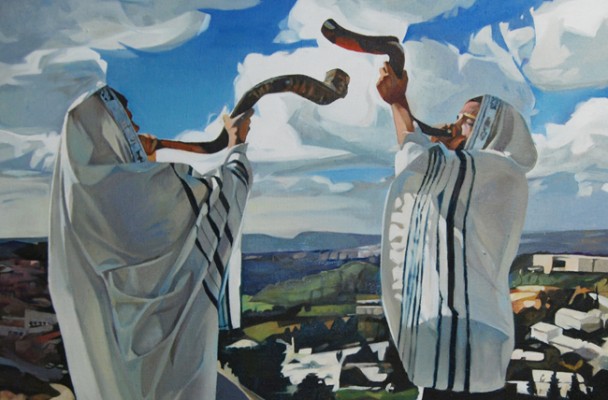 Of the seven annual Sabbaths, the Feast of Trumpets alone occurs on the first day of the month. This is the day that starts when the light of the new moon begins to shine. In ancient Israel, during the sacred year, the priests sounded the trumpets at the beginning of each month. The first day of each month started with the appearing of the new moon. When two concurring witnesses saw the first silver of the new moon, they attested to it before the Sanhedrin. Then, the sound of trumpets announced the new month.
Indeed, for repented and faithful believers the Feast of Trumpets is also a joyful day. In fact, GOD ordained, «Also in the day of your gladness, in your appointed feasts, and at the beginning of your months, you shall blow the trumpets over your burnt offerings, and over the sacrifices of your peace offerings; and they shall be a memorial for the LORD your God» (Num. 10:10; see Ps. 81:3).
The fourth annual Sabbath-rest
The Feast of Trumpets is the fourth annual Sabbath-rest commanded by the LORD. Its order number makes evident that it concerns all humanity up to the four cardinal points of the earth. GOD prescribed to His people: «In the seventh month, on the first day of the month, you shall have a holy convocation. You shall do no customary work. For you it is a day of blowing the trumpets» (Num. 29:1-7).
On this High Sabbath day, the LORD called the Israelites to this solemn meeting with Him by the “blowing of trumpets”. In response, at the temple, the priests presented an offering made by fire, the usual daily sacrifices and the monthly thanksgiving gifts (Lev. 23:25). GOD still exhorts, «Blow the trumpet in Zion, and sound an alarm in My holy mountain! Let all the inhabitants of the land tremble, for the day of the LORD is coming, for it is at hand» (Joel 2:1).
Trumpets of Warning

In ancient times, the trumpets sounded in Israel for various purposes. They called the people to a general assembly, informed about specific dangers, and proclaimed joyful events, such as the King’s coronation. Therefore, this feast, in which the blowing of the trumpets is the prominent feature, sounds special messages.
Scripture provides many clues to understand the purpose for blowing the trumpets on this holy Sabbath day. It states, «When you go to war in your land against the enemy who oppresses you, then you shall sound an alarm with the trumpets, and you will be remembered before the LORD your God, and you will be saved from your enemies» (Num. 10:9,10). According to this statement, the blowing of the trumpets has a double function. Firstly, it is for GOD’s worshippers an alarm, a call to prepare themselves because a danger is approaching. Secondly, it is a reminder for the LORD to save His people from a most perilous situation.
The Day of Yahweh
The Feast of Trumpets foretells the coming of “the Day of Yahweh. ” The prophet Amos described this day of judgment, saying: «Alas, you who are longing for the day of the LORD, For what purpose will the day of the LORD be to you? It will be darkness and not light; As when a man flees from a lion and a bear meets him, or goes home, leans his hand against the wall and a snake bites him. Will not the day of the LORD be darkness instead of light, Even gloom with no brightness in it?» (Amos 5:18-20 NASB).
The prophet Zephaniah also proclaimed: «Near is the great day of the LORD, Near and coming very quickly; Listen, the day of the LORD! In it the warrior cries out bitterly. A day of wrath is that day, A day of trouble and distress, A day of destruction and desolation, A day of darkness and gloom, A day of clouds and thick darkness, A day of trumpet and battle cry against the fortified cities And the high corner towers» (Zephaniah 1:14-16 NASB).
Ten days of repentance and prayer
The Feast of Trumpets is a day of rest, repentance, and reflection. It marks the beginning of a ten-day period of consecration to GOD through prayer, thanksgiving and praise. The need for watchfulness and preparedness in connection with this feast is also echoed throughout the New Testament. Indeed, Jesus Himself exhorts His followers to repent and be ready at any time for His return. He urges, «Repent, for the kingdom of heaven is at hand» (Matt. 4:7). «Therefore be on the alert, for you do not know which day your Lord is coming» (Mat. 24:42 NASB). Again, «Remember therefore from where you have fallen; repent» (Rev. 2:5).
Trumpets of Salvation
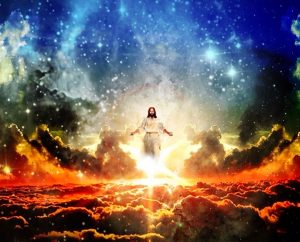 The trumpets in old times, besides warning of an incumbent danger, were also connected to the coming of the Messiah, and to the protection of His people. «The LORD will blow the trumpet, and go with whirlwinds from the south. The LORD of hosts will defend them» (Zec. 9:14,15). «So it shall be in that day: the great trumpet will be blown; they will come, who are about to perish… and they who are outcasts…, and shall worship the LORD in the holy mount at Jerusalem» (Isa. 27:13).
The seventh month is also very significant because it is the last month of the annual feasts calendar. In a future Feast of Trumpets GOD will joyfully announce the coming of His Great Day, the day of salvation. «For the Lord Himself will descend from heaven with a shout, with the voice of the archangel and with the trumpet of God, and the dead in Christ will rise first» (1 Thes. 4:16 NASB). «In a moment, in the twinkling of an eye, at the last trumpet; for the trumpet will sound, and the dead will be raised imperishable, and we will be changed» (1 Cor. 15:52 NASB). «And He will send forth His angels with A GREAT TRUMPET and THEY WILL GATHER TOGETHER His elect from the four winds, from one end of the sky to the other» (Mat. 24:31 NASB).
Trumpets of Rejoicing
In antiquity, the Feast of Trumpets was «an announcement from the King of Israel to His people that the glad sabbatical month had begun, and that the great Day of Atonement, and the supreme festivity of the Feast of Tabernacles, was now at hand».[i]
 Today, this feast is also joyful because it announces the coming of the Messiah and His coronation. In the old times, people rejoiced and blew trumpets at the coronation of a new king (2 Kings 11:14). The same will happen at the return of Jesus Christ, the Lamb of GOD. «For He is King of Kings and Lord of Lords» of believing and saved humanity (Rev. 17:14; 19:16).
Isaiah introduced Him, stating, «The Lord God is King of kings and Lord of Lords! He rules the nations. He has his eye on his people, to guard and keep them» (Is. 6:1-8). «He will be great» heralded also the messenger of GOD to the virgin Mary about Jesus. Furthermore «will be called the Son of the Most High; and the Lord God will give Him the throne of His father David; … and His kingdom will have no end»(Luke 1:32-33).
[i] W. Robertson Nicoll, Ed. The Expositor’s Bible, (New York, A.C.: Armstrong and Son, 1908), vol. 2, p. 462