- HOME
- INTRODUCTION
- FEASTS OF GOD
- 1. PASSOVER- Leviticus 23:5
- 2. FEAST OF UNLEAVENED BREAD - Leviticus 23:6-8
- 3. FEAST OF FIRSTFRUITS - Leviticus 23:9-11,14,15
- 4. FEAST OF WEEKS OR PENTECOST - Leviticus 23: 15-16
- 5. FEAST OF TRUMPETS - Leviticus 23:23,25
- 6. ATONEMENT DAY - Leviticus 23: 32,31
- 7. FEAST OF TABERNACLES OR BOOTHS - 23:34-36
- THE WORSHIP ACCEPTABLE TO GOD
- Conclusion
- Italiano
- Francais
FEASTS OF GOD
The project solving all human problems
 Remarkably, the seven annual feasts and their Sabbaths form a unity, a whole, that only in its entirety reveals with precision the project that solves all human problems from its beginning to its complete fulfillment. Indeed, only celebrating them chronologically, on the date and in the manner prescribed by the LORD, we can have a comprehensive vision and a clear understanding of GOD’s plan for the redemption .
 Furthermore, GOD commanded to the fathers to teach their children what it means to love Him, trust Him, and obey Him. So that He may be their GOD, and they may know how to worship Him in spirit and truth (see Dt. 6:5-8).
 At this point, it is important to highlight that the rituals that man performs do not save. As the sacrifices and offerings at the Temple of GOD by themselves did not redeem the repentant Israelites, so our acts of obedience, do not save us. Truly, who saves people from the slavery of sin is a Person, GOD Himself. And He has chosen to accomplish this wonder through His beloved Son, Jesus Christ.
 On the other side, He will not leave unpunished those who profane His Name by worshipping Him according to human traditions contrary to His expressed instructions, (see Lev. 18:21, 20:3; 21:6; 22:2; Pr. 30:9; Is. 48:11; Ez. 22:26; 39:7; Mic. 4:11; Mal. 1:12:2:10). Indeed, teaching ways different from the ones proclaimed in His Law, do not please Him (see Lev. 10: 8-11; 19:8; 22:15; Num. 18:32; Ps. 74:7; Ez. 7:22; Soph. 3:4; Ac. 21:28; 24:6; Heb. 10:29; 12:16; Rev. 2:14,15,24). Profaning His earth with abominations contrary to His will (see Is. 24:5; Jer. 16:8), and transgressing His Sabbaths, bring only misery and death (see Ex. 31:4; 22:9; Neh. 13:17; Ez. 7:22; 20:13,16; 22:8,26; 23:38; Is. 56:2; Hos. 2:10-15).
 Indeed, all GOD’s annual Sabbaths, including the Atonement Day, have been stipulated as perennial laws. And, the LORD also today exhorts us to remember them and keep them holy, for our wellbeing and blessing (Ex. 31:13; Lev. 19:3,30; 26:2; 23:38; 26:34; Is. 1:13; Lam. 2:6). For, when you trust and obey,«Your light shall break forth like the morning, your healing shall spring forth speedily, and your righteousness will go before you; then you shall call, and the LORD will answer; you shall cry, and He will say, “Here I am”» (Is. 58:8,9). Surely these are GOD’s promises for every believer who celebrates the Sabbaths of the LORD in the manner that He prescribed in His Law.
 While praying and studying the Holy Scripture, «He will guide you in all the truth; for He will not speak on His own authority, but whatever He hears He will speak; and He will tell you things to come» (Jn. 16:13-15). So, believe in GOD’s Law and Jesus’ Testimony alone, as did the apostles (see Jn. 22:22). Then, humbly ask the Holy Spirit to give you knowledge and understanding, and He will show you what is true faithfulness.
 Also the Atonement Day, which is a Sabbath of fasting, personal and corporative introspection and repentance, should be lived with thanksgiving and joy in our hearts because our Redeemer shows His infinite compassion by completely cleansing and restoring us.
 Sabbath-keeping means remembering, reflecting, and rejoicing about the Creation of the world (see Exodus 20:11), the redemption of repentant people from sin (see Dt. 5:15; Lk. 4:16-19), the promise of Christ’s Second Coming, and the creation of the New Earth (see Is. 66:22,23). Even GOD enjoys commemorating and reflecting on important happenings. For example, He paused to reflect on His accomplishments at creation (see Gn. 1:4,9,12,18,21,25,31; 2:2-3; Ex. 20:11).
 Keeping each Sabbath day holy means setting it apart for attending Sabbath services, for embracing GOD wholly, and nurturing a love relationship with Him, with Jesus and the Holy Spirit who make us holy (see Ex. 20:8; 31:13; Is. 58:13; Ez. 20:12).
 GOD concerning the Sabbath specifies that no work is to be done by «you, nor your son, nor your daughter, nor your male servant, nor your female servant, nor your cattle, nor the stranger who is within your gates» (Ex. 20:10). Consequently, this means that employers should not have their employees work. usinesses owned by Sabbath-keepers should be closed on the Sabbath days. We are to pause from our normal routines—shopping, errands, activities, sports, television – and spend the day, not oversleeping, but focusing on spiritual things, following the example of Jesus.
 GOD desires corporate worship (see Is. 66:22, 23). And, Jesus attended and led out in worship services on the Sabbath day (see Lk. 4:16). While on earth He taught to his apostles and disciples, how to worship GOD, our «Father in spirit and truth» (Jn. 4:23). Even Paul, called the believers in Christ to respect «the assembling» of the Sabbath days (Heb. 10:25).
 Keeping the annual feasts and the Sabbath days is a loving response to the commands of Jesus (see Jn. 14:15). It is not meant to be a means of earning our salvation (see Rm. 3:20; Heb. 4:9, 10). And, we respond to Jesus’ gift of rest by serving Him in His strength and living for Him (see Ex. 20:8,9; 2 Cor. 9:8; Heb. 13:20, 21).
 Keeping the Sabbath days means trusting GOD to take care of what we leave undone during the hours of the Sabbath (see Ex. 16:14-30; 20:10; Ps. 5:11,12; Mt. 6:33). It , also, means learning to depend on GOD rather than on ourselves. In fact, Jesus trusted His Father no matter how much Satan tempted Him to do otherwise (see Lk. 4:1-13). And, He demonstrated this trusting attitude as He suffered for our salvation (see Mt. 26:39; Lk. 23:46).
 In the gift of the Sabbaths, GOD provides time for focused fellowship with the whole family—even the animal family (see Ex. 20:8-11). In reality, Sabbath and family go together (see Gn. 1:1-2:25; Lev. 19:3). Therefore, spend quality time with family and other Christians, visit the sick or elderly and even enjoy some relaxing time in GOD’s creation. In fact, this nurtures our “horizontal” relationships – those with our fellow human beings. The members of the Godhead are relational (see Jn. 15:15). And, GOD’s relationship with us is the foundation of our relationship with each other (see Jn. 13:34, 35; 17:20-23).
 Keeping the Sabbath days means caring for necessary physical needs; no creature -human or animal – should be allowed to suffer on this day (see Ex. 23:12; Mat. 12:1-14; Mk. 2:27). GOD supplies all our needs, all the time (see Ex. 16:26, 35; Jos. 5:12; Mt. 6:25-33; Jn. 5:16, 17; Phil. 4:19), and He advocates that we care for the needs of all His creatures (Mat. 12:1-14; Mk. 2:23-28; Lk. 6:1-5). Jesus is a Servant and Proclaimer of the Good News (see Lk 4:18-21; Phil. 2:5-11). He went about doing good and blessing others (see Ac 10:38).
 Jesus proclaims, «the Sabbath was made for man» (Mk. 2:27). And He, who is the «
Chapter:
[ dates ]
The Sabbatical Year
The Feast of Tabernacles lasts seven days. It is also the last and seventh holy appointment of GOD, requiring the third and final pilgrimage of His people to Jerusalem. In addition, every seven years it inaugurates the Sabbatical year, the septennial of rest for the earth. With these attributes, it ultimately points to the Millenium of preparation for GOD’s eternal Kingdom.
Nature of GOD’s Feasts
 For a better understanding of the message of GOD’s feasts it is necessary to consider closely their nature once again. As it has been seen, the dates of GOD’s annual appointments are: typical, events and memorial dates.
«1. TYPICAL DATES: these dates are kept in anticipation of divine victories which are planned to occur in a future year, but on the same day of the same month». Only the dates of the Feasts occurring in the seventh month, Trumpets, Atonement and Tabernacles are still only typical dates. In fact, Jesus has not yet fulfilled fully the events they predict, once for all. The warnings of the trumpets have been partial until now. The final atonement of sins, and the final cleansing of the heavenly sanctuary will occur soon. The Feast of the Tabernacles was partially accomplished when Jesus came to live with humanity the first time, because He left and He has not yet come back to live with us physically, visibly and tangibly forever.
«2. EVENT DATES: These are the actual dates on which the Almighty will perform His mightiest deeds in the Plan of Salvation. When these “once in eternity” arrive, they will be highlighted by signs in the sun, moon and stars». Jesus’ Passover, the Week of Unleavened Bread, the Feast of First Fruits, and of Pentecost that followed, were characterized by signs in God’s creation: earthquake, darkness, sounds from heaven and mighty wind (Mat. 27:54; 28:2; Acts 2:2). They are dates of events fulfilled once forever, whose final blessings will be received fully in the seventh and last month of our history.
«3. MEMORIAL DATES: these are dates which will be celebrated throughout eternity by the redeemed as memorials and anniversaries. On these dates, throughout time, we will look back with rejoicing as we remember the great deeds Yahweh and His Son Yeshua performed to secure our salvation».[iii] These will be perennial commemorations (Zec. 14:16).
The last Septennial of our history
 Surely, the Week of Tabernacles points to the last septennial of our history. The reason is that the periods of time referring to the end of Daniel, chapter 8 and 12, are intervals connecting to the last three feasts and to Jesus’ return (Dan. 8:17; 12:9).
«You will see from the examples given below that these time spans begin and end on divinely appointed dates in the sacred calendar, on the Almighty’s annual Sabbaths, His Feast and Fast days…». Here are some examples:
«The 2300 day prophecy of Daniel 8
In certain periods there are exactly 2300 days between the Feasts of Pentecost in one year and the Feast of Trumpets about seven years later. The first and the last days are both included in the count.» 2300 is six years and 30 days.
- Example 1: between May 22, 1988 and September 7, 1994
- Example 2: between June 1, 1998 and September 16, 2004
- Example 3: between May 22, 1999 and September 6, 2005.
«The 1260 day (3 ½ years or 42 months) of Daniel chapters 7 & 12, and Revelation 13
In certain periods there are exactly 1260 days between the Last Day of Unleavened Bread in one Year and the Day of Atonement in 3 ½ years later. The first and the last days are both included in the count».
- Example 4: between March 30, 1997 and September 9, 2000
- Example 5: between April 18, 1998 and September 28, 2001
- Example 6: between April 4, 2002 and September 14, 2005.
«The 1290-day prophecy of Daniel 12
In certain periods there are exactly 1290 days between New Year’s Day –Feast of Trumpets – in the sacred calendar and the Last Great Day of Tabernacles– the Eighth Day – just over 3 ½ years later. The first day is not included in the count».
- Example 7: between March 25, 1993 and October 5, 1996
- Example 8: between March 14, 1994 and September 24,1997
- Example 9: between March 21, 1996 and October 2, 1999.
«The 1335 day prophecy of Daniel 12
In certain periods there are exactly 1335 days between the Feast of Trumpets in one year and the Feast of Pentecost several years later. The first and the last days are both included in the count».
- Example 10: between September 17, 1993 and May 13, 1997
- Example 11: between September 26, 1995 and May 22, 1999
- Example 12: between September 22, 1998 and May 18, 2002.[iv]
The LORD did not fix these time spans between a feast and another by coincidence. The final two difficult periods, the 1290 and 1335 days of Daniel 12:12, will poccur in the last septennial of our history.
Interpretation of the feasts’ prophetic message
It is relevant to know that any interpretation of prophecy is an hypothesis until it is proved correct by the exact fulfilling of the predicted event. Therefore only in the future, the enigma of the last 1290 and 1335 days of Daniel 12:11-12, will be finally resolved.
 However, the prophetic message of the last three annual feasts surely concerns the end of time. In fact, Michael said, «Many shall be purified, made white, and refined, but the wicked shall do wickedly, and none of the wicked shall understand, but the wise shall understand. And from the time that the daily sacrifice is taken away, and the abomination of desolation is set up, there shall be one thousand two hundred and ninety days. Blessed is he who waits, and comes to the one thousand three hundred and thirty-five days!» (Dan. 12:10-12).
Probably, in the future, on the Last Day of Unleavened Bread (a day of sabbatical rest), Jesus’ activity of daily mediation, forgiveness, and purification on behalf of believers will cease. Then, Satan will take power through his human mediums and partners. And he will show his furious hate on Jesus’ last-days followers on earth. Nevertheless, his evil works will not last longer that 1290 and 1335 days. God is greater and more powerful than all enemies. And He will deliver gloriously His last-days saints at His appointed time. As He mightily saved His first chosen people from all their Egyptians enemies, at the time He predicted to Abraham (See Gen. 15:13-17).
The Ultimate Gathering
 As already stated, «The Feast of Tabernacles … not only pointed back to the wilderness sojourn, but as the feast of harvest, it celebrated the ingathering of the fruits of the earth. And it pointed forward to the great day of final ingathering when the Lord of the harvest shall send forth His reapers to gather the tares together in bundles for the fire, and to gather wheat into His garner».[i]
«What a blessed thought to know that the day is hastening that even now reapers are getting ready to gather the harvest of souls. Soon the Master will descend with all the holy angels, and gather His elect from the four winds, from one end of heaven even to the other. Then with Abraham, Isaac, and Jacob, with all the true and faithful servants of God we shall observe the great Feast of Tabernacles. Oh what a blessed rejoicing that will be»![ii]
Indeed, it is extremely comforting to know that «it shall come to pass that everyone who is left of all the nations which came against Jerusalem shall go up from year to year to worship the King, the Lord of hosts, and to keep the Feast of Tabernacles» (Zec. 14:16).
The celebration in the New Jerusalem
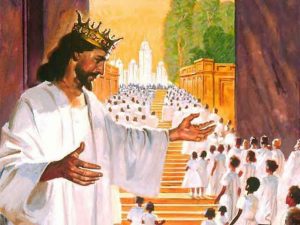 Undoubtedly, the Feast of Tabernacles foretells about the glorious feast the saints will enjoy in the New Jerusalem. John had the privilege to have a foretaste of this celebration. As it happened in the ancient Feast of Tabernacles, he saw «a great multitude which no one could number, of all nations, tribes, peoples, and tongues, standing before the throne and before the Lamb, clothed with white robes, with palm branches in their hands and crying out with a lord voice, saying, “Salvation belongs to our God who sits on the throne, and to the Lamb!”» (Rev. 7:9-10).
The song they are singing reminds a song chanted on the Feast of Tabernacles Psalm 118). Behold, «The voice of rejoicing and salvation is in the tents of the righteous; the right hand of the LORD does valiantly, the right hand of the LORD is exalted… Open to me the gates of righteousness; I will go through them, and I will praise the LORD. This is the gate of the LORD, through which the righteous shall enter… This was the LORD’s doing; it is marvelous in our eyes. This is the day the LORD has made; I will rejoice and be glad in it… You are my God, I will exalt You» (Ps. 118:15, 20-29).
The Sabbath Year of rest for the earth

Beside the year of Jubilee, the LORD set a year of rest and liberty, every seven years. It is the Septennial, the Sabbath Year of rest for the Land. The Hebrew word for “Septennial” is shmita, (Hebrew: שמיטה) which means “release”. It refers to the seventh year of the seven-year agricultural cycle mandated by GOD. Its other names are: Sabbatical Year, “Sabbath of the Land” and shǝvi’it (Hebrew: שביעית), literally, “seventh”. The laws of shmita also include: releasing all debts, ceasing cultivation of the land, and giving up ownership of anything that grows in the fields.
In His legislation GOD established that «the land shall keep a Sabbath to the LORD. Six years you shall sow your field, and six years you shall prune your vineyard, and gather its fruit; but the seventh year there shall be a Sabbath of solemn rest for the land, a Sabbath to the LORD» (Lev. 25:2-4).
GOD made a promise concerning the Sabbatical year corresponding with the 49th followed by the Jubilee Year, the 50th year. He declared, «I will command My blessing on you in the sixth year, and it will bring forth produce enough for three years» (Lev. 25:21). He who has always kept His promises, will keep even this one. He will give rest to His earth. And He will bless abundantly His people in the sixth year of the last «seven Sabbaths of years» (Lev. 25:8).
The Sabbatical year of liberty
 The Septennial is a year of celebration, freedom, grace, joy and satisfaction in the LORD of the Covenant. It is interesting to notice that «Jewish tradition interpreted 2 Chron. 36:21 to mean that the 70 years’ captivity was intended to make up for not observing sabbatical years».[v]
Every seventh year people were not to work the fields (Ex. 23:10-11; Lev. 25:4,5). The land would produce abundant spontaneous fruits and crops for God’s people (Isa. 37:30; Lev. 25:18,19). There would be food even for the foreigners who joined them, and all their animals (Ex. 23:10-11; Lev. 25:6-7). The harvest of the sixth year would be overabundant (Lev. 25:20-22). And the poor would be released of all their debts (Deut. 15:1-4).
The Millennial Kingdom
The Feast of Tabernacles points also beyond this human history. In fact, it prefigures the millennial government of Jesus Christ in the place He prepared in heaven (John 14:2,3). There, all the redeemed «shall be priests of God and of Christ, and shall reign with Him a thousand years» (Rev. 20:6; see also Isa. 66:21, John 14:2,3).
During the week of the Feast of Tabernacles, every Septennial year, people read carefully the book of the law in preparation for the new year (Deut. 31:26).
 In fact, the Lord prescribed, “At the end of every seven years, at the appointed time in the year of release, at the Feast of Tabernacles, when all Israel comes to appear before the Lord your God in the place which He chooses, you shall read this law before all Israel in their hearing. Gather the people together, men and women and little ones, and the stranger who is within your gates, that they may hear and that they may learn to fear the Lord your God and carefully observe all the words of this law, and that their children, who have not known it, may hear and learn to fear the LORD your God as long as you live» (Deut. 31:10-13).
Life in the Millennial Kingdom
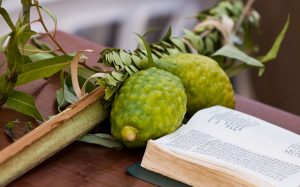 Soon the final Feast of Tabernacles will be fully real. And our heavenly Father and Jesus will inaugurate their New Kingdom with redeemed humanity. During the following millennium, the redeemed will enjoy a new life with Christ. And, among other things, they will study the Law that governs GOD’s universe. So that, when the millennium is over, they will administer His New Earth in the proper manner.
The LORD commanded also to the king of Israel to write for himself a copy of the book of the Law. And he ordered to «read it all the days of his life, that he may learn to fear the LORD his God and be careful to observe all the words of this law and these statutes» (Deut. 17: 19).
King David and Solomon prospered and their people, too, because they delighted in the study of GOD’s Law. Jesus Himself, the «King of kings and Lord of lords» studied it deeply when He lived among humanity (Rev. 19:16). And He knew it so well that at the age of twelve amazed the spiritual leaders of His time (Luke 2:46-47). Furthermore, He considered all GOD’s Law binding. Therefore, He made all efforts to obey even its least statute. It was because of GOD’s instructions that He clearly distinguished good from evil, right from wrong, and never sinned. He pleased our heavenly Father in all things and fulfilling His mission (Mat. 3:17; see Isa. 42:1-4).
Study and teach GOD’s Law
 For the Feast of Tabernacles the LORD still commands all political and religious leaders to study and teach His Law. He orders, «Gather the people together, men and women and little ones, and the stranger who is within your gates, that they may hear and that they may learn to fear the LORD and carefully observe all the words of this law, and that their children, who have not known it, may hear and learn to fear the LORD your God as long as you live» (Deut. 31:12).
Regrettably, most leaders have not studied GOD’s Law to put it into practice. Consequently, all the nations that they led, neglected and transgressed, in a way or another, GOD’s commands. Others picked from GOD’s Law what it seemed fit to their human and limited understanding. Then, they influenced people to believe that GOD’s Law was no longer necessary. Therefore, they promulgated their own legislations, often contrary to GOD’s statutes.
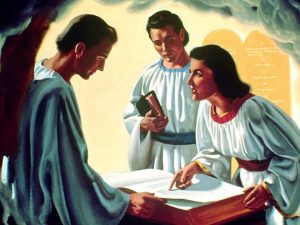 Let us therefore return to believe in GOD’s Law and follow Christ’s example alone in all things. Let us put our trust in the our eternal good and just Father and keep His commands, as Jesus did. So, that since now, «the righteous requirement of the law might be fulfilled in us who do not walk according to the flesh but according to the Spirit» (Rom. 8:4).
Together with Jesus, the redeemed will also evaluate the angels that rebelled against GOD. At this judgment’s revision, in fact, refers Paul when he states: «Do you not know that the saints will judge the world? … Do you not know that we will judge angels?» (1 Cor. 6:2,3).
Events happening after the Millennial Kingdom
The extermination of the wicked
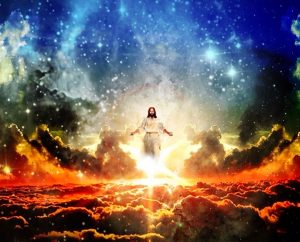 The shekinah glory of Jesus and His voice will have on the wicked the effect of an atomic bomb, of a «consuming fire» (Ex. 24:17; see Isa. 30:27; Heb. 10:27). Scripture states clearly that the «the brightness of His coming» will consume all the wicked (2 Thes. 2:12, 8-12). And they will «not come alive again until the thousand years were finished» (Rev. 20:5).
As on the Atonement Day, people who did not repent perished, «cut off» from GOD’s people (Lev. 23:29). So, all the wicked who «did not believe the truth but had pleasure in unrighteousness», at the end of the Millenium, will be subject to the second death, annihilation.
The destiny of Satan during the Millenium
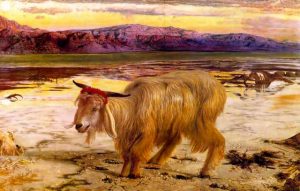 To Satan, on the last Atonement Day, will happen what the ritual of Azazel prefigured. In fact, on this holy Sabbath day, the high priest completed first the purification of GOD’s people and His sanctuary with the blood of the goat chosen by the LORD. Then, all sins were removed and placed «on the head of the live goat» Azazel, representing Satan. And finally, the unclean animal was sent to perish «into the wilderness», in the dwelling of demons (Lev. 16:19-22).
Similarly, Christ, at His return, will eliminate the power of sin by condemning Satan before the entire universe. After a powerful angel of God, will make him powerless. And finally he will confine him «into the bottomless pit, and shut it up, and set a seal on him, so that he should not deceive the nations no more till the thousand years were finished. But after these things he must be released for a little while» (Rev. 20: 1-3).
Notice how good, righteous and patient is our heavenly Father, even in treating His angelic rebellious creatures (Heb. 2:7). He will give a thousand years extra to meditate on the results of their transgression, and to repent.
The second resurrection of the wicked
As surprising as it may seem to some Christians, Jesus declares that there will be a second resurrection. It will concern only the wicked people. Informing His followers, He said: «Do not marvel at this, for the hour is coming in which all who are in the graves will hear His voice and come forth – those who have done good, to the resurrection of life, and those who have done evil, to the resurrection of condemnation» (Rev. 5:25-29). The second resurrection of the wicked people, that one of condemnation, will occur at the end of the thousand years (Rev. 20:5).

In Scripture the “treading of the wine-press” is emblematic of this ultimate divine judgement of condemnation. In fact, Revelation 14:19, describes the last gathering of the wicked this way, «The angel thrust his sickle into the earth and gathered the vine of the earth, and threw it into the great winepress of the wrath of God» (see also Isa. 63:2; Lam. 1:15). It is at this time that the rebellious unrepentant will know the final verdict. Which will predestine them to the second death, meaning, to their elimination from GOD’s universe (Rev. 20:6, 11-14).
Armageddon the greatest battle of all
Christ, in His testimony, adds that «when the thousand years have expired, Satan will be released from his prison and will go out to deceive the nations which are in the four corners of the earth, God and Magog, to gather them together to battle» (Rev. 20:7,8). Gog and Magog represent the nations formed by the unrepentant and rebellious humanity resurrected after the thousand years. Satan and three other demoniac spirits will organize these nations of wicked people for «the battle of that great day of God Almighty» (Rev 16:14).
They will gather them together «to the place called in Hebrew, Armageddon» (Rev. 16:16). This means around the heavenly Jerusalem, the Tabernacle of GOD, that after the thousand years will descend on earth with Jesus and the redeemed (Rev. 21:2, 10).
Armageddon is the crucial battle that the wicked people with the malefic angels will fight against Christ and His saints. At the end of it all the wicked angels and wicked humans will exist o. John saw their annihilation under the seventh bowl which describes God’s wrath (Rev. 16:17). So, He reported that the evil nations, together with the satanic army, «went up on the breath of the earth and surrounded the camp of the saints and the beloved city. And fire came down from God out of heaven and devoured them. The devil, who deceived them was cast into the lake of fire and brimstone» (Rev. 20:9-10; 21:8). This is the complete and definitive «destruction» of Satan, the diabolic devastator, his malefic angels, and his wicked human followers. In other words, it is the extinction of all those who ravaged GOD’s humanity and desolated His earth (Dan. 9:27).
 Until there is time, believe in GOD, study His Law, and faithfully put it into practice. Because «Blessed are those who keep His testimonies, who seek Him with the whole heart» (Ps. 119:2). Indeed, «Blessed are those who keep justice, and he who does righteousness at all times» (Ps. 106:3).
Believe also in GOD’s Son, the Savior, in His testimony, and lovingly follow His example. Avoid provoking His anger so that you may not perish. «Blessed are all those who put their trust in Him» (Ps. 2:12).
[i] Ellen G.White, Patriarchs and Prophets, (Mountain View: Pacific Press Pub. Asso.,
1958), p. 541,542.
[ii] F.C. Gilbert, p. 276.
[iii] Stewarton Bible School, The Sacred Calendar of the God of Israel, p. 63.
[iv] Ibid., p. 60-62.
[v] Holman, Illustrated Bible Dictionary, p. 573.