- HOME
- INTRODUCTION
- FEASTS OF GOD
- 1. PASSOVER- Leviticus 23:5
- 2. FEAST OF UNLEAVENED BREAD - Leviticus 23:6-8
- 3. FEAST OF FIRSTFRUITS - Leviticus 23:9-11,14,15
- 4. FEAST OF WEEKS OR PENTECOST - Leviticus 23: 15-16
- 5. FEAST OF TRUMPETS - Leviticus 23:23,25
- 6. ATONEMENT DAY - Leviticus 23: 32,31
- 7. FEAST OF TABERNACLES OR BOOTHS - 23:34-36
- THE WORSHIP ACCEPTABLE TO GOD
- Conclusion
- Italiano
- Francais
FEASTS OF GOD
The project solving all human problems
Chapter:
[ Feast of Unleavened Bread ]
CHRIST DID NOT ABOLISH GOD’S LAW
 Scripture reports that Jesus Christ did not abolish GOD’s Law, but kept even the least of His commandments, without sinning. Nevertheless, there is a discussion going on about the observance of GOD’s annual feasts.
Those who do not respect them, justify their position by stating that their celebration is binding only for the Jews. While others affirm that Christ made them obsolete because He fulfilled all their message at His death. Yet, Scripture contains no proof that it is as they declare or believe. On the contrary, it gives evidence that Jesus put into practice all the statutes concerning the annual feasts.
 Christ, who had and has all authority in heaven and on earth, did not abrogate the commandments of Leviticus 23. In fact, He stated: «Do not think that I came to destroy the Law or the Prophets, I did not come to destroy but to fulfill. For assuredly I say to you, till heaven and earth pass away one jot or one tittle by no means pass from the law till all is fulfilled» (Mt. 5:17,18).[i]
GOD’s Law exposes what is sin
A modern Bible commentator explains that «The Bible classifies all men as sinners. “All have sinned and come short of the glory of God” (Romans 3:23)… In short, the presence of sin and sinners in the world is positive proof that the Law of the Almighty still exists. The Bible tells us that at the end of this present age, and in the ages to come, true believers will be keeping the commandments of God (See Rev. 12:17; 14:12). How could this be possible if the commandments were abolished at Calvary?»[ii]
 GOD’s Law is «holy and just and good» (Rm. 7:12), in reality, «no one annuls or adds to it» (Gal. 3:23). For this reason, Jesus warns, «Whoever therefore breaks one of the least of these commandments, and teaches men so, shall be called the least in the kingdom of heaven; but whoever does and teach them, he shall be called great in the kingdom of heaven» (Mt. 5:19).
Christ and His apostles did not abolish GOD’s Feasts

Indeed, Christ did not abolish GOD’s Law. The statutes given at Sinai, which comprise also the laws on the annual feasts and “High Sabbaths”, are still binding for all believers.
Furthermore, Leviticus 23, Numbers 26-28 and Deuteronomy 16, are also Jesus’ commandments (Jn. 10:30; 17:11, 21, 22). By obeying all the instructions the Father promulgated at Sinai, Christ «confirmed» the Law of the eternal Covenant.
The Spring Feasts
1. Passover
 Christ respected and fulfilled the smallest tittle of the feasts established by the LORD at Sinai (Lev. 23). He, as the Father, does not change. Concerning Passover supper He declared: «I say to you, I will not drink of this fruit of the wine from now on until that day when I drink it new with you in My Father’s kingdom» (Mt. 26:29). So, it will be.
Christ’s sacrificial death had to «bring an end to sacrifice and offering» only (Dan. 9: 26,27). This divine prediction given to the prophet Daniel, clearly attests that no annual feast had to cease when Jesus died. Indeed, only the sacrifices and offerings, that represented His sacrifice and offering to the Father reached the end of their function.
Concluding, Jesus did not abolish the celebration of Passover. He did not change its date and time, neither its name, as Christianity has done by renaming it Easter. At His last Passover Supper, He only replaced the sacrifice and offerings with the symbols of Melchizedek, bread and wine. Since Christ died for the forgiveness of our sins, He is the Sacrifice and the Offering to GOD. Therefore, let us remember His sublime act of love, and celebrate «Passover» fully assured of our salvation (1 Cor. 5:7).
2. Feast of Unleavened Bread
 Concerning the Feast of Unleavened Bread, Scripture again does not give evidence that Christ abolished it at the cross. And even the Apostle Paul did not make it obsolete. Indeed, Paul instructed and encouraged the church to celebrate it together with the Feast of FirstFruits (see 1 Cor. 5:7,8).
Paul exhorted the Messianic congregations to keep the Feast of Unleavened Bread as a memorial of the purification from sin. Jesus is still accomplishing this ministry in favor of the repentant and confessing believer, in the heavenly sanctuary of GOD. And He is still making faithful people benefit and rejoice in these seven-day feast representing His all-sufficient, everlasting grace.
3. Feast of Firstfruits
 When Paul wrote his letter to the churches inviting them to observe this feast, quite sometime had gone by since Jesus’ death. Bible scholars agree that Paul wrote the first letter to the believers of Corinth, in the spring of 57 AD. Again, this fact confirms that the first three annual feasts were not abolished in his time. Indeed, almost twenty years after Christ’s death the apostolic churches were still observing them.
4. Feast of Weeks or Pentecost
 Jesus’ disciples, after His death and resurrection, kept the Feast of Weeks, or Pentecost. Luke reports that on this feast’s day, they were reunited, praying and asking the fulfillment of Jesus’ promises. And the the Holy Spirit visited them. Then, He assisted them to testify of Christ as the Savior first in Jerusalem, and then in all nations of the ancient world (See Ac. 2:1-4). No need, therefore, to add more on its still binding celebration.
We need to understand the truth and how to abide in it, in the light of the GOD’s Law and Testimony. Because that’s the only manner for experiencing GOD’s grace, peace and blessing in our lives, even today.
The Autumn Feasts
5. Feast of Trumpets
 The New Testament is silent on the Feast of Trumpets. Nevertheless, this does not give license to modern scholars to think it has been abrogated. The apostles did not have the occasion of mentioning it in their writings. That’s all. Indeed, they themselves were making the Gospel of grace sound in all Judea and the surrounding lands as living trumpets.
The themes of repentance, and preparation for judgement, are the central themes of the Feast of Trumpets. These same themes are present in the book of Revelation that was written decades after Christ’s resurrection. In it, Jesus pronounced calls to repentance for the believers of seven Messianic congregations of that time (Rev. 2). In addition, He provided alarming predictions using seven trumpets (Rev. 8, 9 and 11). Christ did so to encourage His followers to be faithful even when they were experiencing persecution.
6. Atonement Day
 Christ did not abolish the observance of the Atonement Day. Scripture provides evidence that Christ’s first followers after His death and resurrection, kept this High Sabbath Day. In fact, Paul reports: «the Fast was already over» (Acts 27:9). Bible students acknowledge that this «Fast» refers to the Atonement Day, that is the only fast of the annual feasts. In addition, they inform that Luke wrote the book of Acts after the destruction of the temple (70 AD.
The respect of this Fast day was neither rendered obsolete by the Spirit who was guiding the believers in Christ. Indeed, the Spirit was convincing them of sins, so that they may confess them, in this High Sabbath day. By do doing, the Savior could grant them forgiveness (John 16:8). Even today, GOD sanctifies believers in the holy appointment days He set apart for this purpose. How can modern scholars, therefore, attest that the observance of the Atonement Day was nailed at the cross?
7. Feast of Tabernacles or Booths
 Christ did not make obsolete the observance of the Feast of Tabernacles. Concerning this glorious celebration, John gives evidence that our Savior went to Jerusalem, and celebrated it (John 7:8,10,11). In fact, «about the middle of the feast Jesus went up into the temple and taught» His message of hope (v.14-21). In so doing, He left an example to follow for all future generations, Jewish and Gentiles alike.
Also Paul observed the Feast of Tabernacles after Jesus’ death. Indeed, He left Ephesus saying to his brethren: «I must by all means keep this coming feast in Jerusalem» (Ac. 18:21). It was a feast that required a pilgrimage to the holy city. And Bible scholars believe it to be the Feast of Tabernacles.
Moreover, Bible scholars believe that this feast was kept by the Messianic congregations when John wrote the book of Revelation. They also explain that Jesus would have not used the themes of the Feast of Tabernacles to depict the consummation of redemption if it had been unknown.
Christ confirmed GOD’s Law and the Testimony His prophets
Isaiah explained the reason why we should observe the commandments of GOD, which include His seven annual Feasts. He declared, «“To the law and to the testimony! If they do not speak according to this word, it is because there is no light in  them. They will pass through it hard-pressed and hungry; and it shall happen, when they are hungry, that they will be enraged and curse their king and their God, and look upward. Then they will look to the earth, and see trouble and darkness, gloom of anguish; and they will be driven into darkness» (Is. 8:19-22). His inspired prediction clearly indicates in which direction the unbelieving and disobedient persons are going.
Furthermore, the LORD pointed out that also spiritual leaders have been found in a similar defiant and troublesome situation. He said, “… priests have violated My law and profaned my holy things; they have not distinguished between the holy and unholy, nor they made known the difference between the unclean and the clean, and they have hidden their eyes from My Sabbaths, so that I am profaned among them” (Ez. 22:26).
Man has changed GOD’s Law
Presenting last-days events to the prophet Daniel, the angel of the LORD declared that, in the unfolding of the great conflict between Satan and GOD, an evil king shall rise. «He shall be different from the first ones. He shall speak pompous words against the Most High, shall persecute the saints of the Most High, and shall intend to change times and law» (Dn. 7:24-25). This statement explains that an evil person changed GOD’s holy appointments and annual feasts and Sabbaths, together with other divine commands.[iii]
Satan has always persecuted GOD’s faithful people. So, also in the last days, he will manipulate another corrupt leader, as he manipulated King Jeroboam in ancient times. And through his human agent, he will cause a lot of trouble to each person «who keep the commandments of God and have the testimony of Jesus Christ» (Rev. 12:17; Dn. 25).
Keep all GOD’s appointed meetings
Through the agency of Nahum, the LORD also indicated how His people should deal with spiritual dilemmas such as the celebration of the annual holy convocations today. He explained, “In controversy they shall stand as judges, and judge it according to My judgements. They shall keep My laws and My statutes in all My appointed meetings, and they shall hallow my Sabbaths” (Ez. 44:24). The prophet Nahum also declared to God’s first chosen people: “Behold, on the mountains the feet of him who brings good tidings, who proclaims peace! O Judah, keep your appointed feasts, perform your vows” (Nah. 1:15)!
Therefore, let us sincerely search on our own the inspired Scriptures to know by ourselves the truth. Let us also verify by ourselves all the things presented by religious and political leaders. Then, humbly ask GOD to help us keep all His laws, including His annual feasts (see 1 Jn. 2:3,4; Rev. 14:12).
The Apostle Paul did not abolish GOD’s Law
Paul advocates for a celebration of the annual feasts
Bible commentators that teach the abrogation of the annual feasts, support their argument quoting Colossians 2:16,17. «Let no one judge you in food or in drink, or regarding a festival or a new moon or Sabbaths, which are a shadow of things to come, but the substance is of Christ». Indeed, this passage has been taken out of its context to state something that is just the opposite of what Paul meant to say. Here, Paul advocates for a celebration of the feasts in the «spirit and truth» that is in «Christ», because at Colossi their observance was mixed with pagan sun worship traditions of human origins.[iv]
 In this statement, Paul does not deal with the validity or abolition of the weekly Sabbath, the annual Sabbaths and the seven feasts of the LORD, the Sabbatical year, and of the New Moon Day kept at the beginning of each lunar month. Instead, he reproaches the illegitimacy of the rules that the teachers of Colossi imposed on their observance. As a flawless pastor, preacher of Scripture and GOD’s Law, Paul reproached those false teachers. And informed the members of this congregation that their leaders did not have any right to judge, and to decide by themselves how to make believers observe the feasts of the LORD to worship, instead of GOD and Christ, evil «angels» (Col. 2:18), to please the «the basic principles of the world» (v. 20), and cheaters puffed up by their «fleshly mind» (v.18).
Although their names derive from GOD’s Law, the celebrations that Paul mentioned in this passage have nothing to do with the true worship offered to GOD, and with the true observance of His annual feasts. «In the context of Colossians, the command to keep festival, new moon and Sabbath is not based on the Torah… Rather the sacred days must be kept for the sake of the “elements of the universe”, who direct the course of the stars, and thus also prescribe minutely the order of the calendar»[v].
GOD’s Law is unchangeable
 The apostle Paul informed that during his own time Satan was already executing his plan to destroy GOD’s Law and change and delay God’s holy appointments for the salvation of His people (times – feasts). Paul clearly stated: «the mystery of lawlessness is already at work; only He who now restrains will do so until it is taken out of the way. And then the lawless one will be revealed, whom the Lord will consume with the breath of His mouth and destroy with the brightness of His coming. The coming of the lawless one is according to the working of Satan, with all power, signs, and wonders, and with all unrighteous deception among those who perish, because they did not receive the love of the truth, that they might be saved» (2 Thes. 2:7-10; Rev. 13:13-15).
GOD’s feasts glorify Christ
Summarizing, Paul did not abrogated the observance of the. He only criticized the distorted motives for which the Colossians were keeping the festivals. Indeed, pointing to their errors, he gave even more relevance to the observance of the feasts, when it is done with the right attitudes and for the right reasons. Paul is concerned that the celebration of the LORD’s feasts honors and glorifies only Jesus Christ, who is GOD’s appointed Accomplisher of their messages and promises. In fact, if the observance of annual feasts doesn’t focus on Jesus, and His redemptive wonders, makes them loose their purpose. Consequently, they become useless, and even spiritual stumbling blocks, preventing people from walking in the way that leads to GOD.
The celebration of GOD’s feasts today
Ellen G. White, who was a passionate commentator of Scripture, exhorts to celebrate the feasts of the LORD. Therefore she did not believe that they are obsolete. Indeed, she says to keep them for the benefit of youth and the growth of faith in GOD and Christ.
First of all, in her writings, she acknowledged that the apostle Paul, various years after Jesus’ death, «… was on his way to Jerusalem to celebrate the Feast of Pentecost».[vi] This means that she believed that Jesus or the apostles did not abolish GOD’s feasts.
Giving counsel to parents and teachers on the celebration of the annual feasts, she remarked: «Would it not be well for us to observe holidays unto God, when we could revive in our minds the memory of His dealings with us? Would it not be well to consider His past blessings, to remember the impressive warnings that have come home to our soul so that we shall not forget God?
The world has many holidays, and man becomes engrossed with games, with horse races, with gambling, smoking and drunkenness. Shall not the people of God more frequently have holy convocations in which to thank God for His rich blessings?»[vii]
The feasts bound us to God and to one another
 On another occasion, Ellen G. White further debated the reason believers should observe GOD’s feasts. She wrote, «Shall we not keep holy festivals unto God? Shall we not show that we have some enthusiasm in His service? With the grand ennobling theme of salvation before us, shall we be as cold as statues of marble? If men can become so excited over a match game of cricket, or a horse race, or over foolish things that bring no good to anyone, shall we be unmoved when the plan of salvation is unfolded to us? Let the school and the church henceforth have festivals of rejoicing unto the Lord».[viii]
It seems clear from these quotations that Ellen G.White strongly encouraged the celebration of the LORD’s annual feasts.
Reasons for observing the feasts’ pilgrimage to Jerusalem
Elsewhere, Ellen G. White also gave the reason for keeping the three annual feasts requiring the pilgrimage Jerusalem. In fact, concerning the feasts requiring the pilgrimage to Jerusalem, she declared, «At these yearly assembles the hearts of old and young would be encouraged in the service of God, while the association of the people from different quarters of the land would strengthen the ties that bound them to God and to one another.
Well would it be for the people of God at the present time to have a feast of Tabernacles – a joyous commemoration of the blessing of God to them.
As the children of Israel celebrated the deliverance that God had brought during their journeying from Egypt, so should we gratefully call to mind the various ways he has devised for bringing us out from the world, and from darkness of error, into the precious light of His grace and truth».[ix]
The feasts’ «function continues in the Christian church»
In more recent time, Samuele Bacchiocchi, a Seventh-day Adventist theologian graduated from the Pontifical Gregorian University in Rome, and an author of various volumes on the Sabbath [x], has published two very comprehensive books on GOD’s festivals in Scripture and history. With these, he provided evidence that Scripture does not declare the Feasts of the LORD obsolete.
In the first volume, commenting on the relevance of the annual feasts, Samuele states: «If the feasts had typified only the redemptive accomplishments of Christ’s first Advent, then obviously their function would have terminated at the Cross. But if the feasts foreshadow also the consummation of redemption to be accomplished by Christ at His Second Advent, then their function continues in the Christian church, though with a new meaning and manner of observance».[xi]
«We need to rethink our practices and learn from the liturgical calendar of the Old Testament»
Jiri Moskala, another Adventist theologian, more recently advised, «Activities of the Church religious calendar should be centered on God’s salving events and not primarily focused on anthropocentric programs scheduled on special days during the year. We need to rethink our practices and learn from the liturgical calendar of the Old Testament people in order that our yearly cycle be theocentric, oriented vertically on the main events in the plan of salvation, and celebrate God’s work for humanity, which help to create a right attitude and joyful service».[xiii]
By these testimonies we can clearly see that Christ did not abolish GOD’s Law and the statutes concerning His annual holy convocations. In fact, His twelve apostles, and also the apostle Paul, observed them, after His ascension to Heaven. Men and women of faith until today have believed in the feasts of the LORD and their celebration.
Indeed, instead of keeping holidays established by human authorities, it would be best if we celebrated GOD’s annual feasts. Their message is comprehensive, refreshing, simple, full of wonderful truths and divine promises, reinvigorating mind and body. They provide the exact day, purpose and spiritual atmosphere to enact joyfully the project solving all human problems, a time not to forget who is our GOD and our Redeemer.
GOD’s Lunar Calendar
By observing the phases of the moon we can establish even today the exact dates of the annual Sabbaths. Men through the centuries invented various calendars and systems to calculate time. Yet, the system that never changes, and that is always correct, is the one put in place by GOD. This system still declares the glory of its wonderful, genial and all powerful Creator. It is the only one that speaks all languages. The one that indicates, on the entire earth, the precise month, day, and hour, in which to celebrate GOD’s feasts. The seven established to glorify His name, rejoice with Him and His beloved Son. Those in which He makes His worshippers holy by His extraordinary sanctifying presence.
 There is nothing wrong in using astronomy to determine the dates of the LORD’s feasts. GOD Himself Himself organized our solar system to assist us to recognize the dates of His annual appointments, and redemptive miracles. (Ps. 19:1-6). In fact, on the fourth day of creation He said, «Let there be lights in the firmament of the heavens to divide the day from the night; and let them be for signs and seasons, and for days and years» (Gen 1:14).
Do you mind to be in the truth, a Law abiding believer? Jesus declared, «Behold I am coming quickly, and My reward is with Me, to give to every one according to his work… Blessed are those who do His commandments that they may have right to the tree of life… But outside are the dogs and sorcerers and sexually immoral and murderers and idolaters, and whoever loves and practice a lie. I, Jesus, have sent My angel to testify to you these things in the churches» (Rev. 22:12-16).
GOD’s Feasts are binding statutes
Today, some Seventh-day Adventist believers are keeping the annual feasts and Sabbaths.[xii] On the other hand, these individual initiatives have created some apprehension in the mind of certain Adventist leaders. This is due to the fact that the church officially considers the annual feasts obsolete and binding only for the Jews. Even though Scripture declares the feasts a «statute forever throughout your generations in all your dwellings»Lev. 23:14,21,31,41).
Another reason for this apprehension is due to the fear of mixing the celebration of GOD’s feasts with worldly practices. Although leaders need to consider this danger as they guide their congregations to sanctify the annual feasts in honor and glory of GOD and Christ, this should not prevent people from celebrating them. In the past, true believers did not cease to witness about Jesus in the best way they could, in spite of risks and persecutions. The same should be for true believers today.
Let us contemplate once again the example left by Jesus. He observed the weekly Sabbath «in spirit and truth» even if the Israelite leaders had made its observance a burden (Jn. 4:24). He celebrated His Passover with the apostles, even knowing, in His foreknowledge, that in a few years, in some churches, such as Colossi, His followers would have dishonored His name by using His feasts to follow pagan traditions. With much greater reason, therefore, believers today, leaving aside all fears, should celebrate the feasts of GOD.
___________________________________________________________________________________
[i] Jesus by the term Law here meant all the Covenant Law given at Sinai through Moses.
[ii] Stewarton Bible School, The Festivals of the God of Israel, p. 29.
[iii] To know more on the change of GOD’s Law see, for example, Samuele Bacchiocchi’s book, Popular Beliefs – Are they Biblical? chapter 6. Sunday Sacredness, p. 193-225. To read this chapter in pdf, see: http://users.oakesdale.net/thedahls/Bacchiocchi.pdf
[iv] Ralph P. Martin, New Century Bible, Colossians and Philemon, (London, UK: Oliphants Marshall, Morgan and Scott, 1974, p. 90.
[v] Eduard Lohse, Colossians and Philemon, (Philadelphia: Fortress Press, 1971), p. 115
[vi] Ellen G. White, Redemption: or the Teaching of Paul, and His Mission to the Gentiles (Battle Creek, MI: Review and Herald Pub. Assoc., 1878), p. 65. A similar statement is made in The Seventh-day Adventist Commentary (Washington, D.C., 1975), vol. 6, p.134.
[vii] Ellen G. White, Counsel to Parents and Teachers, (Mountain View, CA: Pacific Press Publishing Assoc., 1943), p. 343.
[viii] Ellen G. White, Special Testimonies on Education, (Battle Creek, MI: Review andHerald Publishing Assoc., 1870), pp. 77-82.
[ix] Ellen G. White, Patriarchs and Prophets, p. 540-541.
[x] Samuele Bacchiocchi’s studies on the Sabbath include: Divine Rest for Human Restlessness – From Sabbath to Sunday – The Sabbath under Crossfire – The Sabbath in the New Testament.
[xi] Samuele Bacchiocchi, Part I: The Spring Festivals, op. cit., p.13. To read this chapter in pdf, see: https://www.friendsofsabbath.org/Further_Research/Bacchiocchis%20Research/God’s%20Festivals%20vol1.pdf
[xii] At present, at Andrews University, there are professors celebrating the feasts of LORD, although the Seventh-day Adventist Church does not retain their observance mandatory.
[xiii] Journal of the Adventist Theological Society, Jiri Moskala, professor of Old Testament Exegesis and Theology at the Seventh-day Adventist Theological Seminary on the campus of Andrews University, article: The Message of God’s people in the Old Testament, (Berrien Springs, MI, 2008}, Vol. 19, N.1&2, p. 27, footnote 26, referring to paragraph 3. Through Celebrating Festivals).
 At this point, it is important to highlight that the rituals that man performs do not save. As the sacrifices and offerings at the Temple of GOD by themselves did not redeem the repentant Israelites, so our acts of obedience, do not save us. Truly, who saves people from the slavery of sin is a Person, GOD Himself. And He has chosen to accomplish this wonder through His beloved Son, Jesus Christ.
 On the other side, He will not leave unpunished those who profane His Name by worshipping Him according to human traditions contrary to His expressed instructions, (see Lev. 18:21, 20:3; 21:6; 22:2; Pr. 30:9; Is. 48:11; Ez. 22:26; 39:7; Mic. 4:11; Mal. 1:12:2:10). Indeed, teaching ways different from the ones proclaimed in His Law, do not please Him (see Lev. 10: 8-11; 19:8; 22:15; Num. 18:32; Ps. 74:7; Ez. 7:22; Soph. 3:4; Ac. 21:28; 24:6; Heb. 10:29; 12:16; Rev. 2:14,15,24). Profaning His earth with abominations contrary to His will (see Is. 24:5; Jer. 16:8), and transgressing His Sabbaths, bring only misery and death (see Ex. 31:4; 22:9; Neh. 13:17; Ez. 7:22; 20:13,16; 22:8,26; 23:38; Is. 56:2; Hos. 2:10-15).
 While praying and studying the Holy Scripture, «He will guide you in all the truth; for He will not speak on His own authority, but whatever He hears He will speak; and He will tell you things to come» (Jn. 16:13-15). So, believe in GOD’s Law and Jesus’ Testimony alone, as did the apostles (see Jn. 22:22). Then, humbly ask the Holy Spirit to give you knowledge and understanding, and He will show you what is true faithfulness.
 Also the Atonement Day, which is a Sabbath of fasting, personal and corporative introspection and repentance, should be lived with thanksgiving and joy in our hearts because our Redeemer shows His infinite compassion by completely cleansing and restoring us.
 Sabbath-keeping means remembering, reflecting, and rejoicing about the Creation of the world (see Exodus 20:11), the redemption of repentant people from sin (see Dt. 5:15; Lk. 4:16-19), the promise of Christ’s Second Coming, and the creation of the New Earth (see Is. 66:22,23). Even GOD enjoys commemorating and reflecting on important happenings. For example, He paused to reflect on His accomplishments at creation (see Gn. 1:4,9,12,18,21,25,31; 2:2-3; Ex. 20:11).
 Keeping each Sabbath day holy means setting it apart for attending Sabbath services, for embracing GOD wholly, and nurturing a love relationship with Him, with Jesus and the Holy Spirit who make us holy (see Ex. 20:8; 31:13; Is. 58:13; Ez. 20:12).
 GOD concerning the Sabbath specifies that no work is to be done by «you, nor your son, nor your daughter, nor your male servant, nor your female servant, nor your cattle, nor the stranger who is within your gates» (Ex. 20:10). Consequently, this means that employers should not have their employees work. usinesses owned by Sabbath-keepers should be closed on the Sabbath days. We are to pause from our normal routines—shopping, errands, activities, sports, television – and spend the day, not oversleeping, but focusing on spiritual things, following the example of Jesus.
 Our Father who is in Heaven desires the redemption of every human being. Jesus Christ “came to save the lost” and if He finds one He is very happy (Mt. 18:11,13). We answer to the gift of His grace with joy, delight, glorifying His Name with songs, musical instruments, and thanksgiving prayers. Our Father will celebrate at the marriage supper of the Lamb with the redeemed (Rev 19:7-9). Therefore, all the Sabbath days «Give thanks to the LORD with the lyre, sing praises to him with the ten-stringed harp» (Ps. 33:2).
 GOD desires corporate worship (see Is. 66:22, 23). And, Jesus attended and led out in worship services on the Sabbath day (see Lk. 4:16). While on earth He taught to his apostles and disciples, how to worship GOD, our «Father in spirit and truth» (Jn. 4:23). Even Paul, called the believers in Christ to respect «the assembling» of the Sabbath days (Heb. 10:25).
 Keeping the annual feasts and the Sabbath days is a loving response to the commands of Jesus (see Jn. 14:15). It is not meant to be a means of earning our salvation (see Rm. 3:20; Heb. 4:9, 10). And, we respond to Jesus’ gift of rest by serving Him in His strength and living for Him (see Ex. 20:8,9; 2 Cor. 9:8; Heb. 13:20, 21).
 Keeping the Sabbath days means trusting GOD to take care of what we leave undone during the hours of the Sabbath (see Ex. 16:14-30; 20:10; Ps. 5:11,12; Mt. 6:33). It , also, means learning to depend on GOD rather than on ourselves. In fact, Jesus trusted His Father no matter how much Satan tempted Him to do otherwise (see Lk. 4:1-13). And, He demonstrated this trusting attitude as He suffered for our salvation (see Mt. 26:39; Lk. 23:46).
 In the gift of the Sabbaths, GOD provides time for focused fellowship with the whole family—even the animal family (see Ex. 20:8-11). In reality, Sabbath and family go together (see Gn. 1:1-2:25; Lev. 19:3). Therefore, spend quality time with family and other Christians, visit the sick or elderly and even enjoy some relaxing time in GOD’s creation. In fact, this nurtures our “horizontal” relationships – those with our fellow human beings. The members of the Godhead are relational (see Jn. 15:15). And, GOD’s relationship with us is the foundation of our relationship with each other (see Jn. 13:34, 35; 17:20-23).
 Keeping the Sabbath days means caring for necessary physical needs; no creature -human or animal – should be allowed to suffer on this day (see Ex. 23:12; Mat. 12:1-14; Mk. 2:27). GOD supplies all our needs, all the time (see Ex. 16:26, 35; Jos. 5:12; Mt. 6:25-33; Jn. 5:16, 17; Phil. 4:19), and He advocates that we care for the needs of all His creatures (Mat. 12:1-14; Mk. 2:23-28; Lk. 6:1-5). Jesus is a Servant and Proclaimer of the Good News (see Lk 4:18-21; Phil. 2:5-11). He went about doing good and blessing others (see Ac 10:38).
 Jesus proclaims, «the Sabbath was made for man» (Mk. 2:27). And He, who is the «
Chapter:
[ Feast of Unleavened Bread ]
THE ANNUAL FEASTS
«These are the feasts of the LORD, holy convocations, which you shall proclaim at their appointed times»
(Leviticus 23:4)
The annual feasts of the LORD are:
1. The Passover (Lev. 23:4-5 – Ex. 12:1-8; Num. 28:16; Deut. 16:1-2);
2. The Feast of Unleavened Bread (Lev. 23:6-8 – Ex. 23:14-15; Num. 28:16-25; Deut. 16:1-8, 16-17);
3. The Feast of the First Fruits (Lev. 23:9-14);
4. The Feast of Weeks or Pentecost (Lev. 23:15-22 – Ex. 23:16-19; Num. 28:26-31; Deut. 16:9-12, 16-17);
5. The Feast of Trumpets (Lev. 23:23-25 – Num. 29:1-6);
6. The Atonement Day, (Lev. 23:26-32; Lev. 16; Num. 29:7-11) and
7. The Feast of Tabernacles (Lev. 23:33-44; Ex. 23:16-17; Num. 29:12-39; Deut. 16:13-17).
GOD’s Appointed Times
The Hebrew language uses mainly two terms that refer to a feast: “mo’ed” which that translated means “an appointed time”, an “assembly”, a “solemn assembling”, a “holy anniversary”[1], and “hag” which means to “celebrate” and to “make a pilgrimage” (See Ex. 23:14-19; Deut.16:16-17). The “feasts” in ancient times were all «the appointed seasons of the LORD», (in Hebrew מוֹעֲדֵי יְהוָה – Mo’edi’ Yahweh), established on mount Sinai (Lev. 23:2,4). Among them there is the Day of Atonement, that is a feast and also a fast, the Sabbath of all Sabbaths.
Feasts’ Calendar
The seven annual feasts have their origins with the calendar established by the LORD. In fact on the fourth day of creation, «God said, “Let there be lights in the firmament of the heavens to divide the day from night; and let there be for signs and seasons, and for days and years» (Gen. 1:14). Indeed, if the LORD had not created this calendar in the beginning, humanity wouldn’t have known how to calculate time and the days GOD has planned to meet with believers.
According to the calendar of the LORD, the day begins at sunset and ends at sunset (Gen. 1; 1 Kin. 22:35-36; 2 Cr. 18:24; 2 Sam 3:3), the months start and end when the new moon can be seen, and the year begins at Israel’s spring, at the new moon nearest the true equinox,[3] in the month of Abib, or Nisan (Ex. 12:1,2; 13:4; 34:18), fourteen days before Passover.
This study focuses on the seven annual feasts and Sabbaths, although it will not neglect the other Sabbaths commanded by the LORD: the weekly, the Septennial, the sabbatical year, and the Jubilee, the fiftieth, which are years of special rest and deliverance for both man and earth (Lev. 25).
Feasts’ Observance
Three components distinguish the annual feasts: «1. Rejoicing, which mostly takes the form of ceremonial meals (with the exception of the Day of Atonement), and on the more important biblical festivals, the prohibition of work; 2. The liturgy – or in temple times, the special sacrifice and offering service; and 3. Particular ceremonials of the festival, such as eating the matzo on Passover…».[2]
None of the religious denominations having the origin of their faith found in the Jewish Scripture has observed the annual feasts regularly in the manner it was prescribed by the LORD and practiced and taught by Jesus. Israel abandoned them in the periods of apostasy and revived their observance in times of spiritual reform and faithfulness to GOD.
On the other side, Christianity and Islam have changed their names and dates losing memory of what their message is. Various denominations have even ceased to celebrate them altogether. The reasons they give for this are diverse. Some believe that the annual feasts of Leviticus 23 belong exclusively to the Jews. While others attest that the feasts have been abolished with the sacrifice of Jesus Christ. Others still affirm that feasts and sacrifices have been completely taken away at the destruction of the temple (70 A.D).
GOD’s Feasts are Mandatory Laws
Scripture states that all the feasts established by the LORD are mandatory laws to be kept “generation” after “generation”, in every place where those who profess to love the GOD of Abraham, Isaac and Israel, will live (Ex. 20:8-11; Lev. 23:14,21,31,41; Lev. 25:18). Therefore, for Israel, Christianity and all other believers, the feasts of the LORD remain a way to worship Him as Creator and Savior, a foretaste of GOD’s grace and of joyful communion with fellow men, in which everyone can rejoice and be glad.
Feasts’ Nature
GOD’s annual feasts have a peculiar nature. They are typical, prophetic and commemorative. First, they are typical, real shadows, tangible models, because they «contain in typical language a record of God’s dealings with man in grace from the death of Christ to His millennial kingdom»[4]. Indeed, they are real appointments that He has set to be kept for meeting with Him on specific days. At the same time, the feasts are also types, meaning that their message points to the Messiah’s ministry. And, it presents the project that He is executing for the redemption of repented believers. More specifically, the feasts of the LORD indicate:
- The phase that Jesus Christ has already completed, once forever, at His first coming on earth (first three feasts).
- The activity of intercession He is accomplishing, as High Priest, in Heaven, on behalf of believers (fourth feast). While the Spirit, His Agent on earth, prepares, once forever, believers to receive the citizenship for His new kingdom.
- The ultimate works through which our Savior, in the future, will accomplish, once forever, the complete redemption of His people. And, finally, He will fulfill all other promises He has made (last three feasts).
Second, they are prophetic. meaning a real «foreshadowing of great events of the future part of which have since been fulfilled and part of which are yet to be».[5]
Third, when totally fulfilled in all their details, they are commemorative. They become delightful reminders of specific wonders accomplished by the LORD, once and for all, in the past.
Feasts’ Purpose
It is worthy of notice that the word «seasons», in Hebrew “mo-adim”, has the same meaning of “sacred seasons”, “feasts” and “appointments”. This means that the first reason for which our Creator has established His calendar with the lights of our solar system is for directing His worshippers to identify and respect His spiritual appointments on the days that He Himself had fixed to execute and then commemorate His mighty works in their behalf.
The time these days of celebration were ordained and their purpose are also important. The LORD gave these solemn days of worship and rejoicing to the people during the exodus. After He delivered them from the oppression of slavery, and while they traveling toward the promised land, He ordained His feasts, «…as divinely expressions of the moral obligation of His people, as memorial of God’s saving acts in the past, as sacrament of His sanctifying power in the present, and as types of His anticipated victory over sin in the forthcoming first and second advents of Jesus Christ».[6]
 Seven in the Feasts
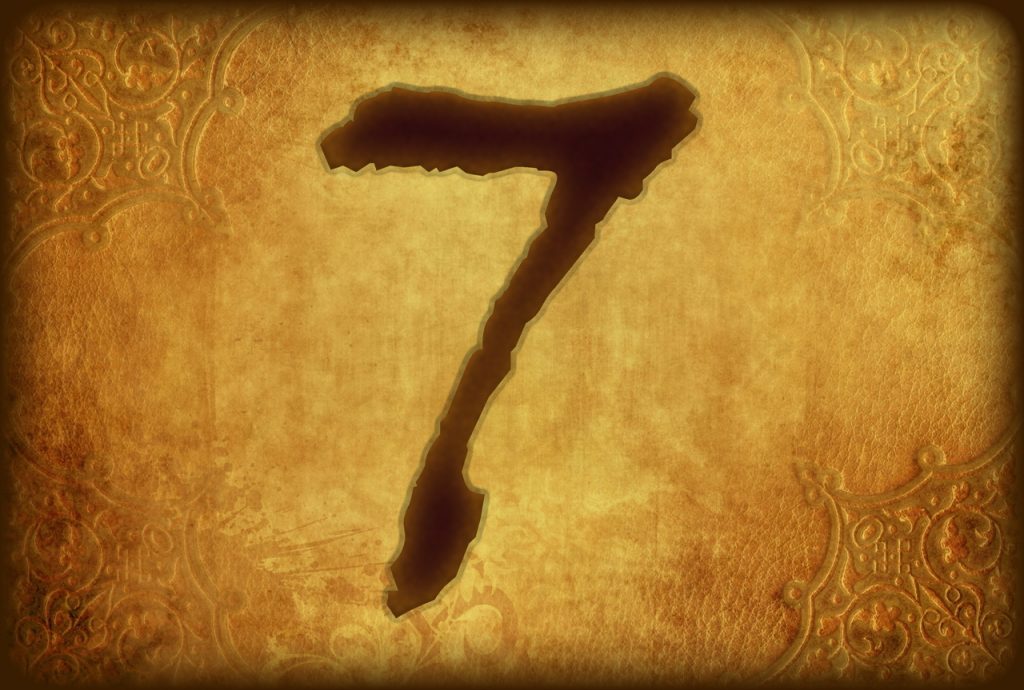
The numbers used by the LORD in His annual feasts are also symbols. For example, seven communicated a sense of “fullness” or “completeness” (שבע “seven” is spelled with the same consonants as the word שבע “complete/full”). In fact, seven is the number that characterizes the weekly Sabbath.[7] This is the day of rest GOD Himself sanctified when He completed the creation of heaven and earth.
Seven is ever present also in the annual feasts, indicating the fullness of blessings the LORD confers on these days. Indeed, seven are GOD’s annual appointments, and seven are also their Sabbaths of rest.
Furthermore, in His sacred calendar, the LORD fixed Passover’s day on Nisan 14th. This date, twice seven, was predetermined at the creation of humanity by the Father to be the day in which He would sacrifice His only Son for our forgiveness. Having completed according to the plan, once for all, the primordial, original redemptive act on the wood of the cross, Jesus, in fact, pronounced «It is finished!» transforming the Passover in a commemorative spiritual anniversary of His first wonderful act for the redemption of those who believe in Him (John 19:30).
Seven days the LORD made also last the following feast, Unleavened Bread, representing the purification from sin that started to take place in the life of Jesus’ followers from Nisan 15th after His death up to today.
Seven weeks after Passover, the LORD fixed the Feast of Weeks, or Pentecost, which started bringing the powerful blessings of the Holy Spirit to complete the spiritual ripening of the human harvest of Jesus.
Then, in the seventh month of His sacred year, the LORD dated His last feasts: Trumpets, Expiation and Tabernacles. Through which, He informed concerning the last tasks that His Son would accomplish to bring at completion the project of redemption.
These activities include: universal warning about the judgment and universal invitation to repentance addressed to the last human generation, and then final absolution, definitive purification and transformation for all His loyal followers ever existed. At last, He ordained the seventh feast, Tabernacles. Even this lasting seven days and ending on the Eighth Day, which is the seventh annual Sabbath of absolute rest and rejoicing, the one depicting the great, unique and perennial day of our new existence with our heavenly Father and Jesus on the earth made new.
The Three Pilgrimage Feasts
It is important to notice that in the written revelation, seven in connection with eight takes up a never-ending value. Significantly, seven and eight are present together in the three pilgrimage feasts to Jerusalem, which is a type of the eternal city built by GOD Himself.
First, the feasts’ cycle opens with eight days of celebration. They are:  the day of Passover, followed by the seven days of the Unleavened Bread.
Second, it progresses with seven weeks of spiritual preparation (49 days). Of which the seventh week (day 42 to 49) are followed by the eighth day, that is the glorious Feast of Weeks (day 50).
Third, the feasts’ cycle ends with other eight days of celebration. They are: the seven days of Tabernacles, followed by the Eighth Day, the seventh annual Sabbath. Indeed, his last Sabbath day is a glorious type of the eternal rest believers will experience in the Jerusalem of GOD (see Lev. 23:39).
Not by chance, all the Sabbaths days established by the LORD for celebrating with Him His three mighty works of creation, redemption and re-creation, are eight: the weekly Sabbath plus the seven annual Sabbaths (Lev. 23). And all eight stipulated as perennial laws of His eternal Covenant with His believing, loyal worshippers (Lev. 23:3,14, 21,31,41).
Feasts’ Chronological Order
The feasts of the LORD have a perfect predetermined chronological order that cannot be broken. Notably, their cycle starts with three spring feasts (Passover, Unleavened Bread, First Fruits). Then it closes with three autumn feasts (Trumpets, Expiation, Tabernacles). In the interior of which there is the Feast of Weeks, or Pentecost, separating and, at the same time, binding the first three to the last three, the beginning to the end of the divine project solving all human problems.
The annual feasts are also interdependent. This is evident by the fact that the meaning and purpose of each one is made clear by the feasts that precede or that follow. For instance without the Passover it becomes difficult to fully understand the meaning and purpose of the Feast of Unleavened Bread, the First Fruits and all the following ones.[8] Instead with the Passover its meaning and fulfillment in mind (Ex. 12), it is easily understood why the LORD ordained the keeping of the seven days of Unleavened Bread to be «as a sign to you on your hand and as a memorial between your eyes», and added, «You shall therefore keep this ordinance in its season from year to year» (Ex. 13:6-10).
[1] Adam Clarke, LL.L., FS.A. & C., Clarke’s Commentary, (New York, NY: Phillips & Hunt, 1830), vol. 1, p.583.
[2] Encyclopedia Judaica, (New York, NY: The Macmillan Co., 1971), vol. 6, p. 1238.
[3] The Stewarton Bible School, has published two booklets entitled The festivals of the God of Israel and The Sacred Calendar of the God of Israel.
This School’s publications, which seem to present a Messianic Jewish interpretation of the Scripture’s prophecies include: Understand the Revelation – Who/What is the AntiChrist? What is his Mark? – The Two Witnesses… Who are they? – Time is Short… Are we nearing the Return of Jesus Christ?
Their free booklets can be requested at www.sbs777.org.uk .
[4] John Ritchie, The Feasts of Jehova Bright Foreshadowings of Grace and Glory, 3rd ed., (Kilmarnock, Sturrock Street: John Ritchie LTD., n.d.), p. B Introduction.
[5] Ibid.
[6] The International Standard Bible Encyclopedia, (Grand Rapids: William B. Eerdmans Pub. Co., 1982), vol.2, p. 293.
[7] Sabbath in Hebrew means rest, abstinence from all work. GOD, after creation, rested and sanctified the weekly Sabbath (see Gen. 1,2). Later, He also established the seven annual Sabbath days, to rest and worship Him as the Author of salvation, in His Messiah, Jesus Christ.
[8] S. Bacchiocchi, God’s Festivals in Scripture and History, Part II: The Fall Festivals, p. 35-40.
Chapter:
[ Feast of Unleavened Bread ]
2. FEAST OF UNLEAVENED BREAD

The Feast of Unleavened Bread (חג המצות) follows immediately Passover. Its institution is recorded in Exodus 12:1-3, Leviticus 23:5-8; Numbers 28:17-25; Deuteronomy 16:3-4,8.
Its celebration starts on the 15th of Nisan (Abib), at the sunset of the 14th, and last seven days. The first and seventh day are Sabbaths, days of worship, and absolute rest from any lucrative activity.
As the name indicates, GOD’s people abstained from eating leaven (yeast) during this feast. In addition, they also removed any kind of fermented food from their homes (Ex. 12:19).
For this feast, the LORD required that the males of His people go to Jerusalem to meet in His presence. At the temple of GOD they joyfully brought thanksgiving gifts for His overabundant provisions (Deut. 16:16; Lev. 23:8). While, to the Levites the LORD ordered an offering by fire for each of its seven days (Lev. 23:8).
In a particular way, the unleavened bread of this feast commemorates the manna that GOD provided directly from heaven to feed His people. In fact, Scripture reports that during the entire forty-years journey in the desert, Israel received daily this wholesome food (Ex. 16:31, 16:35; Deut. 8:3; Josh. 5:12; Num. 9:20).
After the remanent of Israel entered in the land promised, «the LORD said to Joshua, “This day I have rolled away the reproach of Egypt from you.”…Now the children of Israel camped in Gilgal, and kept the Passover on the fourteenth day of the month at twilight on the plains of Jericho. And they ate the produce of the land; and the children no longer had manna, but they had the food of the land of Canaan that year» (Josh 5:9-12).

Centuries later, another remanent of the people of God returned to their promised land after the exile in Babylon. And again, they started their religious celebrations with the Passover and the Feast of Unleavened Bread. Filled with gratitude, Ezra reports, «the descendants of the captivity kept the Passover on the fourteenth day of the first month… ate together… And they kept the Feast of Unleavened Bread seven days with joy, for the LORD made them joyful» (Ezra 6:19-22). Even today, because of GOD’s redemption and blessings, we are called to celebrate this feast with thanksgiving, gratitude, and joy.
Chapter:
[ Feast of Unleavened Bread ]
BELIEVERS AVOID SIN

The seven day Feast of Unleavened Bread reminds believers to avoid sin, and be winners with Christ over every temptation. The Savior who has not sinned, desires that His followers be nourished by His love, justice and truth. Therefore, let us pray and ask constantly for His blessings. He is the One that can enable us to be holy, and winners with Him over every temptation.
«Purge out the old leaven»
The transgression of GOD’s Law has a destructive power upon man. For this reason Jesus exhorts repeatedly His followers to get rid of its curse (Mat. 16:16-12; Mark 8:15)[i]. Believers need to avoid sin, and make efforts to purge out their life from the «leaven» of the Pharisees of ancient time. It represents wickedness, false doctrines, avidity, false religious zeal, distortion of the true spiritual values, omission of justice and love (Mat. 23:14-36). They have also to remove the «leaven» of the Sadducees who lived at Jesus’ time. It symbolizes skepticism, intolerance, cruelty, lack of appreciation of the inspired Scripture and of the power of GOD (Mat. 22:23-29).
Paul wrote about the urgency of abandoning «leaven» such as incredulity, pride and selfishness. He explained to the Corinthians, «Your glorifying is not good. Do you not know that a little leaven leavens the whole lump? Therefore purge out the old leaven, that you may be a new lump, since you truly are unleavened. For indeed Christ, our Passover, was sacrificed for us. Therefore let us keep the feast, not with the leaven of malice and wickedness, but with the unleavened bread of sincerity and truth» (1 Cor. 5:6-8).
How to avoid sin
As it has been evidenced the Feast of Unleavened Bread reminds that GOD sent down from heaven the manna. For forty years, during the entire journey of Israel to the promised land, He provided this nutritious unleavened bread (Ex. 16:35). In the same way, today, every believer needs to feed from GOD’s Law and the testimony of Jesus on daily basis. To ro please the LORD it is necessary to interiorize Scripture, its instructions and promises. This is the provision and the way to be spiritually strong and overcome all the challenges of our journey.
In fact, «… while Passover is the type of Christ’s death Godward, the seven day feast of the unleavened bread, points to the whole course and character of the believer’s life on earth, from the day of conversion onward».[ii] Let us «Repent, therefore» and consecrate our heart, mind and soul to follow Jesus’ example and avoid sin. He can purify us and the Spirit can guide and sustain us with His empowering gifts, to be victorious. Indeed, «He who has an ear, let him hear what the Spirit says to the churches. To him who overcomes I will give some of the hidden manna to eat», promises our Redeemer (Rev. 2:16-17).
[i] Yeast is presented as the agent that makes the kingdom of God grow only in the sanctuary and in Mat. 13:33.
[ii] Ritchie, p. 29.
Chapter:
[ Feast of Unleavened Bread ]
3. FEAST OF FIRSTFRUITS
The Feast of Firstfruits is GOD’s third annual feast. It occurs on the second day of the week of the Feast of Unleavened Bread (Lev. 23:11; Deut 16:9). It celebrated the first grain harvest of the sacred year, the barley. And it started the counting of the seven weeks bringing to the celebration of the second grain harvest, the wheat.
GOD commanded,
«When you come into the land which I give you, and reap its harvest, then you shall bring a sheaf of the firstfruits of your harvest to the priest. He shall wave the sheaf before the LORD; to be accepted on your behalf; on the day after the Sabbath the priest shall wave it». «It shall be a statute forever throughout your generations in all your dwellings» (Lev. 23:9-11,14,15)
For the Feast of Firstfruits, GOD commanded the believer to take a sheaf of barley and give it to the priest. And to the priest He explained, «Then you shall set it before the LORD your God, and worship before the LORD your God. So you shall rejoice in every good thing which the LORD your God has given to you and your house» (Deut. 26:10,11). The sheaf of firstfruits was accompanied by the sacrifice of a lamb without blemish. And an offering of fine flour mixed with oil was added (Lev. 23:10-14).
Recounting GOD’s blessings
The Feast of Firstfruits is another yearly commemoration of the liberation of Israel from slavery and oppression. Gratitude and praise to GOD filled the hearts of the Israelites because of His mercy, blessing and provision. And they joyfully recounted, «My father was a Syrian, about to perish, and he went down to Egypt a. But the Egyptians mistreated us, afflicted us, and laid hard bondage on us.
 Then we cried out to the LORD God of our fathers, and the LORD heard our voice and looked to our affliction and our labor and our oppression.
So the LORD brought us out of Egypt with a mighty hand and with an outstretched arm, with great terror and with signs and wonders…
And now, behold, I have brought the firstfruits of the land which you O LORD have given me…» (Deut. 26:5-10).
Even today, the Feast of Firstfruits calls believers to give thanks to GOD for the gift of freedom from sin. This is indeed a joyous feast of worship and rejoicing before the LORD for all His wonderful works, and blessings.
Chapter:
[ Feast of Unleavened Bread ]
SUMMARY OF THE FIRST ANNUAL FEASTS
Summarizing, the Feast of Passover, Unleavened Bread, Firstfruits and Weeks commemorate the first four amazing events that characterized the deliverance of GOD’s people from slavery, and their walk toward the Promised Land.
Spiritually, they remind the achievement of the first phase of the project solving all human problems. Meaning they point to the wonders that Jesus Christ accomplished at His first coming. Which include: His sacrifice for the forgiveness and cleansing from sin and the spiritual regeneration of repentant believers.
In addition, these feasts indicate the functions that Christ is accomplishing in heaven for His followers on earth. In fact, since He resurrected and ascended to right side of the Father, He has been anointed as High Priest of all believers.
The promises that these four feasts proclaim are fulfilled spiritually in the believers’ life. Starting from the moment they consciously accept Christ as their personal Savior and are baptized by immersion in the name of the Father, the Son and the Holy Spirit.
Furthermore, the blessings by them prefigured continue to be multiplied as believers keep their faith in Jesus. And they are loyal to the terms of the Covenant the LORD has signed with the blood of His Son. Finally, they will become a perennial reality at Jesus’ second coming and in GOD’s eternal kingdom.
The feast of Passover, Unleavened Bread, Firstfruits and Weeks are divine laws to be respected throughout all human generations. And their teachings need to be proclaimed to young and old until the Messiah comes again. They are seals on the foreheads of those who truly believe in the Lamb of GOD, Jesus Christ. Those who faithfully wait to be set free, and to be reunited in GOD’s Kingdom forever.