- HOME
- INTRODUCTION
- FEASTS OF GOD
- 1. PASSOVER- Leviticus 23:5
- 2. FEAST OF UNLEAVENED BREAD - Leviticus 23:6-8
- 3. FEAST OF FIRSTFRUITS - Leviticus 23:9-11,14,15
- 4. FEAST OF WEEKS OR PENTECOST - Leviticus 23: 15-16
- 5. FEAST OF TRUMPETS - Leviticus 23:23,25
- 6. ATONEMENT DAY - Leviticus 23: 32,31
- 7. FEAST OF TABERNACLES OR BOOTHS - 23:34-36
- THE WORSHIP ACCEPTABLE TO GOD
- Conclusion
- Italiano
- Francais
FEASTS OF GOD
The project solving all human problems
Chapter:
[ High Priest ]
SCRIPTURE INTERPRETS ITSELF
Scripture Interprets Itself Through Typology
For an exact and progressive understanding of the written revelation, the LORD communicated with man through tangible symbols, defined “types”. And, from these derives the term “typology”[i], the study of Scripture to understand the originals entities prefigured by the biblical types.
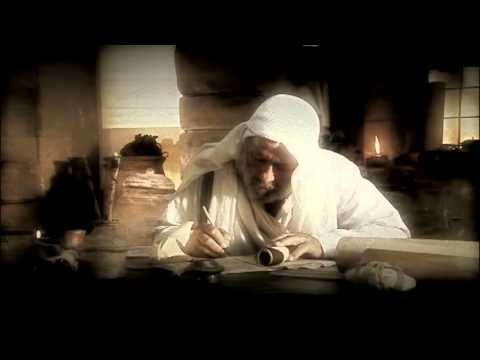
Remarkably the Scripture interprets itself through typology. Consequently, all that is needed is studying it, and watching attentively the events of human history, in particular of Israel. These, in fact, enable to discern when a biblical type and a prophetic event is truly and completely fulfilled in its antitype. And, only at that time, it will be once for all. Then, and only then, interpreters of Scripture receive evidence that their interpretation of a symbol, was correct.[iii]
In antiquity the writers of Scripture were very familiar with this divine method of communication. Consequently, they considered real things, real persons, and real events of the past, types of things to come.
Even today, using typology, this symbolic language can be understood without external references by comparing scripture with scripture.
Man’s Redemption in Types and Antitypes
I. The first sacrifice
 The LORD informed progressively about the means He retained necessary to execute the redemption of repented believers, using types.
Firstly, He disclosed the solution to Adam with the promise of a Messiah that would come only from a woman. His Anointed would defeat the “Serpent”, the “Dragon” by suffering and dying innocently to redeem many. Here, the serpent is a tangible type. In fact, it represents the “devil”, “Satan”, the rebellious angel that took possession of the “ancient serpent” to deceive the parents of humanity (Rev. 12:9).
To Adam and Eve, GOD also specified how the extraordinary Seed of the woman would defeat Satan (Gen. 3:15). In fact, after promising a Redeemer, the LORD presented in types the means through which He would fulfill His promise. And He did this by sacrificing an “innocent animal”, most probably a “lamb”. Then, the LORD, out of love, took the skin of the victim and made garments. And, with them, He covered the parents of humanity, left naked and ashamed of their new miserable sinful condition (Gen. 3:21).
Purposely with this first sacrificial death of an innocent victim, GOD taught to Adam that the Seed of Eve will one day die to make them live. And He also dramatically explained that without shedding of blood there is no remission of sin. Ultimately,this sacrifice prefigured the great sacrifice which, in the latter days, should be offered once for all. Thus, the first death in GOD’s Universe was the sacrifice of Christ in a figure.
II. The substitutionary sacrifice
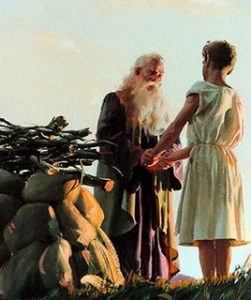 Secondly, the LORD asked Abraham to dramatize the same solution. Trusting in GOD’s promises, our spiritual patriarch offered Isaac, his only legitimate son, as a sacrifice. Yet, as Abraham raised his hands to kill Isaac, the Angel of the LORD stopped him. And, GOD substituted his son with an “innocent victim” He Himself had chosen and provided for the burnt offering (Gen. 22).
This substitutionary sacrifice was a prophetic reenactment. In it, Abraham played the role of our Father who is in Heaven. And, Isaac prefigured GOD’s only Son, sacrificed, once for all, at the fullness of time (John 3:16).
III. The perpetual sacrifice
Thirdly, to the teaching of man’s salvation, GOD added also the spatial dimension through another type, His sanctuary. And, with it He offered other types of the places and means He would use to redeem His believing people. Amazingly, in Scripture the sanctuary typology is used from Genesis to Revelation.
 After liberating Israel, the LORD commanded to build a sanctuary, similar to the one which is in Heaven (Ex. 3:12; 19:11). In obedience, «on the first day of the first month» of the sacred calendar, «the tabernacle was raised up». Then, «the glory of the LORD filled it». Afterwards, «The cloud of the LORD was above the tabernacle by day, fire was over it by night, in the sight of all the house of Israel, throughout all their journey» to the earthly promised land (Ex. 40:17, 35, 38).
In GOD’s sanctuary, the priest offered the perpetual sacrifice, called the “korban tamid” . It was a daily sacrifice of two lambs as burnt offering to maintain a constant relationship with GOD (Exodus 29:38-39). As a matter of fact, one lamb was offered in the morning, and one lamb in the afternoon, each day of the week. In the morning, no sacrifice was before the first lamb. In the afternoon, no sacrifice was after the last lamb. And, they both were holy types, prefiguring the continuous intercession of Christ for the perpetual purification and blessing of repented believers.
The High Priest of GOD
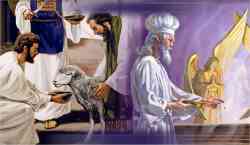 Astonishingly, the sanctuary was a «copy and shadow of the heavenly things» mentioned various times in the book of Revelation (Heb. 8:5).[ii] Indeed, each animal sacrificed on its burnt offering altar was a «shadow of the good things to come» (Heb. 10:1). And, ultimately, it prefigured Jesus Christ, the Savior, the «Lamb of God who takes away the sin of the world» (John 1:29). Who, also, is the «High Priest», the only Mediator between the Father and mankind (John 1:29; Rev. 5:5-6; Heb. 9:6,7, 25).
With the earthly sanctuary and the heavenly sanctuary, the LORD showed how He would accomplish the restoration of His faithful people. Concerning both, «it is what the structures represent, or teach about the great controversy between Christ and Satan, and about the plan of salvation, that matters. The dwelling places of the Deity propose to teach us spiritual truths».[iv]
Without question, what the LORD presents us with His sanctuaries is His good, just and unchangeable will toward fallen man (Ex. 25:22). In fact, He shows in this type the places and wonders through which, at His perfectly fixed dates, He started and will ultimately complete the wonders bringing forth the final rescue of repentant sinners, believing in Him and His Messiah.
Significance of GOD’s Temple
Undoubtedly all that is revealed with the mosaic tabernacle points to the glory of the Father and His saving way with men (Ps. 77:13,19). For this reason, the LORD urged Ezekiel to study it, and to proclaim its message. «Son of man, describe the temple to the house of Israel, that they may be ashamed of their iniquities, and let them measure the pattern. And if they are ashamed of all that they have done, make known to them the design of the temple and its arrangement… its entire design and all its ordinances, and perform them» (Ezek. 43:10,11).
In similar manner, the apostle John, acting the part of true Israel of the last days, was ordered to «rise and measure the temple of God, the altar, and those who worship there» (Rev. 11:1). Indeed, in the penetrating light of GOD’s Good News streaming from the Sanctuary and in its plan, today, the universal people of GOD can be deeply moved through their own sinfulness. And, if they repent, can still find grace, and hear the LORD, from His throne, pronounce the redeeming words, «I will accept you» (Ezek. 43:27, cf. 43:6-27).[vi]
Biblical types testify of Christ
Jesus Christ declared, «You search the Scriptures, for in them you think you have eternal life; and these are they which testify of Me» (John 5:39). Indeed in GOD’s Written Word, many types prefigure the Messiah and His ministry for the redemption of believers.
 It is written, «Your way, O God is in the sanctuary… You are the God who does wonders… You have with your arm redeemed Your people» (Psalm 77:1, 14, 15). Unquestionably, the sanctuary with its rituals presents clearly that it is on earth and through his Lamb, His «only and unique» Son, that our heavenly Father manages the project that will result in the redemption of His people (John 3:16-18). In reality, Jesus came on earth, mysteriously incarnated in a humble human being, to start it. And, He will return, as a glorious King, to complete it.
After His ascension, Jesus is directing the activities leading to man’s redemption from the Heavenly Sanctuary, His actual dwelling place. There, in His tabernacle, the Most Holy Place of GOD, He works on behalf of each repentant believer.[v]
GOD’s redemptive
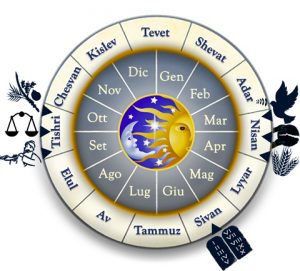 After giving to the teaching of His project for man’s redemption the place and means dimension through His earthly sanctuary, GOD added to it also the time dimension through His weekly Sabbath (Lev. 23:1-3), the seven annual feasts (Lev. 23:4-44), the Septennial and the Jubilee year (Lev. 25).
Especially, the chronology of the annual feasts serves as a divinely ordained calendar. In other words, each feast marks key moments in Israel’s history and represents a specific aspect of GOD’s covenant with His people. And it reveals GOD’s plan for humanity through the progression of the feasts throughout the year.
Concluding, with His appointed times, GOD uses symbolic acts and celebrations that prefigure the redemptive work of His Son, the Messiah. And, all this and more it is revealed through typology, allowing the Scripture to interpret itself.
[i] For further study see website, http://www.theopedia.com/biblical-typology . The Typology of Scripture, (NY and London: Funk & Wagnalls, 1900), I, p. 106; R.T. France, Jesus and the Old Testament (Downers Grove, Ill.: Inter-Varsity Press, 1971), p. 40. Typos, Theological Dictionary of the New Testament. VIII, (Grand Rapids, MI: Eerdmans, 1972), pp. 246-259; Bernard Ramm, Protestant Biblical Interpretation, (Grand Rapids, MI: Baker, 1970), pp. 215-232; Biblical Typology Yesterday and Today, Calvin Theological Journal 5 (1970) pp. 133-162.
[ii] Also Jerusalem is a very dim “shadow” of the city of GOD, (see Heb. 12:22; Rev. 3:12; 2; 22). In fact, the traveling of Abraham toward the earthly promised land and its city, is a type, representing the walk of each individual and family toward GOD’s New Earth and New Jerusalem.
[iii] David H. Stern is a Messianic Jewish theologian. He is the author of the Complete Jewish Bible, a commentary to the New Testament, the Messianic Jewish Manifesto and Restoring the Jewishness of the Gospel, (Clarksville, MD: Jewish New Testament Publications, Inc., first ed. 1984). In the synthesis of this last work titled, Restoring the Jewishness of the Gospel, Section D, Stern mentions four types of Jewish interpretation of Scriptures: the P’shat, Remez, Drash or midrash. These same types are used by the author of this study. For David H. Stern’s publications contact by e-mail: lederer@messianicjewish.net or see website:www.messianicjewish.net.
[iv] Samuele Bacchiocchi, God’s Festivals in Scripture and History, Part II: The Fall Festivals, Biblical Perspectives, (Berrien Springs, MI: 1996), p. 176. Dr. Bacchiocchi is the first non-Catholic to graduate from the Pontifical Gregorian University in Rome. His works include: From Sabbath to Sunday – Sabbath under Crossfire- Immortality or Resurrection? – The Advent Hope for Human Hopelessness – Wine in the Bible, Popular Beliefs – Are they biblical? More information to purchase his publications can be found at: Sbacchiocchi@biblicalperspectives.com; or http://www.biblicalperspectives.com.
[v] Various authors of the Seventh-day Adventist Church, Il Santuario – Il piano di Dio per la Nostra Salvezza, see chapter of Robert S. Folkenberg, “La via degli Altari”, (Falciani, Impruneta, FI: Edizioni ADV, 1996), pp. 18,19.
[vi] For a deeper study on the sanctuary typology see, Wallace B. Nicholson, The Hebrew Sanctuary: a Study in Typology, (Grand Rapids: Baker Book House, 1951. 232.3 n528; Merwin R. Thurber, Symbols of Salvation: How Men are Saved, as Revealed in the Ancient Sanctuary, (Washington D:C:: Review and Herald, 1961, BT 262 .T48; Alfred Felix Vaucher, Le sanctuaire, Collonges-sous-Saleve: Fides, 1970) BT 265 .V37 Heritage; Ellen G. White, Patriarch and Prophets, (Mountain View, CA: Pacific Press, 1958), Chapter 30 “the Tabernacle and Its Services, Chapter 52 – “The annual Feasts”; Christ in the Sanctuary, (Mountain View, CA: Pacific Press, 1969), The Great Controversy between Christ and Satan, (Mountain View, CA: Pacific Press 1950), 488.
Chapter:
[ High Priest ]
Commemoration of Christ’s Sacrifice
 The commemoration of Christ’s sacrifice has to be performed on annual basis on the Passover day. Jesus Himself during His last celebration of the Passover’s meal taught His apostles what to do to commemorate His sacrifice. Matthew reported the manner in which He did it (Mt. 26:26-29; see also Mark 14:22-25; Luke 22:19-20; and Paul, in 1 Corinthians 11:23-26).
Jesus replaced with His own person all the animal sacrifices and offerings performed at the temple for the forgiveness of sin with His own Person. And from there on, at Passover, the grape juice is symbol of His blood. And the unleavened bread is symbol of his flagellated, bleeding body, offered in sacrifice for bearing our penalty.
 Aside from substituting the symbols, the rituals, and the place where to celebrate Passover, Jesus didn’t reform anything else. He didn’t substitute its name, which refers to the “sacrifice” made for the forgiveness of the repentant’s sins. Neither He called it Holy Supper, or Holy Communion, even less, Easter. He didn’t changed the date of this holy day. On the contrary, He died Abib (Nisan) 14th afternoon, perfectly fulfilling even the time of His sacrificial-redemptive death.
Do not change the law of the Most High GOD
GOD has never given authority to man to change His laws. Yet, Daniel reported that there will be humans attempting to change GOD’s instructions concerning His appointed times, or holy convocations. In fact, GOD foretold him, that someone «shall speak pompous words against the Most High, shall persecute the saints of the Most High, and shall intend to change times and law» (Da. 7:25). Regrettably, this prediction has become reality.
With the passing of time, rulers have made the change of name, date, symbols and manner of celebrating Passover. And this way, they lost view of the importance of its perfect, and supernatural fulfillment by Jesus Christ. In so doing, they also obscured the entire plan of GOD for the redemption of believers.
Jesus didn’t need to fulfill Passover as He did. He celebrated it beforehand with His apostles to show that all sacrifices really pointed to His all sufficient sacrifice. Then, He fulfilled it, once for all, replacing all the sanctuary’s types. Jesus even interpreted the types portraying Him given in ancient times. So, the apostles understood the first wonder accomplished by GOD’s Son for their spiritual redemption. And they celebrated Passover, from then on, in the manner in which Jesus instructed them to do it.
The blood of the Covenant shed for forgiveness of sin
Jesus explained to His apostles that He would fulfill Passover’s message. In fact, at His last Passover meal, He took a cup of grape juice, thanked the Father, and invited, «Drink from it, all of you. For this is My blood of the covenant, which is to be shed on behalf of many for forgiveness of sins» (Mt 26:28, from NASB). His blood has ever been the only means to be forgiven, even when it was prefigured by animal blood. Here, it’s also important to notice that Jesus said that He would forgive «many», not “all” people. He will grant forgiveness only to believers who sincerely repent, and turn to faithfully obey God’s commandments.
Some people today find cruel the fact that the LORD ordained the shedding of blood of so many innocent animals. They think animals need to be protected, not killed. These individuals should be reminded that all creatures of earth, humans and animals alike, have been condemned to suffering and death by man’s sin. In reality, no one loves animals more than their Creator to which He still gives life. Who knows the LORD well understands that He is the One that suffers, and has suffered more than anyone else, in seeing His earth devastated, His animals suffering, and even His Son dying innocently because of man’s rebellion.[i]
The earthly sanctuary itself was instituted to point to Jesus’ sacrifice for the forgiveness of sins. An it lost the purpose of its existence at His death. In fact, since the moment Jesus «yielded up His spirit», and the «veil of the temple was torn in two from top to bottom» the mediation of human priests was no longer necessary for the reconciliation with the Father (Mat. 27:50-51; see also Mk. 15:38-41; Lk. 23:45,47-49). Jesus Himself took up the function of the High Priest, the innocent ani sacrificed, and the offerings. Because of this, in the moment that He died, the Father torn the veil that separated the repentant sinner from His most holy presence.
Since then, GOD gave free access to His «most holy place» in heaven (Dan. 9:24), the place where He lives. And it’s from there, that He and our Savior direct the project for our salvation (Ps. 47:8; Mat. 5:34; Rev. 20:11). This is also why GOD allowed that Jerusalem, and the «sanctuary» be destroyed in the year 70 A.D. And, it has not been possible to rebuilt it (Dan. 9:26).
It has to be noted that the cruel death of the LORD’s Messiah did not signal the rejection of Israel’s people and GOD’s Law. It simply abrogated the «sacrifice» of animals, and the «offering» in kind, consummated by fire in the temple (Dan. 9:27). These types being replaced by Jesus Christ, gave also an end to the function of the earthly sanctuary. Since then, the LORD wished that the attention of all humanity be directed exclusively to His only Son. He is His chosen Passover sacrifice, our Redeemer. He is sitting at the right side of GOD’s throne, in the most holy place (Rev. 22:1-3). Let us therefore believe in GOD and in Jesus Christ, repent, obey, consecrate ourselves to Them, and be saved.
[i] The LORD has ordered the sacrifice of His animal creatures to engrave in the mind of man the enormous cost He and His Son would have paid to ransom repentant man from Satan, the adversary. Again, what to say instead of man? Billions of animals are killed by humanity and even by believers in GOD only for the sake of using them as food, or for satisfying their degenerated longing for meat, when they could have fed themselves otherwise. What to say also of people that today seem to show more respect and love for their animal pets than for their Maker?
Chapter:
[ High Priest ]
CHRIST IS THE HIGH PRIEST OF GOD
 The Feast of Weeks proclaims that Christ is blessing believers as the High Priest of GOD. In fact, the high priests who served in the sanctuary of GOD were types of Christ, our High Priest. And, they enacted the ministry He is accomplishing in the Tabernacle of Heaven on behalf of any sincere repentant who believes in Him.
Lovingly, since Adam and Eve sinned, the Father Himself designated Christ «to be Prince and Savior, to give repentance to Israel and forgiveness of sins» to all repentant believers (Acts 5:31, 32; Rev. 5:9-12).
Christ our High Priest
At the first Feast of Weeks of the Messianic era, on the fiftieth day after His resurrection, Christ entered the tabernacle of Heaven (Heb. 9:12). And, there He started His ministry as High «Priest of God Most High» (Gen. 14:18).
 Scripture testifies that our Redeemer and Intercessor is not a successor of a human priest, but of Melchizedech, the «King of righteousness» and «King of peace» of the entire universe (Heb. 7:1-3). Therefore, Christ, as Melchizedech, «remains a priest continually», forever (v. 3, 15-17).
Furthermore, Melchizedech did not present to GOD animal sacrifices, but «bread and wine» (Gen 14:18). And, similarly did Jesus at His last Passover Supper in Jerusalem. In fact, on that holy evening, He established that the unleavened bread and unfermented wine would be symbols and reminders of His body and blood offered in sacrifice to GOD for the expiation of sins.
The earthly and heavenly high priest
This chart below shows that in Christ, the High Priest of GOD, the old earthly priesthood met its antitype. And, when Christ was «cut off» on Calvary, the spiritual values of each animal «sacrifice and offering» were made to cease (Dan. 9:27).
| The earthly high priest – the type | Christ, our heavenly High Priest – the antitype |
| Heb. 7:28; 5:1 Earthly priest called among the people. | Heb. 4:14, 15; 2:16-18 Jesus, our High Priest taken from humanity. |
| Heb. 5:4 The priests did not appoint themselves. Ex. 28:1 Aaron was appointed high priest by GOD, and, his sons, as regular priests. Num. 1:47-52; 3 The remaining men of the tribe of Levi were helpers to the priests. | Heb 5:5,6 Christ appointed by the Father.
Rev. 1:5,6 Jesus through the agency of the Spirit appointed His faithful disciples as His witnesses. |
| Lev. 4:27-31; 16:30 The main function of the priest’s service was taking away the guilt of the community by making atonement for them before GOD. | Heb. 9:22; Mat. 26:28 The main purpose of Jesus’ life and death is to expiate sins, save and bless believers. |
| Lev. 1o:16-18; 6:30 The blood or eaten flesh of every animal sin offering was taken into the tabernacle by the high priest. | 1 Pet. 2:24; Isa. 53; Heb 9:24, 28 Christ bore our sins in His own body. |
| Lev. 4:5,6 The blood was presented before the LORD in the sanctuary. | Heb. 9:12 Christ entered the heavenly Tabernacle of GOD Most High with His own blood. |
| Num. 28 and 29, Heb. 9:6 The priest entered daily in the holy place of the tabernacle to perform the services for forgiveness of sins. | Heb. 9:9,11,14 Jesus’ ministry in the first part of the heavenly Tabernacle continues daily throughout the sacred year. |
Christ offered Himself to GOD
 On the Feast of Weeks, the high priest presented two breads to GOD. He commanded, «You shall bring out of your habitations two wave loaves of two-tenths part. They shall be of fine flour; they shall be baked with leaven; they are the firstfruits unto the Lord» (Lev. 23,17).
Even this ritual points to Christ. First it foreshadows Him offering Himself to GOD and interceding for the forgiveness of sins. Jesus Himself spiritually speaking testified to be «the true bread from heaven». In fact, He declared, «Most assuredly, I say to you, Moses did not give you the bread from heaven, but My Father gives you the true bread from heaven» (John 6:32). «For the bread of God is He who comes down from heaven and gives life to the world» (John 6:33).
Secondly, the presentation of the two breads on the Feast of Weeks, or Pentecost, points to the first Jew and Gentile believers that believed in Christ and that He purified, and offered to the Father.
Christ alone is our Mediator
 Christ alone is our Mediator. He alone does not need, day after day, «to offer sacrifices, first for his own sins and then for the people’s, for this He did once for all when He offered Himself» (Heb. 7:26,27). Therefore, people who still depend on human mediators,[i] reject the ministry that Jesus is performing on their behalf in the Tabernacle built by GOD.
Ou explained, «No one comes to the Father except through me» (John 14:6). This means that we only need Jesus Christ for our redemption. No other human being, male or female, dead or alive, on earth or in Heaven, can replace Him. «For there is one God and one Mediator between God and men, the Man Christ Jesus» (1 Tim. 2:5,6).
In conclusion, only Christ can act as our representative before GOD, because only Him has the authority and power to save us, and reconcile us to GOD.
[i] The mediation of Mary is not biblical. This subject is well explained by Samuele Bacchiocchi, Popular Beliefs – Are they Biblical? (Berrien Springs, MI: Biblical Perspectives, 2008), p. 235-237. See book online at http://www.biblicalperspectives.com.
Chapter:
[ High Priest ]
Jesus’ Activity in Heaven
The Feast of Weeks foretells Jesus’ activity in Heaven as our High Priest and Mediator . In fact, after His sacrifice on Golgotha, the Most Holy Place mentioned by the prophet Daniel was anointed (Dan. 9,24). This is no longer the Israelite temple because it ceased to be God’s dwelling place at the moment Christ died. It’s instead the true Tabernacle of GOD in the Heavenly Jerusalem, where Jesus entered after His ascension. There, Christ, the High Priest of the eternal Covenant, inaugurated His work, by an act which corresponded to the anointing of the earthy tabernacle (see Ex. 40, Num. 9:15, 1 Kin. 8:10).
In fact, after His resurrection, our Savior has being continually active on behalf of all His followers. He blesses by «sustaining the church (Rev. 1:13,20), mediating repentance and forgiveness to believers (Acts 5:31; 1 John 2:1,2; 1:9), making our prayers acceptable to God (John 16: 23-24; Rev. 8:3), providing us with the invisible yet real assistance of His angels (Heb. 1:14; Rev. 5:6; 1:16,20), and bestowing upon believers the essential gift of the Holy Spirit (Acts 2:33)».[i]
Christ makes intercession on behalf of repentant believers
 The Feast of Weeks by celebrating the ingathering of the firstfruits of the wheat harvest, portrays Christ daily blessing His followers, the wheat-people.
Indeed, Scripture explains, «Now,…We have a High Priest, who is seated at the right hand of the throne of the Majesty in the heavens, a Minister of the sanctuary and of the true tabernacle which the Lord erected, and not man» (Heb. 8:1-2).
«He, because He continues forever, has an unchangeable priesthood. Therefore He is also able to save to the uttermost those who come to God through Him, since He always lives to make intercession for them» (Heb. 7:24-25).
Christ makes propitiation for the sins of His people
Christ alone has all the power and authority to pardon sins, save, and sustain believers. «For indeed He does not give aid to angels, but He does give aid to the seed of Abraham». He is the only Savior and Mediator we truly have. For this purpose Jesus became a man, «like His brethren, that He might be a merciful and faithful High Priest in things pertaining to God, to make propitiation for the sins of the people. For in that He Himself has suffered, being tempted, He is able to aid those who are tempted» (Heb. 2:16-18).
The activity that Jesus accomplishes in the GOD’s Tabernacle was also prefigured by the function of the daily sacrifice. As a matter of fact, the high priest sacrificed two male lambs of the first year, every day. The first lamb, offered in the morning, initiated the animal sacrifices. The second lamb, offered in the evening, ended all other sacrifice (Num. 28:1-10).
Christ consecrates faithful believers to GOD
After the sacrifice, the high priest took some of the coals where the lamb was consumed by the fire. And he brought them in the Holy Place, on the altar of perfume to burn before GOD continuously. That perfume always pleased GOD. Therefore He always pardoned all repentant believers living near and far from Jerusalem (Num. 28-29).
The daily sacrifice, the high priest, the ritual of the perfume represented the all sufficient sacrifice of Jesus. It also prefigured Christ as High Priest interceding for His people (Rev. 8:2-4; Dan.12:10; see At 1:5; 2:33; 9:31; Rom. 5:5; 15:13; 16; 1 Pet. 1:2;12). And finally symbolized «the daily consecration of the nation to Jehovah, and their constant dependence upon the atoning blood of Christ».[ii]
Christ gives access to the throne of GOD
 «Within the physical layout of the ancient Israelite camp, the ordinary Israelite worshipper stood several barriers removed from the sanctuary’s innermost sanctum. To gain physical access, it would have been necessary to get by the buffer of priests and Levites and areas surrounding the sacred enclosure. But now, says the author of Hebrews, Christ, our heavenly Priest-Mediator, has opened a door of unlimited access to the heavenly sanctuary itself, the throne room of the living God… »
«Though we do not know the exact form of Jesus’ intercession for us, Scripture offers examples of the idea, albeit from a human standpoint. Two of these occurred in the life of Moses, in connection with the rebellion of Kadesh (Num. 14:10-20), and in connection with the golden calf affair (Ex. 32:9-14, 30-32). These are powerful passages. “But now,” Moses pleads with God in that last reference, “please forgive their sin – but if not, then blot me out of the book you have written” (vs.32, NIV). We also witness such forms of priestly intercession in Daniel (Daniel 9) and in Jesus’ great prayer before His passion (John 17)».[iii]
Plead with Christ to obtain grace
 Jesus’ substitutive, cleansing and sanctifying sacrifice on the cross of Calvary has definitively replaced and abrogated all the sacrifices that the Israelite high priest offered day after day, week after week, and year after year in the court of the earthly sanctuary. Nowadays, as believers repent, Jesus cancels their sins from the records in the heavenly books. In addition, the Spirit assists them with His gifts to be loyal partners of Christ, and royal priests of GOD.
Our Savior cares for us and, on daily basis, assists us in all we need. «For we do not have a High Priest who cannot sympathize with our weaknesses, but was in all points tempted as we are, yet without sin. Let us therefore come boldly to the throne of grace, that we may obtain mercy and find grace to help in time of need» (Heb. 4:15,16).
[i] Samuele Bacchiocchi, Part II: The Fall Festivals, p.165, 166.
[ii] Ellen G.White, Patriarchs and Prophets, p.352.
[iii] Seventh-day Adventist Church, Adult Teachers Sabbath School Bible Study Guide, April-June 2008. The Wonder of Jesus, Principal contributor Roy Adams, (Denmark: Stamborough Press, Ltd.) p. 142. Web site at: http://www.absg.adventist.org
Chapter:
[ High Priest ]
6. ATONEMENT DAY
For the Atonement Day, God instructed,
«It shall be to you a Sabbath of solemn rest, and you shall afflict your souls; on the ninth day of the month at evening, from evening to evening, you shall celebrate your Sabbath» (Leviticus 23:32,31)

The Atonement Day, occurs the 10th of Tishri, starting the ninth at sunset, ten days after the Feast of Trumpets. It is the fifth annual Sabbath, the holiest of all the Sabbaths of the seventh month, and of the year. The Hebrew term for “Day of Atonement” is “Yom-Kippur” (יום כפור). Which literally means “The Day of the Covering Over”, or making an atonement, making reconciliation.
The LORD commanded: «You shall do no work on that same day, 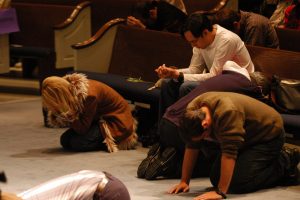 for it is a Day of Atonement, to make atonement for you before the LORD your GOD. For any person who is not afflicted in soul on that day shall be cut off from his people. And any person who does any work on that same day, that person I will destroy from among his people. You shall do no manner of work; it is a statute forever throughout your generations in all your dwellings» (Lev. 23: 28-30).
This holy day, every fifty years, inaugurates the sabbatical year of Jubilee. The word for “jubilee” comes from the Hebrew word יובל (yōḇel) , which means “ram’s horn”. This because the jubilee year started with the blowing of a ram’s horn.
A day of fasting
The Atonement Day is the only day of fasting prescribed by the LORD. The reason for fasting is «symbolized by the sacrifice of the sin-offering, and its presentation and acceptance before Jehovah in the Holy of Holies. Yet, that no one might hence argue from the fact of atonement to license to sin, … the people “should afflict their souls” (Lev. 23:27), namely by fasting, in token of their penitence of the sins for which the atonement was made (Lev. 23:27)».[i]
Judaism affirms that «On Yom Kippur God seals the books of accounting» of man’s works.[ii] In fact, «The LORD commanded that the person who did not observe this day must be cut off from His people. By not obeying the command of God on this day, and seeking the cleansing from his sins through the blood which was shed for him, he showed himself unworthy of life, and practically sealed his destiny and closed his probation.
Whereas the man, though he had sinned during the year, though he had disobeyed and even forsaken the Lord, if he only heeded the command of God and observed this day, and sought pardon through the blood, was forgiven, accepted, and was recognized as one of God’s own. It was, in other words, a day of judgment».[iii]
A Day of Judgement
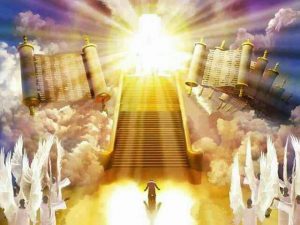 The Day of Atonement is a day of judgment. Christ, in His final testimony to believers, explained how the judgement of humanity takes place. And He informed about books containing the records of all men’s works.
Moreover, John witnessed this judgment. He wrote, «I saw the dead, small and great, standing before God, and books were opened. And another book was opened, which is the Book of Life. And the dead were judged according to their works, by the things which were written in the books» (Rev. 20:12-15).
Christ will judge humanity. He Himself declared, «For judgment I came into this world» (John 9:39). Indeed, it is «the Lord Jesus Christ, who will judge the living and the dead at His appearing and His Kingdom» (2 Tim. 4:1). Surely, «He is coming to judge the earth. He shall judge the world with righteousness, and the peoples with His truth» (Ps. 96:13).
The holiest Sabbath-rest
The Atonement Day, in ancient Israel, was also a day of great joy. The reason for rejoicing was due to what the high priest accomplished in this day. The high priest, in Judaism, was the chief religious functionary in the Temple of Jerusalem. He had the unique privilege to enter the Holy of Holies (inner sanctum), once a year, on the Day of Atonement. And, here, he burned incense and sprinkled the sacrificial animal blood to expiate, once for all, his own sins and those of the people of Israel.
When, he exited the sanctuary, he announced to the people that the LORD had accepted the sacrifice and forgiven their sins. This message of salvation made the people especially thankful and glad in this holy annual Sabbath day.
The Day starting the Jubilee
Jesus is the ultimate, perfect High Priest of GOD’s universal people. After His sacrificial death, He entered the Most Holy Place of Heaven, once for all, by using his own blood, not the blood of goats or young bulls. And there, He makes repentant believers free from sin.
Furthermore, similarly to ancient time, on a future Atonement Day, Christ, our High Priest, will exit the Most Holy Place of Heaven. He will return to his people, complete their redemption, and with them, inaugurate the eternal Jubilee.
Regrettably, Jews ceased to celebrate the Jubilee Year since their captivity in Babylon (around 600 BCE). However, in Israel, they still keep the Sabbath year, (Shemitah in Hebrew), every seven years.
The eternal Sabbatical rest of the ultimate Jubilee will start on a future Atonement Day. For GOD is faithful and merciful. His warning and calling to repentance are true. And His promise of forgiveness is also true.
 He will grant complete freedom from satanic slavery, sin, and death to all who have faith in Him. And He will also give liberty to His entire earthly creation from all the invisible and visible beings that are devastating it. Therefore, let us respond to His call with faith, humility and obedience. And continue to look forward to the great Atonement Day when, we will see our glorious High Priest face to face.
___________________________________________________________________________________
[i] W. Robertson Nicol, Ed., vol. 2, p. 464.
[ii] Victor Buksbazen, The Gospel in the Feasts of Israel, (Philadelphia: The Friends of
Israel Missionary and Relief Society, Inc., 1954), p. 35.
[iii] F.G. Gilbert, p. 260.
Chapter:
[ High Priest ]
CHRIST EXPIATES HIS PEOPLE’S SINS
Christ will expiate, once for all, the sins of His people on the ultimate Atonement Day of this world history. GOD presented this glorious truth as He prescribed the rituals performed by the high priest in the Most Holy Place of the Sanctuary on this annual Sabbath day.
Christ’s blood alone expiates sins
In the morning of the Day of Atonement, the high priest started his activities by offering to God the blood of a lamb. This was the daily morning sacrifice for the forgiveness of God’s people living near and far from the sanctuary. GOD commanded, one lamb in the morning and one in the twilight each day, to start and end the daily sacrificial schedule. This was to be «a continual burnt offering throughout your generations at the door of the tabernacle of meeting before the Lord» (Ex. 29:38-42).
After, the high priest took a bull, confessed his sins and the sins of his family on its head, and sacrificed it (Lev. 16:3,6).
Then, he washed and clothed himself with holy majestic garments prepared just for ministering in the Most Holy Place of God’s sanctuary (Lev. 16:4). He did this only once a year to present Himself before GOD for receiving the final forgiveness of sins.
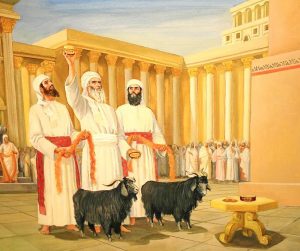 At this time, the people brought to the high priest two goats. And he, in turn, presented them before the door of the tabernacle and casted lots (Lev. 16:7). This way, GOD appointed «one lot for the LORD and the other lot for the scapegoat» (Lev. 16:7-8).
After, the high priest sacrificed the goat of the LORD, for the first time in all the year, without any confession of transgressions on its head.
The blood of the lamb, the bull and the goat for the LORD was a type of Christ’s sacrificial blood. In fact, when Jesus held His last Passover Supper with His disciples, He declared, «This cup is the new covenant in My blood, which is shed for you» (Luke 22:20). And with this statement, He gave an end to the value of each «sacrifice and offering» presented by the Israelite priests (Dan. 9:27).
Christ’s blood atones sins
Following, the high priest took the goat’s blood, together with the bull’s blood, into the Most Holy Place. Where he could enter only once a year, on the Day of Atonement. And there, he sprinkled it «seven» times «over the mercy seat and in front of the mercy seat» (Lev. 16:15-19). While the place was enveloped by a cloud of incense taken from the altar of perfume.
Then, the high priest returned in the Holy Place. And, with the blood of the bull and of the goat, he sprinkled also «seven» times the altar of perfume (Lev. 16:16). He did this because the record of sins was in the Holy Place, through the lamb’s blood that cleansed them.
In fact, GOD said, that through these procedures, the high priest «shall make an atonement for the holy sanctuary, and he shall make an atonement for the tabernacle of the congregation, and for the altar, and he shall make an atonement for the priests, and for all the people of the congregation» (Lev. 16:33). The LORD commanded this «because of their transgressions» (Lev. 16:16).
Christ alone purifies GOD’s people
In the time of the Temple, the high priest was a type of Christ. And the ministry he accomplished, was also a type of the ministry that Christ accomplishes in the Most Holy Place of Heaven. In reality, the sacrifice of Christ revealed the end of the levitical priesthood, and the empty tomb declared the birth of a new priesthood—one that would never die. For wonderfully, this priesthood came to life when Jesus rose from the grave.
The fact that on the Day of Atonement only the high priest made the final purification, signifies that Christ alone can expiate sins and purify GOD’s people. Scripture provides evidence of this truth. Indeed, concerning the task of the high priest, GOD Himself commanded, «There shall be no man in the tabernacle of meeting when he goes in to make atonement in the Holy Place, until he comes out, that he may make atonement for himself, for his household, and for all the assembly of Israel» (Lev. 16:17).
Christ alone is our Savior. It is He who forgives, cleanses and restore our soul to the origins of humanity. He will soon perform the final and complete purification of repentant people and of the tabernacle of GOD (Lev. 16:17). Let us therefore give ourselves to Him. For He in His atonement gave Himself to save us.
Christ alone is our High Priest
On the Day of Atonement, after the high priest completed the purification in the Most Holy Place and in the Holy Place, he changed his clothes and left them «there» (Lev. 16:23). Then, he came out of the tabernacle of GOD, and back to the people bringing the good news of final absolution.
Similarly, Christ accomplished the expiation of GOD’s people, once for all, by pouring His own blood on the Mercy Seat. After He finished His mission, He rested in the tomb. Then, resurrected, and left His «linen cloths lying there», in the tomb (John 20:5-7). And finally, ascended to Heaven and presented Himself to our eternal Father. Even this is «a powerful testimony to Christ’s priesthood. While the priests of Israel all died, this high priest was raised to life, never to die again. And more, he would now live to intercede for his own (John 17, as their exalted high priest”. [i]
Our High Priest will return
On the Atonement Day, GOD’s people waited outside the Tabernacle until the high priest would come out of it. In repentance and in prayer, they pleaded GOD to express a positive verdict, «from above the mercy seat, from between the cherubim which are on the ark of the Testimony» (Ex. 25:22; Lev. 16:2). And exceeding joy and gratitude filled their hearts as they saw that GOD had answered their prayers.
Soon, Christ, our eternal High Priest, will come out from the Most Holy Place of the Tabernacle in Heaven. When He will finish the final expiation of sins, He will cloth Himself with majestic garments and will return gloriously. Thousands and thousands of angels will be with Him. At His appearing, the trumpets will sound, announcing the beginning of the eternal Jubilee. And, «in a moment, in the twinkling of an eye, ... the dead will be raised imperishable, and we shall be changed. For this perishable body must put on the imperishable, and this mortal body must put on immortality» (1 Cor. 15:52-53).
The end of Satan
 On the Day of Atonement, after the high priest came out of the Tabernacle with the good news of God’s forgiveness, he laid his hands on the head of the second goat, named Azazel. And he confessed on it all sins. Then, he ordered that the animal, symbolizing Satan, be sent to die in the desert (Lev. 16:7-10). That meant, in the land devastated and inhabited by the demons (Mat. 4:1; Luke 8:29; see also Job 38:26; Jer. 33:10).
Through the destiny inflicted to this second goat, GOD predicted the manner in which, at the conclusion of His people’s redemption, He will put on Satan the responsibility of all sins. He will condemn him to destruction, and will take away, once for all, his despotic and evil dominion on earth.
Here in type, the one who introduced iniquity in the government of God receives the right punishment. The responsibility of having induced men and women to rebel against GOD is put on his head. As the scapegoat is brought to die in the desert, at the end of all things, GOD will deliver Satan to the abyss (Rev. 20:1). And finally He will cast him into the lake of fire, where he will find his inexorable destruction.
Christ defends repentant believers
No matter how grievous are the sins, Jesus defends those who sincerely repent and put in Him their hope. For this John affirmed: «My little children, these things I write to you, so that you may not sin. And if anyone sins, we have an Advocate with the Father, Jesus Christ the righteous. And He himself is the propitiation for our sins, and not for ours only but also for the whole world» (1 John 2:1,2).
 The problem lies within us if we think that we do not need to repent because our sins are not serious enough. Indeed, «if we say that we have not sin, we deceive ourselves, and the truth is not in us». Instead, «If we confess our sins, He is faithful and just to forgive us our sins and to cleanse us from all unrighteousness» (1 John 1:8,9).
Again, the Father didn’t send His Messiah to condemn us. However Jesus has to have the proof of a moral behavior motivated by a living faith to save us. In fact, he who «believes in Him is not condemned, but he who does not believe is condemned already, because has not believed in the name of the only begotten Son of God» (John 3:17-18; see also Rom. 1:17).
Active faith pleases GOD
Jesus affirmed: «Whoever confesses Me before men, him I will also confess before My Father who is in heaven» (Mat. 10:32-33). And added: «He who has My commandments and keeps them, it is he who loves Me. And he who loves Me will be loved by Father, and I will love him and manifest Myself to Him» (John 14:21).
These two statements teach that the result of our final evaluation will be absolution or condemnation, on the basis of our trusting and obeying Christ, following His example . Although the greatest «commandments» Jesus gave are two, they are so high, so low, so wide and so narrow in their demands, that we cannot skip a moment of our existence in doing otherwise, if not at risk of our eternal life (Mat. 22:37).
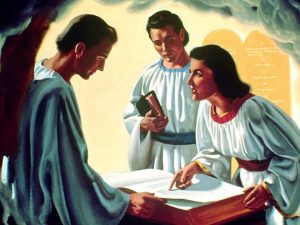
Indeed, Jesus is evaluating how men, women and children express their love for GOD and their neighbor. Our guardian angel writes down our words and works in the book of records (Mal. 3:16; Neh. 13:14; Ps. 56:8). Beside this one and the book with the records of sins, in Heaven, there is also the book of life. The latter contains all the names of those who put their trust in GOD and His beloved Son, Jesus Christ. And of who also follow His commandments (Rev. 20:12; Luke 10:20; Phil. 4:3; Rev. 21:27; 3:5).
Confess your sins to Christ alone
Some Christians still believe that in order to receive spiritual cleansing is necessary to confess the sins to a priest. However Scripture does not make such a statement. In fact, it never reports the confession of sins on the head of an Israelite priest. Jesus alone is the Lamb of God that died to take away sins (Mat. 9:6; Mark 2:10; Luke 5:24). No other man. Therefore, to Him alone sins need to be confessed. For to Him alone has been given the authority to cancel them from our heavenly records.
It is the duty of every believer and religious leader of today to lead people to Christ. He died for expiating their sins, and He is alive for doing it. The persons that neglect to do this, should remember that they, too, will be judged according to their thoughts, words, actions and omissions (Mat. 10:32-33).
Indeed, it is necessary to ask Christ to expiate our sins of omission. This act may seem useless or humiliating for those who do not understand the gravity of omission. Yet, it is exactly the person that trusting in Jesus’ grace, humbles himself before Him, confesses, asks forgiveness and makes efforts to change behavior, who will obtain final cleansing and full redemption.
Religious leaders do not save
Even priests and religious leaders need to go to Jesus in repentance to ask forgiveness (Rom. 3:23). This truth is made evident by the fact that even the Israelite high priest confessed the transgressions he committed on the sacrificial victim. And He confessed to GOD not only his trespasses by also the those of his family. This is something that each father, or head of a household, should do for each member of his family.
This task, regrettably, is not accomplished correctly by various religious leaders. In fact, some of them evaluate the moral cases distressed people bring to them, and then absolve or condemn whom they think best. Not understanding that, in doing so, they are taking the place that is of Jesus by right.
Other religious leaders fear to be rejected if they point out, even privately, the sins their church members are committing. And they do not make an effort to talk with their members about their need of repentance. So, they leave the believers disoriented and confused about their spiritual condition. Until their iniquity ferments like the yeast and explodes in tragedy for the individual and their entire congregation.
Christ invites to go to Him alone
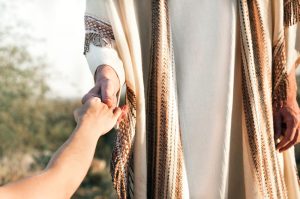 Furthermore, other religious leaders have assumed the psychologist’s function. And, they believe that this way they can help others to change their minds and practices. Yet, Jesus invited: «Come to me all you who labor and are heavy laden, and I will give you rest» (Mat. 11:28,29,30; see Jos. 1:5; Ps. 30:5; 37:23,24; 84:11; 147:3; Isa. 33:16; 40:31; 49:25; 54:13; Rom. 4:21; 8:28; 1 Cor. 15:57; 2 Pet. 2:9; 3:9).
Consequently, persons who neglect to invite people to confess, repent, forgive, and bringing matters to Jesus, are doing wrong. And people who take in their own hand the moral dilemma of others, are doing wrong, too. Because, practically, they deny the love and power of Jesus to help the sinner and the afflicted. Surely, Jesus will not leave unpunished forever the person that neglects, obscures and puts aside the activity that He accomplishes on behalf of repentant, distressed sinners, in the Holy and Most Holy Place of Heaven.
What please God is faith manifested through genuine love for Him and our fellowmen. It is goodness lived moment by moment in continuous relation with Jesus, the Spirit and the Father. Worshipping GOD in spirit and truth is not a theory of the mind, a philosophy of life, or a weekly good feeling about ourselves and God at church. Neither it is an occasional nice thought and action toward God and our neighbor. It is to think, speak and act like Christ at every breath we take.
Repent!
It is necessary to warn all of the danger of persevering in living a selfish, immoral, arrogant life. Only interceding for them is not enough. Scripture gives evidence of this fact with Moses’ prayer. He interceded for the forgiveness of the rebellious and sinful Israelites. But it was not enough. «The LORD said…: “Whoever has sinned against Me, I will blot him out of My book”» (Ex. 32:33, 31-32). Therefore, until there is time, let us join Jesus and say to all our fellowmen who we know that they are in sin, «repent»! Because Jesus needs to see positive changes in words and actions, to keep their names in the Book of Life (Rev. 3:3,5).
Another condition to be forgiven is to forgive those who have sinned against us (Mat. 6:12; John 20:23; 1 John 1:9). Christ forgave even His enemies. In His agony, He even prayed, «Father, forgive them, for they do not know what they do» (Luke 23:34). Let us follow His example and forgive others all the times. Christ will defend us , bless us, and vindicate our name.
GOD gives a crucial warning on yearly basis with the message of the Atonement Day. He declares, «For any person who is not afflicted in soul on that same day, shall be cut off from among his people» (Lev. 23:29) . That’s why it is so important to keep this annual Sabbath with a humble attitude, for introspection, repentance and supplication for the eradication of sin from our life.
[i] David Schrock, The Clothes Make the Man: Seeing the Priesthood of Christ in John’s Gospel, April 2023; https://christoverall.com/article/concise/the-clothes-make-the-man-seeing-the-priesthood-of-christ-in-johns-gospel/#:~:text=And%20for%20all%20those%20who,mediator%20of%20a%20new%20covenant.
Chapter:
[ High Priest ]
THE SON OF GOD WITH US
The Feast of Tabernacles foretells that the faithful believers will live with GOD and His Son forever. In fact, this feast with its special shelters built exclusively from branches of GOD’s creation, points to the New Eden.
Make Me a sanctuary
As Israel walked free toward the promised land, GOD commanded: «Let them make Me a sanctuary, that I may dwell among them. According to all that I show you, that is, the pattern of the tabernacle and the pattern of all its furnishings, just so you shall make it» (Ex. 25:8,9).
The Hebrew word for “sanctuary” is mikdash (מקְדָּשׁ). It comes from the root word kadash (קָדַשׁ), and means a “sacred place” where God is present. In the wilderness it was the tent of meeting; in the time of Solomon it was the Temple at Jerusalem. In both places, the LORD’s presence was made visible as a pillar of smoke during the daytime and a pillar of fire at night.
GOD’s sanctuary on earth
 In Israel the sanctuary provided a holy place for meeting with the LORD. GOD required of all who entered it to worship, or served in it a state of purity. Because of its sinful nature, Israel could not withstand the presence of GOD. Therefore, to avoid its annihilation, first a «cloud covered the tabernacle of meeting». Then, «the glory of the LORD filled the tabernacle» (Exodus 40:34-38).
From there on, day after day, the LORD led His people mightily, and lovingly. Until He introduced them in the land He had promised to Abraham, Isaac and Jacob. A glorious fertile land, where they could enjoy «milk and honey» (Ex. 40:34,38; 3:8; Num. 13:28).
The sanctuary was a microcosm representing in its three places Jesus’ ministry at His First Coming and Second Coming. First, He is the “sacrifice” and the “offering” through which a repentant person obtains the forgiveness of sins. In other words, He is the Suffering Servant (Is. 52:13–53:12). Then, He is also the “High Priest“, the Mediator between GOD and man. . Ultimately, at His Second Coming, He is the “Judge”, the “King of kings” and the “Lord of lords” (Rev. 17:14).
GOD had to separate Himself from His human creatures because of sin. Yet, He is «Emmanuel», which interpreted means «God with us», through His unique Son (Mat. 1:23; Isa. 7:14). John understood this wonderful truth, although Christ’s divine glory at His incarnation was veiled by human flesh. That’s why he started His written testimony about Jesus, declaring: «In the beginning was the Word, and the Word was with God, and the Word was God… And the Word became flesh and dwelt among us, and we beheld His glory, the glory as of the only begotten of the Father, full of grace and truth» (John 1:1,14).
Jesus’ birthday
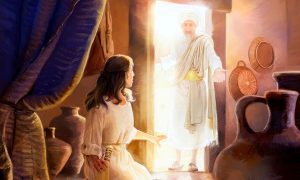 It is almost certain that he date of Jesus birth as the Son of Man was about the time of the Feast of the Tabernacles. Various logic reasons bring to this conclusion. Many religious scholars believe that Jesus was thirty three and a half years old when He was crucified. If this age is subtracted, it brings back to the beginning of autumn (end of September – beginning of October). This calculation takes His birth on, or around, the Feast of Tabernacle, at the beginning of autumn.
Second reason, the shepherds could not possibly be out at night in the chilly temperatures of winter. Third, historians inform that December 25th in antiquity celebrated the birth of the sun (Dies Natalis Solis Invicti), the winter solstice. In fact, only in the year 336 AD, it was repurposed to commemorate the birthday of Jesus.
Christ condemns pagan traditions
Regrettably, the birth of Christ fixed on December 25th, has obscured Jesus’ testimony by dissociating the message of the last three feasts from His Second Coming. Because of Christmas, their celebration is neglected. And their glorious spiritual message forgotten by many.
The world should be better informed that when Christ came the first time, He started, once for all, the project of redemption. And that He will come back, to complete it for good. Today, Christmas focuses only on consumerism and humanity, sentimentalism and emotions, not on the incarnation of the Son of GOD for man’s salvation.
 Human tradition has abrogated, the Feast of Trumpets, the Day of Atonement and the Feast of Tabernacles. And it has replaced them with feasts based on pagan celebrations, such as the feast of the dead (November 1st). That is the day of honoring dead idols sanctified by humans. Then, it has also added the day of Mary’s Immaculate Conception (December 8th), that is another idol. These and other feasts are pagan traditions that obscure the true knowledge of the Father, the Son and the Spirit. Moreover, they cloud the activity Jesus is performing to give us «the right to become children of God» (John 1:12). They should have no place among the people of GOD.
Christ Himself speaks negatively against human traditions that contradict GOD’s laws. And even today, He asks, «Why do you also transgress the commandment of God because of your tradition?» (Mat. 15:3). Why the great majority of Christianity does not keep the commandments concerning the GOD’s annual feasts and annual Sabbaths, written in Leviticus, chapter 23?
Jesus is the safest shelter
The Feast of Tabernacles reminds all believers that in Jesus we have the safest shelter of all. He is the invisible Captain who accompanies us in the paths of righteousness that will ultimately lead to our perennial Home.
For Israel, sojourning in a desolate land,  «the LORD went before them by day in a pillar of cloud to lead the way, and by night in a pillar of fire to give them light, so as to go by day and night» (Ex. 13:21,22).
In a similar manner, Jesus is now preparing our eternal tomorrow. He is our omnipotent protector, benefactor and sustainer, the One who is preparing our heavenly Home (John 14:2,3).
Christ with His people forever
In the fullness of time of about 2000 years ago, Christ came to His people and became their Savior. Likewise, in the second fullness of time, He will return gloriously with His holy angels. And they will gather to Him His saints past, present and future. Then, He will lead them to the glorious place He prepared for them (John 14:1-3). And there, «He will dwell with them, and they shall be His people, God Himself will be with them and be their God» (Rev. 21:3).
 All who belong to Him by creation’s and redemption’s right will suffer no more. «They shall neither hunger anymore, nor thirst anymore; the sun shall not strike them, nor any heat; for the Lamb who is in the midst of the throne will shepherd and lead them to living waters» (Rev. 7:15,16,17).
There, «God will wipe away every tear from their eyes; there shall be no more death, nor sorrow, nor crying. There shall no be no more pain, for the former things have passed away» (Rev. 21:4).
Jesus is the Light of the world
A meaningful ritual performed at Jesus’ time during the Feast of Tabernacles was the illumination of the temple at night. Women lighted the court through a gigantic lamp stand that provided light for the nocturne celebrations. Even this context provided the opportunity for Jesus to direct the mind of His people to Himself.[ii] «I am the light of the world, He who follows Me shall not walk in darkness, but have the light of life», He declared (John 8:12; see also 9:5; 12:46).
Churches are filled with women who love the LORD and want to rejoice serving Him, even today. They, too, have an important task to accomplish in these evil times of spiritual darkness. They need to make the light of Jesus’ testimony and accomplishments shine in their surroundings and in the world.
 It is not by coincidence that Jesus used the parable of the ten virgins. He did it with the precise purpose to exhort especially His female followers to be on the alert and prepared to welcome Him, as their Bridegroom. Do you remember? Five virgins were sleeping and their light went out because they did not have enough oil. While the other five virgins made the flame of their lamps shine to prepare the way for the bridegroom.
By this parable Jesus warns all female believers who are waiting Jesus’ Second Coming but live a passive religion. Omitting to give a testimony of Jesus to others who do not know yet Him well, may result in their rejection. He does not wish to come back and say to negligent women: «I do not know you» (Mat. 25:12).
Be a light to the World
All young, adult and elderly women who truly love GOD have to glorify Him and His beloved Son. Jesus declared: «you are the light of the world. A city that is set on a hill cannot be hidden. Nor do they light a lamp and put it under a basket, but on a lamp stand, and it gives light to all who are in the house… Let your light shine before men, that they may see your good works and glorify your Father in heaven» (Mat. 5:14,16). This is the exhortation that comes from the heavenly sanctuary of GOD.
 Let us make the Law of GOD and the Testimony of Jesus shine! Tell people, first of all, that Jesus loves them, and died to forgive, bless, and redeem them. Let us not be weary in accomplishing Jesus’ mandate just because this world is dominated by man’s abusive power. Serve GOD enthusiastically, until we will find ourselves together in the New Jerusalem, in the Tabernacle of our LORD. Where there is «no need of the sun or the moon to shine in it, for… The Lamb is its light. And the nations of those who are saved shall walk in its light, and the kings of the earth bring their glory and honor into it» (Rev. 21:23-26; 22:5).
GOD’s glorious throne
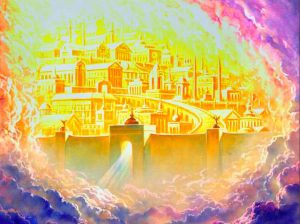 Still today, «The prophetic message of the Feast of Tabernacles is that there is shelter in the Tabernacle of God under the wings of the shekinah glory, for the Jews first, and also the Gentile nations».[i] This, because the Father «shows no partiality. But in every nation whoever fears Him and works righteousness is accepted by Him» (Acts 10:34).
This promise is sure. Since now, it finds its fulfillment in the protection GOD provides, day and night to Christ’s followers. All Israelites and Gentiles who put into practice His laws and keep trusting in His Son’s testimony will be accepted by GOD (See Rev. 12:17; 14:12). And soon will find themselves in the Heavenly Tabernacle, the New Jerusalem. Where «He who sits on the throne will dwell among them» forever (Rev. 7:15).
[i] V. Buksbazen, p. 40.
[ii] Samuele Bacchiocchi, part II, The Fall Festivals, p. 46.