- HOME
- INTRODUCTION
- FEASTS OF GOD
- 1. PASSOVER- Leviticus 23:5
- 2. FEAST OF UNLEAVENED BREAD - Leviticus 23:6-8
- 3. FEAST OF FIRSTFRUITS - Leviticus 23:9-11,14,15
- 4. FEAST OF WEEKS OR PENTECOST - Leviticus 23: 15-16
- 5. FEAST OF TRUMPETS - Leviticus 23:23,25
- 6. ATONEMENT DAY - Leviticus 23: 32,31
- 7. FEAST OF TABERNACLES OR BOOTHS - 23:34-36
- THE WORSHIP ACCEPTABLE TO GOD
- Conclusion
- Italiano
- Francais
FEASTS OF GOD
The project solving all human problems
Chapter:
[ liturgy ]
THE ANNUAL FEASTS
«These are the feasts of the LORD, holy convocations, which you shall proclaim at their appointed times»
(Leviticus 23:4)

The annual feasts of the LORD are:
1. The Passover (Lev. 23:4-5 – Ex. 12:1-8; Num. 28:16; Deut. 16:1-2);
2. The Feast of Unleavened Bread (Lev. 23:6-8 – Ex. 23:14-15; Num. 28:16-25; Deut. 16:1-8, 16-17);
3. The Feast of the First Fruits (Lev. 23:9-14);
4. The Feast of Weeks or Pentecost (Lev. 23:15-22 – Ex. 23:16-19; Num. 28:26-31; Deut. 16:9-12, 16-17);
5. The Feast of Trumpets (Lev. 23:23-25 – Num. 29:1-6);
6. The Atonement Day, (Lev. 23:26-32; Lev. 16; Num. 29:7-11) and
7. The Feast of Tabernacles (Lev. 23:33-44; Ex. 23:16-17; Num. 29:12-39; Deut. 16:13-17).
GOD’s Appointed Times
The Hebrew language uses mainly two terms that refer to a feast: “mo’ed” which that translated means “an appointed time”, an “assembly”, a “solemn assembling”, a “holy anniversary”[1], and “hag” which means to “celebrate” and to “make a pilgrimage” (See Ex. 23:14-19; Deut.16:16-17). The “feasts” in ancient times were all «the appointed seasons of the LORD», (in Hebrew מוֹעֲדֵי יְהוָה – Mo’edi’ Yahweh), established on mount Sinai (Lev. 23:2,4). Among them there is the Day of Atonement, that is a feast and also a fast, the Sabbath of all Sabbaths.
Feasts’ Calendar
The seven annual feasts have their origins with the calendar established by the LORD. In fact on the fourth day of creation, «God said, “Let there be lights in the firmament of the heavens to divide the day from night; and let there be for signs and seasons, and for days and years» (Gen. 1:14). Indeed, if the LORD had not created this calendar in the beginning, humanity wouldn’t have known how to calculate time and the days GOD has planned to meet with believers.
According to the calendar of the LORD, the day begins at sunset and ends at sunset (Gen. 1; 1 Kin. 22:35-36; 2 Cr. 18:24; 2 Sam 3:3), the months start and end when the new moon can be seen, and the year begins at Israel’s spring, at the new moon nearest the true equinox,[3] in the month of Abib, or Nisan (Ex. 12:1,2; 13:4; 34:18), fourteen days before Passover.
This study focuses on the seven annual feasts and Sabbaths, although it will not neglect the other Sabbaths commanded by the LORD: the weekly, the Septennial, the sabbatical year, and the Jubilee, the fiftieth, which are years of special rest and deliverance for both man and earth (Lev. 25).
Feasts’ Observance
Three components distinguish the annual feasts: «1. Rejoicing, which mostly takes the form of ceremonial meals (with the exception of the Day of Atonement), and on the more important biblical festivals, the prohibition of work; 2. The liturgy – or in temple times, the special sacrifice and offering service; and 3. Particular ceremonials of the festival, such as eating the matzo on Passover…».[2]
None of the religious denominations having the origin of their faith found in the Jewish Scripture has observed the annual feasts regularly in the manner it was prescribed by the LORD and practiced and taught by Jesus. Israel abandoned them in the periods of apostasy and revived their observance in times of spiritual reform and faithfulness to GOD.
On the other side, Christianity and Islam have changed their names and dates losing memory of what their message is. Various denominations have even ceased to celebrate them altogether. The reasons they give for this are diverse. Some believe that the annual feasts of Leviticus 23 belong exclusively to the Jews. While others attest that the feasts have been abolished with the sacrifice of Jesus Christ. Others still affirm that feasts and sacrifices have been completely taken away at the destruction of the temple (70 A.D).
GOD’s Feasts are Mandatory Laws
Scripture states that all the feasts established by the LORD are mandatory laws to be kept “generation” after “generation”, in every place where those who profess to love the GOD of Abraham, Isaac and Israel, will live (Ex. 20:8-11; Lev. 23:14,21,31,41; Lev. 25:18). Therefore, for Israel, Christianity and all other believers, the feasts of the LORD remain a way to worship Him as Creator and Savior, a foretaste of GOD’s grace and of joyful communion with fellow men, in which everyone can rejoice and be glad.
Feasts’ Nature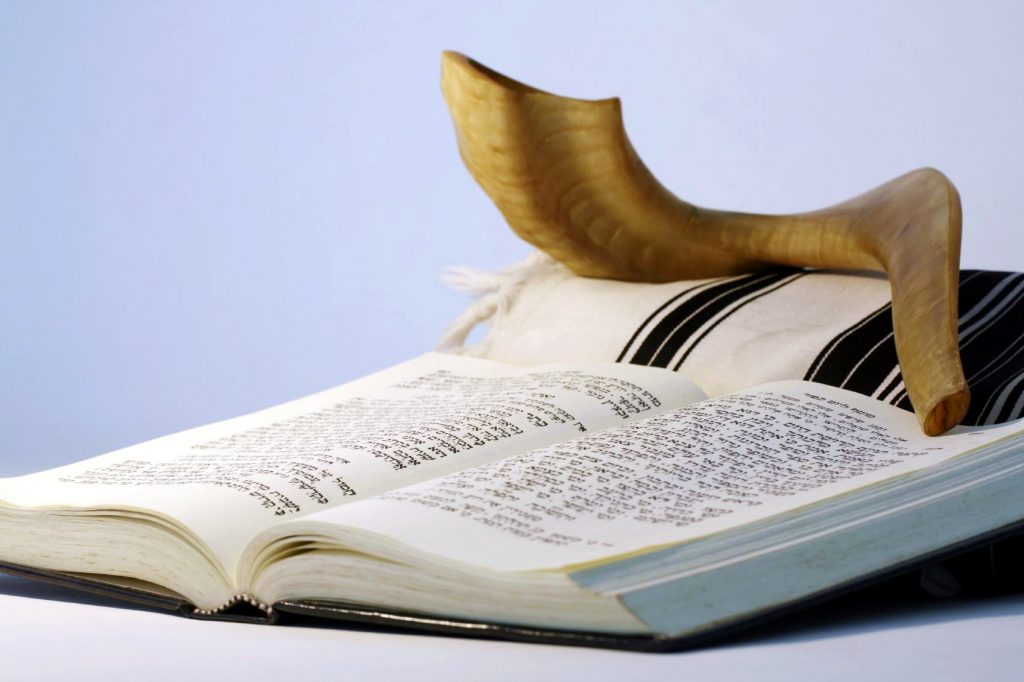
GOD’s annual feasts have a peculiar nature. They are typical, prophetic and commemorative. First, they are typical, real shadows, tangible models, because they «contain in typical language a record of God’s dealings with man in grace from the death of Christ to His millennial kingdom»[4]. Indeed, they are real appointments that He has set to be kept for meeting with Him on specific days. At the same time, the feasts are also types, meaning that their message points to the Messiah’s ministry. And, it presents the project that He is executing for the redemption of repented believers. More specifically, the feasts of the LORD indicate:
- The phase that Jesus Christ has already completed, once forever, at His first coming on earth (first three feasts).
- The activity of intercession He is accomplishing, as High Priest, in Heaven, on behalf of believers (fourth feast). While the Spirit, His Agent on earth, prepares, once forever, believers to receive the citizenship for His new kingdom.
- The ultimate works through which our Savior, in the future, will accomplish, once forever, the complete redemption of His people. And, finally, He will fulfill all other promises He has made (last three feasts).
Second, they are prophetic. meaning a real «foreshadowing of great events of the future part of which have since been fulfilled and part of which are yet to be».[5]
Third, when totally fulfilled in all their details, they are commemorative. They become delightful reminders of specific wonders accomplished by the LORD, once and for all, in the past.
Feasts’ Purpose
It is worthy of notice that the word «seasons», in Hebrew “mo-adim”, has the same meaning of “sacred seasons”, “feasts” and “appointments”. This means that the first reason for which our Creator has established His calendar with the lights of our solar system is for directing His worshippers to identify and respect His spiritual appointments on the days that He Himself had fixed to execute and then commemorate His mighty works in their behalf.
The time these days of celebration were ordained and their purpose are also important. The LORD gave these solemn days of worship and rejoicing to the people during the exodus. After He delivered them from the oppression of slavery, and while they traveling toward the promised land, He ordained His feasts, «…as divinely expressions of the moral obligation of His people, as memorial of God’s saving acts in the past, as sacrament of His sanctifying power in the present, and as types of His anticipated victory over sin in the forthcoming first and second advents of Jesus Christ».[6]
 Seven in the Feasts
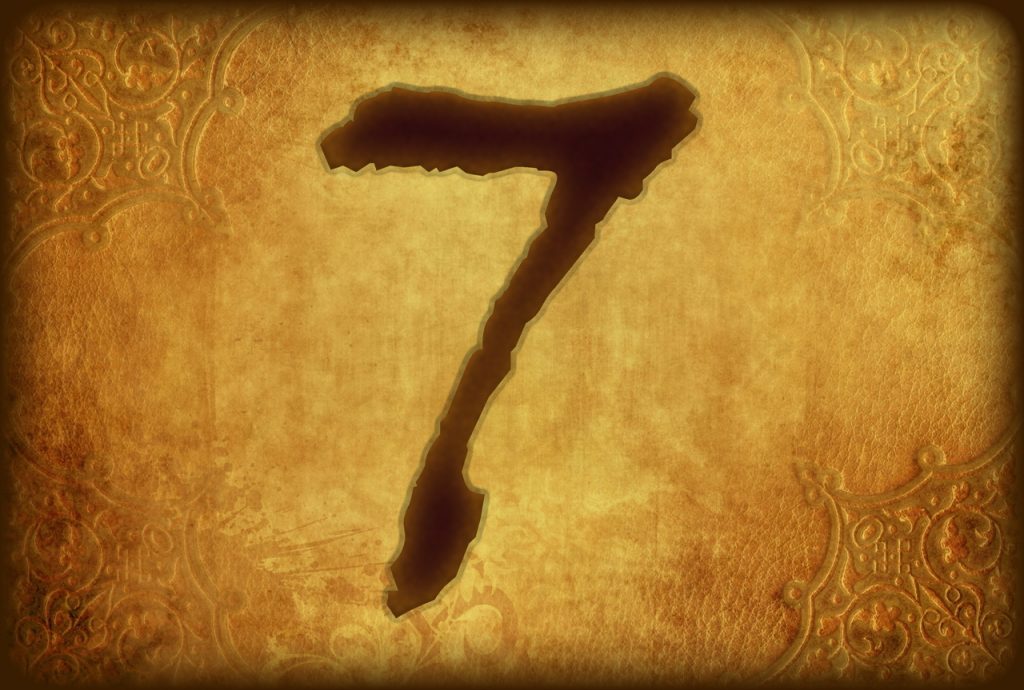
The numbers used by the LORD in His annual feasts are also symbols. For example, seven communicated a sense of “fullness” or “completeness” (שבע “seven” is spelled with the same consonants as the word שבע “complete/full”). In fact, seven is the number that characterizes the weekly Sabbath.[7] This is the day of rest GOD Himself sanctified when He completed the creation of heaven and earth.
Seven is ever present also in the annual feasts, indicating the fullness of blessings the LORD confers on these days. Indeed, seven are GOD’s annual appointments, and seven are also their Sabbaths of rest.
Furthermore, in His sacred calendar, the LORD fixed Passover’s day on Nisan 14th. This date, twice seven, was predetermined at the creation of humanity by the Father to be the day in which He would sacrifice His only Son for our forgiveness. Having completed according to the plan, once for all, the primordial, original redemptive act on the wood of the cross, Jesus, in fact, pronounced «It is finished!» transforming the Passover in a commemorative spiritual anniversary of His first wonderful act for the redemption of those who believe in Him (John 19:30).
Seven days the LORD made also last the following feast, Unleavened Bread, representing the purification from sin that started to take place in the life of Jesus’ followers from Nisan 15th after His death up to today.
Seven weeks after Passover, the LORD fixed the Feast of Weeks, or Pentecost, which started bringing the powerful blessings of the Holy Spirit to complete the spiritual ripening of the human harvest of Jesus.
Then, in the seventh month of His sacred year, the LORD dated His last feasts: Trumpets, Expiation and Tabernacles. Through which, He informed concerning the last tasks that His Son would accomplish to bring at completion the project of redemption.
These activities include: universal warning about the judgment and universal invitation to repentance addressed to the last human generation, and then final absolution, definitive purification and transformation for all His loyal followers ever existed. At last, He ordained the seventh feast, Tabernacles. Even this lasting seven days and ending on the Eighth Day, which is the seventh annual Sabbath of absolute rest and rejoicing, the one depicting the great, unique and perennial day of our new existence with our heavenly Father and Jesus on the earth made new.
The Three Pilgrimage Feasts
It is important to notice that in the written revelation, seven in connection with eight takes up a never-ending value. Significantly, seven and eight are present together in the three pilgrimage feasts to Jerusalem, which is a type of the eternal city built by GOD Himself.
First, the feasts’ cycle opens with eight days of celebration. They are:  the day of Passover, followed by the seven days of the Unleavened Bread.
Second, it progresses with seven weeks of spiritual preparation (49 days). Of which the seventh week (day 42 to 49) are followed by the eighth day, that is the glorious Feast of Weeks (day 50).
Third, the feasts’ cycle ends with other eight days of celebration. They are: the seven days of Tabernacles, followed by the Eighth Day, the seventh annual Sabbath. Indeed, his last Sabbath day is a glorious type of the eternal rest believers will experience in the Jerusalem of GOD (see Lev. 23:39).
Not by chance, all the Sabbaths days established by the LORD for celebrating with Him His three mighty works of creation, redemption and re-creation, are eight: the weekly Sabbath plus the seven annual Sabbaths (Lev. 23). And all eight stipulated as perennial laws of His eternal Covenant with His believing, loyal worshippers (Lev. 23:3,14, 21,31,41).
Feasts’ Chronological Order
The feasts of the LORD have a perfect predetermined chronological order that cannot be broken. Notably, their cycle starts with three spring feasts (Passover, Unleavened Bread, First Fruits). Then it closes with three autumn feasts (Trumpets, Expiation, Tabernacles). In the interior of which there is the Feast of Weeks, or Pentecost, separating and, at the same time, binding the first three to the last three, the beginning to the end of the divine project solving all human problems.
The annual feasts are also interdependent. This is evident by the fact that the meaning and purpose of each one is made clear by the feasts that precede or that follow. For instance without the Passover it becomes difficult to fully understand the meaning and purpose of the Feast of Unleavened Bread, the First Fruits and all the following ones.[8] Instead with the Passover its meaning and fulfillment in mind (Ex. 12), it is easily understood why the LORD ordained the keeping of the seven days of Unleavened Bread to be «as a sign to you on your hand and as a memorial between your eyes», and added, «You shall therefore keep this ordinance in its season from year to year» (Ex. 13:6-10).
[1] Adam Clarke, LL.L., FS.A. & C., Clarke’s Commentary, (New York, NY: Phillips & Hunt, 1830), vol. 1, p.583.
[2] Encyclopedia Judaica, (New York, NY: The Macmillan Co., 1971), vol. 6, p. 1238.
[3] The Stewarton Bible School, has published two booklets entitled The festivals of the God of Israel and The Sacred Calendar of the God of Israel.
This School’s publications, which seem to present a Messianic Jewish interpretation of the Scripture’s prophecies include: Understand the Revelation – Who/What is the AntiChrist? What is his Mark? – The Two Witnesses… Who are they? – Time is Short… Are we nearing the Return of Jesus Christ?
Their free booklets can be requested at www.sbs777.org.uk .
[4] John Ritchie, The Feasts of Jehova Bright Foreshadowings of Grace and Glory, 3rd ed., (Kilmarnock, Sturrock Street: John Ritchie LTD., n.d.), p. B Introduction.
[5] Ibid.
[6] The International Standard Bible Encyclopedia, (Grand Rapids: William B. Eerdmans Pub. Co., 1982), vol.2, p. 293.
[7] Sabbath in Hebrew means rest, abstinence from all work. GOD, after creation, rested and sanctified the weekly Sabbath (see Gen. 1,2). Later, He also established the seven annual Sabbath days, to rest and worship Him as the Author of salvation, in His Messiah, Jesus Christ.
[8] S. Bacchiocchi, God’s Festivals in Scripture and History, Part II: The Fall Festivals, p. 35-40.