- HOME
- INTRODUCTION
- FEASTS OF GOD
- 1. PASSOVER- Leviticus 23:5
- 2. FEAST OF UNLEAVENED BREAD - Leviticus 23:6-8
- 3. FEAST OF FIRSTFRUITS - Leviticus 23:9-11,14,15
- 4. FEAST OF WEEKS OR PENTECOST - Leviticus 23: 15-16
- 5. FEAST OF TRUMPETS - Leviticus 23:23,25
- 6. ATONEMENT DAY - Leviticus 23: 32,31
- 7. FEAST OF TABERNACLES OR BOOTHS - 23:34-36
- THE WORSHIP ACCEPTABLE TO GOD
- Conclusion
- Italiano
- Francais
FEASTS OF GOD
The project solving all human problems
Chapter:
[ most holy place ]
Commemoration of Christ’s Sacrifice
 The commemoration of Christ’s sacrifice has to be performed on annual basis on the Passover day. Jesus Himself during His last celebration of the Passover’s meal taught His apostles what to do to commemorate His sacrifice. Matthew reported the manner in which He did it (Mt. 26:26-29; see also Mark 14:22-25; Luke 22:19-20; and Paul, in 1 Corinthians 11:23-26).
Jesus replaced with His own person all the animal sacrifices and offerings performed at the temple for the forgiveness of sin with His own Person. And from there on, at Passover, the grape juice is symbol of His blood. And the unleavened bread is symbol of his flagellated, bleeding body, offered in sacrifice for bearing our penalty.
 Aside from substituting the symbols, the rituals, and the place where to celebrate Passover, Jesus didn’t reform anything else. He didn’t substitute its name, which refers to the “sacrifice” made for the forgiveness of the repentant’s sins. Neither He called it Holy Supper, or Holy Communion, even less, Easter. He didn’t changed the date of this holy day. On the contrary, He died Abib (Nisan) 14th afternoon, perfectly fulfilling even the time of His sacrificial-redemptive death.
Do not change the law of the Most High GOD
GOD has never given authority to man to change His laws. Yet, Daniel reported that there will be humans attempting to change GOD’s instructions concerning His appointed times, or holy convocations. In fact, GOD foretold him, that someone «shall speak pompous words against the Most High, shall persecute the saints of the Most High, and shall intend to change times and law» (Da. 7:25). Regrettably, this prediction has become reality.
With the passing of time, rulers have made the change of name, date, symbols and manner of celebrating Passover. And this way, they lost view of the importance of its perfect, and supernatural fulfillment by Jesus Christ. In so doing, they also obscured the entire plan of GOD for the redemption of believers.
Jesus didn’t need to fulfill Passover as He did. He celebrated it beforehand with His apostles to show that all sacrifices really pointed to His all sufficient sacrifice. Then, He fulfilled it, once for all, replacing all the sanctuary’s types. Jesus even interpreted the types portraying Him given in ancient times. So, the apostles understood the first wonder accomplished by GOD’s Son for their spiritual redemption. And they celebrated Passover, from then on, in the manner in which Jesus instructed them to do it.
The blood of the Covenant shed for forgiveness of sin
Jesus explained to His apostles that He would fulfill Passover’s message. In fact, at His last Passover meal, He took a cup of grape juice, thanked the Father, and invited, «Drink from it, all of you. For this is My blood of the covenant, which is to be shed on behalf of many for forgiveness of sins» (Mt 26:28, from NASB). His blood has ever been the only means to be forgiven, even when it was prefigured by animal blood. Here, it’s also important to notice that Jesus said that He would forgive «many», not “all” people. He will grant forgiveness only to believers who sincerely repent, and turn to faithfully obey God’s commandments.
Some people today find cruel the fact that the LORD ordained the shedding of blood of so many innocent animals. They think animals need to be protected, not killed. These individuals should be reminded that all creatures of earth, humans and animals alike, have been condemned to suffering and death by man’s sin. In reality, no one loves animals more than their Creator to which He still gives life. Who knows the LORD well understands that He is the One that suffers, and has suffered more than anyone else, in seeing His earth devastated, His animals suffering, and even His Son dying innocently because of man’s rebellion.[i]
The earthly sanctuary itself was instituted to point to Jesus’ sacrifice for the forgiveness of sins. An it lost the purpose of its existence at His death. In fact, since the moment Jesus «yielded up His spirit», and the «veil of the temple was torn in two from top to bottom» the mediation of human priests was no longer necessary for the reconciliation with the Father (Mat. 27:50-51; see also Mk. 15:38-41; Lk. 23:45,47-49). Jesus Himself took up the function of the High Priest, the innocent ani sacrificed, and the offerings. Because of this, in the moment that He died, the Father torn the veil that separated the repentant sinner from His most holy presence.
Since then, GOD gave free access to His «most holy place» in heaven (Dan. 9:24), the place where He lives. And it’s from there, that He and our Savior direct the project for our salvation (Ps. 47:8; Mat. 5:34; Rev. 20:11). This is also why GOD allowed that Jerusalem, and the «sanctuary» be destroyed in the year 70 A.D. And, it has not been possible to rebuilt it (Dan. 9:26).
It has to be noted that the cruel death of the LORD’s Messiah did not signal the rejection of Israel’s people and GOD’s Law. It simply abrogated the «sacrifice» of animals, and the «offering» in kind, consummated by fire in the temple (Dan. 9:27). These types being replaced by Jesus Christ, gave also an end to the function of the earthly sanctuary. Since then, the LORD wished that the attention of all humanity be directed exclusively to His only Son. He is His chosen Passover sacrifice, our Redeemer. He is sitting at the right side of GOD’s throne, in the most holy place (Rev. 22:1-3). Let us therefore believe in GOD and in Jesus Christ, repent, obey, consecrate ourselves to Them, and be saved.
[i] The LORD has ordered the sacrifice of His animal creatures to engrave in the mind of man the enormous cost He and His Son would have paid to ransom repentant man from Satan, the adversary. Again, what to say instead of man? Billions of animals are killed by humanity and even by believers in GOD only for the sake of using them as food, or for satisfying their degenerated longing for meat, when they could have fed themselves otherwise. What to say also of people that today seem to show more respect and love for their animal pets than for their Maker?
Chapter:
[ most holy place ]
6. ATONEMENT DAY
For the Atonement Day, God instructed,
«It shall be to you a Sabbath of solemn rest, and you shall afflict your souls; on the ninth day of the month at evening, from evening to evening, you shall celebrate your Sabbath» (Leviticus 23:32,31)

The Atonement Day, occurs the 10th of Tishri, starting the ninth at sunset, ten days after the Feast of Trumpets. It is the fifth annual Sabbath, the holiest of all the Sabbaths of the seventh month, and of the year. The Hebrew term for “Day of Atonement” is “Yom-Kippur” (יום כפור). Which literally means “The Day of the Covering Over”, or making an atonement, making reconciliation.
The LORD commanded: «You shall do no work on that same day, 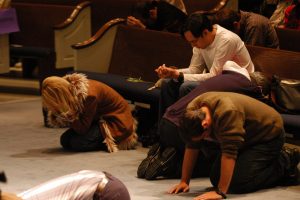 for it is a Day of Atonement, to make atonement for you before the LORD your GOD. For any person who is not afflicted in soul on that day shall be cut off from his people. And any person who does any work on that same day, that person I will destroy from among his people. You shall do no manner of work; it is a statute forever throughout your generations in all your dwellings» (Lev. 23: 28-30).
This holy day, every fifty years, inaugurates the sabbatical year of Jubilee. The word for “jubilee” comes from the Hebrew word יובל (yōḇel) , which means “ram’s horn”. This because the jubilee year started with the blowing of a ram’s horn.
A day of fasting
The Atonement Day is the only day of fasting prescribed by the LORD. The reason for fasting is «symbolized by the sacrifice of the sin-offering, and its presentation and acceptance before Jehovah in the Holy of Holies. Yet, that no one might hence argue from the fact of atonement to license to sin, … the people “should afflict their souls” (Lev. 23:27), namely by fasting, in token of their penitence of the sins for which the atonement was made (Lev. 23:27)».[i]
Judaism affirms that «On Yom Kippur God seals the books of accounting» of man’s works.[ii] In fact, «The LORD commanded that the person who did not observe this day must be cut off from His people. By not obeying the command of God on this day, and seeking the cleansing from his sins through the blood which was shed for him, he showed himself unworthy of life, and practically sealed his destiny and closed his probation.
Whereas the man, though he had sinned during the year, though he had disobeyed and even forsaken the Lord, if he only heeded the command of God and observed this day, and sought pardon through the blood, was forgiven, accepted, and was recognized as one of God’s own. It was, in other words, a day of judgment».[iii]
A Day of Judgement
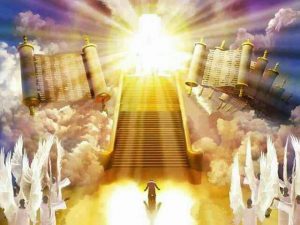 The Day of Atonement is a day of judgment. Christ, in His final testimony to believers, explained how the judgement of humanity takes place. And He informed about books containing the records of all men’s works.
Moreover, John witnessed this judgment. He wrote, «I saw the dead, small and great, standing before God, and books were opened. And another book was opened, which is the Book of Life. And the dead were judged according to their works, by the things which were written in the books» (Rev. 20:12-15).
Christ will judge humanity. He Himself declared, «For judgment I came into this world» (John 9:39). Indeed, it is «the Lord Jesus Christ, who will judge the living and the dead at His appearing and His Kingdom» (2 Tim. 4:1). Surely, «He is coming to judge the earth. He shall judge the world with righteousness, and the peoples with His truth» (Ps. 96:13).
The holiest Sabbath-rest
 The Atonement Day, in ancient Israel, was also a day of great joy. The reason for rejoicing was due to what the high priest accomplished in this day. The high priest, in Judaism, was the chief religious functionary in the Temple of Jerusalem. He had the unique privilege to enter the Holy of Holies (inner sanctum), once a year, on the Day of Atonement. And, here, he burned incense and sprinkled the sacrificial animal blood to expiate, once for all, his own sins and those of the people of Israel.
When, he exited the sanctuary, he announced to the people that the LORD had accepted the sacrifice and forgiven their sins. This message of salvation made the people especially thankful and glad in this holy annual Sabbath day.
The Day starting the Jubilee
 Jesus is the ultimate, perfect High Priest of GOD’s universal people. After His sacrificial death, He entered the Most Holy Place of Heaven, once for all, by using his own blood, not the blood of goats or young bulls. And there, He makes repentant believers free from sin.
Furthermore, similarly to ancient time, on a future Atonement Day, Christ, our High Priest, will exit the Most Holy Place of Heaven. He will return to his people, complete their redemption, and with them, inaugurate the eternal Jubilee.
Regrettably, Jews ceased to celebrate the Jubilee Year since their captivity in Babylon (around 600 BCE). However, in Israel, they still keep the Sabbath year, (Shemitah in Hebrew), every seven years.
The eternal Sabbatical rest of the ultimate Jubilee will start on a future Atonement Day. For GOD is faithful and merciful. His warning and calling to repentance are true. And His promise of forgiveness is also true.
 He will grant complete freedom from satanic slavery, sin, and death to all who have faith in Him. And He will also give liberty to His entire earthly creation from all the invisible and visible beings that are devastating it. Therefore, let us respond to His call with faith, humility and obedience. And continue to look forward to the great Atonement Day when, we will see our glorious High Priest face to face.
___________________________________________________________________________________
[i] W. Robertson Nicol, Ed., vol. 2, p. 464.
[ii] Victor Buksbazen, The Gospel in the Feasts of Israel, (Philadelphia: The Friends of
Israel Missionary and Relief Society, Inc., 1954), p. 35.
[iii] F.G. Gilbert, p. 260.
Chapter:
[ most holy place ]
CHRIST EXPIATES HIS PEOPLE’S SINS
Christ will expiate, once for all, the sins of His people on the ultimate Atonement Day of this world history. GOD presented this glorious truth as He prescribed the rituals performed by the high priest in the Most Holy Place of the Sanctuary on this annual Sabbath day.
Christ’s blood alone expiates sins
In the morning of the Day of Atonement, the high priest started his activities by offering to God the blood of a lamb. This was the daily morning sacrifice for the forgiveness of God’s people living near and far from the sanctuary. GOD commanded, one lamb in the morning and one in the twilight each day, to start and end the daily sacrificial schedule. This was to be «a continual burnt offering throughout your generations at the door of the tabernacle of meeting before the Lord» (Ex. 29:38-42).
After, the high priest took a bull, confessed his sins and the sins of his family on its head, and sacrificed it (Lev. 16:3,6).
Then, he washed and clothed himself with holy majestic garments prepared just for ministering in the Most Holy Place of God’s sanctuary (Lev. 16:4). He did this only once a year to present Himself before GOD for receiving the final forgiveness of sins.
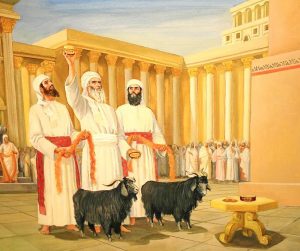 At this time, the people brought to the high priest two goats. And he, in turn, presented them before the door of the tabernacle and casted lots (Lev. 16:7). This way, GOD appointed «one lot for the LORD and the other lot for the scapegoat» (Lev. 16:7-8).
After, the high priest sacrificed the goat of the LORD, for the first time in all the year, without any confession of transgressions on its head.
The blood of the lamb, the bull and the goat for the LORD was a type of Christ’s sacrificial blood. In fact, when Jesus held His last Passover Supper with His disciples, He declared, «This cup is the new covenant in My blood, which is shed for you» (Luke 22:20). And with this statement, He gave an end to the value of each «sacrifice and offering» presented by the Israelite priests (Dan. 9:27).
Christ’s blood atones sins
Following, the high priest took the goat’s blood, together with the bull’s blood, into the Most Holy Place. Where he could enter only once a year, on the Day of Atonement. And there, he sprinkled it «seven» times «over the mercy seat and in front of the mercy seat» (Lev. 16:15-19). While the place was enveloped by a cloud of incense taken from the altar of perfume.
Then, the high priest returned in the Holy Place. And, with the blood of the bull and of the goat, he sprinkled also «seven» times the altar of perfume (Lev. 16:16). He did this because the record of sins was in the Holy Place, through the lamb’s blood that cleansed them.
In fact, GOD said, that through these procedures, the high priest «shall make an atonement for the holy sanctuary, and he shall make an atonement for the tabernacle of the congregation, and for the altar, and he shall make an atonement for the priests, and for all the people of the congregation» (Lev. 16:33). The LORD commanded this «because of their transgressions» (Lev. 16:16).
Christ alone purifies GOD’s people
 In the time of the Temple, the high priest was a type of Christ. And the ministry he accomplished, was also a type of the ministry that Christ accomplishes in the Most Holy Place of Heaven. In reality, the sacrifice of Christ revealed the end of the levitical priesthood, and the empty tomb declared the birth of a new priesthood—one that would never die. For wonderfully, this priesthood came to life when Jesus rose from the grave.
The fact that on the Day of Atonement only the high priest made the final purification, signifies that Christ alone can expiate sins and purify GOD’s people. Scripture provides evidence of this truth. Indeed, concerning the task of the high priest, GOD Himself commanded, «There shall be no man in the tabernacle of meeting when he goes in to make atonement in the Holy Place, until he comes out, that he may make atonement for himself, for his household, and for all the assembly of Israel» (Lev. 16:17).
Christ alone is our Savior. It is He who forgives, cleanses and restore our soul to the origins of humanity. He will soon perform the final and complete purification of repentant people and of the tabernacle of GOD (Lev. 16:17). Let us therefore give ourselves to Him. For He in His atonement gave Himself to save us.
Christ alone is our High Priest
On the Day of Atonement, after the high priest completed the purification in the Most Holy Place and in the Holy Place, he changed his clothes and left them «there» (Lev. 16:23). Then, he came out of the tabernacle of GOD, and back to the people bringing the good news of final absolution.
Similarly, Christ accomplished the expiation of GOD’s people, once for all, by pouring His own blood on the Mercy Seat. After He finished His mission, He rested in the tomb. Then, resurrected, and left His «linen cloths lying there», in the tomb (John 20:5-7). And finally, ascended to Heaven and presented Himself to our eternal Father. Even this is «a powerful testimony to Christ’s priesthood. While the priests of Israel all died, this high priest was raised to life, never to die again. And more, he would now live to intercede for his own (John 17, as their exalted high priest”. [i]
Our High Priest will return
On the Atonement Day, GOD’s people waited outside the Tabernacle until the high priest would come out of it. In repentance and in prayer, they pleaded GOD to express a positive verdict, «from above the mercy seat, from between the cherubim which are on the ark of the Testimony» (Ex. 25:22; Lev. 16:2). And exceeding joy and gratitude filled their hearts as they saw that GOD had answered their prayers.
Soon, Christ, our eternal High Priest, will come out from the Most Holy Place of the Tabernacle in Heaven. When He will finish the final expiation of sins, He will cloth Himself with majestic garments and will return gloriously. Thousands and thousands of angels will be with Him. At His appearing, the trumpets will sound, announcing the beginning of the eternal Jubilee. And, «in a moment, in the twinkling of an eye, ... the dead will be raised imperishable, and we shall be changed. For this perishable body must put on the imperishable, and this mortal body must put on immortality» (1 Cor. 15:52-53).
The end of Satan
 On the Day of Atonement, after the high priest came out of the Tabernacle with the good news of God’s forgiveness, he laid his hands on the head of the second goat, named Azazel. And he confessed on it all sins. Then, he ordered that the animal, symbolizing Satan, be sent to die in the desert (Lev. 16:7-10). That meant, in the land devastated and inhabited by the demons (Mat. 4:1; Luke 8:29; see also Job 38:26; Jer. 33:10).
Through the destiny inflicted to this second goat, GOD predicted the manner in which, at the conclusion of His people’s redemption, He will put on Satan the responsibility of all sins. He will condemn him to destruction, and will take away, once for all, his despotic and evil dominion on earth.
Here in type, the one who introduced iniquity in the government of God receives the right punishment. The responsibility of having induced men and women to rebel against GOD is put on his head. As the scapegoat is brought to die in the desert, at the end of all things, GOD will deliver Satan to the abyss (Rev. 20:1). And finally He will cast him into the lake of fire, where he will find his inexorable destruction.
Christ defends repentant believers
No matter how grievous are the sins, Jesus defends those who sincerely repent and put in Him their hope. For this John affirmed: «My little children, these things I write to you, so that you may not sin. And if anyone sins, we have an Advocate with the Father, Jesus Christ the righteous. And He himself is the propitiation for our sins, and not for ours only but also for the whole world» (1 John 2:1,2).
 The problem lies within us if we think that we do not need to repent because our sins are not serious enough. Indeed, «if we say that we have not sin, we deceive ourselves, and the truth is not in us». Instead, «If we confess our sins, He is faithful and just to forgive us our sins and to cleanse us from all unrighteousness» (1 John 1:8,9).
Again, the Father didn’t send His Messiah to condemn us. However Jesus has to have the proof of a moral behavior motivated by a living faith to save us. In fact, he who «believes in Him is not condemned, but he who does not believe is condemned already, because has not believed in the name of the only begotten Son of God» (John 3:17-18; see also Rom. 1:17).
Active faith pleases GOD
Jesus affirmed: «Whoever confesses Me before men, him I will also confess before My Father who is in heaven» (Mat. 10:32-33). And added: «He who has My commandments and keeps them, it is he who loves Me. And he who loves Me will be loved by Father, and I will love him and manifest Myself to Him» (John 14:21).
These two statements teach that the result of our final evaluation will be absolution or condemnation, on the basis of our trusting and obeying Christ, following His example . Although the greatest «commandments» Jesus gave are two, they are so high, so low, so wide and so narrow in their demands, that we cannot skip a moment of our existence in doing otherwise, if not at risk of our eternal life (Mat. 22:37).
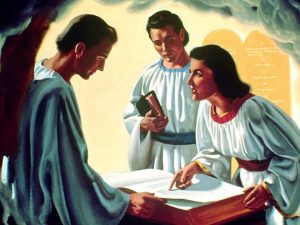
Indeed, Jesus is evaluating how men, women and children express their love for GOD and their neighbor. Our guardian angel writes down our words and works in the book of records (Mal. 3:16; Neh. 13:14; Ps. 56:8). Beside this one and the book with the records of sins, in Heaven, there is also the book of life. The latter contains all the names of those who put their trust in GOD and His beloved Son, Jesus Christ. And of who also follow His commandments (Rev. 20:12; Luke 10:20; Phil. 4:3; Rev. 21:27; 3:5).
Confess your sins to Christ alone
Some Christians still believe that in order to receive spiritual cleansing is necessary to confess the sins to a priest. However Scripture does not make such a statement. In fact, it never reports the confession of sins on the head of an Israelite priest. Jesus alone is the Lamb of God that died to take away sins (Mat. 9:6; Mark 2:10; Luke 5:24). No other man. Therefore, to Him alone sins need to be confessed. For to Him alone has been given the authority to cancel them from our heavenly records.
It is the duty of every believer and religious leader of today to lead people to Christ. He died for expiating their sins, and He is alive for doing it. The persons that neglect to do this, should remember that they, too, will be judged according to their thoughts, words, actions and omissions (Mat. 10:32-33).
Indeed, it is necessary to ask Christ to expiate our sins of omission. This act may seem useless or humiliating for those who do not understand the gravity of omission. Yet, it is exactly the person that trusting in Jesus’ grace, humbles himself before Him, confesses, asks forgiveness and makes efforts to change behavior, who will obtain final cleansing and full redemption.
Religious leaders do not save
Even priests and religious leaders need to go to Jesus in repentance to ask forgiveness (Rom. 3:23). This truth is made evident by the fact that even the Israelite high priest confessed the transgressions he committed on the sacrificial victim. And He confessed to GOD not only his trespasses by also the those of his family. This is something that each father, or head of a household, should do for each member of his family.
This task, regrettably, is not accomplished correctly by various religious leaders. In fact, some of them evaluate the moral cases distressed people bring to them, and then absolve or condemn whom they think best. Not understanding that, in doing so, they are taking the place that is of Jesus by right.
Other religious leaders fear to be rejected if they point out, even privately, the sins their church members are committing. And they do not make an effort to talk with their members about their need of repentance. So, they leave the believers disoriented and confused about their spiritual condition. Until their iniquity ferments like the yeast and explodes in tragedy for the individual and their entire congregation.
Christ invites to go to Him alone
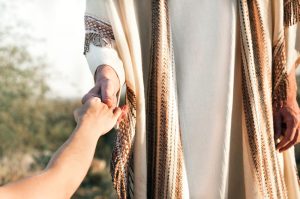 Furthermore, other religious leaders have assumed the psychologist’s function. And, they believe that this way they can help others to change their minds and practices. Yet, Jesus invited: «Come to me all you who labor and are heavy laden, and I will give you rest» (Mat. 11:28,29,30; see Jos. 1:5; Ps. 30:5; 37:23,24; 84:11; 147:3; Isa. 33:16; 40:31; 49:25; 54:13; Rom. 4:21; 8:28; 1 Cor. 15:57; 2 Pet. 2:9; 3:9).
Consequently, persons who neglect to invite people to confess, repent, forgive, and bringing matters to Jesus, are doing wrong. And people who take in their own hand the moral dilemma of others, are doing wrong, too. Because, practically, they deny the love and power of Jesus to help the sinner and the afflicted. Surely, Jesus will not leave unpunished forever the person that neglects, obscures and puts aside the activity that He accomplishes on behalf of repentant, distressed sinners, in the Holy and Most Holy Place of Heaven.
What please God is faith manifested through genuine love for Him and our fellowmen. It is goodness lived moment by moment in continuous relation with Jesus, the Spirit and the Father. Worshipping GOD in spirit and truth is not a theory of the mind, a philosophy of life, or a weekly good feeling about ourselves and God at church. Neither it is an occasional nice thought and action toward God and our neighbor. It is to think, speak and act like Christ at every breath we take.
Repent!
It is necessary to warn all of the danger of persevering in living a selfish, immoral, arrogant life. Only interceding for them is not enough. Scripture gives evidence of this fact with Moses’ prayer. He interceded for the forgiveness of the rebellious and sinful Israelites. But it was not enough. «The LORD said…: “Whoever has sinned against Me, I will blot him out of My book”» (Ex. 32:33, 31-32). Therefore, until there is time, let us join Jesus and say to all our fellowmen who we know that they are in sin, «repent»! Because Jesus needs to see positive changes in words and actions, to keep their names in the Book of Life (Rev. 3:3,5).
Another condition to be forgiven is to forgive those who have sinned against us (Mat. 6:12; John 20:23; 1 John 1:9). Christ forgave even His enemies. In His agony, He even prayed, «Father, forgive them, for they do not know what they do» (Luke 23:34). Let us follow His example and forgive others all the times. Christ will defend us , bless us, and vindicate our name.
GOD gives a crucial warning on yearly basis with the message of the Atonement Day. He declares, «For any person who is not afflicted in soul on that same day, shall be cut off from among his people» (Lev. 23:29) . That’s why it is so important to keep this annual Sabbath with a humble attitude, for introspection, repentance and supplication for the eradication of sin from our life.
[i] David Schrock, The Clothes Make the Man: Seeing the Priesthood of Christ in John’s Gospel, April 2023; https://christoverall.com/article/concise/the-clothes-make-the-man-seeing-the-priesthood-of-christ-in-johns-gospel/#:~:text=And%20for%20all%20those%20who,mediator%20of%20a%20new%20covenant.
Chapter:
[ most holy place ]
FEAST OF TABERNACLES
«The fifteen day of this seventh month shall be the Feast of Tabernacles for seven days to the Lord»
(Leviticus 23:34-36)
The Feast of Tabernacles, or Booths (in Hebrew, סֻכּוֹת Sukkot) is the seventh annual festival of GOD. And it is the third and last celebration of the seventh month, closing the cycle of God’s appointed times. It starts on the 15th of Tishri, (end of September – middle of October). The first day and the Eighth Day of this feast are holy annual Sabbaths of rest and worship. Moreover, these two days correspond respectively to the sixth and the seventh annual Sabbath of the feasts’ cycle.
Scripture testifies of it in Leviticus 23:33-43; Numbers 29:12-16; Deuteronomy 16:13-15. It also mentions it in 1 King 8:2, 65-66; Neh. 8; and John 7:2, 10, 37-39. Every seven years, the Feast of Tabernacles inaugurates the Septennial, or Sabbatical year, which is a year of rest. At this time, the priests read GOD’s Law to the people (Deut. 31:10-13). In the Feast of Tabernacles there is a remembrance of Israel dwelling in tents, or booths, in the wilderness, as well as a remembrance of their fathers dwelling in tents in Canaan.

The third and last pilgrimage to Jerusalem
For the Feast of Tabernacles GOD requested the men of Israel to make the last of the three annual pilgrimages to Jerusalem (Deut. 16:16). Noteworthy is the fact that the number seven fills the three pilgrimages. And this number in Scripture represents a full and complete world, and spiritual perfection.
As a matter of fact, the first pilgrimage is for the Feast of Unleavened Bread which lasts 7 days. The second is for the Feast of Weeks which occurs seven weeks (7days x 7) after the Feast of Firstfruits. And the third is for the Feast of Tabernacles which lasts 7 days. And finally culminates in the Eighth Day, or seventh annual Sabbath. All three of these divine appointments were harvest festivals in the land of Israel. The Feast of Unleavened Bread was traditionally the time of the first harvest, the barley harvest. The Feast of Weeks marked the second, the wheat harvest. And the Feast of Tabernacles celebrated the third and final harvest, the fall’s fruits.
The seventh annual Sabbath – the Eighth Day
The Feast of Tabernacle concludes merrily the fall holy days season of the seven month. Indeed, GOD declared, «Celebrate the Festival of Tabernacles for seven days after you have gathered the produce of your threshing floor and your winepress. Be joyful at your festival… For the Lord your God will bless you in all your harvest and in all the work of your hands, and your joy will be complete» (Deut. 16:13-15).
Moreover, the LORD added, “For seven days you shall offer an offering made by fire to the LORD. On the eighth day you shall have a holy convocation, and you shall offer an offering made by fire to the LORD. It is a sacred assembly, and you shall do no customary work on it” (Lev. 23:36). GOD’s worshippers presented a very great number of other sacrifices and voluntary offerings, during this holy week (Num. 29).
Noteworthy is that the Feast of Unleavened Bread (7 days) began after the unique sacrifice of the LORD’s Lamb in the homes, on Passover. And the Feast of Tabernacles (7 days) began after the unique offering of the LORD’s goat in the Most Holy Place of His sanctuary, on the Atonement Day (See Lev. 23:5; 16:15; Dan. 9:27). These facts indicate how the purification of GOD’s people begins and how it will end, once for all.
The feast of the ultimate harvest
The Feast of Tabernacles is the Feast of Harvest (Asif), specifically, of the last gathering of the fruits of the earth. Beside the booth, the most prominent features of this feast are fruits and branches of three plants. GOD commanded, «you shall take on the first day the fruit of splendid trees, branches of palm trees and boughs of leafy trees and willows of the brook, and you shall rejoice before the Lord your God seven days» (Lev. 23:40).
There were at least three reasons for the observance of the Feast of Tabernacles: the first, natural. It celebrated the final gathering of the products of the year. The second is historical. It was a memorial of the days when Israel dwelt in booths in the wilderness.[i] The third reason was supernatural. In fact, the Feast of Tabernacles brought the spiritual experience of GOD’s people to the climax. They were thankful for the great miracles GOD accomplished in their deliverance from slavery. Felt safe for the protection the LORD granted during the pilgrimage in the desert. And rejoiced for gift of a fertile land, the provision of food, the abundant water and uncountable blessings freely received.
A celebration of OD’s salvation
GOD’s objective for the celebration of the Feast of Tabernacles was «to excite and maintain in them (the people of Israel) a spirit of gratitude and obedience, by leading them to consider deeply the greatness of the favors which they received from His most merciful hands».[ii] In particular, they remembered GOD’s provision of water from the rock of Horeb (See Ex. 17: 2-6). In fact, in commemoration of this miracle, the priests carried water from the Pool of Siloam to the altar. And on the last day, the Eighth Day, while making seven circuits around the altar, they shouted, «Save now, I pray, O Lord» (Ps. 118:
Christ promises the water of eternal life
Moreover, in time, during this week-long celebration, GOD’s chosen people prayed for the last rain of the year.[iii] This because the rainy season for the new crop in Israel starts in the period of the Feast of Tabernacles. By the time of Jesus, water had become one of the main feature of the Feast of Tabernacles in Jerusalem. This explains why, on the «great day of the feast», the Eighth Day, Christ offered the water of eternal life. And invited, «If anyone thirsts, let him come to Me and drink. He who believes in Me, as the Scripture has said, out of his heart will flow rivers of living water» (John 7:37-39).
This fact has a typological meaning. Also for «water», indeed, it can be found a perfect parallel in these last days. Today, increasingly severe drought conditions around the world are putting the wellbeing of billions at stake. More than 1 billion people lack access to safe water supplies. While 2,6 billion lack proper sanitation mainly because of insufficient potable water. Furthermore, only 2.5 percent of the earth’s water is fresh. And over 1.5 percent of that water is locked in glaciers that are rapidly melting because of the greenhouse effect warming the atmosphere. Let us therefore pray Jesus to grant us full salvation and «the free gift of the water of life» (Rev. 22:17).
The Tabernacle of GOD will be with men
The pilgrimage of the Feast of Tabernacles is the last. And it reminds how GOD saved and finally led His people to the promised Land, and His holy city, Jerusalem. Ultimately, it points to GOD’s people dwelling in His New Kingdom, New Canaan, and to the last ingathering of GOD’s people in the New Jerusalem. Where all the saints will hear: «Behold the tabernacle of God is with men, and He will dwell with them, and they shall be His people. God Himself will be with them and be their God» (Rev. 21:3).
[i] W. Robertson Nicoll, vol. 2, p. 30.
[ii] A. Clarke, vol. 1, p. 586.
[iii] Statistics on water needs: (http://www.unesco.org/water//facts_figures/basic_needs.shtml). See also: (http://earthobersavation.nasa.gov/library/water/water_2.html). As water resources will diminish for all humanity because of climate changes and water pollution, according to the type, surely, GOD’s people will return to pray also for drinking water.