- HOME
- INTRODUCTION
- FEASTS OF GOD
- 1. PASSOVER- Leviticus 23:5
- 2. FEAST OF UNLEAVENED BREAD - Leviticus 23:6-8
- 3. FEAST OF FIRSTFRUITS - Leviticus 23:9-11,14,15
- 4. FEAST OF WEEKS OR PENTECOST - Leviticus 23: 15-16
- 5. FEAST OF TRUMPETS - Leviticus 23:23,25
- 6. ATONEMENT DAY - Leviticus 23: 32,31
- 7. FEAST OF TABERNACLES OR BOOTHS - 23:34-36
- THE WORSHIP ACCEPTABLE TO GOD
- Conclusion
- Italiano
- Francais
FEASTS OF GOD
The project solving all human problems
Chapter:
[ no work ]
6. ATONEMENT DAY
For the Atonement Day, God instructed,
«It shall be to you a Sabbath of solemn rest, and you shall afflict your souls; on the ninth day of the month at evening, from evening to evening, you shall celebrate your Sabbath» (Leviticus 23:32,31)

The Atonement Day, occurs the 10th of Tishri, starting the ninth at sunset, ten days after the Feast of Trumpets. It is the fifth annual Sabbath, the holiest of all the Sabbaths of the seventh month, and of the year. The Hebrew term for “Day of Atonement” is “Yom-Kippur” (יום כפור). Which literally means “The Day of the Covering Over”, or making an atonement, making reconciliation.
The LORD commanded: «You shall do no work on that same day, 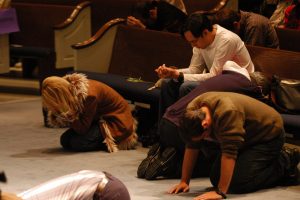 for it is a Day of Atonement, to make atonement for you before the LORD your GOD. For any person who is not afflicted in soul on that day shall be cut off from his people. And any person who does any work on that same day, that person I will destroy from among his people. You shall do no manner of work; it is a statute forever throughout your generations in all your dwellings» (Lev. 23: 28-30).
This holy day, every fifty years, inaugurates the sabbatical year of Jubilee. The word for “jubilee” comes from the Hebrew word יובל (yōḇel) , which means “ram’s horn”. This because the jubilee year started with the blowing of a ram’s horn.
A day of fasting
The Atonement Day is the only day of fasting prescribed by the LORD. The reason for fasting is «symbolized by the sacrifice of the sin-offering, and its presentation and acceptance before Jehovah in the Holy of Holies. Yet, that no one might hence argue from the fact of atonement to license to sin, … the people “should afflict their souls” (Lev. 23:27), namely by fasting, in token of their penitence of the sins for which the atonement was made (Lev. 23:27)».[i]
Judaism affirms that «On Yom Kippur God seals the books of accounting» of man’s works.[ii] In fact, «The LORD commanded that the person who did not observe this day must be cut off from His people. By not obeying the command of God on this day, and seeking the cleansing from his sins through the blood which was shed for him, he showed himself unworthy of life, and practically sealed his destiny and closed his probation.
Whereas the man, though he had sinned during the year, though he had disobeyed and even forsaken the Lord, if he only heeded the command of God and observed this day, and sought pardon through the blood, was forgiven, accepted, and was recognized as one of God’s own. It was, in other words, a day of judgment».[iii]
A Day of Judgement
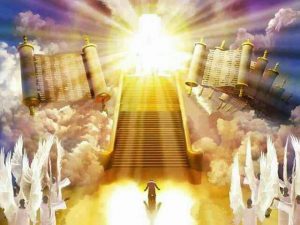 The Day of Atonement is a day of judgment. Christ, in His final testimony to believers, explained how the judgement of humanity takes place. And He informed about books containing the records of all men’s works.
Moreover, John witnessed this judgment. He wrote, «I saw the dead, small and great, standing before God, and books were opened. And another book was opened, which is the Book of Life. And the dead were judged according to their works, by the things which were written in the books» (Rev. 20:12-15).
Christ will judge humanity. He Himself declared, «For judgment I came into this world» (John 9:39). Indeed, it is «the Lord Jesus Christ, who will judge the living and the dead at His appearing and His Kingdom» (2 Tim. 4:1). Surely, «He is coming to judge the earth. He shall judge the world with righteousness, and the peoples with His truth» (Ps. 96:13).
The holiest Sabbath-rest
 The Atonement Day, in ancient Israel, was also a day of great joy. The reason for rejoicing was due to what the high priest accomplished in this day. The high priest, in Judaism, was the chief religious functionary in the Temple of Jerusalem. He had the unique privilege to enter the Holy of Holies (inner sanctum), once a year, on the Day of Atonement. And, here, he burned incense and sprinkled the sacrificial animal blood to expiate, once for all, his own sins and those of the people of Israel.
When, he exited the sanctuary, he announced to the people that the LORD had accepted the sacrifice and forgiven their sins. This message of salvation made the people especially thankful and glad in this holy annual Sabbath day.
The Day starting the Jubilee
 Jesus is the ultimate, perfect High Priest of GOD’s universal people. After His sacrificial death, He entered the Most Holy Place of Heaven, once for all, by using his own blood, not the blood of goats or young bulls. And there, He makes repentant believers free from sin.
Furthermore, similarly to ancient time, on a future Atonement Day, Christ, our High Priest, will exit the Most Holy Place of Heaven. He will return to his people, complete their redemption, and with them, inaugurate the eternal Jubilee.
Regrettably, Jews ceased to celebrate the Jubilee Year since their captivity in Babylon (around 600 BCE). However, in Israel, they still keep the Sabbath year, (Shemitah in Hebrew), every seven years.
The eternal Sabbatical rest of the ultimate Jubilee will start on a future Atonement Day. For GOD is faithful and merciful. His warning and calling to repentance are true. And His promise of forgiveness is also true.
 He will grant complete freedom from satanic slavery, sin, and death to all who have faith in Him. And He will also give liberty to His entire earthly creation from all the invisible and visible beings that are devastating it. Therefore, let us respond to His call with faith, humility and obedience. And continue to look forward to the great Atonement Day when, we will see our glorious High Priest face to face.
___________________________________________________________________________________
[i] W. Robertson Nicol, Ed., vol. 2, p. 464.
[ii] Victor Buksbazen, The Gospel in the Feasts of Israel, (Philadelphia: The Friends of
Israel Missionary and Relief Society, Inc., 1954), p. 35.
[iii] F.G. Gilbert, p. 260.