- HOME
- INTRODUCTION
- FEASTS OF GOD
- 1. PASSOVER- Leviticus 23:5
- 2. FEAST OF UNLEAVENED BREAD - Leviticus 23:6-8
- 3. FEAST OF FIRSTFRUITS - Leviticus 23:9-11,14,15
- 4. FEAST OF WEEKS OR PENTECOST - Leviticus 23: 15-16
- 5. FEAST OF TRUMPETS - Leviticus 23:23,25
- 6. ATONEMENT DAY - Leviticus 23: 32,31
- 7. FEAST OF TABERNACLES OR BOOTHS - 23:34-36
- THE WORSHIP ACCEPTABLE TO GOD
- Conclusion
- Italiano
- Francais
FEASTS OF GOD
The project solving all human problems
Chapter:
[ offering ]
THE SACRIFICE BECOMES REALITY WITH CHRIST
 GOD informed beforehand concerning the time when the real Passover sacrifice would become reality with Christ, once and for all. Gabriel said to the prophet Daniel: «Seventy weeks are determined for your people and for your holy city, to finish the transgression, to make an end of sins, to make reconciliation for iniquity, to bring in everlasting righteousness, to seal up vision and prophecy, and to anoint the Most Holy» (Dan. 9:24).
These seventy weeks, according to the prophetic principle one-day=one-year, set by Scripture in Numbers 14:34 and Ezekiel 4:6, are 490 years (70x7days=490 years). The command to restore and build Jerusalem allows to find an approximative date. This is the decree of Artaxerxes, King of Persia, issued in the year 457 B.C.. Indeed, with this alone the people of GOD obtained the permission to restore and build Jerusalem together with its temple. No other. The Scripture that by principle interprets itself, records this decree in Ezra 7:8-26.[i]
The date of Christ’s sacrifice
 Gabriel continued, «Know therefore and understand, that from the going forth of the command to restore and build Jerusalem, until the Messiah the Prince, there shall be seven weeks and sixty-two weeks» (Dan. 9:25-26). The «seven weeks and sixty-two weeks», are sixty-nine weeks of years, prophetically 483 years (69 x 7). If we add to 457 B.C. the 483 years we reach the time Jesus was thirty years old (30).
Gabriel finished his explanation of the seventy-weeks/490-years informing that after the killing of the Messiah, Satan, the prince of demons, by the agency of his human agents, «shall destroy the city and the sanctuary», and profane GOD’s holy things (Dan. 9:26). This is what Satan continues to do, «until the end, which is already determined», will come upon him (Dan. 9:27).
The high priest received the anointing for the priestly ministry in the Sanctuary of GOD at thirty years (See Num. 4:3). So did Jesus Christ, who is the High Priest according to the order of Melchizedek (Ps. 110:4, Heb. 7:17). The Holy Spirit anointed Jesus at His baptism, when He was thirty years old (See Mat. 2:1,16,19; Lk. 1:32). Today, it’s impossible to calculate the exact year when His baptism took place because the calendar has been changed in 1582.[ii]
End of sacrifice and offering
 After His anointment, Jesus accomplished His public ministry by teaching about the new way of salvation (see Mat. 3:13-17; Mark 1:9-11; Luke 3:21-22; John 1:32-34). Then, «in the middle of the week», the seventieth prophetic week (7 years), exactly three and a half years after his baptism (7:2 = 3 ½), He brought «an end to sacrifice and offering» by sacrificing Himself for the redemption of humanity (Dan. 9:27). In fact, He died on wood, as occurred for any animal sacrifice.
The destroyer who «cut off» the Messiah, the Prince of GOD, is Satan (Dan. 9:27). He accomplished this atrocity by manipulating the roman oppressors and the religious leaders of Israel of that time. In fact, they represent the two great categories in which humanity distributed itself since the days of Cain and Abel: the unbeliever and the believer. Satan murdered Christ, not knowing that, manifesting his hate against GOD’s Son, he would have been disclosed. While the Savior would have confirmed, once for all, GOD’s eternal covenant with believing humanity.
GOD’s eternal covenant confirmed once for all
 Jesus replaced the animal “sacrifice” and the burned “offering” taking place in the court of God’s earthly sanctuary with His substitutive-redemptive sacrifice. Therefore, these two alone, ceased to have value for our merciful Father, because these alone were the tangible types prefiguring the sacrifice of His only Son.[iii] Indeed, by suffering and dying, Jesus obtained, on earth and in heaven, once and for all, an eternal righteousness for all faithful believers (See Isa. 53).
The types prefiguring the suffering Messiah and His atoning death were fulfilled in their least details. Jesus Christ gave His life in sacrifice on Passover day. His death occurred on this day for a purpose, to confirm GOD’s eternal covenant, once for all. Jesus knew that His death was to occur on the fourteenth day of Nisan (Aviv) because He knew He would fulfill the Passover sacrifice.
Jesus Christ fulfilled the Passover
 Christ also knew the hour He would suffer and die to redeem His followers. Indeed, He is the true Passover Lamb, the first sacrifice accomplished in the annual cycle of GOD’s feasts. And the true Lamb of GOD, prefigured by the first and the last lamb offering of each single day.
In fact, commanded, «Now this is what you shall offer on the altar: two lambs of the first year, day by day continually. One lamb you shall offer in the morning, and the other lamb you shall offer at twilight … This shall be a continual burnt offering throughout your generations at the door of the tabernacle of meeting before the Lord» (Ex. 29:38-42).
In time, this continual burnt offering became known as the “Tamid Sacrifice“. The Hebrew word “tamid” (תָּמִיד) means “always”, “everlasting”, or “daily offering.” It was the sacrifice of a lamb with the offering of bread and wine. No other sacrifices were to take precedence over it, and no other sacrifices were to follow it.
Jesus Christ is the true Tamid Lamb, the «First and the Last» sacrifice and offering to GOD (Rev. 1:8). As a matter of fact, He, the Lamb of GOD, was crucified in the morning, at the «third hour» of the day, 9 am (Mk 15:25). This is the same exact hour the morning lamb was sacrificed in the temple. And Christ died, at twilight, at the «ninth hour» of the day, 3 pm (Mt. 27:46). This is the exact same hour the evening lamb was offered to end any daily «sacrifice and offering».[iv]
The Lamb of GOD
 Scripture testifies that the first phase of the project solving all human problems started at the miraculous incarnation of the Son of GOD (Luke 1; see Isa. 9:6). And it finished at His sacrificial death. In fact, in the exact day determined before the foundation of the world as His Passover appointment, the Father sacrificed His Son. And wonderfully, He constituted Him Savior of repentant and believing sinners (Dan. 9:24).
The prophet Isaiah (Isa. 53) understood that the suffering Servant of the LORD is Jesus Christ, «the Lamb of God that takes away the sins of the world» (John 1:29).
The apostle John himself saw in heaven Jesus, in the form of «a Lamb as though it had been slain»(Rev. 5:6). And He testified that the Savior has all power, all knowledge and all authority. His «seven horns», «seven eyes», and «seven Spirits of GOD» reveal in fact Jesus’ divinity (Rev. 5:6).
Also Paul, a Jewish doctor of the Law of GOD, describes Christ as «our Passover» (1 Cor. 5:7. For this reason, he encourages believers to keep the feast in remembrance of His redeeming sacrifice (v.8). Our Savior is the «Prince of peace» (Isa. 9:6; 55:4; Mic. 5:1), and the «Prince of life» (Ac. 3:15). Let us therefore proclaim His Name until we will celebrate with Him in GOD’s Kingdom.
[i] This is the interpretation of the Seventh-day Adventist Church.
[ii] “There is consensus among modern scholars that the historical year of the birth of Jesus was around 6-4 Before Christ”. Romans Catholic popes have changed the calendar. Because of this, now believers cannot know the year exact. Nevertheless, thanks to our gracious GOD, we know the “season”. For more information on the changes of the actual calendar and the date of Jesus’ birth see: http://en.wikipedia.org/wiki/Anno_Domini .
[iii] See also the studies of the Stewarton Bible School entitled Behold the Lamb of God – Animal Sacrifices … are they Necessary? See also link: www.sbs777.org.uk.
[iv] For more prophecies fulfilled by the death of Jesus, see link: allaboutjesuschrist.org/prophecies-fulfilled-by-the-crucifixion-of-jesus-christ-fag.htm.
Chapter:
[ offering ]
Commemoration of Christ’s Sacrifice
 The commemoration of Christ’s sacrifice has to be performed on annual basis on the Passover day. Jesus Himself during His last celebration of the Passover’s meal taught His apostles what to do to commemorate His sacrifice. Matthew reported the manner in which He did it (Mt. 26:26-29; see also Mark 14:22-25; Luke 22:19-20; and Paul, in 1 Corinthians 11:23-26).
Jesus replaced with His own person all the animal sacrifices and offerings performed at the temple for the forgiveness of sin with His own Person. And from there on, at Passover, the grape juice is symbol of His blood. And the unleavened bread is symbol of his flagellated, bleeding body, offered in sacrifice for bearing our penalty.
 Aside from substituting the symbols, the rituals, and the place where to celebrate Passover, Jesus didn’t reform anything else. He didn’t substitute its name, which refers to the “sacrifice” made for the forgiveness of the repentant’s sins. Neither He called it Holy Supper, or Holy Communion, even less, Easter. He didn’t changed the date of this holy day. On the contrary, He died Abib (Nisan) 14th afternoon, perfectly fulfilling even the time of His sacrificial-redemptive death.
Do not change the law of the Most High GOD
GOD has never given authority to man to change His laws. Yet, Daniel reported that there will be humans attempting to change GOD’s instructions concerning His appointed times, or holy convocations. In fact, GOD foretold him, that someone «shall speak pompous words against the Most High, shall persecute the saints of the Most High, and shall intend to change times and law» (Da. 7:25). Regrettably, this prediction has become reality.
With the passing of time, rulers have made the change of name, date, symbols and manner of celebrating Passover. And this way, they lost view of the importance of its perfect, and supernatural fulfillment by Jesus Christ. In so doing, they also obscured the entire plan of GOD for the redemption of believers.
Jesus didn’t need to fulfill Passover as He did. He celebrated it beforehand with His apostles to show that all sacrifices really pointed to His all sufficient sacrifice. Then, He fulfilled it, once for all, replacing all the sanctuary’s types. Jesus even interpreted the types portraying Him given in ancient times. So, the apostles understood the first wonder accomplished by GOD’s Son for their spiritual redemption. And they celebrated Passover, from then on, in the manner in which Jesus instructed them to do it.
The blood of the Covenant shed for forgiveness of sin
Jesus explained to His apostles that He would fulfill Passover’s message. In fact, at His last Passover meal, He took a cup of grape juice, thanked the Father, and invited, «Drink from it, all of you. For this is My blood of the covenant, which is to be shed on behalf of many for forgiveness of sins» (Mt 26:28, from NASB). His blood has ever been the only means to be forgiven, even when it was prefigured by animal blood. Here, it’s also important to notice that Jesus said that He would forgive «many», not “all” people. He will grant forgiveness only to believers who sincerely repent, and turn to faithfully obey God’s commandments.
Some people today find cruel the fact that the LORD ordained the shedding of blood of so many innocent animals. They think animals need to be protected, not killed. These individuals should be reminded that all creatures of earth, humans and animals alike, have been condemned to suffering and death by man’s sin. In reality, no one loves animals more than their Creator to which He still gives life. Who knows the LORD well understands that He is the One that suffers, and has suffered more than anyone else, in seeing His earth devastated, His animals suffering, and even His Son dying innocently because of man’s rebellion.[i]
The earthly sanctuary itself was instituted to point to Jesus’ sacrifice for the forgiveness of sins. An it lost the purpose of its existence at His death. In fact, since the moment Jesus «yielded up His spirit», and the «veil of the temple was torn in two from top to bottom» the mediation of human priests was no longer necessary for the reconciliation with the Father (Mat. 27:50-51; see also Mk. 15:38-41; Lk. 23:45,47-49). Jesus Himself took up the function of the High Priest, the innocent ani sacrificed, and the offerings. Because of this, in the moment that He died, the Father torn the veil that separated the repentant sinner from His most holy presence.
Since then, GOD gave free access to His «most holy place» in heaven (Dan. 9:24), the place where He lives. And it’s from there, that He and our Savior direct the project for our salvation (Ps. 47:8; Mat. 5:34; Rev. 20:11). This is also why GOD allowed that Jerusalem, and the «sanctuary» be destroyed in the year 70 A.D. And, it has not been possible to rebuilt it (Dan. 9:26).
It has to be noted that the cruel death of the LORD’s Messiah did not signal the rejection of Israel’s people and GOD’s Law. It simply abrogated the «sacrifice» of animals, and the «offering» in kind, consummated by fire in the temple (Dan. 9:27). These types being replaced by Jesus Christ, gave also an end to the function of the earthly sanctuary. Since then, the LORD wished that the attention of all humanity be directed exclusively to His only Son. He is His chosen Passover sacrifice, our Redeemer. He is sitting at the right side of GOD’s throne, in the most holy place (Rev. 22:1-3). Let us therefore believe in GOD and in Jesus Christ, repent, obey, consecrate ourselves to Them, and be saved.
[i] The LORD has ordered the sacrifice of His animal creatures to engrave in the mind of man the enormous cost He and His Son would have paid to ransom repentant man from Satan, the adversary. Again, what to say instead of man? Billions of animals are killed by humanity and even by believers in GOD only for the sake of using them as food, or for satisfying their degenerated longing for meat, when they could have fed themselves otherwise. What to say also of people that today seem to show more respect and love for their animal pets than for their Maker?
Chapter:
[ offering ]
3. FEAST OF FIRSTFRUITS
 The Feast of Firstfruits is GOD’s third annual feast. It occurs on the second day of the week of the Feast of Unleavened Bread (Lev. 23:11; Deut 16:9). It celebrated the first grain harvest of the sacred year, the barley. And it started the counting of the seven weeks bringing to the celebration of the second grain harvest, the wheat.
GOD commanded,
«When you come into the land which I give you, and reap its harvest, then you shall bring a sheaf of the firstfruits of your harvest to the priest. He shall wave the sheaf before the LORD; to be accepted on your behalf; on the day after the Sabbath the priest shall wave it». «It shall be a statute forever throughout your generations in all your dwellings» (Lev. 23:9-11,14,15)
For the Feast of Firstfruits, GOD commanded the believer to take a sheaf of barley and give it to the priest. And to the priest He explained, «Then you shall set it before the LORD your God, and worship before the LORD your God. So you shall rejoice in every good thing which the LORD your God has given to you and your house» (Deut. 26:10,11). The sheaf of firstfruits was accompanied by the sacrifice of a lamb without blemish. And an offering of fine flour mixed with oil was added (Lev. 23:10-14).
Recounting GOD’s blessings
The Feast of Firstfruits is another yearly commemoration of the liberation of Israel from slavery and oppression. Gratitude and praise to GOD filled the hearts of the Israelites because of His mercy, blessing and provision. And they joyfully recounted, «My father was a Syrian, about to perish, and he went down to Egypt a. But the Egyptians mistreated us, afflicted us, and laid hard bondage on us.
 Then we cried out to the LORD God of our fathers, and the LORD heard our voice and looked to our affliction and our labor and our oppression.
So the LORD brought us out of Egypt with a mighty hand and with an outstretched arm, with great terror and with signs and wonders…
And now, behold, I have brought the firstfruits of the land which you O LORD have given me…» (Deut. 26:5-10).
Even today, the Feast of Firstfruits calls believers to give thanks to GOD for the gift of freedom from sin. This is indeed a joyous feast of worship and rejoicing before the LORD for all His wonderful works, and blessings.
Chapter:
[ offering ]
4. FEAST OF WEEKS OR PENTECOST
The Feast of Weeks or Pentecost, pronounced in Hebrew, “Chag HaShavuot” (חג השבועות), is the LORD’s fourth annual holy convocation.
GOD commanded,
«You shall count for yourselves from the day after the Sabbath, from the day that you brought the sheaf of the wave offering; seven Sabbaths shall be completed. Count fifty days to the day after the seventh Sabbath; then you shall offer a new grain offering to the LORD» (Lev. 23:15,16)
GOD refers to this fourth annual convocation as «the Feast of Weeks, of the Firstfruits of Wheat Harvest» (Ex. 34:22). In addition, He calls it «the Feast of Harvest, the firstfruits of your labors» (Ex. 23:16). Instead, its name “Pentecost”, meaning “fiftieth”, derives from the Greek language. With it, Greek-speaking Jews indicated this annual Sabbath day because it falls fifty days after the Feast of the Firstfruits.[i] However, this study will refer to this holy appointment as GOD Himself named it, in Hebrew, the «Feast of Weeks».
The LORD, for His annual convocations, requires three pilgrimages to Jerusalem And for this holy Sabbath day, He established the second pilgrimage.
The two breads offering
The Feast of Weeks, or Pentecost, is the LORD’s fourth annual meeting with His people. It is also the intermediate in the feasts’ annual cycle. In fact, it stands between GOD’s first three feasts in the spring and last three feasts in the autumn. In the sacred calendar, it falls on the sixth day of the third month, named Sivan, in Hebrew. Instead, in the Gregorian calendar it occurs between the end of May and the beginning of June.
 On this holy day heads of families have to present themselves before the LORD with a new offering of thanksgiving for the blessing of the second harvest (Deut. 16:16; Ex. 34:23).
Scripture records the main features of this holy day of thanksgiving for the wheat harvest in Leviticus 23:9-22, Numbers 28:26-31, and Deuteronomy 16:9-12. The religious leaders, following GOD’s commandment, prepared two loaves made of fine wheat flour. «They were the first fruit of that season, being offered unto the Lord by the priest in the name of the whole nation (see on Ex. 34:22).
The bread used at Passover was unleavened – a difference which is counted for, – that the one was a memorial of the bread hastily prepared at their departure (from Egypt), while this was a tribute of gratitude to God for daily food, which was leavened».[ii] The presentation of the two loaves for the Feast of Weeks was an offering that allowed the LORD to sanctify the entire harvest of His people. It was God’s power, manifested in nature that motivated them to bring as a gift to the LORD the «firstfruits».
The blessing of GOD’s Law
 Furthermore, on the Feast of Weeks, or Pentecost, the high priest read GOD’s Law before all the pilgrims (Lev. 23:21). For this reason, later, it became a commemoration of the giving of GOD’s Law during Israel pilgrimage at Sinai. And this transformed it into a joyful celebration of the harvest and of the day the LORD’s Covenant was established.[iii]
[i] Herbert G. May Bruce M. Metzger Eds., The new Oxford Annotated Bible with Apocrypha, (New York: Oxford University Press, 1973), p. 151.
[ii] R. Jamieson, p. 498.
[iii] Isaac Klein, A Guide to Jewish Religious Practice, (New York: The Jewish Theological Seminary of America, 1979), p. 147.
Chapter:
[ offering ]
CHRIST IS THE HIGH PRIEST OF GOD
 The Feast of Weeks proclaims that Christ is blessing believers as the High Priest of GOD. In fact, the high priests who served in the sanctuary of GOD were types of Christ, our High Priest. And, they enacted the ministry He is accomplishing in the Tabernacle of Heaven on behalf of any sincere repentant who believes in Him.
Lovingly, since Adam and Eve sinned, the Father Himself designated Christ «to be Prince and Savior, to give repentance to Israel and forgiveness of sins» to all repentant believers (Acts 5:31, 32; Rev. 5:9-12).
Christ our High Priest
At the first Feast of Weeks of the Messianic era, on the fiftieth day after His resurrection, Christ entered the tabernacle of Heaven (Heb. 9:12). And, there He started His ministry as High «Priest of God Most High» (Gen. 14:18).
 Scripture testifies that our Redeemer and Intercessor is not a successor of a human priest, but of Melchizedech, the «King of righteousness» and «King of peace» of the entire universe (Heb. 7:1-3). Therefore, Christ, as Melchizedech, «remains a priest continually», forever (v. 3, 15-17).
Furthermore, Melchizedech did not present to GOD animal sacrifices, but «bread and wine» (Gen 14:18). And, similarly did Jesus at His last Passover Supper in Jerusalem. In fact, on that holy evening, He established that the unleavened bread and unfermented wine would be symbols and reminders of His body and blood offered in sacrifice to GOD for the expiation of sins.
The earthly and heavenly high priest
This chart below shows that in Christ, the High Priest of GOD, the old earthly priesthood met its antitype. And, when Christ was «cut off» on Calvary, the spiritual values of each animal «sacrifice and offering» were made to cease (Dan. 9:27).
| The earthly high priest – the type | Christ, our heavenly High Priest – the antitype |
| Heb. 7:28; 5:1 Earthly priest called among the people. | Heb. 4:14, 15; 2:16-18 Jesus, our High Priest taken from humanity. |
| Heb. 5:4 The priests did not appoint themselves. Ex. 28:1 Aaron was appointed high priest by GOD, and, his sons, as regular priests. Num. 1:47-52; 3 The remaining men of the tribe of Levi were helpers to the priests. | Heb 5:5,6 Christ appointed by the Father.
Rev. 1:5,6 Jesus through the agency of the Spirit appointed His faithful disciples as His witnesses. |
| Lev. 4:27-31; 16:30 The main function of the priest’s service was taking away the guilt of the community by making atonement for them before GOD. | Heb. 9:22; Mat. 26:28 The main purpose of Jesus’ life and death is to expiate sins, save and bless believers. |
| Lev. 1o:16-18; 6:30 The blood or eaten flesh of every animal sin offering was taken into the tabernacle by the high priest. | 1 Pet. 2:24; Isa. 53; Heb 9:24, 28 Christ bore our sins in His own body. |
| Lev. 4:5,6 The blood was presented before the LORD in the sanctuary. | Heb. 9:12 Christ entered the heavenly Tabernacle of GOD Most High with His own blood. |
| Num. 28 and 29, Heb. 9:6 The priest entered daily in the holy place of the tabernacle to perform the services for forgiveness of sins. | Heb. 9:9,11,14 Jesus’ ministry in the first part of the heavenly Tabernacle continues daily throughout the sacred year. |
Christ offered Himself to GOD
 On the Feast of Weeks, the high priest presented two breads to GOD. He commanded, «You shall bring out of your habitations two wave loaves of two-tenths part. They shall be of fine flour; they shall be baked with leaven; they are the firstfruits unto the Lord» (Lev. 23,17).
Even this ritual points to Christ. First it foreshadows Him offering Himself to GOD and interceding for the forgiveness of sins. Jesus Himself spiritually speaking testified to be «the true bread from heaven». In fact, He declared, «Most assuredly, I say to you, Moses did not give you the bread from heaven, but My Father gives you the true bread from heaven» (John 6:32). «For the bread of God is He who comes down from heaven and gives life to the world» (John 6:33).
Secondly, the presentation of the two breads on the Feast of Weeks, or Pentecost, points to the first Jew and Gentile believers that believed in Christ and that He purified, and offered to the Father.
Christ alone is our Mediator
 Christ alone is our Mediator. He alone does not need, day after day, «to offer sacrifices, first for his own sins and then for the people’s, for this He did once for all when He offered Himself» (Heb. 7:26,27). Therefore, people who still depend on human mediators,[i] reject the ministry that Jesus is performing on their behalf in the Tabernacle built by GOD.
Ou explained, «No one comes to the Father except through me» (John 14:6). This means that we only need Jesus Christ for our redemption. No other human being, male or female, dead or alive, on earth or in Heaven, can replace Him. «For there is one God and one Mediator between God and men, the Man Christ Jesus» (1 Tim. 2:5,6).
In conclusion, only Christ can act as our representative before GOD, because only Him has the authority and power to save us, and reconcile us to GOD.
[i] The mediation of Mary is not biblical. This subject is well explained by Samuele Bacchiocchi, Popular Beliefs – Are they Biblical? (Berrien Springs, MI: Biblical Perspectives, 2008), p. 235-237. See book online at http://www.biblicalperspectives.com.
Chapter:
[ offering ]
FEAST OF TABERNACLES
«The fifteen day of this seventh month shall be the Feast of Tabernacles for seven days to the Lord»
(Leviticus 23:34-36)
The Feast of Tabernacles, or Booths (in Hebrew, סֻכּוֹת Sukkot) is the seventh annual festival of GOD. And it is the third and last celebration of the seventh month, closing the cycle of God’s appointed times. It starts on the 15th of Tishri, (end of September – middle of October). The first day and the Eighth Day of this feast are holy annual Sabbaths of rest and worship. Moreover, these two days correspond respectively to the sixth and the seventh annual Sabbath of the feasts’ cycle.
Scripture testifies of it in Leviticus 23:33-43; Numbers 29:12-16; Deuteronomy 16:13-15. It also mentions it in 1 King 8:2, 65-66; Neh. 8; and John 7:2, 10, 37-39. Every seven years, the Feast of Tabernacles inaugurates the Septennial, or Sabbatical year, which is a year of rest. At this time, the priests read GOD’s Law to the people (Deut. 31:10-13). In the Feast of Tabernacles there is a remembrance of Israel dwelling in tents, or booths, in the wilderness, as well as a remembrance of their fathers dwelling in tents in Canaan.

The third and last pilgrimage to Jerusalem
For the Feast of Tabernacles GOD requested the men of Israel to make the last of the three annual pilgrimages to Jerusalem (Deut. 16:16). Noteworthy is the fact that the number seven fills the three pilgrimages. And this number in Scripture represents a full and complete world, and spiritual perfection.
As a matter of fact, the first pilgrimage is for the Feast of Unleavened Bread which lasts 7 days. The second is for the Feast of Weeks which occurs seven weeks (7days x 7) after the Feast of Firstfruits. And the third is for the Feast of Tabernacles which lasts 7 days. And finally culminates in the Eighth Day, or seventh annual Sabbath. All three of these divine appointments were harvest festivals in the land of Israel. The Feast of Unleavened Bread was traditionally the time of the first harvest, the barley harvest. The Feast of Weeks marked the second, the wheat harvest. And the Feast of Tabernacles celebrated the third and final harvest, the fall’s fruits.
The seventh annual Sabbath – the Eighth Day
The Feast of Tabernacle concludes merrily the fall holy days season of the seven month. Indeed, GOD declared, «Celebrate the Festival of Tabernacles for seven days after you have gathered the produce of your threshing floor and your winepress. Be joyful at your festival… For the Lord your God will bless you in all your harvest and in all the work of your hands, and your joy will be complete» (Deut. 16:13-15).
Moreover, the LORD added, “For seven days you shall offer an offering made by fire to the LORD. On the eighth day you shall have a holy convocation, and you shall offer an offering made by fire to the LORD. It is a sacred assembly, and you shall do no customary work on it” (Lev. 23:36). GOD’s worshippers presented a very great number of other sacrifices and voluntary offerings, during this holy week (Num. 29).
Noteworthy is that the Feast of Unleavened Bread (7 days) began after the unique sacrifice of the LORD’s Lamb in the homes, on Passover. And the Feast of Tabernacles (7 days) began after the unique offering of the LORD’s goat in the Most Holy Place of His sanctuary, on the Atonement Day (See Lev. 23:5; 16:15; Dan. 9:27). These facts indicate how the purification of GOD’s people begins and how it will end, once for all.
The feast of the ultimate harvest
The Feast of Tabernacles is the Feast of Harvest (Asif), specifically, of the last gathering of the fruits of the earth. Beside the booth, the most prominent features of this feast are fruits and branches of three plants. GOD commanded, «you shall take on the first day the fruit of splendid trees, branches of palm trees and boughs of leafy trees and willows of the brook, and you shall rejoice before the Lord your God seven days» (Lev. 23:40).
There were at least three reasons for the observance of the Feast of Tabernacles: the first, natural. It celebrated the final gathering of the products of the year. The second is historical. It was a memorial of the days when Israel dwelt in booths in the wilderness.[i] The third reason was supernatural. In fact, the Feast of Tabernacles brought the spiritual experience of GOD’s people to the climax. They were thankful for the great miracles GOD accomplished in their deliverance from slavery. Felt safe for the protection the LORD granted during the pilgrimage in the desert. And rejoiced for gift of a fertile land, the provision of food, the abundant water and uncountable blessings freely received.
A celebration of OD’s salvation
GOD’s objective for the celebration of the Feast of Tabernacles was «to excite and maintain in them (the people of Israel) a spirit of gratitude and obedience, by leading them to consider deeply the greatness of the favors which they received from His most merciful hands».[ii] In particular, they remembered GOD’s provision of water from the rock of Horeb (See Ex. 17: 2-6). In fact, in commemoration of this miracle, the priests carried water from the Pool of Siloam to the altar. And on the last day, the Eighth Day, while making seven circuits around the altar, they shouted, «Save now, I pray, O Lord» (Ps. 118:
Christ promises the water of eternal life
Moreover, in time, during this week-long celebration, GOD’s chosen people prayed for the last rain of the year.[iii] This because the rainy season for the new crop in Israel starts in the period of the Feast of Tabernacles. By the time of Jesus, water had become one of the main feature of the Feast of Tabernacles in Jerusalem. This explains why, on the «great day of the feast», the Eighth Day, Christ offered the water of eternal life. And invited, «If anyone thirsts, let him come to Me and drink. He who believes in Me, as the Scripture has said, out of his heart will flow rivers of living water» (John 7:37-39).
This fact has a typological meaning. Also for «water», indeed, it can be found a perfect parallel in these last days. Today, increasingly severe drought conditions around the world are putting the wellbeing of billions at stake. More than 1 billion people lack access to safe water supplies. While 2,6 billion lack proper sanitation mainly because of insufficient potable water. Furthermore, only 2.5 percent of the earth’s water is fresh. And over 1.5 percent of that water is locked in glaciers that are rapidly melting because of the greenhouse effect warming the atmosphere. Let us therefore pray Jesus to grant us full salvation and «the free gift of the water of life» (Rev. 22:17).
The Tabernacle of GOD will be with men
The pilgrimage of the Feast of Tabernacles is the last. And it reminds how GOD saved and finally led His people to the promised Land, and His holy city, Jerusalem. Ultimately, it points to GOD’s people dwelling in His New Kingdom, New Canaan, and to the last ingathering of GOD’s people in the New Jerusalem. Where all the saints will hear: «Behold the tabernacle of God is with men, and He will dwell with them, and they shall be His people. God Himself will be with them and be their God» (Rev. 21:3).
[i] W. Robertson Nicoll, vol. 2, p. 30.
[ii] A. Clarke, vol. 1, p. 586.
[iii] Statistics on water needs: (http://www.unesco.org/water//facts_figures/basic_needs.shtml). See also: (http://earthobersavation.nasa.gov/library/water/water_2.html). As water resources will diminish for all humanity because of climate changes and water pollution, according to the type, surely, GOD’s people will return to pray also for drinking water.
Chapter:
[ offering ]
THE SON OF GOD WITH US
The Feast of Tabernacles foretells that the faithful believers will live with GOD and His Son forever. In fact, this feast with its special shelters built exclusively from branches of GOD’s creation, points to the New Eden.
Make Me a sanctuary
As Israel walked free toward the promised land, GOD commanded: «Let them make Me a sanctuary, that I may dwell among them. According to all that I show you, that is, the pattern of the tabernacle and the pattern of all its furnishings, just so you shall make it» (Ex. 25:8,9).
The Hebrew word for “sanctuary” is mikdash (מקְדָּשׁ). It comes from the root word kadash (קָדַשׁ), and means a “sacred place” where God is present. In the wilderness it was the tent of meeting; in the time of Solomon it was the Temple at Jerusalem. In both places, the LORD’s presence was made visible as a pillar of smoke during the daytime and a pillar of fire at night.
GOD’s sanctuary on earth
In Israel the sanctuary provided a holy place for meeting with the LORD. GOD required of all who entered it to worship, or served in it a state of purity. Because of its sinful nature, Israel could not withstand the presence of GOD. Therefore, to avoid its annihilation, first a «cloud covered the tabernacle of meeting». Then, «the glory of the LORD filled the tabernacle» (Exodus 40:34-38).
From there on, day after day, the LORD led His people mightily, and lovingly. Until He introduced them in the land He had promised to Abraham, Isaac and Jacob. A glorious fertile land, where they could enjoy «milk and honey» (Ex. 40:34,38; 3:8; Num. 13:28).
The sanctuary was a microcosm representing in its three places Jesus’ ministry at His First Coming and Second Coming. First, He is the “sacrifice” and the “offering” through which a repentant person obtains the forgiveness of sins. In other words, He is the Suffering Servant (Is. 52:13–53:12). Then, He is also the “High Priest“, the Mediator between GOD and man. . Ultimately, at His Second Coming, He is the “Judge”, the “King of kings” and the “Lord of lords” (Rev. 17:14).
GOD had to separate Himself from His human creatures because of sin. Yet, He is «Emmanuel», which interpreted means «God with us», through His unique Son (Mat. 1:23; Isa. 7:14). John understood this wonderful truth, although Christ’s divine glory at His incarnation was veiled by human flesh. That’s why he started His written testimony about Jesus, declaring: «In the beginning was the Word, and the Word was with God, and the Word was God… And the Word became flesh and dwelt among us, and we beheld His glory, the glory as of the only begotten of the Father, full of grace and truth» (John 1:1,14).
Jesus’ birthday
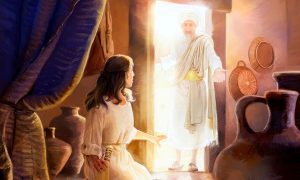 It is almost certain that he date of Jesus birth as the Son of Man was about the time of the Feast of the Tabernacles. Various logic reasons bring to this conclusion. Many religious scholars believe that Jesus was thirty three and a half years old when He was crucified. If this age is subtracted, it brings back to the beginning of autumn (end of September – beginning of October). This calculation takes His birth on, or around, the Feast of Tabernacle, at the beginning of autumn.
Second reason, the shepherds could not possibly be out at night in the chilly temperatures of winter. Third, historians inform that December 25th in antiquity celebrated the birth of the sun (Dies Natalis Solis Invicti), the winter solstice. In fact, only in the year 336 AD, it was repurposed to commemorate the birthday of Jesus.
Christ condemns pagan traditions
Regrettably, the birth of Christ fixed on December 25th, has obscured Jesus’ testimony by dissociating the message of the last three feasts from His Second Coming. Because of Christmas, their celebration is neglected. And their glorious spiritual message forgotten by many.
The world should be better informed that when Christ came the first time, He started, once for all, the project of redemption. And that He will come back, to complete it for good. Today, Christmas focuses only on consumerism and humanity, sentimentalism and emotions, not on the incarnation of the Son of GOD for man’s salvation.
Human tradition has abrogated, the Feast of Trumpets, the Day of Atonement and the Feast of Tabernacles. And it has replaced them with feasts based on pagan celebrations, such as the feast of the dead (November 1st). That is the day of honoring dead idols sanctified by humans. Then, it has also added the day of Mary’s Immaculate Conception (December 8th), that is another idol. These and other feasts are pagan traditions that obscure the true knowledge of the Father, the Son and the Spirit. Moreover, they cloud the activity Jesus is performing to give us «the right to become children of God» (John 1:12). They should have no place among the people of GOD.
Christ Himself speaks negatively against human traditions that contradict GOD’s laws. And even today, He asks, «Why do you also transgress the commandment of God because of your tradition?» (Mat. 15:3). Why the great majority of Christianity does not keep the commandments concerning the GOD’s annual feasts and annual Sabbaths, written in Leviticus, chapter 23?
Jesus is the safest shelter
The Feast of Tabernacles reminds all believers that in Jesus we have the safest shelter of all. He is the invisible Captain who accompanies us in the paths of righteousness that will ultimately lead to our perennial Home.
For Israel, sojourning in a desolate land,  «the LORD went before them by day in a pillar of cloud to lead the way, and by night in a pillar of fire to give them light, so as to go by day and night» (Ex. 13:21,22).
In a similar manner, Jesus is now preparing our eternal tomorrow. He is our omnipotent protector, benefactor and sustainer, the One who is preparing our heavenly Home (John 14:2,3).
Christ with His people forever
In the fullness of time of about 2000 years ago, Christ came to His people and became their Savior. Likewise, in the second fullness of time, He will return gloriously with His holy angels. And they will gather to Him His saints past, present and future. Then, He will lead them to the glorious place He prepared for them (John 14:1-3). And there, «He will dwell with them, and they shall be His people, God Himself will be with them and be their God» (Rev. 21:3).
 All who belong to Him by creation’s and redemption’s right will suffer no more. «They shall neither hunger anymore, nor thirst anymore; the sun shall not strike them, nor any heat; for the Lamb who is in the midst of the throne will shepherd and lead them to living waters» (Rev. 7:15,16,17).
There, «God will wipe away every tear from their eyes; there shall be no more death, nor sorrow, nor crying. There shall no be no more pain, for the former things have passed away» (Rev. 21:4).
Jesus is the Light of the world
A meaningful ritual performed at Jesus’ time during the Feast of Tabernacles was the illumination of the temple at night. Women lighted the court through a gigantic lamp stand that provided light for the nocturne celebrations. Even this context provided the opportunity for Jesus to direct the mind of His people to Himself.[ii] «I am the light of the world, He who follows Me shall not walk in darkness, but have the light of life», He declared (John 8:12; see also 9:5; 12:46).
Churches are filled with women who love the LORD and want to rejoice serving Him, even today. They, too, have an important task to accomplish in these evil times of spiritual darkness. They need to make the light of Jesus’ testimony and accomplishments shine in their surroundings and in the world.
 It is not by coincidence that Jesus used the parable of the ten virgins. He did it with the precise purpose to exhort especially His female followers to be on the alert and prepared to welcome Him, as their Bridegroom. Do you remember? Five virgins were sleeping and their light went out because they did not have enough oil. While the other five virgins made the flame of their lamps shine to prepare the way for the bridegroom.
By this parable Jesus warns all female believers who are waiting Jesus’ Second Coming but live a passive religion. Omitting to give a testimony of Jesus to others who do not know yet Him well, may result in their rejection. He does not wish to come back and say to negligent women: «I do not know you» (Mat. 25:12).
Be a light to the World
All young, adult and elderly women who truly love GOD have to glorify Him and His beloved Son. Jesus declared: «you are the light of the world. A city that is set on a hill cannot be hidden. Nor do they light a lamp and put it under a basket, but on a lamp stand, and it gives light to all who are in the house… Let your light shine before men, that they may see your good works and glorify your Father in heaven» (Mat. 5:14,16). This is the exhortation that comes from the heavenly sanctuary of GOD.
 Let us make the Law of GOD and the Testimony of Jesus shine! Tell people, first of all, that Jesus loves them, and died to forgive, bless, and redeem them. Let us not be weary in accomplishing Jesus’ mandate just because this world is dominated by man’s abusive power. Serve GOD enthusiastically, until we will find ourselves together in the New Jerusalem, in the Tabernacle of our LORD. Where there is «no need of the sun or the moon to shine in it, for… The Lamb is its light. And the nations of those who are saved shall walk in its light, and the kings of the earth bring their glory and honor into it» (Rev. 21:23-26; 22:5).
GOD’s glorious throne
Still today, «The prophetic message of the Feast of Tabernacles is that there is shelter in the Tabernacle of God under the wings of the shekinah glory, for the Jews first, and also the Gentile nations».[i] This, because the Father «shows no partiality. But in every nation whoever fears Him and works righteousness is accepted by Him» (Acts 10:34).
This promise is sure. Since now, it finds its fulfillment in the protection GOD provides, day and night to Christ’s followers. All Israelites and Gentiles who put into practice His laws and keep trusting in His Son’s testimony will be accepted by GOD (See Rev. 12:17; 14:12). And soon will find themselves in the Heavenly Tabernacle, the New Jerusalem. Where «He who sits on the throne will dwell among them» forever (Rev. 7:15).
[i] V. Buksbazen, p. 40.
[ii] Samuele Bacchiocchi, part II, The Fall Festivals, p. 46.