- HOME
- INTRODUCTION
- FEASTS OF GOD
- 1. PASSOVER- Leviticus 23:5
- 2. FEAST OF UNLEAVENED BREAD - Leviticus 23:6-8
- 3. FEAST OF FIRSTFRUITS - Leviticus 23:9-11,14,15
- 4. FEAST OF WEEKS OR PENTECOST - Leviticus 23: 15-16
- 5. FEAST OF TRUMPETS - Leviticus 23:23,25
- 6. ATONEMENT DAY - Leviticus 23: 32,31
- 7. FEAST OF TABERNACLES OR BOOTHS - 23:34-36
- THE WORSHIP ACCEPTABLE TO GOD
- Conclusion
- Italiano
- Francais
FEASTS OF GOD
The project solving all human problems
Chapter:
[ pilgrimage ]
THE ANNUAL FEASTS
«These are the feasts of the LORD, holy convocations, which you shall proclaim at their appointed times»
(Leviticus 23:4)

The annual feasts of the LORD are:
1. The Passover (Lev. 23:4-5 – Ex. 12:1-8; Num. 28:16; Deut. 16:1-2);
2. The Feast of Unleavened Bread (Lev. 23:6-8 – Ex. 23:14-15; Num. 28:16-25; Deut. 16:1-8, 16-17);
3. The Feast of the First Fruits (Lev. 23:9-14);
4. The Feast of Weeks or Pentecost (Lev. 23:15-22 – Ex. 23:16-19; Num. 28:26-31; Deut. 16:9-12, 16-17);
5. The Feast of Trumpets (Lev. 23:23-25 – Num. 29:1-6);
6. The Atonement Day, (Lev. 23:26-32; Lev. 16; Num. 29:7-11) and
7. The Feast of Tabernacles (Lev. 23:33-44; Ex. 23:16-17; Num. 29:12-39; Deut. 16:13-17).
GOD’s Appointed Times
The Hebrew language uses mainly two terms that refer to a feast: “mo’ed” which that translated means “an appointed time”, an “assembly”, a “solemn assembling”, a “holy anniversary”[1], and “hag” which means to “celebrate” and to “make a pilgrimage” (See Ex. 23:14-19; Deut.16:16-17). The “feasts” in ancient times were all «the appointed seasons of the LORD», (in Hebrew מוֹעֲדֵי יְהוָה – Mo’edi’ Yahweh), established on mount Sinai (Lev. 23:2,4). Among them there is the Day of Atonement, that is a feast and also a fast, the Sabbath of all Sabbaths.
Feasts’ Calendar
The seven annual feasts have their origins with the calendar established by the LORD. In fact on the fourth day of creation, «God said, “Let there be lights in the firmament of the heavens to divide the day from night; and let there be for signs and seasons, and for days and years» (Gen. 1:14). Indeed, if the LORD had not created this calendar in the beginning, humanity wouldn’t have known how to calculate time and the days GOD has planned to meet with believers.
According to the calendar of the LORD, the day begins at sunset and ends at sunset (Gen. 1; 1 Kin. 22:35-36; 2 Cr. 18:24; 2 Sam 3:3), the months start and end when the new moon can be seen, and the year begins at Israel’s spring, at the new moon nearest the true equinox,[3] in the month of Abib, or Nisan (Ex. 12:1,2; 13:4; 34:18), fourteen days before Passover.
This study focuses on the seven annual feasts and Sabbaths, although it will not neglect the other Sabbaths commanded by the LORD: the weekly, the Septennial, the sabbatical year, and the Jubilee, the fiftieth, which are years of special rest and deliverance for both man and earth (Lev. 25).
Feasts’ Observance
Three components distinguish the annual feasts: «1. Rejoicing, which mostly takes the form of ceremonial meals (with the exception of the Day of Atonement), and on the more important biblical festivals, the prohibition of work; 2. The liturgy – or in temple times, the special sacrifice and offering service; and 3. Particular ceremonials of the festival, such as eating the matzo on Passover…».[2]
None of the religious denominations having the origin of their faith found in the Jewish Scripture has observed the annual feasts regularly in the manner it was prescribed by the LORD and practiced and taught by Jesus. Israel abandoned them in the periods of apostasy and revived their observance in times of spiritual reform and faithfulness to GOD.
On the other side, Christianity and Islam have changed their names and dates losing memory of what their message is. Various denominations have even ceased to celebrate them altogether. The reasons they give for this are diverse. Some believe that the annual feasts of Leviticus 23 belong exclusively to the Jews. While others attest that the feasts have been abolished with the sacrifice of Jesus Christ. Others still affirm that feasts and sacrifices have been completely taken away at the destruction of the temple (70 A.D).
GOD’s Feasts are Mandatory Laws
Scripture states that all the feasts established by the LORD are mandatory laws to be kept “generation” after “generation”, in every place where those who profess to love the GOD of Abraham, Isaac and Israel, will live (Ex. 20:8-11; Lev. 23:14,21,31,41; Lev. 25:18). Therefore, for Israel, Christianity and all other believers, the feasts of the LORD remain a way to worship Him as Creator and Savior, a foretaste of GOD’s grace and of joyful communion with fellow men, in which everyone can rejoice and be glad.
Feasts’ Nature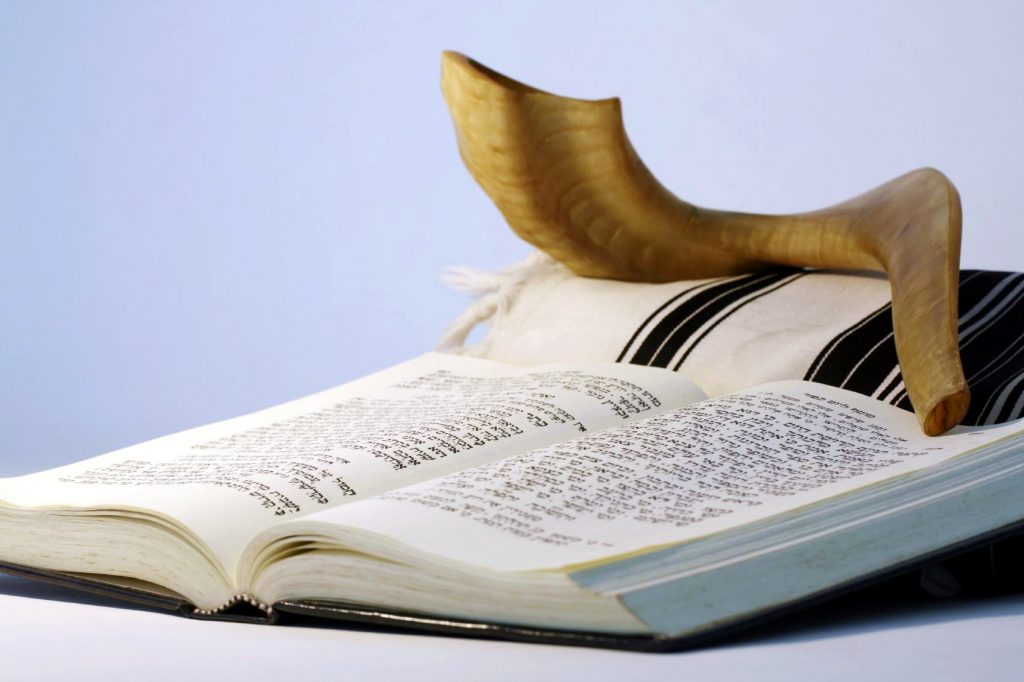
GOD’s annual feasts have a peculiar nature. They are typical, prophetic and commemorative. First, they are typical, real shadows, tangible models, because they «contain in typical language a record of God’s dealings with man in grace from the death of Christ to His millennial kingdom»[4]. Indeed, they are real appointments that He has set to be kept for meeting with Him on specific days. At the same time, the feasts are also types, meaning that their message points to the Messiah’s ministry. And, it presents the project that He is executing for the redemption of repented believers. More specifically, the feasts of the LORD indicate:
- The phase that Jesus Christ has already completed, once forever, at His first coming on earth (first three feasts).
- The activity of intercession He is accomplishing, as High Priest, in Heaven, on behalf of believers (fourth feast). While the Spirit, His Agent on earth, prepares, once forever, believers to receive the citizenship for His new kingdom.
- The ultimate works through which our Savior, in the future, will accomplish, once forever, the complete redemption of His people. And, finally, He will fulfill all other promises He has made (last three feasts).
Second, they are prophetic. meaning a real «foreshadowing of great events of the future part of which have since been fulfilled and part of which are yet to be».[5]
Third, when totally fulfilled in all their details, they are commemorative. They become delightful reminders of specific wonders accomplished by the LORD, once and for all, in the past.
Feasts’ Purpose
It is worthy of notice that the word «seasons», in Hebrew “mo-adim”, has the same meaning of “sacred seasons”, “feasts” and “appointments”. This means that the first reason for which our Creator has established His calendar with the lights of our solar system is for directing His worshippers to identify and respect His spiritual appointments on the days that He Himself had fixed to execute and then commemorate His mighty works in their behalf.
The time these days of celebration were ordained and their purpose are also important. The LORD gave these solemn days of worship and rejoicing to the people during the exodus. After He delivered them from the oppression of slavery, and while they traveling toward the promised land, He ordained His feasts, «…as divinely expressions of the moral obligation of His people, as memorial of God’s saving acts in the past, as sacrament of His sanctifying power in the present, and as types of His anticipated victory over sin in the forthcoming first and second advents of Jesus Christ».[6]
 Seven in the Feasts
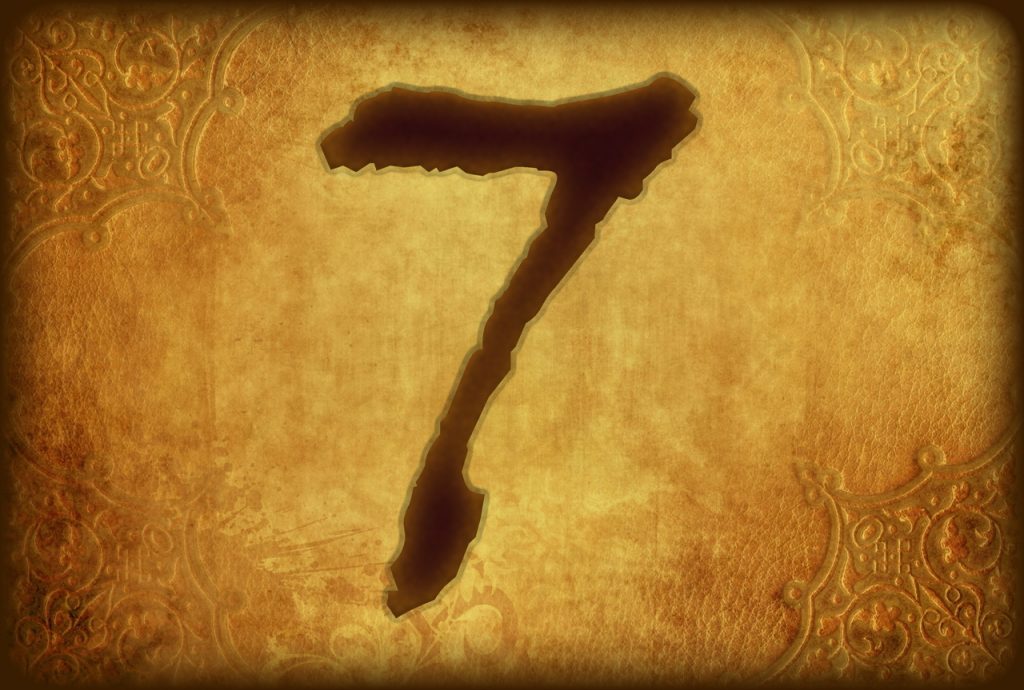
The numbers used by the LORD in His annual feasts are also symbols. For example, seven communicated a sense of “fullness” or “completeness” (שבע “seven” is spelled with the same consonants as the word שבע “complete/full”). In fact, seven is the number that characterizes the weekly Sabbath.[7] This is the day of rest GOD Himself sanctified when He completed the creation of heaven and earth.
Seven is ever present also in the annual feasts, indicating the fullness of blessings the LORD confers on these days. Indeed, seven are GOD’s annual appointments, and seven are also their Sabbaths of rest.
Furthermore, in His sacred calendar, the LORD fixed Passover’s day on Nisan 14th. This date, twice seven, was predetermined at the creation of humanity by the Father to be the day in which He would sacrifice His only Son for our forgiveness. Having completed according to the plan, once for all, the primordial, original redemptive act on the wood of the cross, Jesus, in fact, pronounced «It is finished!» transforming the Passover in a commemorative spiritual anniversary of His first wonderful act for the redemption of those who believe in Him (John 19:30).
Seven days the LORD made also last the following feast, Unleavened Bread, representing the purification from sin that started to take place in the life of Jesus’ followers from Nisan 15th after His death up to today.
Seven weeks after Passover, the LORD fixed the Feast of Weeks, or Pentecost, which started bringing the powerful blessings of the Holy Spirit to complete the spiritual ripening of the human harvest of Jesus.
Then, in the seventh month of His sacred year, the LORD dated His last feasts: Trumpets, Expiation and Tabernacles. Through which, He informed concerning the last tasks that His Son would accomplish to bring at completion the project of redemption.
These activities include: universal warning about the judgment and universal invitation to repentance addressed to the last human generation, and then final absolution, definitive purification and transformation for all His loyal followers ever existed. At last, He ordained the seventh feast, Tabernacles. Even this lasting seven days and ending on the Eighth Day, which is the seventh annual Sabbath of absolute rest and rejoicing, the one depicting the great, unique and perennial day of our new existence with our heavenly Father and Jesus on the earth made new.
The Three Pilgrimage Feasts
It is important to notice that in the written revelation, seven in connection with eight takes up a never-ending value. Significantly, seven and eight are present together in the three pilgrimage feasts to Jerusalem, which is a type of the eternal city built by GOD Himself.
First, the feasts’ cycle opens with eight days of celebration. They are:  the day of Passover, followed by the seven days of the Unleavened Bread.
Second, it progresses with seven weeks of spiritual preparation (49 days). Of which the seventh week (day 42 to 49) are followed by the eighth day, that is the glorious Feast of Weeks (day 50).
Third, the feasts’ cycle ends with other eight days of celebration. They are: the seven days of Tabernacles, followed by the Eighth Day, the seventh annual Sabbath. Indeed, his last Sabbath day is a glorious type of the eternal rest believers will experience in the Jerusalem of GOD (see Lev. 23:39).
Not by chance, all the Sabbaths days established by the LORD for celebrating with Him His three mighty works of creation, redemption and re-creation, are eight: the weekly Sabbath plus the seven annual Sabbaths (Lev. 23). And all eight stipulated as perennial laws of His eternal Covenant with His believing, loyal worshippers (Lev. 23:3,14, 21,31,41).
Feasts’ Chronological Order
The feasts of the LORD have a perfect predetermined chronological order that cannot be broken. Notably, their cycle starts with three spring feasts (Passover, Unleavened Bread, First Fruits). Then it closes with three autumn feasts (Trumpets, Expiation, Tabernacles). In the interior of which there is the Feast of Weeks, or Pentecost, separating and, at the same time, binding the first three to the last three, the beginning to the end of the divine project solving all human problems.
The annual feasts are also interdependent. This is evident by the fact that the meaning and purpose of each one is made clear by the feasts that precede or that follow. For instance without the Passover it becomes difficult to fully understand the meaning and purpose of the Feast of Unleavened Bread, the First Fruits and all the following ones.[8] Instead with the Passover its meaning and fulfillment in mind (Ex. 12), it is easily understood why the LORD ordained the keeping of the seven days of Unleavened Bread to be «as a sign to you on your hand and as a memorial between your eyes», and added, «You shall therefore keep this ordinance in its season from year to year» (Ex. 13:6-10).
[1] Adam Clarke, LL.L., FS.A. & C., Clarke’s Commentary, (New York, NY: Phillips & Hunt, 1830), vol. 1, p.583.
[2] Encyclopedia Judaica, (New York, NY: The Macmillan Co., 1971), vol. 6, p. 1238.
[3] The Stewarton Bible School, has published two booklets entitled The festivals of the God of Israel and The Sacred Calendar of the God of Israel.
This School’s publications, which seem to present a Messianic Jewish interpretation of the Scripture’s prophecies include: Understand the Revelation – Who/What is the AntiChrist? What is his Mark? – The Two Witnesses… Who are they? – Time is Short… Are we nearing the Return of Jesus Christ?
Their free booklets can be requested at www.sbs777.org.uk .
[4] John Ritchie, The Feasts of Jehova Bright Foreshadowings of Grace and Glory, 3rd ed., (Kilmarnock, Sturrock Street: John Ritchie LTD., n.d.), p. B Introduction.
[5] Ibid.
[6] The International Standard Bible Encyclopedia, (Grand Rapids: William B. Eerdmans Pub. Co., 1982), vol.2, p. 293.
[7] Sabbath in Hebrew means rest, abstinence from all work. GOD, after creation, rested and sanctified the weekly Sabbath (see Gen. 1,2). Later, He also established the seven annual Sabbath days, to rest and worship Him as the Author of salvation, in His Messiah, Jesus Christ.
[8] S. Bacchiocchi, God’s Festivals in Scripture and History, Part II: The Fall Festivals, p. 35-40.
Chapter:
[ pilgrimage ]
The Law of GOD for humanity
GOD for the Feasts of Weeks, or Pentecost, required the second pilgrimage to Jerusalem. He did so, to let the priests read the legislation of the Covenant before the men that were head of households (Lev. 23:21). The Law of GOD for humanity is one. Only later, scholars classified it in three categories, named the Moral, the Ceremonial and the Civil Law.
1. The Moral Law

The Ten Commandments – The Decalogue (Ex. 20) is the personal testimony the LORD wrote with His own finger on two stones. It is a summary of His constitution, meaning the eternal Covenant He made with fallen humanity at Sinai.
Christ did not abrogate the Decalogue, because the laws of the LORD do not need any amendment or abrogation. In fact, «The law of the Lord is perfect, converting the soul… The statutes of the Lord are right, rejoicing the heart. The commandment of the Lord is pure, enlightening the eyes. The fear of the Lord is clean, enduring forever. The judgments of the Lord are true and righteous altogether» (Ps. 19:7-9).
Firstly, love GOD
 During a discussion, Jesus answering a specific question, presented two universal moral principles. First, what is right and good to do in our relation to GOD. Second, what is right and good to do in our relation to our fellowmen. Jesus said, «‘You shall love the Lord your God with all your heart, with all your soul, and with all your mind.’ This is the first and great commandment» (Mat. 22:37-38). This first universal moral rule is a summary of the first four commandments of the Decalogue (Ex. 20:1-11).
Secondly, love your neighbor
 Then, our supreme Teacher added, «And the second is like it: ‘You shall love your neighbor as yourself’» (Mat. 22:39). This second universal moral rule summarizes the remaining six commandments of the Decalogue (Ex. 20:12-17).
Again a summary is not an abrogation. Jesus Himself gave evidence that the Ten Commandments are still binding. In fact, He put them fully into practice and in the deepest sense, honoring the Father, and loving all others to the point of giving His life for their eternal wellbeing.
Today, Jesus promises even to us, «If you love me, keep My commandments. And I will pray the Father, and He will give you another Helper, that He may abide with you forever – the Spirit of truth» (John 14:15-17).
2. The Ceremonial Law
The true worship – The second category in which GOD’s legislation was classified was named by theologians ceremonial law. This contains in types all the details of the project that the Deity is implementing to solve all human problems, and all the practices for the true worship pleasing GOD (Luke 22:42). Jesus did not abrogate this one, either. According to prophecy, He was crucified and «cut off» from the living for our redemption (Dan. 9:26,27). Accomplishing this, His sublime person replaced the «sacrifice and offering» presented to GOD in the temple, bringing to an «end» their practice, but surely not the truth of their spiritual message.
 Jesus, in fact, prayed to the Father, loved Him, and accomplished His will. He went in the synagogues, Sabbath after Sabbath, to preach and teach about the Father, His Kingdom, and His constitution. In addition, He also went at the temple in Jerusalem at every annual pilgrimage-feast. There, He referred to each feast’s types to preach that the redemption of man would be accomplished by Himself, together with the Father and the Spirit.
3.The Civil Law
 The principles of good government – The third category was named the civil law. It includes the rules concerning positive human relationships, management of justice, public and individual holistic welfare, and successful economy. This was decreed for the internal safety, wellbeing and prosperity of Israel and all the other nations and persons that would have learned from Israel to govern their people with justice, love and truth.
These three man-made categories form GOD’s unique Law for fallen humanity. If we change one, or take away one, or pick up only some instructions, here and there, as it seems suitable to our limited human minds, it is no longer GOD’s Law, but man’s.
Christ never sinned
Jesus gave a perfect example of what it means to trust and obey GOD. He is our firm foundation when we have doubts on what and how to obey. Indeed, Christ, during the weekly and annual Sabbaths and all the other days of His life, glorified the Father. He pleased Him by putting into practice all the instructions of His eternal Covenant. If He had not done so, He would have been a sinner like all humans. But thanks to His dependence from the Father and the Spirit, He never sinned. This signifies that He respected even the smallest detail of GOD’s Law in love, justice and truth. Even today, the example that Jesus left to us has to be followed closely. In fact, there is no other way of life that honors Him and our Father who is in heaven.
Today many believers have a distorted understanding of the character of our heavenly Father and of His Law, the Torah. Not knowing Him and Scripture well, quite a good number of them have reached wrong conclusions. One of which is that the LORD, during the period that preceded Jesus’ first coming, behaved with man too harshly.
While others affirm that the Law given at Sinai was appropriate for the hard-neck Israelites of antiquity. While modern believers, being more mentally and spiritually evolved than Israel of old, do not need to follow all those strict rules. But this is human nonsense, for the simple reason that the Most High GOD has always been righteous and good with all His human creatures past and present. He has always been perfect in everything.
A perfect Covenant Law
Therefore what was legislated on mount Sinai because it came out of His holy mouth, was and remains perfect and immutable. Jesus, as He stated, came only to fulfill GOD’s perfect Law, to teach it straight, and to give an example of how to put it into practice in love, justice and truth. Only those who do not know their GOD, and do not see their own sinful condition, can state that there was some fault in the Most High and in His Law.
 Those who reject the Law given on Mount Sinai stating that is not actual and pertinent to our way of being and living today, in reality accuse our perfect Father of not being just and good enough with all His human creatures past and present. And in doing so, implicitly, imitate His enemy and their own enemy, Satan, who deceived the parents of humanity with, more or less, the same lie. They do not realize that in doing so, they dishonor GOD’s holy name, transgressing the first three commandments (Ex. 20:1-8).
People who are spiritually confused, who want to live according to their own convenience and inclination, follow easily this satanic intellectual trap. They ignore that if some of GOD’s laws were to be made obsolete, Jesus, who, being the Son of God and the Son of Man, could legitimately have changed them, would have done it [i]. Then, He would have clearly informed His apostles about the necessary amendments, and in turn even us. As He informed Daniel about the ceasing of the sacrifices and offerings at the Messiah’s death (Dan. 9:27). And He reformed the symbols of Passover, at His last Supper on earth.