- HOME
- INTRODUCTION
- FEASTS OF GOD
- 1. PASSOVER- Leviticus 23:5
- 2. FEAST OF UNLEAVENED BREAD - Leviticus 23:6-8
- 3. FEAST OF FIRSTFRUITS - Leviticus 23:9-11,14,15
- 4. FEAST OF WEEKS OR PENTECOST - Leviticus 23: 15-16
- 5. FEAST OF TRUMPETS - Leviticus 23:23,25
- 6. ATONEMENT DAY - Leviticus 23: 32,31
- 7. FEAST OF TABERNACLES OR BOOTHS - 23:34-36
- THE WORSHIP ACCEPTABLE TO GOD
- Conclusion
- Italiano
- Francais
Chapter:
[ questions ]
INTRODUCTION TO THE FEASTS OF GOD
This is the introduction of an in-depth study on the annual feasts of GOD presented in the book of Leviticus, chapter 23.
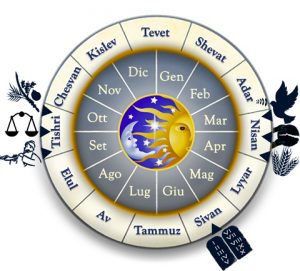 All people appreciate the opportunity to enjoy friendship, love, gladness, and a renewal of optimism. For these reasons, many nations have numerous feasts in their calendar. Yet, as pleasant as these holidays are, the Scripture warns, «Be aware least anyone cheat you…, according to the tradition of men, …, and not according to Christ» (Col. 2:8).
In fact, as we look closely at our society today, we find out that it celebrates many popular holidays. Nevertheless, it neglects the biblical feasts established by the Almighty GOD.
Regrettably, there are even denominations affirming that the observance of feasts terminated at Christ’s death. And they were abrogated, together with each «sacrifice» and «offering» pointing to the death of Jesus Christ (Dan. 9:26-27).
Questions this study answers
In view of this situation, this study seeks Scripture to answer the following questions:
- Were the seven biblical annual feasts completely fulfilled at the death of Jesus Christ?
- Are there applications for the feasts that pointed beyond the cross? If yes, which ones were they?
- Is there evidence that Christ abolished them and that the apostles didn’t keep them after His death?
- Should Christians celebrate only some or all of the biblical holy days?
- Is there a way of observing them for worshipping GOD in «spirit and truth» today?
Purpose of Study
 Considering the questions previously stated, the purpose of this study is to search in-depth Scripture, and reveal the message of GOD’s seven annual feasts. It also attempts to shortly indicate how to worship GOD during their Sabbaths.
In this introduction to the feasts of GOD, it is also necessary to define the meaning of two words. First, in Scripture the term “feast” refers to a collective holy appointment established by the LORD, having ceremonies with a prophetic message pointing to the ministry of GOD’s «only and unique Son» (John 3:16-18; Dan. 7:13). Second, the term “abrogation” means the abolition of laws, in this instance concerning the feasts, by the authority of GOD, or His Son.
Scripture Focus
This study focuses on the seven annual feasts GOD established at Sinai. It makes no claim to deal with this subject exhaustively. In fact, no man in this existence can attain the full comprehension of the marvelous wonders and messages of the Almighty GOD.
 This is a search on the Scripture alone, and, more precisely, on Leviticus 23. Therefore, also the indications for the observance of the annual feasts derive exclusively from Scripture. In fact, it alone can guide to understand their message and correct celebration, to teach their truth and spread of the Good News of salvation, to know GOD and worship Him.
Basic Assumptions
I – Seven commandments of GOD
This introduction presents three basic assumptions. Firstly, the seven annual feasts are part of the Law that the LORD addresses in His Covenant with all believers. Indeed, «those things which are revealed belong to us and to our children forever, that we may do all the words of this law» (Deut. 29:29).
II – Follow Jesus Christ
 Secondly, all true believers in Scripture need to harmonize their faith and practice to the «commandments of God». And, they should relate to GOD following the example and the «testimony of Jesus Christ» (Rev. 12:17; 14:12; 19:10). Only these enable believers to know and love our Father who is in heaven, and prepare for His New Kingdom. Beyond these, there is no assurance of living according to divine truth, and of worshipping GOD in spirit and truth.
III – The wise shall understand
Thirdly, the understanding of the written revelation is progressive. The Spirit reveals its mysteries according to the knowledge believers need in the time they live in. An evidence of this fact is the experience of Daniel. This great prophet of GOD did not fully understand the predictions concerning the last days events. Therefore, he asked for more explanation. And the answer was, «Go your way, Daniel, for the words are closed up and sealed till the time of the end». Then, «knowledge shall increase» and «the wise shall understand» (Dan.12:9,4,10).[iii] This promise of full understanding of the feasts’ messages and prophecies is the Spirit’s gift to the last generation.
Significance of this Study
This introduction and study of the biblical annual feasts inspires believers to worship GOD in spirit and truth. In fact, «All Scripture is given by inspiration of God, and is profitable for doctrine, for reproof, for correction, for instruction in righteousness»[ii] (2 Tim. 3:16, 17).
Indeed, knowing and understanding the message of the annual feasts help to remember GOD’s faithfulness. As they remind of the of significant events in Israel’s history, such as the exodus from Egypt and the giving of the Law at Mount Sinai. In addition, they provide times to express our faith and gratitude to GOD, and celebrate with the community. The feasts convey spiritual lessons about sin, atonement, and repentance. And, parents and religious leaders can use these holy convocations to teach younger generations about GOD’s plan of salvation. And, observing them serves as a reminder and encouragement for believers to resist evil. The annual feasts display God’s love for humanity and assist to worship Him in love, spirit and truth.
GOD’s annual Sabbaths are a sign
 We human beings have a limited memory. For this reason, the LORD established seven annual feasts, proclaiming specific messages. «These are My feasts», declares the LORD Himself (Lev. 23:1). Furthermore, Moses reports, «These are the feasts of the LORD, holy convocations which you shall proclaim at their appointed times» (Lev. 23:2).
After, GOD states, «I also gave them My Sabbaths, to be a sign between them and Me, that they might know that I am the LORD who sanctify them» (Ezek. 20:12, 11). Indeed, the respect of the annual Sabbaths is part of the law that will govern the life of GOD’s people on this earth and in GOD’s New Kingdom (1 Pet. 1:20).
Finally, the best way to conclude this introduction to the feasts of GOD is with a prayer. May GOD enable every reader to sanctify GOD’s annual feasts and Sabbaths as a token of love to Him and to Jesus Christ, His «only and unique Son» (John 3:16-18).
[i] In this study the covenant name of God, YHWH, is replaced with LORD or GOD, as in the Holy Bible, New King James Version.
[ii] The Oblique type and the bold type enhance the vividness and/or the authoritative quality of the Scripture’s message.
[iii] Daniel and the other prophets such as Isaiah, Ezekiel, Zechariah, Malachi, and others, did not clearly explained which message and vision they received pertained to the first coming of the Messiah, and which ones to His Second Coming.
Published on: 2014-12-23