- HOME
- INTRODUCTION
- FEASTS OF GOD
- 1. PASSOVER- Leviticus 23:5
- 2. FEAST OF UNLEAVENED BREAD - Leviticus 23:6-8
- 3. FEAST OF FIRSTFRUITS - Leviticus 23:9-11,14,15
- 4. FEAST OF WEEKS OR PENTECOST - Leviticus 23: 15-16
- 5. FEAST OF TRUMPETS - Leviticus 23:23,25
- 6. ATONEMENT DAY - Leviticus 23: 32,31
- 7. FEAST OF TABERNACLES OR BOOTHS - 23:34-36
- THE WORSHIP ACCEPTABLE TO GOD
- Conclusion
- Italiano
- Francais
FEASTS OF GOD
The project solving all human problems
Chapter:
[ repentance ]
CHRIST FORGIVES REPENTANT BELIEVERS
The Feast of Unleavened Bread proclaims that Christ forgives repentant believers. On the cross, He shed His blood and water to expiate the sins of His universal fallen people. Therefore, we need to celebrate the Passover, the Feast of Firstfruits, and the Feast of Unleavened Bread trusting in Him for our redemption. He is merciful and wishes to bless us beyond what we might ask.
The cleansing through Feet Washing
 Jesus proclaimed the wonderful truth that He is willing to forgive our sins by establishing the Feet Washing ritual. During His last Passover, He f instructed His apostles to commemorate His sacrificial death with unleavened bread and unfermented wine. Then, «supper being ended, … knowing that the Father had given all things into His hands, and that He had come from God and was going to God, rose from supper and laid aside His garments, took a towel and girded Himself. After that, He poured water into a basin and began to wash the disciples’ feet, and to wipe them with the towel with which He was girded» (John 13:2, 4-5).
Christ fulfills the Feast of Unleavened Bread
By performing the ritual of the Feet Washing, after His Passover Supper,  Jesus initiated the Feast of Unleavened Bread. In fact, the first day and first Sabbath of this feast begins at the sundown of the Passover day. And with its unleavened bread, it symbolizes the cleansing of the soul from sin (leaven). In the project of redemption, this spiritual washing is produced in the believer’s life after he accepts Christ’s sacrifice and is baptized. Consequently, this ritual gives evidence that Jesus fulfilled the message of the Feast of Unleavened Bread in the least detail. In fact, by doing it, He cleansed not only the feet but also the soul of His faithful apostles.
Feet that crossed trouble waters
The crossing of the Red Sea is a symbol of baptism, which is a type that foreshadows the Feet Washing as performed by Jesus. In fact, it all goes back to the Biblical account of the deliverance of Israel from the bondage in Egypt. GOD, through the mediation of Moses, saved the Israelites from slavery. Then, He miraculously enabled them to cross the Red Sea’s waters by foot.[i] So, His people safely moved forward to the Promised Land (Ex. 14:13-30).
Also the crossing of the Jordan River is a symbol of baptism, which is a type foreshadowing the Feet Washing. Scripture reports that GOD accompanied and blessed the Israelites during their forty years of wandering in the wilderness. Then, under Joshua’s leadership, helped them to cross the waters of the Jordan River by foot. So, he led them in the the land GOD had promised to Abraham, making it a powerful symbol of achieving salvation by grace.
How sins are washed away
 The Feet Washing ritual symbolizes, first, Christ who forgives and cleanses repentant believers. Secondly, our forgiveness of those who have offended and hurt us. This is clearly demonstrated by what happened to Him on the cross. John testifies that the soldiers responsible of executing the death’s penalty went to verify the conditions of the condemned. And when «they came to Jesus and saw that He was already dead… But one of the soldiers pierced his side with a spear and immediately blood and water came out» (John 19:33,34). His is the blood and the water that cleanses repentant believers from sin.
Isaiah saw this miracle of GOD’s grace centuries before. And he attested that the Messiah, «… was pierced for our transgressions, he was crushed for our iniquities; the punishment that brought us peace was on him, and by his wounds we are healed» (Is. 53:5). This is how Christ forgives and cleanses all repentant believers from spiritual impurities. And how He gives peace to their souls.
Christ’s cleansing ministry in the Heaven
Furthermore, Jesus’ feet washing fulfills the sanctuary’s type signified by the washing done by the high priest with the water of the bronze laver. This was standing in the sanctuary’s court after the altar of burnt offerings where the lambs were sacrificed. With the water in the bronze laver the high priest washed hands and feet that made him ritually cleansed. Then, he went in the tabernacle, in the presence of the LORD. And there, he presented the blood of the lamb. Asked for mercy, and in answer to his supplication, GOD forgave the sins of His people (Ex. 38:8).
 Christ truly is the eternal High Priest of GOD most High. A few days before His sacrifice, Mary’s tears washed His feet, anointing Him to accomplish His priestly mission (Luke 7:36-50). Then, on Calvary, He willingly shed His blood and water to cleanse all repentant believers. He alone has the authority to cancel the sins and purify the conscience and soul of the repentant. Only Christ is able to make a believer pure, holy, and ready to enter the Kingdom of GOD. No other.
The Cleansing Water in the Sanctuary of GOD
 Christ’s body is the antitype of the bronze laver, its stand and its content. The laver was of bronze as was the altar of the burnt offerings. Even this particular feature is rich in spiritual meaning. It reminds of the bronze serpent that was lifted up to cleanse GOD’s people from the poison of the serpents. The people who believed, repented and looked up to that type of the Redeemer, survived from the snakes’ poison (Num. 21:9; 5-8). In similar manner, Christ cleanses repentant believers from the poison of their sins.
What redeems man is not belonging to a church or a nation, is not trusting in human beings, as great as they may be. It is not a high reputation or the accumulation of means and success in this life. What makes men acceptable to our heavenly Father, and prospective citizens of His future kingdom, is Jesus, our Savior. He explained clearly, «I am the way, the truth and the life. No one comes to the Father except through Me» (John 14:6). Surely, He is «the lamb of GOD who takes away the sins of the world» (John 1:19). He is the eternal Mediator between GOD and men, and the only One who can purify body, mind and soul.
Forgive One Another

It is important to notice that Jesus gave a precise example to follow, when He washed the feet of His disciples. In fact,«when He had washed their feet, taken His garments, and sat down again, He said to them, “Do you understand what I have done to you? You call Me Teacher and Lord, and you say well, for so I am. If I then, your Lord and Teacher, have washed your feet, you also ought to wash one another’s feet. For I have given you an example, that you should do as I have done to you» (John 13:12-15). Therefore, we need to forgive others if wish to be forgiven.
Our Savior gave proof to be merciful and willing to forgive even the worst sin of repentant believers. He gave proof of this when He prayed for the forgiveness of His tormentors: «Father, forgive them; for they do not know what they are doing» (Luke 23:34). He will plead also for your forgiveness. Forgive those that have offended and hurt you, as did Christ. Avoid doing what is evil, following Christ’s example, and He will save you.
Remission of sins to be preached in Jesus’ Name
Since Jesus’ Passover Supper and His institution of the Feet Washing ritual, He wishes that «repentance and remission of sins should be preached in His name to all nations, beginning at Jerusalem» (Luke 24:47). All people, should know that, even before the foundation of the world, He decided to sacrifice His Son, in the eventuality man would fall prey of His enemy. The unbeliever that is perishing for lack of knowledge, need to know that since the first sacrifice accomplished in Eden (Gen. 3:21), «the wages of sin is death, but the gift of God is eternal life in Christ Jesus our Lord» (Rom. 6:23).
Christ, the Giver of Living Water
 To the Samaritan woman who ashamed of her sins was going to the well searching for water in the full heat of the day, Jesus said, «Whoever drinks of this water will thirst again, but whoever drinks of the water that I shall give him will never thirst… the water that I shall give him will become in him a fountain of water springing up into everlasting life» (John 4:13-14). This promise of abundant and perennial life is for all repentant believes. Adam and Eve benefitted of it, when they acknowledged their sin and became ashamed of it. Let us therefore not hide behind futile excuses and ask Chr on a daily basis, «Sir, give of this water that I may not thirst» anymore (John 4:15; Mt. 6:12-13).
Christ, invites all sinners to trust in Him, repent of whatever sin they have committed, and ask forgiveness. «’Come now, and let us reason together,’ says the Lord, ‘Though your sins are like scarlet, they shall be as white as snow; though they are red like crimson, they shall be as wool» (Is. 1:18). Let us believe in this promise and go to Him sincerely repented, assured that He will grant forgiveness.
The pure water of Life
 Finally, the water of the Feet Washing reminds of the river «that went out of Eden to water the garden, and from there it parted and became four rivers» (Gen. 2:10). The first parents of humanity could not drink of its water because of their sin. The believers in Christ, those that He has purified, will see its waters in the New Kingdom. They will drink from the «pure water of life, clear as crystal, proceeding from the throne of God and of the Lamb» (Rev. 22:1), and thirst no more from anything they are now longing for.
Therefore, until Christ returns invite others, «Come!». «And let him who hears say, “Come!” And let him who thirsts come. Whoever desires, let him take the water of life”» that the LORD freely gives to all who believe in His wonderful Son (Rev. 22:17).
[i] Is it not amazing that even the Red sea, the people of GOD had to cross to obtain final freedom from pharaoh’s persecution, has the color of blood?
[ii] For more information on the extraordinary events that occurred in the Bible times and in particular at the death of Jesus-Christ, see: Findings Confirming the Bible – The Greatest Biblical Archeology Discoveries of all Time, by Ron Wyatt, The Truth always Adds Up, by Ron Wyatt: https://www.youtube.com/watch?v=euCeXXAcAnU and Forbidden Pictures Revealed – Did Ron Wyatt tell the truth? By David Gates: https://www.youtube.com/watch?v=9ubKUip6pz0
David Gates interviews Dr. David Kim, who made 12 trips behind military fences in Saudi Arabia and climbed Mt. Sinai to collect evidence of a Red Sea crossing. Amazing photos and artifacts. Published on July 6, 2013.
Chapter:
[ repentance ]
CHRIST IS THE HIGH PRIEST OF GOD
 The Feast of Weeks proclaims that Christ is blessing believers as the High Priest of GOD. In fact, the high priests who served in the sanctuary of GOD were types of Christ, our High Priest. And, they enacted the ministry He is accomplishing in the Tabernacle of Heaven on behalf of any sincere repentant who believes in Him.
Lovingly, since Adam and Eve sinned, the Father Himself designated Christ «to be Prince and Savior, to give repentance to Israel and forgiveness of sins» to all repentant believers (Acts 5:31, 32; Rev. 5:9-12).
Christ our High Priest
At the first Feast of Weeks of the Messianic era, on the fiftieth day after His resurrection, Christ entered the tabernacle of Heaven (Heb. 9:12). And, there He started His ministry as High «Priest of God Most High» (Gen. 14:18).
 Scripture testifies that our Redeemer and Intercessor is not a successor of a human priest, but of Melchizedech, the «King of righteousness» and «King of peace» of the entire universe (Heb. 7:1-3). Therefore, Christ, as Melchizedech, «remains a priest continually», forever (v. 3, 15-17).
Furthermore, Melchizedech did not present to GOD animal sacrifices, but «bread and wine» (Gen 14:18). And, similarly did Jesus at His last Passover Supper in Jerusalem. In fact, on that holy evening, He established that the unleavened bread and unfermented wine would be symbols and reminders of His body and blood offered in sacrifice to GOD for the expiation of sins.
The earthly and heavenly high priest
This chart below shows that in Christ, the High Priest of GOD, the old earthly priesthood met its antitype. And, when Christ was «cut off» on Calvary, the spiritual values of each animal «sacrifice and offering» were made to cease (Dan. 9:27).
| The earthly high priest – the type | Christ, our heavenly High Priest – the antitype |
| Heb. 7:28; 5:1 Earthly priest called among the people. | Heb. 4:14, 15; 2:16-18 Jesus, our High Priest taken from humanity. |
| Heb. 5:4 The priests did not appoint themselves. Ex. 28:1 Aaron was appointed high priest by GOD, and, his sons, as regular priests. Num. 1:47-52; 3 The remaining men of the tribe of Levi were helpers to the priests. | Heb 5:5,6 Christ appointed by the Father.
Rev. 1:5,6 Jesus through the agency of the Spirit appointed His faithful disciples as His witnesses. |
| Lev. 4:27-31; 16:30 The main function of the priest’s service was taking away the guilt of the community by making atonement for them before GOD. | Heb. 9:22; Mat. 26:28 The main purpose of Jesus’ life and death is to expiate sins, save and bless believers. |
| Lev. 1o:16-18; 6:30 The blood or eaten flesh of every animal sin offering was taken into the tabernacle by the high priest. | 1 Pet. 2:24; Isa. 53; Heb 9:24, 28 Christ bore our sins in His own body. |
| Lev. 4:5,6 The blood was presented before the LORD in the sanctuary. | Heb. 9:12 Christ entered the heavenly Tabernacle of GOD Most High with His own blood. |
| Num. 28 and 29, Heb. 9:6 The priest entered daily in the holy place of the tabernacle to perform the services for forgiveness of sins. | Heb. 9:9,11,14 Jesus’ ministry in the first part of the heavenly Tabernacle continues daily throughout the sacred year. |
Christ offered Himself to GOD
 On the Feast of Weeks, the high priest presented two breads to GOD. He commanded, «You shall bring out of your habitations two wave loaves of two-tenths part. They shall be of fine flour; they shall be baked with leaven; they are the firstfruits unto the Lord» (Lev. 23,17).
Even this ritual points to Christ. First it foreshadows Him offering Himself to GOD and interceding for the forgiveness of sins. Jesus Himself spiritually speaking testified to be «the true bread from heaven». In fact, He declared, «Most assuredly, I say to you, Moses did not give you the bread from heaven, but My Father gives you the true bread from heaven» (John 6:32). «For the bread of God is He who comes down from heaven and gives life to the world» (John 6:33).
Secondly, the presentation of the two breads on the Feast of Weeks, or Pentecost, points to the first Jew and Gentile believers that believed in Christ and that He purified, and offered to the Father.
Christ alone is our Mediator
 Christ alone is our Mediator. He alone does not need, day after day, «to offer sacrifices, first for his own sins and then for the people’s, for this He did once for all when He offered Himself» (Heb. 7:26,27). Therefore, people who still depend on human mediators,[i] reject the ministry that Jesus is performing on their behalf in the Tabernacle built by GOD.
Ou explained, «No one comes to the Father except through me» (John 14:6). This means that we only need Jesus Christ for our redemption. No other human being, male or female, dead or alive, on earth or in Heaven, can replace Him. «For there is one God and one Mediator between God and men, the Man Christ Jesus» (1 Tim. 2:5,6).
In conclusion, only Christ can act as our representative before GOD, because only Him has the authority and power to save us, and reconcile us to GOD.
[i] The mediation of Mary is not biblical. This subject is well explained by Samuele Bacchiocchi, Popular Beliefs – Are they Biblical? (Berrien Springs, MI: Biblical Perspectives, 2008), p. 235-237. See book online at http://www.biblicalperspectives.com.
Chapter:
[ repentance ]
5. FEAST OF TRUMPETS
«In the seventh month, on the first day of the month,
you shall have a sabbath-rest,
a memorial of blowing of trumpets,
a holy convocation.
You shall do no customary work on it»
(Leviticus 23:23-25)

The spiritual life of GOD’s people awakened with the Feast of Trumpets, four months after the Feast of Weeks. In Scripture, it is the “day of blasting/shouting” (in biblical Hebrew, ים תרועה – Yom Teru’ah). The word teru’ah (תרועה) means “a loud joyful sound”. It also refers to “Zikhron Teruah”, the “Memorial of Blowing” of Trumpets (Lev. 23:24). The trumpets blown are in reality ram’s horns turned into a trumpet-like musical instruments, called in Hebrew, “shofars“.
The Seventh Month
The Feast of Trumpets is celebrated the 1st of Tishri, or Ethanim, the first day of the seventh month, the one which completes the cycle of the “LORD’s feasts” (Lev. 23:23-25). In our calendar it falls in autumn, at the new moon that occurs between September and October. Since the second century of our modern era, this annual sabbath day coincides with the first day of the Israelite civil year, “Rosh Hashanah”, which means “Head of the Year”. In addition, in Judaism it commemorates the creation of the world.[i]
The first day of the seven month
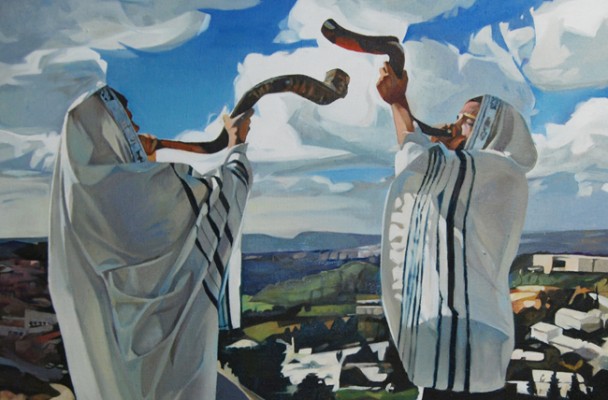 Of the seven annual Sabbaths, the Feast of Trumpets alone occurs on the first day of the month. This is the day that starts when the light of the new moon begins to shine. In ancient Israel, during the sacred year, the priests sounded the trumpets at the beginning of each month. The first day of each month started with the appearing of the new moon. When two concurring witnesses saw the first silver of the new moon, they attested to it before the Sanhedrin. Then, the sound of trumpets announced the new month.
Indeed, for repented and faithful believers the Feast of Trumpets is also a joyful day. In fact, GOD ordained, «Also in the day of your gladness, in your appointed feasts, and at the beginning of your months, you shall blow the trumpets over your burnt offerings, and over the sacrifices of your peace offerings; and they shall be a memorial for the LORD your God» (Num. 10:10; see Ps. 81:3).
The fourth annual Sabbath-rest
The Feast of Trumpets is the fourth annual Sabbath-rest commanded by the LORD. Its order number makes evident that it concerns all humanity up to the four cardinal points of the earth. GOD prescribed to His people: «In the seventh month, on the first day of the month, you shall have a holy convocation. You shall do no customary work. For you it is a day of blowing the trumpets» (Num. 29:1-7).
On this High Sabbath day, the LORD called the Israelites to this solemn meeting with Him by the “blowing of trumpets”. In response, at the temple, the priests presented an offering made by fire, the usual daily sacrifices and the monthly thanksgiving gifts (Lev. 23:25). GOD still exhorts, «Blow the trumpet in Zion, and sound an alarm in My holy mountain! Let all the inhabitants of the land tremble, for the day of the LORD is coming, for it is at hand» (Joel 2:1).
Trumpets of Warning

In ancient times, the trumpets sounded in Israel for various purposes. They called the people to a general assembly, informed about specific dangers, and proclaimed joyful events, such as the King’s coronation. Therefore, this feast, in which the blowing of the trumpets is the prominent feature, sounds special messages.
Scripture provides many clues to understand the purpose for blowing the trumpets on this holy Sabbath day. It states, «When you go to war in your land against the enemy who oppresses you, then you shall sound an alarm with the trumpets, and you will be remembered before the LORD your God, and you will be saved from your enemies» (Num. 10:9,10). According to this statement, the blowing of the trumpets has a double function. Firstly, it is for GOD’s worshippers an alarm, a call to prepare themselves because a danger is approaching. Secondly, it is a reminder for the LORD to save His people from a most perilous situation.
The Day of Yahweh
The Feast of Trumpets foretells the coming of “the Day of Yahweh. ” The prophet Amos described this day of judgment, saying: «Alas, you who are longing for the day of the LORD, For what purpose will the day of the LORD be to you? It will be darkness and not light; As when a man flees from a lion and a bear meets him, or goes home, leans his hand against the wall and a snake bites him. Will not the day of the LORD be darkness instead of light, Even gloom with no brightness in it?» (Amos 5:18-20 NASB).
The prophet Zephaniah also proclaimed: «Near is the great day of the LORD, Near and coming very quickly; Listen, the day of the LORD! In it the warrior cries out bitterly. A day of wrath is that day, A day of trouble and distress, A day of destruction and desolation, A day of darkness and gloom, A day of clouds and thick darkness, A day of trumpet and battle cry against the fortified cities And the high corner towers» (Zephaniah 1:14-16 NASB).
Ten days of repentance and prayer
The Feast of Trumpets is a day of rest, repentance, and reflection. It marks the beginning of a ten-day period of consecration to GOD through prayer, thanksgiving and praise. The need for watchfulness and preparedness in connection with this feast is also echoed throughout the New Testament. Indeed, Jesus Himself exhorts His followers to repent and be ready at any time for His return. He urges, «Repent, for the kingdom of heaven is at hand» (Matt. 4:7). «Therefore be on the alert, for you do not know which day your Lord is coming» (Mat. 24:42 NASB). Again, «Remember therefore from where you have fallen; repent» (Rev. 2:5).
Trumpets of Salvation
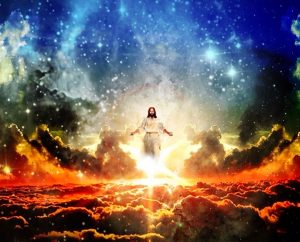 The trumpets in old times, besides warning of an incumbent danger, were also connected to the coming of the Messiah, and to the protection of His people. «The LORD will blow the trumpet, and go with whirlwinds from the south. The LORD of hosts will defend them» (Zec. 9:14,15). «So it shall be in that day: the great trumpet will be blown; they will come, who are about to perish… and they who are outcasts…, and shall worship the LORD in the holy mount at Jerusalem» (Isa. 27:13).
The seventh month is also very significant because it is the last month of the annual feasts calendar. In a future Feast of Trumpets GOD will joyfully announce the coming of His Great Day, the day of salvation. «For the Lord Himself will descend from heaven with a shout, with the voice of the archangel and with the trumpet of God, and the dead in Christ will rise first» (1 Thes. 4:16 NASB). «In a moment, in the twinkling of an eye, at the last trumpet; for the trumpet will sound, and the dead will be raised imperishable, and we will be changed» (1 Cor. 15:52 NASB). «And He will send forth His angels with A GREAT TRUMPET and THEY WILL GATHER TOGETHER His elect from the four winds, from one end of the sky to the other» (Mat. 24:31 NASB).
Trumpets of Rejoicing
In antiquity, the Feast of Trumpets was «an announcement from the King of Israel to His people that the glad sabbatical month had begun, and that the great Day of Atonement, and the supreme festivity of the Feast of Tabernacles, was now at hand».[i]
 Today, this feast is also joyful because it announces the coming of the Messiah and His coronation. In the old times, people rejoiced and blew trumpets at the coronation of a new king (2 Kings 11:14). The same will happen at the return of Jesus Christ, the Lamb of GOD. «For He is King of Kings and Lord of Lords» of believing and saved humanity (Rev. 17:14; 19:16).
Isaiah introduced Him, stating, «The Lord God is King of kings and Lord of Lords! He rules the nations. He has his eye on his people, to guard and keep them» (Is. 6:1-8). «He will be great» heralded also the messenger of GOD to the virgin Mary about Jesus. Furthermore «will be called the Son of the Most High; and the Lord God will give Him the throne of His father David; … and His kingdom will have no end»(Luke 1:32-33).
[i] W. Robertson Nicoll, Ed. The Expositor’s Bible, (New York, A.C.: Armstrong and Son, 1908), vol. 2, p. 462