- HOME
- INTRODUCTION
- FEASTS OF GOD
- 1. PASSOVER- Leviticus 23:5
- 2. FEAST OF UNLEAVENED BREAD - Leviticus 23:6-8
- 3. FEAST OF FIRSTFRUITS - Leviticus 23:9-11,14,15
- 4. FEAST OF WEEKS OR PENTECOST - Leviticus 23: 15-16
- 5. FEAST OF TRUMPETS - Leviticus 23:23,25
- 6. ATONEMENT DAY - Leviticus 23: 32,31
- 7. FEAST OF TABERNACLES OR BOOTHS - 23:34-36
- THE WORSHIP ACCEPTABLE TO GOD
- Conclusion
- Italiano
- Francais
FEASTS OF GOD
The project solving all human problems
 Worship is a demonstration of love and there are many ways to worship GOD. Christ alone gave a perfect example of love and worship of GOD. He also explained that «
 Remarkably, the seven annual feasts and their Sabbaths form a unity, a whole, that only in its entirety reveals with precision the project that solves all human problems from its beginning to its complete fulfillment. Indeed, only celebrating them chronologically, on the date and in the manner prescribed by the LORD, we can have a comprehensive vision and a clear understanding of GOD’s plan for the redemption .
 Furthermore, GOD commanded to the fathers to teach their children what it means to love Him, trust Him, and obey Him. So that He may be their GOD, and they may know how to worship Him in spirit and truth (see Dt. 6:5-8).
 At this point, it is important to highlight that the rituals that man performs do not save. As the sacrifices and offerings at the Temple of GOD by themselves did not redeem the repentant Israelites, so our acts of obedience, do not save us. Truly, who saves people from the slavery of sin is a Person, GOD Himself. And He has chosen to accomplish this wonder through His beloved Son, Jesus Christ.
 On the other side, He will not leave unpunished those who profane His Name by worshipping Him according to human traditions contrary to His expressed instructions, (see Lev. 18:21, 20:3; 21:6; 22:2; Pr. 30:9; Is. 48:11; Ez. 22:26; 39:7; Mic. 4:11; Mal. 1:12:2:10). Indeed, teaching ways different from the ones proclaimed in His Law, do not please Him (see Lev. 10: 8-11; 19:8; 22:15; Num. 18:32; Ps. 74:7; Ez. 7:22; Soph. 3:4; Ac. 21:28; 24:6; Heb. 10:29; 12:16; Rev. 2:14,15,24). Profaning His earth with abominations contrary to His will (see Is. 24:5; Jer. 16:8), and transgressing His Sabbaths, bring only misery and death (see Ex. 31:4; 22:9; Neh. 13:17; Ez. 7:22; 20:13,16; 22:8,26; 23:38; Is. 56:2; Hos. 2:10-15).
 Indeed, all GOD’s annual Sabbaths, including the Atonement Day, have been stipulated as perennial laws. And, the LORD also today exhorts us to remember them and keep them holy, for our wellbeing and blessing (Ex. 31:13; Lev. 19:3,30; 26:2; 23:38; 26:34; Is. 1:13; Lam. 2:6). For, when you trust and obey,«Your light shall break forth like the morning, your healing shall spring forth speedily, and your righteousness will go before you; then you shall call, and the LORD will answer; you shall cry, and He will say, “Here I am”» (Is. 58:8,9). Surely these are GOD’s promises for every believer who celebrates the Sabbaths of the LORD in the manner that He prescribed in His Law.
 While praying and studying the Holy Scripture, «He will guide you in all the truth; for He will not speak on His own authority, but whatever He hears He will speak; and He will tell you things to come» (Jn. 16:13-15). So, believe in GOD’s Law and Jesus’ Testimony alone, as did the apostles (see Jn. 22:22). Then, humbly ask the Holy Spirit to give you knowledge and understanding, and He will show you what is true faithfulness.
 Also the Atonement Day, which is a Sabbath of fasting, personal and corporative introspection and repentance, should be lived with thanksgiving and joy in our hearts because our Redeemer shows His infinite compassion by completely cleansing and restoring us.
 Sabbath-keeping means remembering, reflecting, and rejoicing about the Creation of the world (see Exodus 20:11), the redemption of repentant people from sin (see Dt. 5:15; Lk. 4:16-19), the promise of Christ’s Second Coming, and the creation of the New Earth (see Is. 66:22,23). Even GOD enjoys commemorating and reflecting on important happenings. For example, He paused to reflect on His accomplishments at creation (see Gn. 1:4,9,12,18,21,25,31; 2:2-3; Ex. 20:11).
 GOD concerning the Sabbath specifies that no work is to be done by «you, nor your son, nor your daughter, nor your male servant, nor your female servant, nor your cattle, nor the stranger who is within your gates» (Ex. 20:10). Consequently, this means that employers should not have their employees work. usinesses owned by Sabbath-keepers should be closed on the Sabbath days. We are to pause from our normal routines—shopping, errands, activities, sports, television – and spend the day, not oversleeping, but focusing on spiritual things, following the example of Jesus.
 Our Father who is in Heaven desires the redemption of every human being. Jesus Christ “came to save the lost” and if He finds one He is very happy (Mt. 18:11,13). We answer to the gift of His grace with joy, delight, glorifying His Name with songs, musical instruments, and thanksgiving prayers. Our Father will celebrate at the marriage supper of the Lamb with the redeemed (Rev 19:7-9). Therefore, all the Sabbath days «Give thanks to the LORD with the lyre, sing praises to him with the ten-stringed harp» (Ps. 33:2).
 GOD desires corporate worship (see Is. 66:22, 23). And, Jesus attended and led out in worship services on the Sabbath day (see Lk. 4:16). While on earth He taught to his apostles and disciples, how to worship GOD, our «Father in spirit and truth» (Jn. 4:23). Even Paul, called the believers in Christ to respect «the assembling» of the Sabbath days (Heb. 10:25).
 Keeping the annual feasts and the Sabbath days is a loving response to the commands of Jesus (see Jn. 14:15). It is not meant to be a means of earning our salvation (see Rm. 3:20; Heb. 4:9, 10). And, we respond to Jesus’ gift of rest by serving Him in His strength and living for Him (see Ex. 20:8,9; 2 Cor. 9:8; Heb. 13:20, 21).
 Keeping the Sabbath days means trusting GOD to take care of what we leave undone during the hours of the Sabbath (see Ex. 16:14-30; 20:10; Ps. 5:11,12; Mt. 6:33). It , also, means learning to depend on GOD rather than on ourselves. In fact, Jesus trusted His Father no matter how much Satan tempted Him to do otherwise (see Lk. 4:1-13). And, He demonstrated this trusting attitude as He suffered for our salvation (see Mt. 26:39; Lk. 23:46).
 In the gift of the Sabbaths, GOD provides time for focused fellowship with the whole family—even the animal family (see Ex. 20:8-11). In reality, Sabbath and family go together (see Gn. 1:1-2:25; Lev. 19:3). Therefore, spend quality time with family and other Christians, visit the sick or elderly and even enjoy some relaxing time in GOD’s creation. In fact, this nurtures our “horizontal” relationships – those with our fellow human beings. The members of the Godhead are relational (see Jn. 15:15). And, GOD’s relationship with us is the foundation of our relationship with each other (see Jn. 13:34, 35; 17:20-23).
 Keeping the Sabbath days means caring for necessary physical needs; no creature -human or animal – should be allowed to suffer on this day (see Ex. 23:12; Mat. 12:1-14; Mk. 2:27). GOD supplies all our needs, all the time (see Ex. 16:26, 35; Jos. 5:12; Mt. 6:25-33; Jn. 5:16, 17; Phil. 4:19), and He advocates that we care for the needs of all His creatures (Mat. 12:1-14; Mk. 2:23-28; Lk. 6:1-5). Jesus is a Servant and Proclaimer of the Good News (see Lk 4:18-21; Phil. 2:5-11). He went about doing good and blessing others (see Ac 10:38).
 Jesus proclaims, «the Sabbath was made for man» (Mk. 2:27). And He, who is the «
Chapter:
[ Sanctuary ]
SCRIPTURE INTERPRETS ITSELF
Scripture Interprets Itself Through Typology
For an exact and progressive understanding of the written revelation, the LORD communicated with man through tangible symbols, defined “types”. And, from these derives the term “typology”[i], the study of Scripture to understand the originals entities prefigured by the biblical types.
Remarkably the Scripture interprets itself through typology. Consequently, all that is needed is studying it, and watching attentively the events of human history, in particular of Israel. These, in fact, enable to discern when a biblical type and a prophetic event is truly and completely fulfilled in its antitype. And, only at that time, it will be once for all. Then, and only then, interpreters of Scripture receive evidence that their interpretation of a symbol, was correct.[iii]
In antiquity the writers of Scripture were very familiar with this divine method of communication. Consequently, they considered real things, real persons, and real events of the past, types of things to come.
Even today, using typology, this symbolic language can be understood without external references by comparing scripture with scripture.
Man’s Redemption in Types and Antitypes
I. The first sacrifice
 The LORD informed progressively about the means He retained necessary to execute the redemption of repented believers, using types.
Firstly, He disclosed the solution to Adam with the promise of a Messiah that would come only from a woman. His Anointed would defeat the “Serpent”, the “Dragon” by suffering and dying innocently to redeem many. Here, the serpent is a tangible type. In fact, it represents the “devil”, “Satan”, the rebellious angel that took possession of the “ancient serpent” to deceive the parents of humanity (Rev. 12:9).
To Adam and Eve, GOD also specified how the extraordinary Seed of the woman would defeat Satan (Gen. 3:15). In fact, after promising a Redeemer, the LORD presented in types the means through which He would fulfill His promise. And He did this by sacrificing an “innocent animal”, most probably a “lamb”. Then, the LORD, out of love, took the skin of the victim and made garments. And, with them, He covered the parents of humanity, left naked and ashamed of their new miserable sinful condition (Gen. 3:21).
Purposely with this first sacrificial death of an innocent victim, GOD taught to Adam that the Seed of Eve will one day die to make them live. And He also dramatically explained that without shedding of blood there is no remission of sin. Ultimately,this sacrifice prefigured the great sacrifice which, in the latter days, should be offered once for all. Thus, the first death in GOD’s Universe was the sacrifice of Christ in a figure.
II. The substitutionary sacrifice
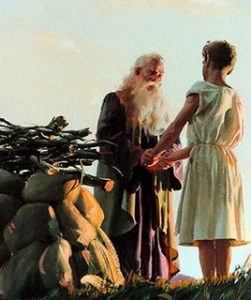 Secondly, the LORD asked Abraham to dramatize the same solution. Trusting in GOD’s promises, our spiritual patriarch offered Isaac, his only legitimate son, as a sacrifice. Yet, as Abraham raised his hands to kill Isaac, the Angel of the LORD stopped him. And, GOD substituted his son with an “innocent victim” He Himself had chosen and provided for the burnt offering (Gen. 22).
This substitutionary sacrifice was a prophetic reenactment. In it, Abraham played the role of our Father who is in Heaven. And, Isaac prefigured GOD’s only Son, sacrificed, once for all, at the fullness of time (John 3:16).
III. The perpetual sacrifice
Thirdly, to the teaching of man’s salvation, GOD added also the spatial dimension through another type, His sanctuary. And, with it He offered other types of the places and means He would use to redeem His believing people. Amazingly, in Scripture the sanctuary typology is used from Genesis to Revelation.
 After liberating Israel, the LORD commanded to build a sanctuary, similar to the one which is in Heaven (Ex. 3:12; 19:11). In obedience, «on the first day of the first month» of the sacred calendar, «the tabernacle was raised up». Then, «the glory of the LORD filled it». Afterwards, «The cloud of the LORD was above the tabernacle by day, fire was over it by night, in the sight of all the house of Israel, throughout all their journey» to the earthly promised land (Ex. 40:17, 35, 38).
In GOD’s sanctuary, the priest offered the perpetual sacrifice, called the “korban tamid” . It was a daily sacrifice of two lambs as burnt offering to maintain a constant relationship with GOD (Exodus 29:38-39). As a matter of fact, one lamb was offered in the morning, and one lamb in the afternoon, each day of the week. In the morning, no sacrifice was before the first lamb. In the afternoon, no sacrifice was after the last lamb. And, they both were holy types, prefiguring the continuous intercession of Christ for the perpetual purification and blessing of repented believers.
The High Priest of GOD
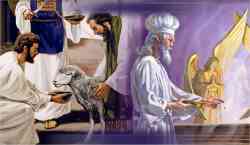 Astonishingly, the sanctuary was a «copy and shadow of the heavenly things» mentioned various times in the book of Revelation (Heb. 8:5).[ii] Indeed, each animal sacrificed on its burnt offering altar was a «shadow of the good things to come» (Heb. 10:1). And, ultimately, it prefigured Jesus Christ, the Savior, the «Lamb of God who takes away the sin of the world» (John 1:29). Who, also, is the «High Priest», the only Mediator between the Father and mankind (John 1:29; Rev. 5:5-6; Heb. 9:6,7, 25).
With the earthly sanctuary and the heavenly sanctuary, the LORD showed how He would accomplish the restoration of His faithful people. Concerning both, «it is what the structures represent, or teach about the great controversy between Christ and Satan, and about the plan of salvation, that matters. The dwelling places of the Deity propose to teach us spiritual truths».[iv]
Without question, what the LORD presents us with His sanctuaries is His good, just and unchangeable will toward fallen man (Ex. 25:22). In fact, He shows in this type the places and wonders through which, at His perfectly fixed dates, He started and will ultimately complete the wonders bringing forth the final rescue of repentant sinners, believing in Him and His Messiah.
Significance of GOD’s Temple
Undoubtedly all that is revealed with the mosaic tabernacle points to the glory of the Father and His saving way with men (Ps. 77:13,19). For this reason, the LORD urged Ezekiel to study it, and to proclaim its message. «Son of man, describe the temple to the house of Israel, that they may be ashamed of their iniquities, and let them measure the pattern. And if they are ashamed of all that they have done, make known to them the design of the temple and its arrangement… its entire design and all its ordinances, and perform them» (Ezek. 43:10,11).
In similar manner, the apostle John, acting the part of true Israel of the last days, was ordered to «rise and measure the temple of God, the altar, and those who worship there» (Rev. 11:1). Indeed, in the penetrating light of GOD’s Good News streaming from the Sanctuary and in its plan, today, the universal people of GOD can be deeply moved through their own sinfulness. And, if they repent, can still find grace, and hear the LORD, from His throne, pronounce the redeeming words, «I will accept you» (Ezek. 43:27, cf. 43:6-27).[vi]
Biblical types testify of Christ
Jesus Christ declared, «You search the Scriptures, for in them you think you have eternal life; and these are they which testify of Me» (John 5:39). Indeed in GOD’s Written Word, many types prefigure the Messiah and His ministry for the redemption of believers.
 It is written, «Your way, O God is in the sanctuary… You are the God who does wonders… You have with your arm redeemed Your people» (Psalm 77:1, 14, 15). Unquestionably, the sanctuary with its rituals presents clearly that it is on earth and through his Lamb, His «only and unique» Son, that our heavenly Father manages the project that will result in the redemption of His people (John 3:16-18). In reality, Jesus came on earth, mysteriously incarnated in a humble human being, to start it. And, He will return, as a glorious King, to complete it.
After His ascension, Jesus is directing the activities leading to man’s redemption from the Heavenly Sanctuary, His actual dwelling place. There, in His tabernacle, the Most Holy Place of GOD, He works on behalf of each repentant believer.[v]
GOD’s redemptive
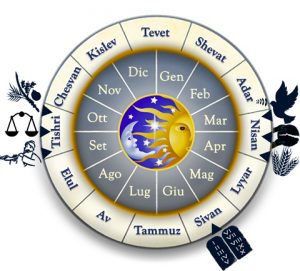 After giving to the teaching of His project for man’s redemption the place and means dimension through His earthly sanctuary, GOD added to it also the time dimension through His weekly Sabbath (Lev. 23:1-3), the seven annual feasts (Lev. 23:4-44), the Septennial and the Jubilee year (Lev. 25).
Especially, the chronology of the annual feasts serves as a divinely ordained calendar. In other words, each feast marks key moments in Israel’s history and represents a specific aspect of GOD’s covenant with His people. And it reveals GOD’s plan for humanity through the progression of the feasts throughout the year.
Concluding, with His appointed times, GOD uses symbolic acts and celebrations that prefigure the redemptive work of His Son, the Messiah. And, all this and more it is revealed through typology, allowing the Scripture to interpret itself.
[i] For further study see website, http://www.theopedia.com/biblical-typology . The Typology of Scripture, (NY and London: Funk & Wagnalls, 1900), I, p. 106; R.T. France, Jesus and the Old Testament (Downers Grove, Ill.: Inter-Varsity Press, 1971), p. 40. Typos, Theological Dictionary of the New Testament. VIII, (Grand Rapids, MI: Eerdmans, 1972), pp. 246-259; Bernard Ramm, Protestant Biblical Interpretation, (Grand Rapids, MI: Baker, 1970), pp. 215-232; Biblical Typology Yesterday and Today, Calvin Theological Journal 5 (1970) pp. 133-162.
[ii] Also Jerusalem is a very dim “shadow” of the city of GOD, (see Heb. 12:22; Rev. 3:12; 2; 22). In fact, the traveling of Abraham toward the earthly promised land and its city, is a type, representing the walk of each individual and family toward GOD’s New Earth and New Jerusalem.
[iii] David H. Stern is a Messianic Jewish theologian. He is the author of the Complete Jewish Bible, a commentary to the New Testament, the Messianic Jewish Manifesto and Restoring the Jewishness of the Gospel, (Clarksville, MD: Jewish New Testament Publications, Inc., first ed. 1984). In the synthesis of this last work titled, Restoring the Jewishness of the Gospel, Section D, Stern mentions four types of Jewish interpretation of Scriptures: the P’shat, Remez, Drash or midrash. These same types are used by the author of this study. For David H. Stern’s publications contact by e-mail: lederer@messianicjewish.net or see website:www.messianicjewish.net.
[iv] Samuele Bacchiocchi, God’s Festivals in Scripture and History, Part II: The Fall Festivals, Biblical Perspectives, (Berrien Springs, MI: 1996), p. 176. Dr. Bacchiocchi is the first non-Catholic to graduate from the Pontifical Gregorian University in Rome. His works include: From Sabbath to Sunday – Sabbath under Crossfire- Immortality or Resurrection? – The Advent Hope for Human Hopelessness – Wine in the Bible, Popular Beliefs – Are they biblical? More information to purchase his publications can be found at: Sbacchiocchi@biblicalperspectives.com; or http://www.biblicalperspectives.com.
[v] Various authors of the Seventh-day Adventist Church, Il Santuario – Il piano di Dio per la Nostra Salvezza, see chapter of Robert S. Folkenberg, “La via degli Altari”, (Falciani, Impruneta, FI: Edizioni ADV, 1996), pp. 18,19.
[vi] For a deeper study on the sanctuary typology see, Wallace B. Nicholson, The Hebrew Sanctuary: a Study in Typology, (Grand Rapids: Baker Book House, 1951. 232.3 n528; Merwin R. Thurber, Symbols of Salvation: How Men are Saved, as Revealed in the Ancient Sanctuary, (Washington D:C:: Review and Herald, 1961, BT 262 .T48; Alfred Felix Vaucher, Le sanctuaire, Collonges-sous-Saleve: Fides, 1970) BT 265 .V37 Heritage; Ellen G. White, Patriarch and Prophets, (Mountain View, CA: Pacific Press, 1958), Chapter 30 “the Tabernacle and Its Services, Chapter 52 – “The annual Feasts”; Christ in the Sanctuary, (Mountain View, CA: Pacific Press, 1969), The Great Controversy between Christ and Satan, (Mountain View, CA: Pacific Press 1950), 488.
Chapter:
[ Sanctuary ]
Commemoration of Christ’s Sacrifice
 The commemoration of Christ’s sacrifice has to be performed on annual basis on the Passover day. Jesus Himself during His last celebration of the Passover’s meal taught His apostles what to do to commemorate His sacrifice. Matthew reported the manner in which He did it (Mt. 26:26-29; see also Mark 14:22-25; Luke 22:19-20; and Paul, in 1 Corinthians 11:23-26).
Jesus replaced with His own person all the animal sacrifices and offerings performed at the temple for the forgiveness of sin with His own Person. And from there on, at Passover, the grape juice is symbol of His blood. And the unleavened bread is symbol of his flagellated, bleeding body, offered in sacrifice for bearing our penalty.
 Aside from substituting the symbols, the rituals, and the place where to celebrate Passover, Jesus didn’t reform anything else. He didn’t substitute its name, which refers to the “sacrifice” made for the forgiveness of the repentant’s sins. Neither He called it Holy Supper, or Holy Communion, even less, Easter. He didn’t changed the date of this holy day. On the contrary, He died Abib (Nisan) 14th afternoon, perfectly fulfilling even the time of His sacrificial-redemptive death.
Do not change the law of the Most High GOD
GOD has never given authority to man to change His laws. Yet, Daniel reported that there will be humans attempting to change GOD’s instructions concerning His appointed times, or holy convocations. In fact, GOD foretold him, that someone «shall speak pompous words against the Most High, shall persecute the saints of the Most High, and shall intend to change times and law» (Da. 7:25). Regrettably, this prediction has become reality.
With the passing of time, rulers have made the change of name, date, symbols and manner of celebrating Passover. And this way, they lost view of the importance of its perfect, and supernatural fulfillment by Jesus Christ. In so doing, they also obscured the entire plan of GOD for the redemption of believers.
Jesus didn’t need to fulfill Passover as He did. He celebrated it beforehand with His apostles to show that all sacrifices really pointed to His all sufficient sacrifice. Then, He fulfilled it, once for all, replacing all the sanctuary’s types. Jesus even interpreted the types portraying Him given in ancient times. So, the apostles understood the first wonder accomplished by GOD’s Son for their spiritual redemption. And they celebrated Passover, from then on, in the manner in which Jesus instructed them to do it.
The blood of the Covenant shed for forgiveness of sin
Jesus explained to His apostles that He would fulfill Passover’s message. In fact, at His last Passover meal, He took a cup of grape juice, thanked the Father, and invited, «Drink from it, all of you. For this is My blood of the covenant, which is to be shed on behalf of many for forgiveness of sins» (Mt 26:28, from NASB). His blood has ever been the only means to be forgiven, even when it was prefigured by animal blood. Here, it’s also important to notice that Jesus said that He would forgive «many», not “all” people. He will grant forgiveness only to believers who sincerely repent, and turn to faithfully obey God’s commandments.
Some people today find cruel the fact that the LORD ordained the shedding of blood of so many innocent animals. They think animals need to be protected, not killed. These individuals should be reminded that all creatures of earth, humans and animals alike, have been condemned to suffering and death by man’s sin. In reality, no one loves animals more than their Creator to which He still gives life. Who knows the LORD well understands that He is the One that suffers, and has suffered more than anyone else, in seeing His earth devastated, His animals suffering, and even His Son dying innocently because of man’s rebellion.[i]
The earthly sanctuary itself was instituted to point to Jesus’ sacrifice for the forgiveness of sins. An it lost the purpose of its existence at His death. In fact, since the moment Jesus «yielded up His spirit», and the «veil of the temple was torn in two from top to bottom» the mediation of human priests was no longer necessary for the reconciliation with the Father (Mat. 27:50-51; see also Mk. 15:38-41; Lk. 23:45,47-49). Jesus Himself took up the function of the High Priest, the innocent ani sacrificed, and the offerings. Because of this, in the moment that He died, the Father torn the veil that separated the repentant sinner from His most holy presence.
Since then, GOD gave free access to His «most holy place» in heaven (Dan. 9:24), the place where He lives. And it’s from there, that He and our Savior direct the project for our salvation (Ps. 47:8; Mat. 5:34; Rev. 20:11). This is also why GOD allowed that Jerusalem, and the «sanctuary» be destroyed in the year 70 A.D. And, it has not been possible to rebuilt it (Dan. 9:26).
It has to be noted that the cruel death of the LORD’s Messiah did not signal the rejection of Israel’s people and GOD’s Law. It simply abrogated the «sacrifice» of animals, and the «offering» in kind, consummated by fire in the temple (Dan. 9:27). These types being replaced by Jesus Christ, gave also an end to the function of the earthly sanctuary. Since then, the LORD wished that the attention of all humanity be directed exclusively to His only Son. He is His chosen Passover sacrifice, our Redeemer. He is sitting at the right side of GOD’s throne, in the most holy place (Rev. 22:1-3). Let us therefore believe in GOD and in Jesus Christ, repent, obey, consecrate ourselves to Them, and be saved.
[i] The LORD has ordered the sacrifice of His animal creatures to engrave in the mind of man the enormous cost He and His Son would have paid to ransom repentant man from Satan, the adversary. Again, what to say instead of man? Billions of animals are killed by humanity and even by believers in GOD only for the sake of using them as food, or for satisfying their degenerated longing for meat, when they could have fed themselves otherwise. What to say also of people that today seem to show more respect and love for their animal pets than for their Maker?
Chapter:
[ Sanctuary ]
Jesus’ Activity in Heaven
The Feast of Weeks foretells Jesus’ activity in Heaven as our High Priest and Mediator . In fact, after His sacrifice on Golgotha, the Most Holy Place mentioned by the prophet Daniel was anointed (Dan. 9,24). This is no longer the Israelite temple because it ceased to be God’s dwelling place at the moment Christ died. It’s instead the true Tabernacle of GOD in the Heavenly Jerusalem, where Jesus entered after His ascension. There, Christ, the High Priest of the eternal Covenant, inaugurated His work, by an act which corresponded to the anointing of the earthy tabernacle (see Ex. 40, Num. 9:15, 1 Kin. 8:10).
In fact, after His resurrection, our Savior has being continually active on behalf of all His followers. He blesses by «sustaining the church (Rev. 1:13,20), mediating repentance and forgiveness to believers (Acts 5:31; 1 John 2:1,2; 1:9), making our prayers acceptable to God (John 16: 23-24; Rev. 8:3), providing us with the invisible yet real assistance of His angels (Heb. 1:14; Rev. 5:6; 1:16,20), and bestowing upon believers the essential gift of the Holy Spirit (Acts 2:33)».[i]
Christ makes intercession on behalf of repentant believers
 The Feast of Weeks by celebrating the ingathering of the firstfruits of the wheat harvest, portrays Christ daily blessing His followers, the wheat-people.
Indeed, Scripture explains, «Now,…We have a High Priest, who is seated at the right hand of the throne of the Majesty in the heavens, a Minister of the sanctuary and of the true tabernacle which the Lord erected, and not man» (Heb. 8:1-2).
«He, because He continues forever, has an unchangeable priesthood. Therefore He is also able to save to the uttermost those who come to God through Him, since He always lives to make intercession for them» (Heb. 7:24-25).
Christ makes propitiation for the sins of His people
Christ alone has all the power and authority to pardon sins, save, and sustain believers. «For indeed He does not give aid to angels, but He does give aid to the seed of Abraham». He is the only Savior and Mediator we truly have. For this purpose Jesus became a man, «like His brethren, that He might be a merciful and faithful High Priest in things pertaining to God, to make propitiation for the sins of the people. For in that He Himself has suffered, being tempted, He is able to aid those who are tempted» (Heb. 2:16-18).
 The activity that Jesus accomplishes in the GOD’s Tabernacle was also prefigured by the function of the daily sacrifice. As a matter of fact, the high priest sacrificed two male lambs of the first year, every day. The first lamb, offered in the morning, initiated the animal sacrifices. The second lamb, offered in the evening, ended all other sacrifice (Num. 28:1-10).
Christ consecrates faithful believers to GOD
After the sacrifice, the high priest took some of the coals where the lamb was consumed by the fire. And he brought them in the Holy Place, on the altar of perfume to burn before GOD continuously. That perfume always pleased GOD. Therefore He always pardoned all repentant believers living near and far from Jerusalem (Num. 28-29).
The daily sacrifice, the high priest, the ritual of the perfume represented the all sufficient sacrifice of Jesus. It also prefigured Christ as High Priest interceding for His people (Rev. 8:2-4; Dan.12:10; see At 1:5; 2:33; 9:31; Rom. 5:5; 15:13; 16; 1 Pet. 1:2;12). And finally symbolized «the daily consecration of the nation to Jehovah, and their constant dependence upon the atoning blood of Christ».[ii]
Christ gives access to the throne of GOD
 «Within the physical layout of the ancient Israelite camp, the ordinary Israelite worshipper stood several barriers removed from the sanctuary’s innermost sanctum. To gain physical access, it would have been necessary to get by the buffer of priests and Levites and areas surrounding the sacred enclosure. But now, says the author of Hebrews, Christ, our heavenly Priest-Mediator, has opened a door of unlimited access to the heavenly sanctuary itself, the throne room of the living God… »
«Though we do not know the exact form of Jesus’ intercession for us, Scripture offers examples of the idea, albeit from a human standpoint. Two of these occurred in the life of Moses, in connection with the rebellion of Kadesh (Num. 14:10-20), and in connection with the golden calf affair (Ex. 32:9-14, 30-32). These are powerful passages. “But now,” Moses pleads with God in that last reference, “please forgive their sin – but if not, then blot me out of the book you have written” (vs.32, NIV). We also witness such forms of priestly intercession in Daniel (Daniel 9) and in Jesus’ great prayer before His passion (John 17)».[iii]
Plead with Christ to obtain grace
 Jesus’ substitutive, cleansing and sanctifying sacrifice on the cross of Calvary has definitively replaced and abrogated all the sacrifices that the Israelite high priest offered day after day, week after week, and year after year in the court of the earthly sanctuary. Nowadays, as believers repent, Jesus cancels their sins from the records in the heavenly books. In addition, the Spirit assists them with His gifts to be loyal partners of Christ, and royal priests of GOD.
Our Savior cares for us and, on daily basis, assists us in all we need. «For we do not have a High Priest who cannot sympathize with our weaknesses, but was in all points tempted as we are, yet without sin. Let us therefore come boldly to the throne of grace, that we may obtain mercy and find grace to help in time of need» (Heb. 4:15,16).
[i] Samuele Bacchiocchi, Part II: The Fall Festivals, p.165, 166.
[ii] Ellen G.White, Patriarchs and Prophets, p.352.
[iii] Seventh-day Adventist Church, Adult Teachers Sabbath School Bible Study Guide, April-June 2008. The Wonder of Jesus, Principal contributor Roy Adams, (Denmark: Stamborough Press, Ltd.) p. 142. Web site at: http://www.absg.adventist.org
Chapter:
[ Sanctuary ]
God sent on earth the Holy Spirit
 On the Feast of Weeks after His resurrection, Christ with the approval of GOD, sent the Holy Spirit in Jerusalem. About 120 messianic Israelites, as represented by the twelve breads in the Holy Place, were gathered to celebrate this feast. They were praying and rejoicing together for the wonders Jesus had accomplished on behalf of Israel and humanity. As Christ had promised, the Spirit visited them and comforted them with His solemn, loving and powerful presence (Acts 2). At the same time, He granted His gifts and enabled them to be Jesus’ testimonies among mankind. He also sealed them with the citizenship of GOD’s Kingdom.
Christ’s spiritual Gifts
It is our Savior that through the Holy Spirit provides for all our spiritual needs. John explains, «God is Spirit, and those who worship Him must worship in spirit and truth» (John 4:23,24). Indeed, only Christ can purify us, sanctify us and equip us believers to be worshippers pleasing and honoring GOD.
Paul declares, «to each one of us grace was given according to the measure of Christ’s gift» (Eph. 4:7) ). According to the promise, after Christ resurrected and «ascended on high, … gave gifts to men» (Psalm 68:18). Even today, our Savior is able to bless believers in GOD and in Him beyond their hopes and expectations.
 Indeed, Christ «Himself gave some to be apostles, some prophets, some evangelists, and some pastors and teachers, for the equipping of the saints for the work of ministry» (Eph. 4:11-12). It is Christ who gave to the apostles the ability to recruit souls for GOD’s Kingdom and enterprise on earth. Through the Spirit, Christ gives capacities to spread GOD’s Law and the Good News of salvation through Him. He enabled the apostle John, Peter and Paul to know GOD’s plans for the future and become prophets. He gives wisdom and compassion to become pastors capable to nurture and protect believers young and old, rich and poor. Again, Christ gives knowledge and understanding to become teachers able to explain the Word of GOD and His testimony of Christ.
Restored in the image and resemblance of Christ
We should rejoice and be thankful for this extraordinary event that happened on the first Feast of Weeks after Christ’s resurrection. Since then, our Savior is managing the forgiveness and cleansing of His repentant people from the throne of the Universe. While on earth, the Holy Spirit blesses, guides, and transforms believing souls. «… So that the body of Christ may be built up until we all reach unity in the faith and in the knowledge of the Son of God and become mature, attaining to the whole measure of the fullness of Christ» (Eph. 4:12-13). Let us therefore acknowledge the ministry that Christ and the Holy Spirit are accomplishing to prepare us for GOD’s Kingdom, in a special way, on the Feast of Weeks.
Chapter:
[ Sanctuary ]
FEAST OF TABERNACLES
«The fifteen day of this seventh month shall be the Feast of Tabernacles for seven days to the Lord»
(Leviticus 23:34-36)
The Feast of Tabernacles, or Booths (in Hebrew, סֻכּוֹת Sukkot) is the seventh annual festival of GOD. And it is the third and last celebration of the seventh month, closing the cycle of God’s appointed times. It starts on the 15th of Tishri, (end of September – middle of October). The first day and the Eighth Day of this feast are holy annual Sabbaths of rest and worship. Moreover, these two days correspond respectively to the sixth and the seventh annual Sabbath of the feasts’ cycle.
Scripture testifies of it in Leviticus 23:33-43; Numbers 29:12-16; Deuteronomy 16:13-15. It also mentions it in 1 King 8:2, 65-66; Neh. 8; and John 7:2, 10, 37-39. Every seven years, the Feast of Tabernacles inaugurates the Septennial, or Sabbatical year, which is a year of rest. At this time, the priests read GOD’s Law to the people (Deut. 31:10-13). In the Feast of Tabernacles there is a remembrance of Israel dwelling in tents, or booths, in the wilderness, as well as a remembrance of their fathers dwelling in tents in Canaan.

The third and last pilgrimage to Jerusalem
For the Feast of Tabernacles GOD requested the men of Israel to make the last of the three annual pilgrimages to Jerusalem (Deut. 16:16). Noteworthy is the fact that the number seven fills the three pilgrimages. And this number in Scripture represents a full and complete world, and spiritual perfection.
As a matter of fact, the first pilgrimage is for the Feast of Unleavened Bread which lasts 7 days. The second is for the Feast of Weeks which occurs seven weeks (7days x 7) after the Feast of Firstfruits. And the third is for the Feast of Tabernacles which lasts 7 days. And finally culminates in the Eighth Day, or seventh annual Sabbath. All three of these divine appointments were harvest festivals in the land of Israel. The Feast of Unleavened Bread was traditionally the time of the first harvest, the barley harvest. The Feast of Weeks marked the second, the wheat harvest. And the Feast of Tabernacles celebrated the third and final harvest, the fall’s fruits.
The seventh annual Sabbath – the Eighth Day
The Feast of Tabernacle concludes merrily the fall holy days season of the seven month. Indeed, GOD declared, «Celebrate the Festival of Tabernacles for seven days after you have gathered the produce of your threshing floor and your winepress. Be joyful at your festival… For the Lord your God will bless you in all your harvest and in all the work of your hands, and your joy will be complete» (Deut. 16:13-15).
Moreover, the LORD added, “For seven days you shall offer an offering made by fire to the LORD. On the eighth day you shall have a holy convocation, and you shall offer an offering made by fire to the LORD. It is a sacred assembly, and you shall do no customary work on it” (Lev. 23:36). GOD’s worshippers presented a very great number of other sacrifices and voluntary offerings, during this holy week (Num. 29).
Noteworthy is that the Feast of Unleavened Bread (7 days) began after the unique sacrifice of the LORD’s Lamb in the homes, on Passover. And the Feast of Tabernacles (7 days) began after the unique offering of the LORD’s goat in the Most Holy Place of His sanctuary, on the Atonement Day (See Lev. 23:5; 16:15; Dan. 9:27). These facts indicate how the purification of GOD’s people begins and how it will end, once for all.
The feast of the ultimate harvest
The Feast of Tabernacles is the Feast of Harvest (Asif), specifically, of the last gathering of the fruits of the earth. Beside the booth, the most prominent features of this feast are fruits and branches of three plants. GOD commanded, «you shall take on the first day the fruit of splendid trees, branches of palm trees and boughs of leafy trees and willows of the brook, and you shall rejoice before the Lord your God seven days» (Lev. 23:40).
There were at least three reasons for the observance of the Feast of Tabernacles: the first, natural. It celebrated the final gathering of the products of the year. The second is historical. It was a memorial of the days when Israel dwelt in booths in the wilderness.[i] The third reason was supernatural. In fact, the Feast of Tabernacles brought the spiritual experience of GOD’s people to the climax. They were thankful for the great miracles GOD accomplished in their deliverance from slavery. Felt safe for the protection the LORD granted during the pilgrimage in the desert. And rejoiced for gift of a fertile land, the provision of food, the abundant water and uncountable blessings freely received.
A celebration of OD’s salvation
GOD’s objective for the celebration of the Feast of Tabernacles was «to excite and maintain in them (the people of Israel) a spirit of gratitude and obedience, by leading them to consider deeply the greatness of the favors which they received from His most merciful hands».[ii] In particular, they remembered GOD’s provision of water from the rock of Horeb (See Ex. 17: 2-6). In fact, in commemoration of this miracle, the priests carried water from the Pool of Siloam to the altar. And on the last day, the Eighth Day, while making seven circuits around the altar, they shouted, «Save now, I pray, O Lord» (Ps. 118:
Christ promises the water of eternal life
Moreover, in time, during this week-long celebration, GOD’s chosen people prayed for the last rain of the year.[iii] This because the rainy season for the new crop in Israel starts in the period of the Feast of Tabernacles. By the time of Jesus, water had become one of the main feature of the Feast of Tabernacles in Jerusalem. This explains why, on the «great day of the feast», the Eighth Day, Christ offered the water of eternal life. And invited, «If anyone thirsts, let him come to Me and drink. He who believes in Me, as the Scripture has said, out of his heart will flow rivers of living water» (John 7:37-39).
This fact has a typological meaning. Also for «water», indeed, it can be found a perfect parallel in these last days. Today, increasingly severe drought conditions around the world are putting the wellbeing of billions at stake. More than 1 billion people lack access to safe water supplies. While 2,6 billion lack proper sanitation mainly because of insufficient potable water. Furthermore, only 2.5 percent of the earth’s water is fresh. And over 1.5 percent of that water is locked in glaciers that are rapidly melting because of the greenhouse effect warming the atmosphere. Let us therefore pray Jesus to grant us full salvation and «the free gift of the water of life» (Rev. 22:17).
The Tabernacle of GOD will be with men
The pilgrimage of the Feast of Tabernacles is the last. And it reminds how GOD saved and finally led His people to the promised Land, and His holy city, Jerusalem. Ultimately, it points to GOD’s people dwelling in His New Kingdom, New Canaan, and to the last ingathering of GOD’s people in the New Jerusalem. Where all the saints will hear: «Behold the tabernacle of God is with men, and He will dwell with them, and they shall be His people. God Himself will be with them and be their God» (Rev. 21:3).
[i] W. Robertson Nicoll, vol. 2, p. 30.
[ii] A. Clarke, vol. 1, p. 586.
[iii] Statistics on water needs: (http://www.unesco.org/water//facts_figures/basic_needs.shtml). See also: (http://earthobersavation.nasa.gov/library/water/water_2.html). As water resources will diminish for all humanity because of climate changes and water pollution, according to the type, surely, GOD’s people will return to pray also for drinking water.
Chapter:
[ Sanctuary ]
THE SON OF GOD WITH US
The Feast of Tabernacles foretells that the faithful believers will live with GOD and His Son forever. In fact, this feast with its special shelters built exclusively from branches of GOD’s creation, points to the New Eden.
Make Me a sanctuary
As Israel walked free toward the promised land, GOD commanded: «Let them make Me a sanctuary, that I may dwell among them. According to all that I show you, that is, the pattern of the tabernacle and the pattern of all its furnishings, just so you shall make it» (Ex. 25:8,9).
The Hebrew word for “sanctuary” is mikdash (מקְדָּשׁ). It comes from the root word kadash (קָדַשׁ), and means a “sacred place” where God is present. In the wilderness it was the tent of meeting; in the time of Solomon it was the Temple at Jerusalem. In both places, the LORD’s presence was made visible as a pillar of smoke during the daytime and a pillar of fire at night.
GOD’s sanctuary on earth
In Israel the sanctuary provided a holy place for meeting with the LORD. GOD required of all who entered it to worship, or served in it a state of purity. Because of its sinful nature, Israel could not withstand the presence of GOD. Therefore, to avoid its annihilation, first a «cloud covered the tabernacle of meeting». Then, «the glory of the LORD filled the tabernacle» (Exodus 40:34-38).
From there on, day after day, the LORD led His people mightily, and lovingly. Until He introduced them in the land He had promised to Abraham, Isaac and Jacob. A glorious fertile land, where they could enjoy «milk and honey» (Ex. 40:34,38; 3:8; Num. 13:28).
The sanctuary was a microcosm representing in its three places Jesus’ ministry at His First Coming and Second Coming. First, He is the “sacrifice” and the “offering” through which a repentant person obtains the forgiveness of sins. In other words, He is the Suffering Servant (Is. 52:13–53:12). Then, He is also the “High Priest“, the Mediator between GOD and man. . Ultimately, at His Second Coming, He is the “Judge”, the “King of kings” and the “Lord of lords” (Rev. 17:14).
GOD had to separate Himself from His human creatures because of sin. Yet, He is «Emmanuel», which interpreted means «God with us», through His unique Son (Mat. 1:23; Isa. 7:14). John understood this wonderful truth, although Christ’s divine glory at His incarnation was veiled by human flesh. That’s why he started His written testimony about Jesus, declaring: «In the beginning was the Word, and the Word was with God, and the Word was God… And the Word became flesh and dwelt among us, and we beheld His glory, the glory as of the only begotten of the Father, full of grace and truth» (John 1:1,14).
Jesus’ birthday
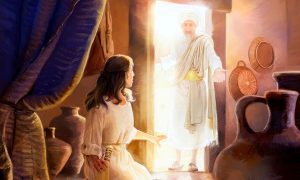 It is almost certain that he date of Jesus birth as the Son of Man was about the time of the Feast of the Tabernacles. Various logic reasons bring to this conclusion. Many religious scholars believe that Jesus was thirty three and a half years old when He was crucified. If this age is subtracted, it brings back to the beginning of autumn (end of September – beginning of October). This calculation takes His birth on, or around, the Feast of Tabernacle, at the beginning of autumn.
Second reason, the shepherds could not possibly be out at night in the chilly temperatures of winter. Third, historians inform that December 25th in antiquity celebrated the birth of the sun (Dies Natalis Solis Invicti), the winter solstice. In fact, only in the year 336 AD, it was repurposed to commemorate the birthday of Jesus.
Christ condemns pagan traditions
Regrettably, the birth of Christ fixed on December 25th, has obscured Jesus’ testimony by dissociating the message of the last three feasts from His Second Coming. Because of Christmas, their celebration is neglected. And their glorious spiritual message forgotten by many.
The world should be better informed that when Christ came the first time, He started, once for all, the project of redemption. And that He will come back, to complete it for good. Today, Christmas focuses only on consumerism and humanity, sentimentalism and emotions, not on the incarnation of the Son of GOD for man’s salvation.
 Human tradition has abrogated, the Feast of Trumpets, the Day of Atonement and the Feast of Tabernacles. And it has replaced them with feasts based on pagan celebrations, such as the feast of the dead (November 1st). That is the day of honoring dead idols sanctified by humans. Then, it has also added the day of Mary’s Immaculate Conception (December 8th), that is another idol. These and other feasts are pagan traditions that obscure the true knowledge of the Father, the Son and the Spirit. Moreover, they cloud the activity Jesus is performing to give us «the right to become children of God» (John 1:12). They should have no place among the people of GOD.
Christ Himself speaks negatively against human traditions that contradict GOD’s laws. And even today, He asks, «Why do you also transgress the commandment of God because of your tradition?» (Mat. 15:3). Why the great majority of Christianity does not keep the commandments concerning the GOD’s annual feasts and annual Sabbaths, written in Leviticus, chapter 23?
Jesus is the safest shelter
The Feast of Tabernacles reminds all believers that in Jesus we have the safest shelter of all. He is the invisible Captain who accompanies us in the paths of righteousness that will ultimately lead to our perennial Home.
For Israel, sojourning in a desolate land,  «the LORD went before them by day in a pillar of cloud to lead the way, and by night in a pillar of fire to give them light, so as to go by day and night» (Ex. 13:21,22).
In a similar manner, Jesus is now preparing our eternal tomorrow. He is our omnipotent protector, benefactor and sustainer, the One who is preparing our heavenly Home (John 14:2,3).
Christ with His people forever
In the fullness of time of about 2000 years ago, Christ came to His people and became their Savior. Likewise, in the second fullness of time, He will return gloriously with His holy angels. And they will gather to Him His saints past, present and future. Then, He will lead them to the glorious place He prepared for them (John 14:1-3). And there, «He will dwell with them, and they shall be His people, God Himself will be with them and be their God» (Rev. 21:3).
 All who belong to Him by creation’s and redemption’s right will suffer no more. «They shall neither hunger anymore, nor thirst anymore; the sun shall not strike them, nor any heat; for the Lamb who is in the midst of the throne will shepherd and lead them to living waters» (Rev. 7:15,16,17).
There, «God will wipe away every tear from their eyes; there shall be no more death, nor sorrow, nor crying. There shall no be no more pain, for the former things have passed away» (Rev. 21:4).
Jesus is the Light of the world
A meaningful ritual performed at Jesus’ time during the Feast of Tabernacles was the illumination of the temple at night. Women lighted the court through a gigantic lamp stand that provided light for the nocturne celebrations. Even this context provided the opportunity for Jesus to direct the mind of His people to Himself.[ii] «I am the light of the world, He who follows Me shall not walk in darkness, but have the light of life», He declared (John 8:12; see also 9:5; 12:46).
Churches are filled with women who love the LORD and want to rejoice serving Him, even today. They, too, have an important task to accomplish in these evil times of spiritual darkness. They need to make the light of Jesus’ testimony and accomplishments shine in their surroundings and in the world.
 It is not by coincidence that Jesus used the parable of the ten virgins. He did it with the precise purpose to exhort especially His female followers to be on the alert and prepared to welcome Him, as their Bridegroom. Do you remember? Five virgins were sleeping and their light went out because they did not have enough oil. While the other five virgins made the flame of their lamps shine to prepare the way for the bridegroom.
By this parable Jesus warns all female believers who are waiting Jesus’ Second Coming but live a passive religion. Omitting to give a testimony of Jesus to others who do not know yet Him well, may result in their rejection. He does not wish to come back and say to negligent women: «I do not know you» (Mat. 25:12).
Be a light to the World
All young, adult and elderly women who truly love GOD have to glorify Him and His beloved Son. Jesus declared: «you are the light of the world. A city that is set on a hill cannot be hidden. Nor do they light a lamp and put it under a basket, but on a lamp stand, and it gives light to all who are in the house… Let your light shine before men, that they may see your good works and glorify your Father in heaven» (Mat. 5:14,16). This is the exhortation that comes from the heavenly sanctuary of GOD.
 Let us make the Law of GOD and the Testimony of Jesus shine! Tell people, first of all, that Jesus loves them, and died to forgive, bless, and redeem them. Let us not be weary in accomplishing Jesus’ mandate just because this world is dominated by man’s abusive power. Serve GOD enthusiastically, until we will find ourselves together in the New Jerusalem, in the Tabernacle of our LORD. Where there is «no need of the sun or the moon to shine in it, for… The Lamb is its light. And the nations of those who are saved shall walk in its light, and the kings of the earth bring their glory and honor into it» (Rev. 21:23-26; 22:5).
GOD’s glorious throne
Still today, «The prophetic message of the Feast of Tabernacles is that there is shelter in the Tabernacle of God under the wings of the shekinah glory, for the Jews first, and also the Gentile nations».[i] This, because the Father «shows no partiality. But in every nation whoever fears Him and works righteousness is accepted by Him» (Acts 10:34).
This promise is sure. Since now, it finds its fulfillment in the protection GOD provides, day and night to Christ’s followers. All Israelites and Gentiles who put into practice His laws and keep trusting in His Son’s testimony will be accepted by GOD (See Rev. 12:17; 14:12). And soon will find themselves in the Heavenly Tabernacle, the New Jerusalem. Where «He who sits on the throne will dwell among them» forever (Rev. 7:15).
[i] V. Buksbazen, p. 40.
[ii] Samuele Bacchiocchi, part II, The Fall Festivals, p. 46.