FEASTS OF GOD

The project solving all human problems

Chapter:
[ seven annual feasts ]

WORSHIP GOD IN SPIRIT AND TRUTH


Worship is a demonstration of love and there are many ways to worship GOD. Christ alone gave a perfect example of love and worship of GOD.  He also explained that «true worshipers will worship the Father in spirit and truth; for the Father is seeking such to worship Him»
(John 4:23). How can a believer worship GOD in spirit and truth today? Scripture provides all the information needed.  In fact, it attests that GOD Himself, at Sinai, established the Sabbaths days for worshipping Him. These holy days include the weekly Sabbath (Saturday), and the seven annual Sabbath days.
Furthermore, Scripture informs about the dates of the annual feasts and even the dates of annual Sabbath days. According to Leviticus 23, these holy day of rest and worship, are:

1 – the first day of the Feast of Unleavened Bread, Nisan 15th,

2 – the seventh day of the Feast of Unleavened Bread, Nisan 21st,

3 – the Feast of Weeks, o Pentecost, Sivan 6th,

4 – the Feast of Trumpets, Tishri 1st,

5 – the Atonement Day, Tishri 10th,

6 – the first day of the Feast of Tabernacles, or Booths, Tishri 15th,

7 –  the Eighth Day, Tishri 22nd.[i]


GOD  sanctified the Sabbath days

Scripture testifies that GOD sanctified the Sabbath day, the first seventh day of this earth history, by resting in it. Then, it reports that His faithful people worshipped Him on the weekly Sabbath day.  And, they also celebrated His seven annual Sabbaths. Which they called “High Sabbaths,” “Feast Sabbaths,” “Holiest Sabbaths,” “Great Sabbaths,” or “Most Holy Sabbaths” (Lev 16:31; 23:32). Consequently, these are the days of absolute rest to worship God  in spirit and truth. No others.

Remarkably, the seven annual feasts and their Sabbaths form a unity, a whole, that only in its entirety reveals with precision the project that solves all human problems from its beginning to its complete fulfillment. Indeed, only celebrating them chronologically, on the date and in the manner prescribed by the LORD, we can have a comprehensive vision and a clear understanding of GOD’s plan for the redemption .

We need to spend these are holy days in fervent prayer of intercession for all men, women and children, in particular, for the weakest, poorest and most vulnerable. And, insistent requests should be addressed to the LORD so that His universal human family may receive from Him forgiveness, wisdom,  knowledge, understanding, and capacity to think, speak, and act in a manner that pleases Him.

Observing them on yearly bases, at the exact dates prearranged by the LORD,  gives an evidence of faith in our heavenly Father who promulgated them. And, it also demonstrates faith in Jesus Christ who fulfills their message and promises at GOD’s appointed times.


GOD’s three holy convocations at Jerusalem

Furthermore, GOD commanded to the fathers to teach their children what it means to love Him, trust Him, and obey Him. So that He may be their GOD, and they may know how to worship Him in spirit and truth (see Dt. 6:5-8).

As men celebrated these three feasts in Jerusalem, rejoicing in the court of the Temple, re-studying His Law together with others fellow believers, they renewed their commitment to put into practice all His commandments out of love for Him. And, because of this, the LORD continued to graciously bestow upon them all the blessings that He had in store, and to fulfill His promises on their behalf.

In addition, these three appointments at Jerusalem reminded the thankful pilgrims that, even if they lived in the land GOD had promised, they did not have to consider it a permanent residence.  In fact, their existence here below was but a journey toward their happiest dwelling, the New Kingdom of GOD and His New Jerusalem.

Even today, leaders of families and churches, all men in good health, twelve years of age and older, should gather together at Jerusalem, three times a year, at the dates set by the LORD. In these seasons, they should worship Him with a thankful heart, and joyful praise.  Moreover, they should study  and meditate on His mighty redemptive acts and promises. And, as they come closer to GOD, they should consecrate themselves and their families to be truly the saints of the last days, those «who keep the commandments of God and have the testimony of the Jesus Christ» engraved in their minds and hearts (Rev. 12:17; 14:12).


True believers sanctify GOD’s Sabbaths  

At this point, it is important to highlight that the rituals that man performs do not save. As the sacrifices and offerings at the Temple of GOD by themselves did not redeem the repentant Israelites, so our acts of obedience, do not save us. Truly, who saves people from the slavery of sin is a Person, GOD Himself. And He has chosen to accomplish this wonder through His beloved Son, Jesus Christ.

Indeed, the real joy of redemption doesn’t come through the celebration of the annual feasts, but through GOD the Father, our Redeemer who was sacrificed for our salvation, and the Holy Spirit, who was sent to guide us in the truth. So that we obediently and patiently wait for the complete will of the Father to «be done on earth as it is in heaven» (Mt. 6:10).


GOD punishes who profanes His Sabbaths

It is necessary to be careful not to profane the feasts and their Sabbaths, not to merge them with human traditions, not even with the ones that might seem inoffensive. They are GOD’s holy days.  And, we need observe them to worship our GOD  in «spirit and truth» (Jn. 4:24).

Additionally, the LORD is very jealous of all things that He has promulgated, even of the eternal Covenant established with fallen humanity at Mount Sinai, represented by His first chosen people, Israel (see Is. 24:5; 55:3; Jer. 32:40; 50:5; Ez. 16:60).  And, He promises to bless and to prosper all who observe the instructions prescribed in His Covenant (see Ex. 19:5; 1 Chron. 16:15; Ps. 25:8-15; 105:8; 111:5; Lk. 1:72).

On the other side, He will not leave unpunished those who profane His Name by worshipping Him according to human traditions contrary to His expressed instructions, (see Lev. 18:21, 20:3; 21:6; 22:2; Pr. 30:9; Is. 48:11; Ez. 22:26; 39:7; Mic. 4:11; Mal. 1:12:2:10). Indeed, teaching ways different from the ones proclaimed in His Law, do not please Him (see Lev. 10: 8-11; 19:8; 22:15; Num. 18:32; Ps. 74:7; Ez. 7:22; Soph. 3:4; Ac. 21:28; 24:6; Heb. 10:29; 12:16; Rev. 2:14,15,24). Profaning His earth with abominations contrary to His will (see Is. 24:5; Jer. 16:8), and transgressing His Sabbaths, bring only misery and death (see Ex. 31:4; 22:9; Neh. 13:17; Ez. 7:22; 20:13,16; 22:8,26; 23:38; Is. 56:2; Hos. 2:10-15).


The testimony of  GOD’s messengers

At this point, it is important to notice that Isaiah 58:13-14, does not refer to the weekly Sabbath, as some theologians teach, but specifically to the only Fast Day of the sacred year, the Atonement Day, the highest, and holiest of all Sabbaths. God here urges to respect this fifth annual Sabbath, focusing on Him as our  Redeemer and Restorer, not the weekly Sabbath, which points to GOD as our Creator and Sustainer (See beginning of chapter 58 and Ex. 20:8-11).

Indeed, all GOD’s annual Sabbaths, including the Atonement Day, have been stipulated as perennial laws.  And, the LORD also today exhorts us to remember them and keep them holy, for our wellbeing and blessing  (Ex. 31:13; Lev. 19:3,30; 26:2; 23:38; 26:34; Is. 1:13; Lam. 2:6). For, when you trust and obey,«Your light shall break forth like the morning, your healing shall spring forth speedily, and your righteousness will go before you; then you shall call, and the LORD will answer; you shall cry, and He will say, “Here I am”» (Is. 58:8,9). Surely these are GOD’s promises for every believer who celebrates the Sabbaths of the LORD in the manner that He prescribed in His Law.


Prerequisites for the Acceptable Worship to God

There are some fundamental prerequisites for worshipping the Father and glorifying Jesus Christ on all Sabbath days. The first is the study and understanding of the truth GOD proclaims through them. And this implies turning away from all wrong beliefs, days  and practices.  As the LORD Himself says, «Do not walk in the statutes of your fathers, nor observe their judgments, nor defile yourselves with their idols. I am the LORD your God: walk in My statutes, keep my judgments, and do them; hallow My Sabbaths and they will be a sign between Me and you, that you may know that I am the LORD your God» (Ez. 20:12).

The second prerequisite is the acknowledgement that the Sabbaths are the only days established by GOD to worship Him in spirit and truth.  No others. In fact, GOD promises, «If you turn away your foot from the Sabbath, from doing your pleasure on My holy day, and call the Sabbath a delight, the holy day of the LORD honorable and shall honor Him, not doing your own ways, nor finding your own pleasure, nor speaking your own words, then you shall delight yourself in the LORD, and I will cause you to ride on the high hills of the earth» (Is. 58:13-14).

The third requirement is the recognition that the weekly Sabbath and also the annual Sabbaths, even the Jubilee Year, inaugurated on the Atonement Day, and the Septennial, inaugurated on the Feast of Tabernacles, are all together «a sign that identify the God who sanctified Israel, and who also sanctifies Christians».[iii] Notably, the use of the plural term “Sabbaths“, in Ezekiel 20:12 means that the LORD is not speaking exclusively of the weekly Sabbath, but of all the Sabbath days and Sabbath years He established at Sinai with Israel and all Gentiles believing in the GOD of Israel (see Lev. 23 and 25).


Study Scripture and pray

Because of human fallibility, we have to keep on studying the Scripture personally and prayerfully to be able to discern correctly what to believe from all other sources. Even today, Jesus is helping every sincere believer who studies God’s Word through the Agent He sent to assist us, the «Spirit of truth» (Jn. 14:17). Surely, He is our surest Guide to understand the Scripture because He inspired each word it contains (1 Tim.  3:16; 2 Pt. 1:20; Jn. 10:35).

While praying and studying the Holy Scripture, «He will guide you in all the truth; for He will not speak on His own authority, but whatever He hears He will speak; and He will tell you things to come» (Jn. 16:13-15). So, believe in GOD’s Law and Jesus’ Testimony alone, as did the apostles (see Jn. 22:22). Then, humbly ask the Holy Spirit to give you knowledge and understanding, and He will show you what is true faithfulness.

As we remember and keep the Sabbath Days holy, we have also to present special thanksgiving to GOD, and accomplish actions of sincere love and compassion toward our fellowmen, following the example of Jesus. «Therefore by Him let us continually offer the sacrifice of praise to God that is the fruit of our lips, giving thanks to His name. But do not forget to do good and to share, for with such sacrifices God is pleased» (Heb. 13:15-16).

Also the Atonement Day, which is a Sabbath of fasting, personal and corporative introspection and repentance, should be lived with thanksgiving and joy in our hearts because our Redeemer shows His infinite compassion by completely cleansing and restoring us.

During the six annual Sabbaths where eating is instead permitted, families can share a wholesome meal with friends of like faith, relatives, the underprivileged, the disadvantaged, the prisoners, the foreigners, so that they may rejoice in the LORD’s holy days.

Summarizing, to worship GOD in spirit and truth  does not comprise only praising, thanksgiving, praying, singing and fasting in repentance. It also includes to do good to others, give generously and bless freely, meaning, «to share your bread with the hungry, and that you bring to your house the poor who are cast out; when you see a naked that you cover him and not hide yourself from your own flesh», «to loose the bonds of wickedness, to undo the heavy burdens, to let the oppressed go free, and that you break every yoke» of injustice, discrimination, and prejudice, first, in your family, and neighborhood, then, in society (Is. 58:7,6).


The observance of the seven annual Sabbaths

Scripture provides many principles on how to observe the seven annual Sabbaths established by GOD to worship Him in spirit and truth. Here below are ten of them.


1 – Remember God’s creation, the anniversaries of the earth and the saving miracles of Jesus

Sabbath-keeping means remembering, reflecting, and rejoicing about the Creation of the world (see Exodus 20:11), the redemption of repentant people from sin (see Dt. 5:15; Lk. 4:16-19), the promise of Christ’s Second Coming, and the creation of the New Earth (see Is. 66:22,23). Even GOD enjoys commemorating and reflecting on important happenings. For example, He paused to reflect on His accomplishments at creation (see Gn. 1:4,9,12,18,21,25,31; 2:2-3; Ex. 20:11).

He always remembers His covenant of grace with humanity (see Gn. 9:15-16; Lev. 26:42, 45). Therefore, let us remember His blessings and the wonders accomplished by Jesus, too. Because it is this that increases our love for our Father who is in Heaven and for our Redeemer (see Gn. 1:31; 9:15-16; Lev. 26:42,45; Is. 66:22-23; Rev. 21, 22).


2 – Set apart all the Sabbaths days at the dates established to assemble with other believers to worship GOD, focus on Him and His Word, and promote His Cause

In Leviticus 23, the weekly Sabbath and the annual Sabbaths are referred to as God’s «holy convocations» (verse 2, 4,7,8,21,24,25,32,35,36). A  “convocation” is a public meeting where GOD’s people assemble together for the purpose of worship, learning from God’s Word, and fellowship with each other.  Truly, God is holy (see Lev. 11:44; 19:2). And, He sanctifies, or makes holy, His Sabbaths and His people (see Gn. 2:3; Ex. 20:11; 31:13).

Keeping each Sabbath day holy means setting it apart for attending Sabbath services, for embracing GOD wholly, and nurturing a love relationship with Him, with Jesus and the Holy Spirit who make us holy (see Ex. 20:8; 31:13; Is. 58:13; Ez. 20:12).
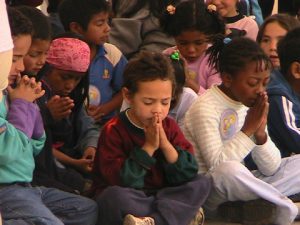
Undoubtedly, GOD rejoices with His creation and when He sees His human creatures loving Him and getting close to Him (see Gn. 1:31; Dt. 30:9). Therefore, let us make the Sabbath a delight, spend more time than usual studying the Holy Bible, evaluating ourselves, and communicating with GOD.  Indeed, «In your presence is fullness of joy; at your right hand are pleasures forevermore» o LORD (Ps. 16:11).


3 – Rest from any work, concern and secular distraction

Rest is one of the purposes for which GOD gave His weekly and annual Sabbaths (see Ex.16:28-29; 20:9-10; 23:12; 34:21; Lev. 23; Lev. 25; Neh. 13:15-22; Jer. 17:27; Lk. 23:54-56). In fact, He is the center of the sabbatical rest. And in Him we find true rest. For «My soul finds rest in God alone» (Ps. 62:1, NIV).

The Sabbath command in Exodus 20:10 specifically states: «The seventh day is the Sabbath of the LORD your God. In it you shall do no work». And, the same command applies to the seven Sabbath-days of the annual feasts (see Lev. 23:7,8, 21, 24-25, 30-32, 39). For this reason, let us keep the Sabbath days by pausing from our normal works and activities for 24 hours, from sunset to sunset. And at the same time, do not employing others to work for us.

GOD concerning the Sabbath  specifies that no work is to be done by «you, nor your son, nor your daughter, nor your male servant, nor your female servant, nor your cattle, nor the stranger who is within your gates» (Ex. 20:10). Consequently, this means that employers should not have their employees work. usinesses owned by Sabbath-keepers should be closed on the Sabbath days. We are to pause from our normal routines—shopping, errands, activities, sports, television – and spend the day, not oversleeping, but focusing on spiritual things, following the example of Jesus.

 

4 – Promote healing and mental renewal through attitudes and practices that free from stress and relational tensions

Sabbath-keeping means observing the day in such a way that promotes restoration, relief, release, liberation, and refreshment. Consequently, any action that hurts one-self or others is Sabbath-breaking (Is. 58; Mt. 12:9-15; Mk. 1:21-28; Lk. 4:38,39; 13:10-17; 14:1-6; Jn. 5:1-18; and Jn. 9). Truly, GOD is a healer (see Ex. 15:26; Ps. 103:3; 147:3; Mt. 4:23; Ac.10:38). And, He has «healing in His wings» (Mal. 4:2, NKJV).

The Father sent Jesus Christ to restore sight to the blind and to release the oppressed (see Is. 61; Lk. 4:18,19). And, He established the Sabbaths are days  for the regeneration of believers. Indeed, their sacred, delightful hours provide spiritual and physical renewal to people who keep them in faith. surely, GOD revitalizes our being – «He restores my soul» (Ps. 23:3, NIV). He exudes renewal, (see Ps. 103:5; Is. 40:31; 2 Cor. 4:16).

Summarizing, our loving Creator provides the Sabbath vacation for our welfare (Mk. 2:27). And, through Jesus Christ, He invites, «Take my yoke upon you and learn from me, because I am gentle and humble in heart, and you will find rest for your souls. For my yoke is easy, and my burden is light» (Mt. 11:28-30). Surely, keeping the weekly and the seven annual Sabbaths means worshipping GOD in spirit and truth, and celebrating with Him and Jesus, our Creator, Redeemer and Restorer (see Dt. 5:15; Ps. 92; Is. 58:13).


5 – Joyfully answer to the grace of GOD

Our Father who is in Heaven desires the redemption of every human being. Jesus Christ “came to save the lost” and if He finds one He is very happy (Mt. 18:11,13). We answer to the gift of His grace with joy, delight, glorifying His Name with songs, musical instruments, and thanksgiving prayers. Our Father will celebrate at the marriage supper of the Lamb with the redeemed (Rev 19:7-9). Therefore, all the Sabbath days «Give thanks to the LORD with the lyre, sing praises to him with the ten-stringed harp» (Ps. 33:2).


6 – Worship GOD in spirit and truth

Sabbath-keeping means participating in corporate, focused worship of GOD with our church family (see Lev. 23:3; Is. 56:1-8; 66:22, 23; Mk. 1:21; 3:1-4; Lk. 4:16; 13:10; Heb. 10:25; Rev. 14:7). This, indeed, nurtures our relationship with GOD, Christ and our fellow human beings.

GOD desires corporate worship (see Is. 66:22, 23). And, Jesus attended and led out in worship services on the Sabbath day (see Lk. 4:16). While on earth He taught to his apostles and disciples, how to worship GOD, our «Father in spirit and truth» (Jn. 4:23). Even Paul, called the believers in Christ to respect «the assembling» of the Sabbath days (Heb. 10:25).


7 – Enjoy living in harmony with GOD

Keeping the annual feasts and the Sabbath days is a loving response to the commands of Jesus (see Jn. 14:15). It is not meant to be a means of earning our salvation (see Rm. 3:20; Heb. 4:9, 10). And, we respond to Jesus’ gift of rest by serving Him in His strength and living for Him (see Ex. 20:8,9; 2 Cor. 9:8; Heb. 13:20, 21).

Love motivated Jesus to keep GOD’s commandments (see Jn.15:10). And, by following His example, «You will find your joy in the LORD» (Is. 58:14, NIV). GOD is personal and loving (see 1 Jn. 4:8), and He seeks intimacy and special time with His family (see 11:44; 19:2; Jn. 15:15; Rev. 3:20).  Indeed, He rejoices when people come to Him ready to love Him and obey Him (see Dt. 30:9; Is. 62:5; Zeph. 3:17; Lk. 15).


8 – Trust in God who provides all that we cannot do during His Sabbath days

Keeping the Sabbath days means trusting GOD to take care of what we leave undone during the hours of the Sabbath (see Ex. 16:14-30; 20:10; Ps. 5:11,12; Mt. 6:33). It , also, means learning to depend on GOD rather than on ourselves. In fact, Jesus trusted His Father no matter how much Satan tempted Him to do otherwise (see Lk. 4:1-13). And, He demonstrated this trusting attitude as He suffered for our salvation (see Mt. 26:39; Lk. 23:46).


9 – Fellowship with our family, friends and other people

In the gift of the Sabbaths, GOD provides time for focused fellowship with the whole family—even the animal family (see Ex. 20:8-11). In reality, Sabbath and family go together (see Gn. 1:1-2:25; Lev. 19:3). Therefore, spend quality time with family and other Christians, visit the sick or elderly and even enjoy some relaxing time in GOD’s creation. In fact, this nurtures our “horizontal” relationships – those with our fellow human beings. The members of the Godhead are relational (see Jn. 15:15). And, GOD’s relationship with us is the foundation of our relationship with each other (see Jn. 13:34, 35; 17:20-23).

Jesus fellowshipped with others on Sabbath (see Mk. 1:29-31; Lk. 14:1). Consequently, following His example means rightly representing the atmosphere of the Sabbath by a spirit of acceptance, love, and affirmation rather than a spirit of judgment and criticism (see Jn. 7:24). Indeed, Jesus is accepting, loving, and affirming (see Mt. 11:28; Jn. 3:16; Rm. 8:38; Eph. 1:3-10; Rev. 22:17). And, He lived the Sabbath days in communion with God and with His fellowmen (see Mc. 1:29-31; Lk. 14:1).


10 – Care for other people and witness lovingly for GOD

Keeping the Sabbath days means caring for necessary physical needs; no creature -human or animal – should be allowed to suffer on this day (see Ex. 23:12; Mat. 12:1-14; Mk. 2:27). GOD supplies all our needs, all the time (see Ex. 16:26, 35; Jos. 5:12; Mt. 6:25-33; Jn. 5:16, 17; Phil. 4:19), and He advocates that we care for the needs of all His creatures (Mat. 12:1-14; Mk. 2:23-28; Lk. 6:1-5). Jesus is a Servant and Proclaimer of the Good News (see Lk 4:18-21; Phil. 2:5-11). He went about doing good and blessing others (see Ac 10:38).[iv]

May these ten principles of Sabbath day keeping be put into practice to worship GOD  in «spirit and truth», and to lift up the name of Jesus, our  Creator, Savior and Lord (John 4:23).


Christ is the Lord of the Sabbath

Jesus proclaims, «the Sabbath was made for man» (Mk. 2:27). And He, who is the «Lord of the Sabbath» (verse 28), reveals that the weekly and the annual Sabbaths  are a blessing for human beings.

Nowhere GOD declares that Sunday, the first day of the week by Him established, is a holy day.  Instead, to those who did not observe the biblical holy days as prescribed,  He warned, «they profaned My Sabbaths. Then I said I would pour out My fury on them and fulfill My anger against them» (Ez. 20:21,24,26). [ii]


Conclusion

Concluding,  Scripture teaches that GOD is pleased with a worship offered in love, spirit and truth. And, this worship includes the respect of all His «commandments… and the faith in Jesus» as our Redeemer (Rev. 14:12; 12:17). It also informs that Jesus did not abolish a tittle of the laws concerning the days of His holy convocations. On the contrary, throughout His entire life on earth, He assembled with others on the Sabbath, and went to the temple for the feasts requiring a pilgrimage to Jerusalem (see Lk. 4:16). In addition, He did good to the afflicted, the sick, and the poor on the Sabbath day. Indeed, now and forever, He is our supreme and perfect Example in all things. Let us follow Him and observe the annual Sabbaths and GOD’s three holy convocations at Jerusalem.

Scripture reports that the apostles of Jesus kept the annual feasts after He ascended to heaven. And the first messianic communities held Sabbath services where persons assembled to hear biblically based messages, sing worship songs to GOD, and break bread together.

Even today, there are Messianic communities, Christian churches and Bible teachers keeping the annual feasts and their Sabbath days to worship our heavenly Father and Jesus Christ «in spirit and truth» (Jn. 4:23). All this gives evidence that the celebration of the annual feasts is a matter of faith. It is written that «Without faith it is impossible to please Him» (Heb. 11:6). And, «Faith comes from hearing, and hearing by the Word of God» (Rm. 10:17). Now we have heard, and it is up to us to decide and act in consequence.

__________________________________________________________________________________________

[i]  To know the days on which the seven annual Sabbaths fall each year, search on Internet the sacred calendar of the LORD as kept by Jewish Messianic Congregations, and the Jewish Heritage Adventist Community (jewishheritage.net/events) .

[ii] On the other side, the inspired Word of GOD nowhere states that the LORD will ignore who refuses to put into practice all His Covenant laws concerning the Sabbath days.

[iii]  J.L. Porter, p. 14.

[iv] This selection is taken from the internet, Elder’s Digest April/June 2009, website:

http://documents.adventistarchives.org/Periodicals/ED/ED20090401-V15-02__D.pdf


Chapter:
[ seven annual feasts ]

INTRODUCTION TO THE FEASTS OF GOD

This is the introduction of an in-depth study on the annual feasts of GOD presented in the book of Leviticus, chapter 23.

All people appreciate the opportunity to enjoy friendship, love, gladness, and a renewal of optimism. For these reasons, many nations have numerous feasts in their calendar. Yet, as pleasant as these holidays are, the Scripture warns, «Be aware least anyone cheat you…, according to the tradition of men, …, and not according to Christ» (Col. 2:8).

In fact, as we look closely at our society today, we find out that it celebrates many popular holidays. Nevertheless, it neglects the biblical feasts established by the Almighty GOD.

Regrettably, there are even  denominations affirming that the observance of  feasts terminated at Christ’s death. And they were abrogated, together with each «sacrifice» and «offering» pointing to the death of Jesus Christ (Dan. 9:26-27).


Questions this study answers                                             

In view of this situation, this study seeks Scripture to answer the following questions:

  • Were the seven biblical annual feasts completely fulfilled at the death of Jesus Christ?
  • Are there applications for the feasts that pointed beyond the cross? If yes, which ones were they?
  • Is there evidence that Christ abolished them and that the apostles didn’t keep them after His death?
  • Should Christians celebrate only some or all of the biblical holy days?
  • Is there a way of observing them for worshipping GOD in «spirit and truth» today?


Purpose of Study

Considering the questions previously stated, the purpose of  this study is to search in-depth Scripture, and reveal the message of GOD’s seven annual feasts. It also attempts to shortly indicate how to worship GOD during their Sabbaths.

In this introduction to the feasts of GOD, it is also necessary to define the meaning of two words. First, in Scripture the term “feast” refers to a collective holy appointment established by the LORD, having ceremonies with a prophetic message pointing to the ministry of GOD’s «only and unique Son» (John 3:16-18; Dan. 7:13). Second, the term “abrogation” means the abolition of laws, in this instance concerning the feasts, by the authority of GOD, or His Son.


Scripture Focus

This study focuses on the seven annual feasts GOD established at Sinai. It makes no claim to deal with this subject exhaustively. In fact, no man in this existence can attain the full comprehension of the marvelous wonders and messages of the Almighty GOD.

This is a search on the Scripture alone, and, more precisely, on Leviticus 23. Therefore, also the indications for the observance of the annual feasts derive exclusively from Scripture. In fact, it alone can guide to understand their message and correct celebration,  to teach their truth and spread of the Good News of salvation, to know GOD and worship Him.


Basic Assumptions 

I – Seven commandments of GOD

This introduction presents three basic assumptions. Firstly, the seven annual feasts are part of the Law that the LORD addresses in His Covenant with all believers.  Indeed, «those things which are revealed belong to us and to our children forever, that we may do all the words of this law» (Deut. 29:29).


II – Follow Jesus Christ

Secondly, all true believers in Scripture need to harmonize their faith and practice to the «commandments of God». And, they should relate to GOD following the example and the «testimony of Jesus Christ» (Rev. 12:17; 14:12; 19:10). Only these enable believers to know and love our Father who is in heaven, and prepare for His New Kingdom. Beyond these, there is no assurance of living according to divine truth, and of worshipping GOD in spirit and truth.


III – The wise shall understand

Thirdly, the understanding of the written revelation is progressive. The Spirit reveals its mysteries  according to the knowledge believers need in the time they live in. An evidence of this fact is the experience of Daniel. This great prophet of GOD did not fully understand the predictions concerning the last days events. Therefore, he asked for more explanation. And the answer was, «Go your way, Daniel, for the words are closed up and sealed till the time of the end». Then, «knowledge shall increase» and «the wise shall understand» (Dan.12:9,4,10).[iii]  This promise of full understanding of the feasts’ messages and  prophecies is the Spirit’s gift to the last generation.


Significance of this Study

This introduction and study of the biblical annual feasts inspires believers to worship GOD in spirit and truth.  In fact, «All Scripture is given by inspiration of God, and is profitable for doctrine, for reproof, for correction, for instruction in righteousness»[ii] (2 Tim. 3:16, 17).

Indeed, knowing and understanding the message of the annual feasts help to remember GOD’s faithfulness. As they remind of the of significant events in Israel’s history, such as the exodus from Egypt and the giving of the Law at Mount Sinai.  In addition, they provide times to express our faith and gratitude to GOD, and celebrate with the community. The feasts convey spiritual lessons about sin, atonement, and repentance. And, parents and religious leaders can use these holy convocations to teach younger generations about GOD’s plan of salvation.  And, observing them serves as a reminder and encouragement for believers to resist evil. The annual feasts display God’s love for humanity and assist to worship Him in love, spirit and truth.


GOD’s annual Sabbaths are a sign

We human beings have a limited memory. For this reason, the LORD established seven annual feasts, proclaiming specific messages. «These are My feasts», declares the LORD Himself (Lev. 23:1). Furthermore, Moses reports, «These are the feasts of the LORD, holy convocations which you shall proclaim at their appointed times» (Lev. 23:2).

After, GOD states, «I also gave them My Sabbaths, to be a sign between them and Me, that they might know that I am the LORD who sanctify them» (Ezek. 20:12, 11). Indeed, the respect of  the annual Sabbaths is part of the law that will govern the life of GOD’s people on this earth and in GOD’s New Kingdom (1 Pet. 1:20).

Finally, the best way to conclude this introduction to the feasts of GOD is with a prayer. May GOD enable every reader to sanctify GOD’s annual feasts and Sabbaths as a token of love to Him and to Jesus Christ, His «only and unique Son» (John 3:16-18).


[i] In this study the covenant name of God, YHWH, is replaced with LORD or GOD, as in the Holy Bible, New King James Version.

[ii] The Oblique type and the bold type enhance the vividness and/or the authoritative quality of the Scripture’s message.

[iii]  Daniel and the other prophets such as Isaiah, Ezekiel, Zechariah, Malachi, and others, did not clearly explained which message and vision they received pertained to the first coming of the Messiah, and which ones to His Second Coming.

Chapter:
[ seven annual feasts ]

SCRIPTURE INTERPRETS ITSELF

Scripture Interprets Itself  Through Typology

For an exact and progressive understanding of the written revelation, the LORD communicated with man through tangible symbols, defined “types”. And, from these derives the term “typology”[i], the study of Scripture to understand the originals entities prefigured by the biblical types.
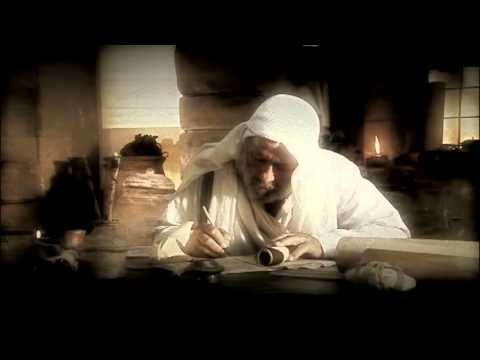
A - apostolo che scrive su rotolo

Remarkably the Scripture interprets itself through typology. Consequently, all that is needed is studying it, and watching attentively the events of human history, in particular of Israel. These, in fact, enable to discern when a biblical type and a prophetic event is truly and completely fulfilled in its antitype. And, only at that  time, it will be once for all. Then, and only then, interpreters  of Scripture receive evidence that their interpretation of a symbol, was correct.[iii] 

In antiquity the writers of Scripture were very familiar with this divine method of communication. Consequently, they considered real things, real persons, and real events of the past, types of things to come.

Even today, using typology, this symbolic language can be understood without external references by comparing scripture with scripture.


Man’s Redemption in Types and Antitypes

I.  The first sacrifice

The LORD informed progressively about the means He retained necessary to execute the redemption of repented believers, using types.

Firstly, He disclosed the solution to Adam with the promise of a Messiah that would come only from a woman. His Anointed would defeat the “Serpent”, the “Dragon” by suffering and dying innocently to redeem many. Here, the serpent is a tangible type. In fact, it represents the “devil”, “Satan”, the rebellious angel that took possession of the “ancient serpent” to deceive the parents of humanity (Rev. 12:9).

To Adam and Eve, GOD also specified how the extraordinary Seed of the woman would defeat Satan (Gen. 3:15). In fact, after promising a Redeemer, the LORD presented in types the means through which He would fulfill His promise. And He did this by sacrificing an “innocent animal”, most probably a “lamb”. Then, the LORD, out of love, took the skin of the victim and made  garments. And, with them, He covered the parents of humanity, left naked and ashamed of their new miserable sinful condition (Gen. 3:21).

Purposely with this first sacrificial death of an innocent victim, GOD taught to Adam that the Seed of Eve will one day die to make them live. And He also dramatically explained that without shedding of blood there is no remission of sin.  Ultimately,this  sacrifice prefigured the great sacrifice which, in the latter days, should be offered once for all. Thus, the first death in GOD’s Universe was the sacrifice of  Christ in a figure.


II. The substitutionary sacrifice
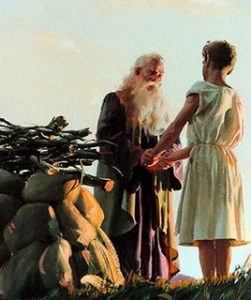
Secondly, the LORD asked Abraham to dramatize the same solution.  Trusting in GOD’s promises, our spiritual patriarch offered Isaac, his only legitimate son, as a sacrifice. Yet, as Abraham raised his hands to kill Isaac, the Angel of the LORD stopped him. And, GOD substituted his son with an “innocent victim” He Himself had chosen and provided for the burnt offering (Gen. 22).

This substitutionary sacrifice was a prophetic reenactment. In it, Abraham played the role of our Father who is in Heaven. And, Isaac prefigured GOD’s only Son, sacrificed, once for all, at the fullness of time (John 3:16).


III. The perpetual sacrifice

Thirdly, to the teaching of man’s salvation, GOD added also the spatial dimension through another type, His sanctuary. And, with it He offered other types of the places and means He would use to redeem His believing  people. Amazingly, in Scripture the sanctuary typology is used from Genesis to Revelation.

After liberating Israel, the LORD commanded to build a sanctuary, similar to the one which is in Heaven (Ex. 3:12; 19:11). In obedience, «on the first day of the first month» of the sacred calendar, «the tabernacle was raised up».  Then, «the glory of the LORD filled it».  Afterwards, «The cloud of the LORD was above the tabernacle by day, fire was over it by night, in the sight of all the house of Israel, throughout all their journey» to the earthly promised land (Ex. 40:17, 35, 38).

In GOD’s sanctuary, the priest offered the perpetual sacrifice, called the “korban tamid” . It was a daily sacrifice of two lambs as burnt offering to maintain a constant relationship with GOD (Exodus 29:38-39).  As a matter of fact,  one lamb was offered in the morning, and one lamb in the afternoon, each day of the week. In the morning, no sacrifice was before the first lamb.  In the afternoon, no sacrifice was after the last lamb. And, they both were holy types, prefiguring the continuous intercession of Christ for the perpetual purification and blessing of repented believers.


The High Priest of GOD
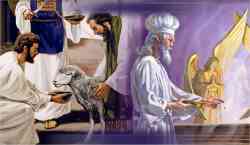
Astonishingly, the sanctuary was a «copy and shadow of the heavenly things» mentioned various times in the book of Revelation (Heb. 8:5).[ii] Indeed, each animal sacrificed on its burnt offering altar was a «shadow of the good things to come» (Heb. 10:1). And, ultimately, it prefigured Jesus Christ, the Savior, the «Lamb of God who takes away the sin of the world» (John 1:29).  Who, also, is the «High Priest», the only Mediator between the Father and mankind (John 1:29; Rev. 5:5-6; Heb. 9:6,7, 25).

With the earthly sanctuary and the heavenly sanctuary, the LORD showed how He would accomplish the restoration of His faithful people. Concerning both, «it is what the structures represent, or teach about the great controversy between Christ and Satan, and about the plan of salvation, that matters. The dwelling places of the Deity propose to teach us spiritual truths».[iv]

Without question,  what the LORD presents us with His sanctuaries is His good, just and unchangeable will toward fallen man (Ex. 25:22). In fact, He shows in this type the places and wonders through which, at His perfectly fixed dates, He started and will ultimately complete the wonders bringing forth the final rescue of repentant sinners, believing in Him and His Messiah.


Significance of GOD’s Temple

Undoubtedly all that is revealed with the mosaic tabernacle points to the glory of the Father and His saving way with men (Ps. 77:13,19). For this reason, the LORD urged Ezekiel to study it, and to proclaim its message. «Son of man, describe the temple to the house of Israel, that they may be ashamed of their iniquities, and let them measure the pattern. And if they are ashamed of all that they have done, make known to them the design of the temple and its arrangement… its entire design and all its ordinances, and perform them» (Ezek. 43:10,11).

In similar manner, the apostle John, acting the part of true Israel of the last days, was ordered to «rise and measure the temple of God, the altar, and those who worship there» (Rev. 11:1). Indeed, in the penetrating light of GOD’s Good News streaming from the Sanctuary and in its plan, today, the universal people of GOD can be deeply moved through their own sinfulness. And, if they repent, can still find grace, and hear the LORD, from His throne, pronounce the redeeming words, «I will accept you» (Ezek. 43:27, cf. 43:6-27).[vi]


Biblical types testify of Christ

Jesus Christ declared, «You search the Scriptures, for in them you think you have eternal life; and these are they which testify of Me» (John 5:39).  Indeed in GOD’s Written Word, many types prefigure the Messiah and His ministry for the redemption of believers.

It is written, «Your way, O God is in the sanctuary… You are the God who does wonders… You have with your arm redeemed Your people» (Psalm 77:1, 14, 15). Unquestionably, the sanctuary with its rituals presents clearly that it is on earth and through his Lamb, His «only and unique» Son, that our heavenly Father manages the project that will result in the redemption of His people (John 3:16-18). In reality, Jesus came on earth, mysteriously incarnated in a humble human being, to start it.  And, He will return, as a glorious King, to complete it.

After His ascension, Jesus is directing the activities leading to man’s redemption from the Heavenly Sanctuary, His actual dwelling place. There, in His tabernacle, the Most Holy Place of GOD, He works on behalf of each repentant believer.[v]


GOD’s redemptive 
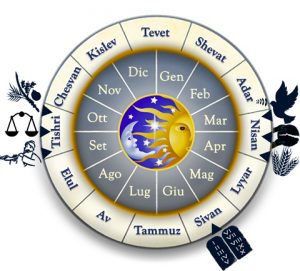
After giving to the teaching of His project for man’s redemption the place and means dimension through His earthly sanctuary, GOD added to it also the time dimension through His weekly Sabbath (Lev. 23:1-3), the seven annual feasts (Lev. 23:4-44), the Septennial and the Jubilee year (Lev. 25).

Especially, the chronology of the annual feasts serves as a divinely ordained calendar. In other words, each feast marks key moments in Israel’s history and represents a specific aspect of GOD’s covenant with His people. And it reveals GOD’s plan for humanity through the progression of the feasts throughout the year.

Concluding, with His appointed times, GOD uses symbolic acts and celebrations that prefigure the redemptive work of His Son, the Messiah.   And, all this and more it is revealed through typology, allowing the Scripture to interpret itself.


[i]   For further study see website, http://www.theopedia.com/biblical-typology . The Typology of Scripture, (NY and London: Funk & Wagnalls, 1900), I, p. 106; R.T. France, Jesus and the Old Testament (Downers Grove, Ill.: Inter-Varsity Press, 1971), p. 40. Typos, Theological Dictionary of the New Testament. VIII, (Grand Rapids, MI: Eerdmans, 1972), pp. 246-259; Bernard Ramm, Protestant Biblical Interpretation, (Grand Rapids, MI: Baker, 1970), pp. 215-232; Biblical Typology Yesterday  and Today, Calvin Theological  Journal 5 (1970) pp. 133-162.
[ii]   Also Jerusalem is a very dim “shadow” of the city of GOD, (see Heb. 12:22; Rev. 3:12; 2; 22).  In fact, the traveling of Abraham toward the earthly promised land and its city, is a type, representing the walk of each individual and family toward GOD’s New Earth and New Jerusalem.
[iii]   David H. Stern is a Messianic Jewish theologian. He is the author of the Complete Jewish Bible, a commentary to the New Testament, the Messianic Jewish Manifesto and  Restoring the Jewishness of the Gospel, (Clarksville, MD: Jewish New Testament Publications, Inc., first ed. 1984). In the synthesis of this last work titled, Restoring the Jewishness of the Gospel, Section D, Stern mentions four types of Jewish interpretation of Scriptures: the P’shat, Remez, Drash or midrash. These same types are used by the author of this study. For David H. Stern’s publications contact by e-mail: lederer@messianicjewish.net or see website:www.messianicjewish.net.
[iv]   Samuele Bacchiocchi, God’s Festivals in Scripture and History, Part II: The Fall Festivals, Biblical Perspectives, (Berrien Springs, MI: 1996), p. 176. Dr. Bacchiocchi is the first non-Catholic to graduate from the Pontifical Gregorian University in Rome. His works include: From Sabbath to Sunday – Sabbath under Crossfire-  Immortality or Resurrection? – The Advent Hope for Human Hopelessness – Wine in the Bible, Popular Beliefs – Are they biblical? More information to purchase his publications can be found at: Sbacchiocchi@biblicalperspectives.com; or  http://www.biblicalperspectives.com.
[v]  Various authors of the Seventh-day Adventist Church, Il Santuario – Il piano di Dio per la Nostra Salvezza, see chapter of Robert S. Folkenberg, “La via degli Altari”, (Falciani, Impruneta, FI: Edizioni ADV, 1996), pp. 18,19.
[vi]  For a deeper study on the sanctuary typology see, Wallace B. Nicholson, The Hebrew Sanctuary: a Study in Typology, (Grand Rapids: Baker Book House, 1951. 232.3  n528; Merwin R. Thurber, Symbols of Salvation: How Men are Saved, as Revealed in the Ancient Sanctuary, (Washington D:C:: Review and Herald, 1961, BT 262 .T48; Alfred Felix Vaucher, Le sanctuaire, Collonges-sous-Saleve: Fides, 1970) BT 265 .V37 Heritage; Ellen G. White, Patriarch and Prophets, (Mountain View, CA: Pacific Press, 1958), Chapter 30 “the Tabernacle and Its Services, Chapter 52 – “The annual Feasts”; Christ in  the Sanctuary, (Mountain View, CA: Pacific Press, 1969), The Great Controversy between Christ and Satan,  (Mountain View, CA: Pacific Press 1950), 488.